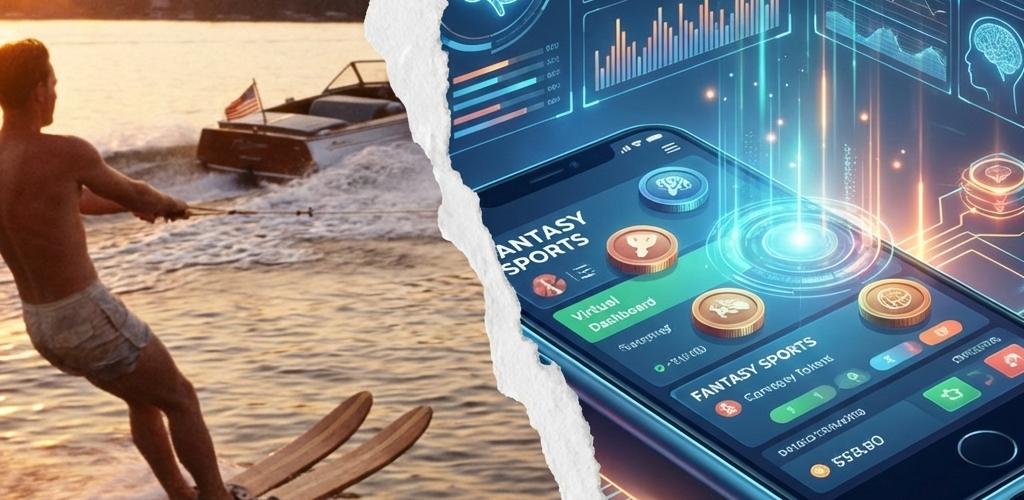
Waterski Predictor: Future or Fantasy?
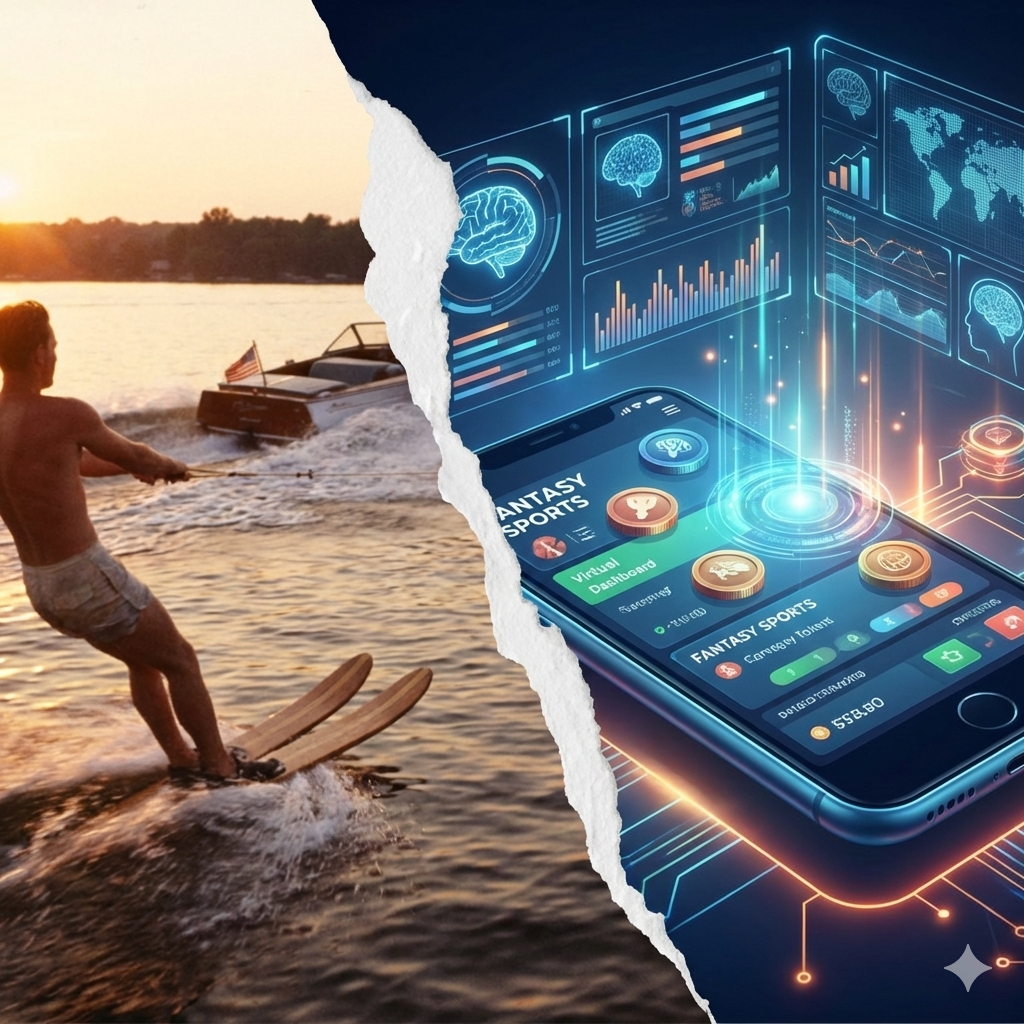
Matching Waterski Predictor’s AI energy with our own glitchy digital divide (image: Nano Banana Pro)
By Jack Burden
Every few years, someone tries to fix water skiing.
Not with a new fin setting or a better beveled edge, but with an idea that promises something bigger: relevance, engagement, growth. A way to make people care again, or care more, about a sport that for all its beauty and difficulty has never quite figured out how to keep casual fans engaged.
This week, Waterski Predictor entered that lineage.
Launched in beta with slick AI-generated promos and a tagline that flirts unapologetically with existential dread (“Imagine a world without waterskiing”), the platform positions itself as a fantasy-style prediction game layered over professional events. Fans sign up, receive tokens, predict outcomes, and, if they’re right often enough, redeem rewards like ski gear, coaching, or experiences. No cash payouts. No betting slips. At least on paper, firmly on the safe side of legality.
The pitch is familiar, even compelling: sports grow when fans don’t just watch, they participate.
It’s hard to argue with that. Fantasy leagues transformed how millions consume football, basketball, and Formula One. Prediction games give meaning to mid-pack finishes, to heats that don’t involve the favorite, to the long, quiet stretches of a tournament day when only diehards usually stay tuned. In a sport like water skiing, where storylines are rich but exposure is thin, that extra layer of attention matters.
But water skiing is not football. And participation is not a neutral word anymore.
Almost immediately, the reaction split along predictable lines. Some laughed. Some cringed. Some signed up. Some recoiled at the whiff of gambling culture drifting into a sport that still prides itself on junior development, family lake days, and hand-me-down skis.
“Gambling will solve all our problems,” former Under-21 world champion Sean Hunter deadpanned on Instagram.
Others pushed back more earnestly. Loving skiing, they argued, should be enough. Turning outcomes into tokens felt unnecessary, even vaguely dystopian, especially when paired with a launch video that framed the app as a savior rather than a supplement.
To Waterski Predictor’s credit, their responses were measured. This isn’t meant for everyone. It’s optional. Think fantasy sports, not gambling.
That distinction matters. Legally, it matters a lot. As John Horton explained on a BallOfSpray forum following the launch, drawing on his own deep dive into the regulatory minefield, once cash enters the equation things get illegal fast. Tokens redeemable for prizes may be the only viable path for something like this to exist at all. In that sense, Waterski Predictor isn’t flirting with gambling so much as carefully stepping around it.
Still, perception lags legality.
The language of tokens, exchanges, and rewards carries cultural baggage now, whether the creators intend it or not. Crypto-bro excess, predatory betting apps, and the broader gamification of everything have left many people understandably wary. Water skiing, a sport already fighting to explain itself to the outside world, doesn’t need another thing that looks confusing or ethically murky at first glance.
And yet.
Scroll past the skepticism and you see something else: people laughing at the promo. Inside jokes landing. Fans debating formats. Old-timers recalling fantasy leagues from 25 years ago that handed out hats and T-shirts and somehow survived without ruining anyone’s soul. Curiosity, not just outrage.
You also see something water skiing rarely gets: conversation.
Not about federations or politics or declining participation numbers, but about pro events themselves. Who will win. Who might surprise. Which pass actually matters. That attention, fragile and fleeting, is the currency the sport has often lacked.
The deeper question, then, isn’t whether Waterski Predictor is good or bad. It’s whether water skiing can afford to be precious.
This is a sport that struggles to monetize viewership, to retain fans between rounds, to offer athletes sustainable careers. Anything that keeps eyes on the screen longer has value, even if it makes us uncomfortable at first. Growth rarely arrives in forms that feel pure.
At the same time, the discomfort shouldn’t be dismissed. Transparency matters. So does tone. Launching with apocalyptic framing that suggests this saves the sport invites backlash in a community that has seen enough silver bullets misfire. Water skiing doesn’t need salvation. It needs infrastructure, trust, and incremental wins.
Waterski Predictor could be one of those wins, if it knows what it is.
Not a replacement for loving the sport. Not a financial engine. Not a moral crusade. Just a thin, optional layer that gives fans another reason to stay through the last round instead of checking results later.
That, more than tokens or AI videos, may be the point.
Water skiing has never suffered from a lack of passion. It has suffered from a lack of experiments. Some fail. Some quietly help. Most sit somewhere in between, nudging the sport forward by inches rather than saving it outright.
Waterski Predictor probably won’t change everything. It might not even last. But it asks a question worth asking in 2026: how do we invite people not just to watch water skiing, but to care what happens next?
The answer, as always in this sport, will be complicated. That much you can bet on.