Moomba Delivers: Record Scores, Breakout Stars, and Riverbank Chaos
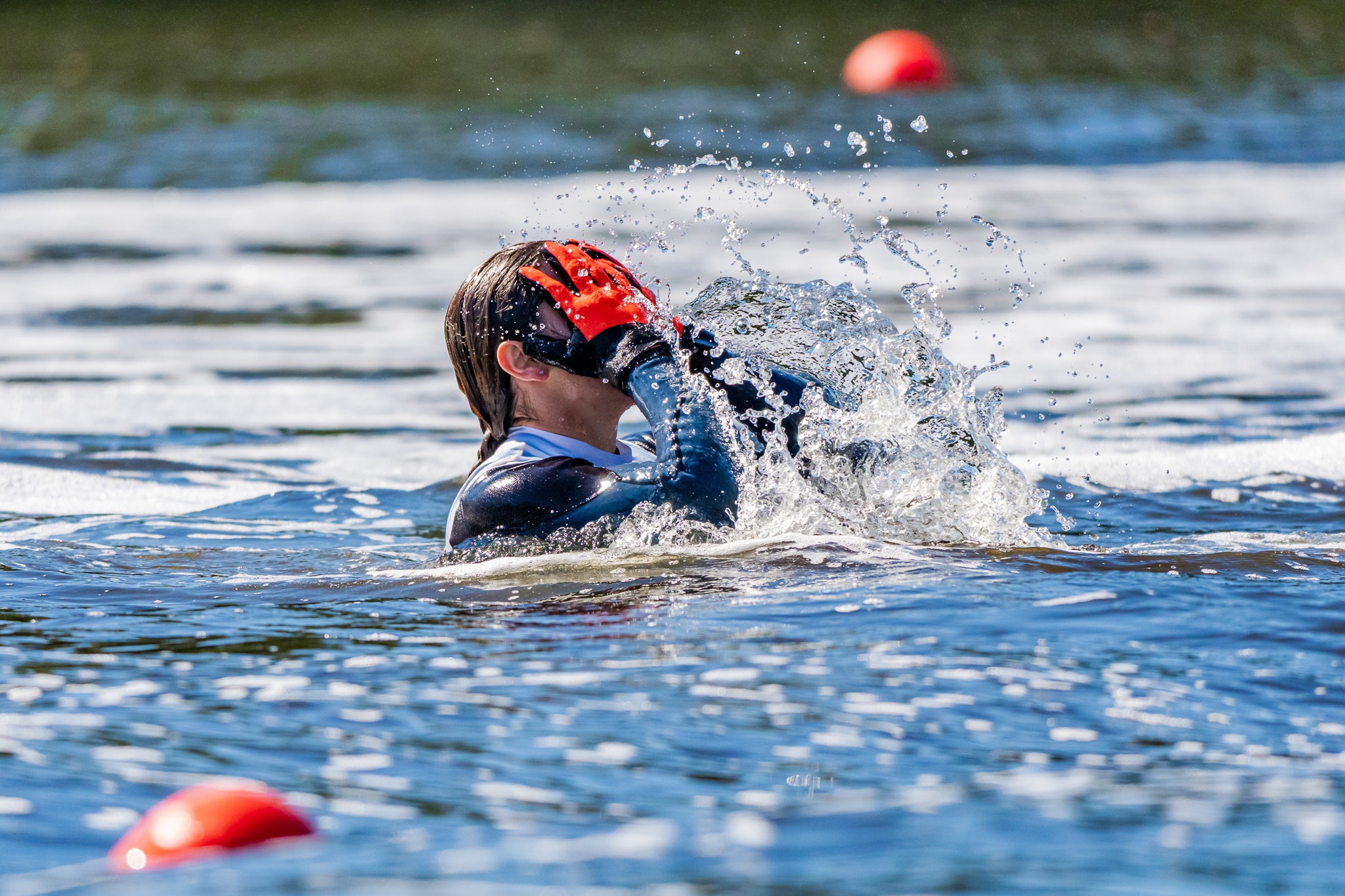
Image: Jackson Cross Photography
By Jack Burden
MELBOURNE, Australia — If the Yarra River has taught the sport anything over the past seven decades, it’s that reputation counts for very little once the rope tightens.
World champions have fallen here. Record holders have vanished into the current. Entire weekends can unravel in the space of a mistimed turn or a half-second of hesitation.
And yet, somehow, the 2026 Moomba Masters still managed to feel both chaotic and strangely inevitable at the same time.
Because despite the notorious conditions — the current, the chop, the setups, the thousands of spectators leaning over the banks — this was a year when, more often than not, the best skier still won. In four of the six disciplines, the champion was either the current or pending world record holder. Personal bests ruled the podiums.
The cream, as they say, rose.
But Moomba still made them work for it.
And it did so in front of one of the largest crowds the event has ever seen. Announcer Jarrod Faoro, who has called more than his share of Moomba finals, described Sunday evening’s audience as the biggest he had ever seen here — a sea of people packed along the banks.
Melbourne was already swelling. Formula 1 was running across town at Albert Park. Nearly 100,000 fans were headed for the AFL opener at the nearby MCG. The city was buzzing.
And tucked in the middle of it all, water skiing quietly produced one of its most compelling weekends in years.
If there was a single storyline threading through the entire weekend, it might have been the emergence of Jake Abelson.
For years, Joel Poland has occupied a unique place in the sport — a rare athlete capable of challenging the world’s best across all three events. The kind of skier whose overall scores force people to reconsider what’s possible.
Now there may be another.
Abelson arrived in Melbourne already holding the world record in tricks. That part was never in doubt. But over the course of the weekend, the 18-year-old American produced the kind of all-around performance that forces people to start whispering bigger questions.
He qualified for the finals in all three events on Moomba Monday. He launched the first 200-foot jump of his career earlier in the week. He won the Saturday night jump under lights.
And he looked increasingly comfortable doing all of it.
At the same age, Abelson’s overall scores already sit well ahead of where Poland once was. His tricking is elite. His jump is already world-class.
The missing piece — as it always is in overall skiing — remains slalom.
But if Abelson can close that gap, the sport may be watching the arrival of another genuine triple-threat.
Tricks: The Most Anticipated Finals
Moomba Monday traditionally begins with tricks, and in 2026 the event had been hyped all week as the must-watch discipline.
Both trick fields were absurdly deep. The men’s preliminaries had already produced six scores above 11,000. The women’s field featured the sport’s fiercest rivalry of the past year.
It did not disappoint.
Kennedy Hansen opened the final like someone determined to silence any doubts.
The American was arguably the breakout skier of 2025 — winner of the WWS Overall Tour, the newest member of the 10,000-point club, and runner-up at the World Championships. On the Yarra she delivered two composed passes to set the early benchmark above 9,000 points.
But the real battle was always expected to come from the sport’s hottest rivalry: Neilly Ross vs. Erika Lang.
Ross, the reigning world champion, began with a powerful toe pass that hinted at a huge score. But a momentary loss of rhythm cost her dearly on hands — nearly a thousand points slipping away between time and judging deductions.
That left the door open.
And Erika Lang has spent most of the last decade walking through doors like that.
The American produced two blistering passes to score 10,930 points, winning her fourth consecutive and eighth overall Moomba Masters trick title. The victory moves her to second on the all-time trick titles list, now just one win behind Moomba legend Karen Bowkett Neville.
Lang didn’t just win.
She cleared second place by 1,300 points.
If the women’s final delivered tension, the men’s event produced pure spectacle.
Jake Abelson set the early pace with a score just over 12,000 points, despite an equipment issue that cost him a final toe trick and a hand pass that ran a fraction too long.
Even with those lost points, the score looked strong.
Then Matias Gonzalez happened.
The 18-year-old Chilean had arrived in Melbourne a week removed from setting a pending world record. His early rounds had been relatively quiet — even finishing third in the Under-21 event.
But in the professional final, he delivered something extraordinary.
Two impossibly fast passes. No wasted motion. No theatrics.
Just speed.
Gonzalez’s skiing isn’t built on the boundary-pushing flips of Joel Poland, the inventive toe work of Martin Labra, or the technical complexity of Abelson and Patricio Font.
Instead, he performs classic sequences at speeds that once seemed impossible.
His run looked like someone had pressed fast-forward on the tape.
The result: 12,860 points, the highest score ever recorded in a professional tournament and a new Moomba course record.
The remaining contenders — Poland, Labra, and Font — all needed personal bests to catch him.
None could.
Gonzalez skied away with his first Moomba Masters title.
Slalom: Folk Heroes and Familiar Winners
If Jake’s performance felt like a breakthrough, his younger sister Alexia quietly produced one of the most remarkable stories of the finals.
Just days removed from winning Most Outstanding Junior Performance earlier in the week, the 15-year-old American lined up for the women’s slalom final — only the third professional slalom tournament of her career.
Few expected what came next.
Abelson built momentum through the 11.25m (38′ off) pass with growing confidence, turning buoy after buoy with the kind of rhythm that suggests a skier momentarily forgetting where they are.
For a moment, it looked like she might run 11m for the first time.
Instead, she fell around five ball — half a buoy shy of her personal best — leaving her somewhere between joy, disbelief, and frustration as she floated away smiling.
Then the chaos began.
Neilly Ross missed. Australia’s Sade Ferguson faltered. One by one, the field fell short.
Suddenly Abelson found herself climbing the leaderboard until only one skier remained: world record holder Regina Jaquess.
Jaquess did what Jaquess usually does. She navigated into 10.75m to secure her second Moomba slalom title.
But the real surprise was just behind her.
A 15-year-old with a grin that suggested she was still trying to process what had just happened.
Slalom on the Yarra has a habit of producing unlikely protagonists.
This year’s belonged to Corey Saddington.
Ranked 82nd in the world, the 23-year-old from Bendigo barely made the final, sneaking through the repechage on Sunday afternoon.
Then he opened the finals by running 11.25m and pushing into 10.75m (39.5′ off), finishing within a buoy of his personal best.
And then he waited.
Five consecutive skiers — all with far better rankings and deeper personal bests — failed to match him as the current ripped through the course.
For a moment, the unthinkable felt possible.
Freddie Winter eventually edged past by a single buoy. Thomas Degasperi matched the mark.
Then defending champion Charlie Ross arrived.
The 20-year-old Canadian skied like he was in different water entirely — smooth, controlled, unhurried.
Ross rounded four buoys at 10.75m to claim back-to-back Moomba titles.
Saddington, meanwhile, finished fourth — and became the weekend’s most unlikely folk hero.
Jump: New Champions, Familiar Power
The women’s jump event still feels slightly strange without Jacinta Carroll towering over the field.
For more than a decade the Australian legend owned the Yarra. Now the event is learning how to exist without her.
But if there was ever concern about the future, the Australian pipeline offered reassurance. Young jumpers like Sade Ferguson, Kristy Appleton, and Zarhli Reeves carried forward a lineage stretching from Sue Lipplegoes to Emma Sheers to Carroll herself.
The podium, however, belonged to the Americans.
Regina Jaquess set the early benchmark with 51.9m (170 ft) — longer than last year’s winning jump.
Then Aliaksandra Danisheuskaya answered.
Her 54.6m (179 ft) leap proved untouchable, as Brittany Greenwood Wharton fought valiantly through swans, current, and chop but failed to defend her crown. Danisheuskaya finally delivering the Moomba title that had eluded her through four previous runner-up finishes.
After years chasing Carroll, Danisheuskaya now had a major professional victory of her own.
The men’s jump final closed the tournament — and it felt like a fitting finale.
Joel Poland entered as the sport’s most dominant jumper of 2025 but struggled in qualifying. In the final he passed his first jump, then found himself awkwardly out of rhythm approaching the ramp.
What followed felt very on-brand.
Poland executed a series of quick hops during his glide — adjusting speed and timing mid-approach — before launching 68.1 meters (223 ft).
It was the sort of audacious improvisation that only Poland would attempt.
And somehow it worked.
Josh Wallent, a 28-year-old builder from South Australia, came closest with 64.1m (210 ft) — earning his first professional podium.
But the last word belonged to Ryan Dodd.
After a frustrating 2025 season chasing Poland, the Canadian looked imperious all weekend. His 69.9m qualifying jump had already put him well clear of the field.
In the final he needed six feet less.
Dodd delivered it comfortably, reclaiming the Moomba Masters jump title.
When the River Settled
There were disappointments, too.
Joel Poland’s solitary silver was a paltry haul for the triple threat. Kennedy Hansen narrowly missed the jump final on her first visit to the Yarra. World overall champion Dorien Llewelyn failed to capitalize on his opportunities in either the trick or jump finals. Edoardo Marenzi endured one of the toughest tournaments of his career—missing the slalom final, narrowly missing the jump cut, and finishing last in the lone final he made.
Even the best sometimes leave Melbourne with bruises.
Because that’s the thing about Moomba.
It never quite unfolds the way anyone expects.
But as the crowds finally drifted away from the riverbanks — past bridges, food stalls, and festival lights — one thing felt clear.
The sport’s established stars were still standing.
But a new generation had arrived.
And they were no longer waiting their turn.

Great recap of a great event. Could not comprehend the size of the crowd for Sunday night jump atmosphere was awesome.