Centerline Handle by Spray Research

New Tournament-Approved Handle Offers Fresh Take on Water Ski Safety

Media

New tournament-approved handle offers fresh take on water ski safety

Centerline Handle by Spray Research

Image: Spray Research

By Jack Burden


The water ski handle hasn’t changed much in decades—but a new option from Spray Research is quietly challenging that status quo.

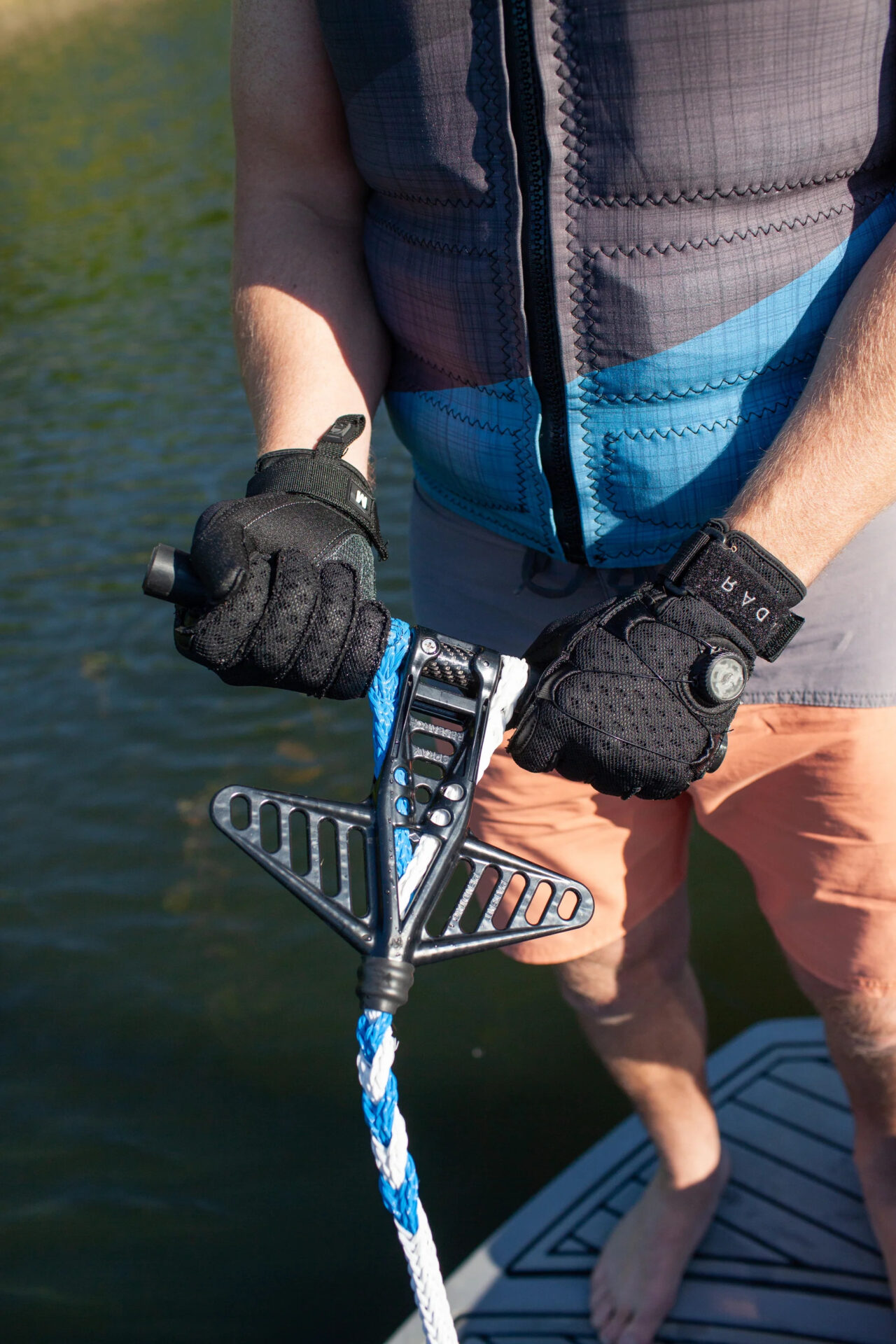
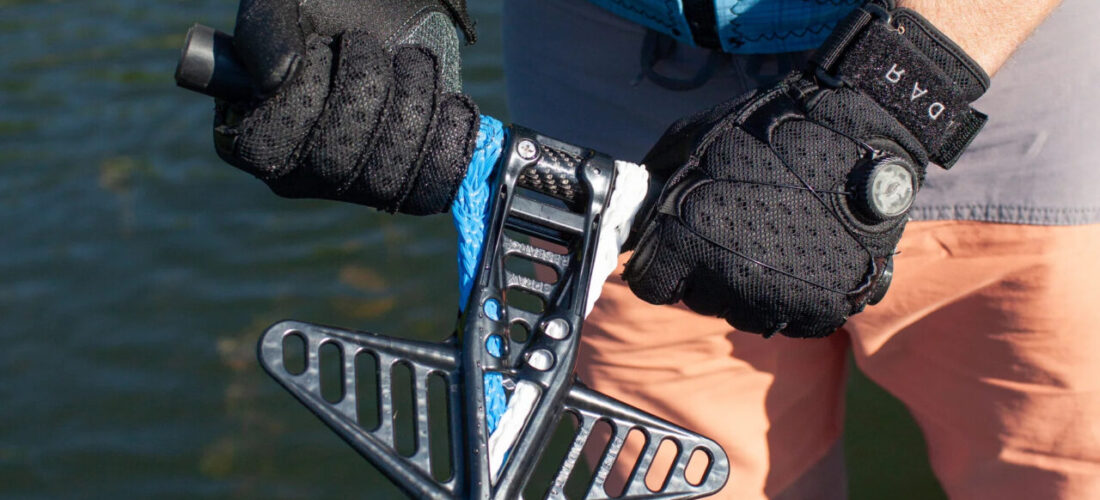
Officially launched this week, the Centerline Handle—formerly known as the T-Handle—is now available for order through Spray Research’s new website, sprayresearchusa.com. Engineered by Jason Peckham, a Masters Men skier and design engineer, the handle rethinks how rope and handle connect by eliminating the traditional open bridle in favor of a central attachment point.

The design aims to reduce the risk of serious injury during falls, like the one Peckham himself experienced in 2022 when his arm became entangled in a conventional handle at 39.5 off. The result: a fractured radius, torn tendon, and an extended recovery.

The Centerline’s signature feature—a rigid “Centerline Stiffener”—creates a closed, stable loop where the rope meets the core bar, reducing the chances of limb entrapment. It’s already been approved for a 24-month trial in IWWF tournaments, allowing athletes to put the handle through real-world paces at the highest level.

While early testers, including juniors and seasoned skiers, have reported a positive feel, the handle’s radically different shape and grip may require a period of adjustment. As with any departure from long-established gear, adoption may be gradual—and not every skier will prefer the feel.

Questions remain about how the handle performs in high-speed releases, its long-term durability, and whether a new shape can gain traction in a sport deeply rooted in tradition. But its arrival signals an important moment: a meaningful attempt to improve safety without compromising performance.

Available for $225 USD with free U.S. shipping through June, the Centerline Handle is poised for a wider audience this summer. Whether it becomes a staple on docks around the world remains to be seen—but it’s certainly one to watch.

William Asher slalom skier

The Relentless Reinvention of Will Asher

Articles

The relentless reinvention of Will Asher

William Asher slalom skier

Image: @jmommer2

By Jack Burden


In the early morning glass of a Florida lake, Will Asher slices the slalom course like a man trying to solve a riddle only he can hear. At 42, he shouldn’t be this vigorous. But this ride isn’t just about winning—it’s about understanding.

That understanding, it turns out, might be the only thing keeping him going.

In a season that was supposed to mark the rise of the next generation, it was the old master who stood tallest. Asher, already a two-time world champion and one of the most decorated slalom skiers of all time, didn’t just show up in 2024—he took over. Four professional wins, more than double the next closest competitor. A three-stop sweep through Morocco, the south of France, and Monaco, where he ran 10.25 meters (41’ off) not once, but twice. Against men half his age, Will Asher was untouchable.

Ask what changed, and he doesn’t talk about dominance—he talks about freedom.

“We made a breakthrough [with my equipment],” he said in a recent episode of the FPM Podcast with Marcus Brown. “And when you get to that point, you’re able to just switch off.”

There’s a calmness to Asher now—a kind of peace forged not by slowing down, but by refining his purpose. In a sport where most of his contemporaries have long since moved on, he’s still here. Still evolving. Still building.

Charting a New Course

What do you do when you’ve won almost everything? For Asher, the answer wasn’t to walk away. It was to go deeper.

Ski design—once a curiosity, now an obsession—has become his new frontier. His latest creation, the Syndicate Works 01, isn’t just a ski. It’s the result of a decade-long search for feel, feedback, and flow. A physical manifestation of everything he’s learned—and everything he still doesn’t know.

For Asher, it’s not about tournament wins anymore. It’s about chasing the perfect feel.

And it’s not just about his performance. It’s about the craft. The satisfaction of building something that matters.

“It’s like my babies,” he says. “Thousands of my children out there that people are trying to experience. And it does feel good when people say, ‘That changed my life.’ That’s their release. Their enjoyment. Their pleasure.”

This isn’t legacy-building. It’s presence. Pride. Passion shared.

Asher often speaks of skiing as more than sport. It’s structure. It’s meaning. A daily ritual that gives shape to life.

“Yeah,” he says, when asked if skiing brings purpose. “It keeps me on the straight and narrow. Keeps me motivated. Gets me up in the morning. Makes me go to bed. Make good decisions… most of the time.”

But underneath the laugh is something harder. At 42, he knows his competitive days are numbered. And he’s honest about what comes next.

“Essentially a piece of me is going to die,” he says. “We don’t see the timer, but we know there’s a timer. [Maybe] this year, maybe next year, it could happen next week.”

Then, more quietly: “And when people put their whole life into one thing and it suddenly goes away—it’s full of depression and anxiety. You’ve got to fill that hole, right?”

That’s the part athletes don’t talk about. The collapse waiting just off-stage. The slow erasure of identity. For Asher, the antidote isn’t legacy. It’s curiosity.

“I think specialization is a terrible thing,” he says. “[It’s] one of the worst things that can happen for the potential of a child in athletics. I don’t understand why it’s not also true for adults.”

He finds refuge in other routines: cycling, lifting, running, foiling. “It’s like my kind of therapy,” he says. “To get away from everything.”

Even his on-water habits reflect that mindset. “I will actively go out of my way to not ski with people that are just too obsessed and cannot switch it off.”

Another form of escape? R&D.

Asher’s work with HO Skis has become a space beyond the slalom course. A place where he can tinker, rebuild, and reimagine what a ski can be.

He talks about design with reverence. Like a miner chasing gold.

“You know there’s gold down there,” he says. “You’ve done the tests. You’ve done the experiments. You see it—it’s there. But you still have to go dig it out.”

That treasure—the perfect ski—remains elusive. And maybe that’s the point.

“As crazy as it may sound, after 20 years I’m still trying to understand the basics,” he says. “It’s unbelievable how many variables there are in just one ski.”

Flex. Rocker. Width. Concave. Materials. Layup. The way a ski flexes and twists. It all matters. And yet, no formula guarantees feel.

“On paper, you can maximize everything. [But] if you maximize everything, that thing doesn’t work,” he says. “You can get performance, but sometimes it’s almost scary. To actually go to that place on the ski—it’s not comfortable.”

Still, he chases it.

“I feel like it’s my life’s work to get all that to come together into one place.”

Staying Unfinished

It’s not just theory. Asher’s skis are reshaping how elite skiers approach the sport. Team Syndicate riders won more than 40% of all professional slalom titles last season, with roughly the same share of podiums. An extraordinary haul in a field where seven different ski brands earned at least one win.

Less rigidity. More feel. Less fear. More flow.

The lab has become a second course. A proving ground for risk and reinvention.

Because perfection isn’t really the point. The point is to keep going.

What’s most remarkable about Asher isn’t the titles—though there are plenty. It’s that, two decades in, he still believes there’s something essential left to discover. That his life’s work isn’t a résumé of wins, but a trail of questions.

And that legacy is starting to echo—in younger skiers looking beyond the podium. In those chasing meaning, not just medals.

That’s Will Asher’s influence. Not just as a champion. But as a craftsman. A philosopher of flow. A man still mid-process.

Back on the lake, Asher is testing again. Not skiing for scores, but for feel. Riding a prototype. Making notes. Chasing something invisible.

It’s not about being the best anymore. It’s about staying unfinished.

Because the perfect ski—like the perfect run—probably doesn’t exist.

But if you spend your life looking for it… maybe that’s enough.
Brisbane 2032 Games Vision

IWWF Urges Water Ski Community to Weigh In on Brisbane 2032 Olympic Vision

Media

IWWF urges water ski community to weigh in on Brisbane 2032 Olympic vision

Brisbane 2032 Games Vision

Shaping the Future: Brisbane 2032

By Jack Burden


The International Waterski & Wakeboard Federation (IWWF) is calling on athletes, fans, and anyone with a stake in the sport to speak up, as the Brisbane 2032 Olympic organizers open the door—just slightly—for public input on the Games’ direction.

A short survey, open to the public until June 20, invites people from around the world to help shape the vision for the 2032 Olympic and Paralympic Games. It’s a rare chance for the waterskiing community to register on the radar of Olympic decision-makers—and maybe, just maybe, push the sport one step closer to the five rings.

This campaign comes at a curious and potentially pivotal moment. For the first time in years, the Olympic conversation doesn’t feel like a one-way street. According to insiders, it was the Brisbane 2032 Organising Committee—not the waterski federations—that initiated talks about possible inclusion. That’s a reversal big enough to raise eyebrows across a sport long relegated to the Olympic sidelines.

Cindy Hook, the CEO of Brisbane 2032, may be part of the reason. She has a background in skiing—not just the kind with lift tickets and après, but the kind pulled behind a boat. How much that personal link matters is anyone’s guess, but in Olympic politics, connections have always mattered more than most people would like to admit.

USA Water Ski & Wake Sports Executive Director Kevin Michael recently confirmed that the organization has launched a new Olympic campaign, anchored by meetings with Brisbane officials. “We’re making the right pitch to the right people at the right time,” he said in The Water Skier magazine. “No promises yet, but this journey will absolutely pay dividends for the sport.”

Whether those dividends come in the form of Olympic inclusion—or simply more visibility and legitimacy—remains to be seen. The waterski world is split. Some see this as a tired, expensive dream that has sapped energy from more realistic efforts to grow the sport. Others view it as a necessary gamble, a long shot worth taking if only to show future generations that the sport hasn’t stopped dreaming.

Behind the scenes, there’s cautious optimism. Rumors are circulating of quiet support within the International Olympic Committee, and even whispers of water skiing being considered for exhibition status at the 2028 Los Angeles Games. But for now, it’s all speculation and strategy meetings.

What isn’t speculation is this: there’s a survey open, and the people running Brisbane 2032 say they want to hear from the public. So, if you’ve ever had an opinion about where the sport should be—or where it could go—now’s the time to speak up.

Take the Brisbane 2032 survey here. Deadline: June 20.

Shocking loss of Stephanie Stange

Gone Too Soon: Water Ski Community Mourns Stephanie Stange

Media

Gone too soon: Water ski community mourns Stephanie Stange

Shocking loss of Stephanie Stange

Image: AWSA South Central

By Jack Burden


The water ski world is mourning the sudden and tragic loss of Stephanie Stange, a beloved figure in the sport both on and off the water. Stange, 55, was fatally struck by a pickup truck while bicycling outside Denison, Texas, on Thursday evening, according to the Texas Department of Public Safety. She was transported to Texoma Medical Center, where she later died from her injuries.

A multiple-time national slalom champion, Stange most recently won the Masters Women’s slalom title in 2023. Off the water, she was a Senior Scorer and served as an appointed official at the 2024 National Water Ski Championships.

Her influence on the sport extended through her family as well. Her two children, Parker and Griffin Stange, were standout skiers for the University of Louisiana at Lafayette, graduating earlier this year after helping lead the Ragin’ Cajuns to multiple collegiate titles.

In a statement shared by the AWSA South Central Region, Stephanie was remembered as “vibrant, down-to-earth, and full of joy,” someone who brought warmth and humor to every conversation. “She had an incredible way of making everyone feel seen and valued… Stephanie lived her life with courage, laughter, and love.”

Beyond skiing, Stange was a chiropractor in Sherman, Texas, and an adventurer with a deep love for her family, her community, and the sport she helped elevate for decades.

She is survived by her husband Dave, and their two children Parker and Griffin. The entire water skiing community joins them in grieving the loss of a remarkable woman — an athlete, official, mother, and friend who gave so much to the sport and the people within it.

2026 Ski Nautique

“Drastically Better Wakes”: Pros Weigh In on the 2026 Ski Nautique

Media

“Drastically Better Wakes”: Pros Weigh In on the 2026 Ski Nautique

2026 Ski Nautique

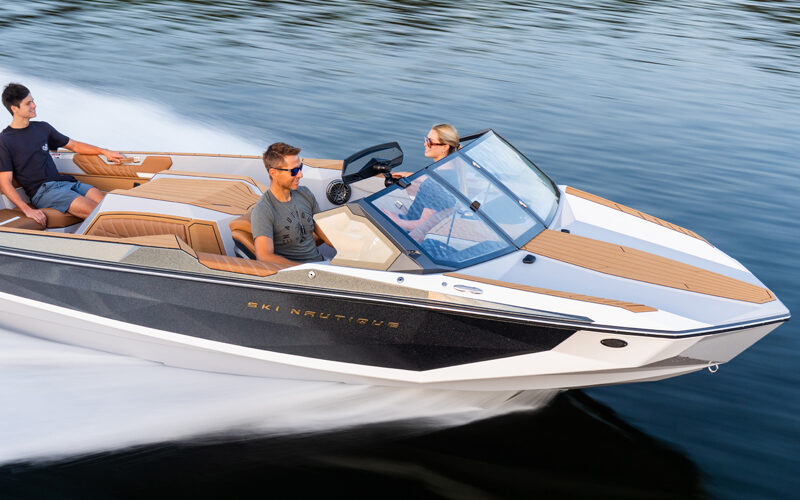
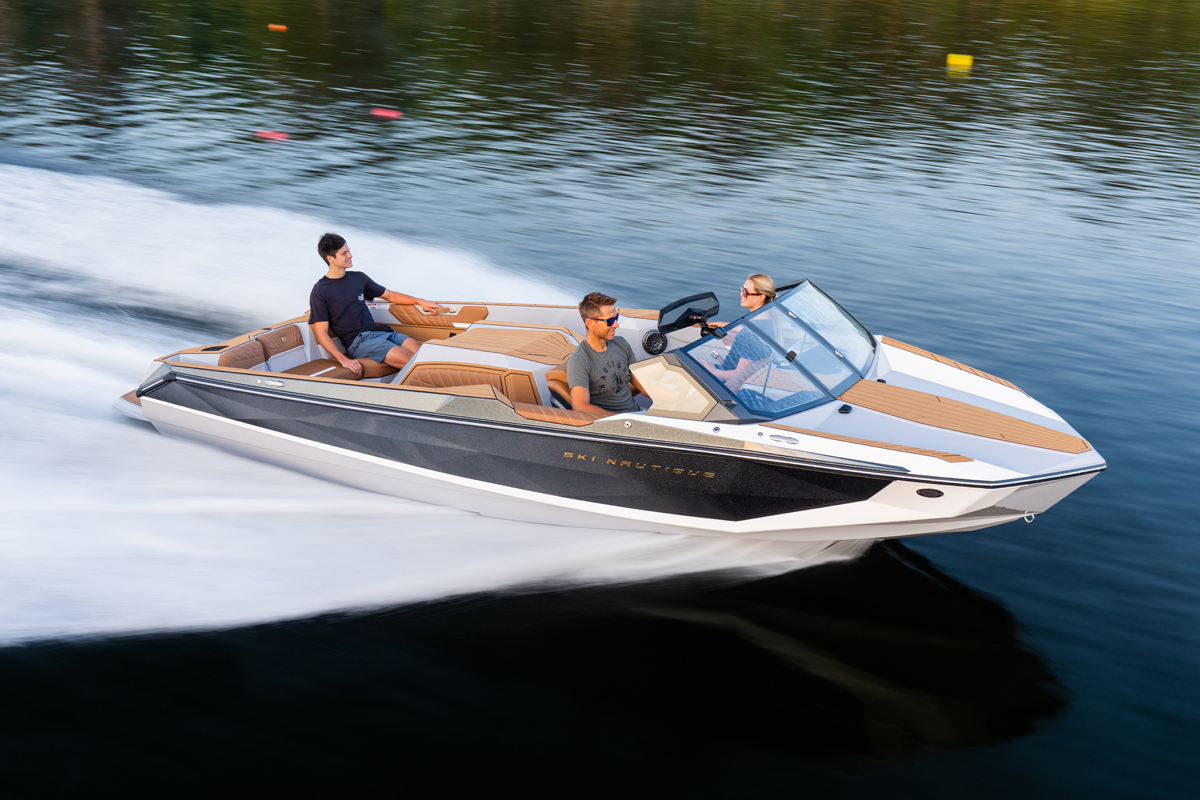
The Next Generation (image: Nautique)

By Jack Burden


The 2026 Ski Nautique has been out in the wild for barely a week, but it’s already generating real-world feedback from the world’s best. Pro slalom skier Cole McCormick took his first set behind the new model earlier this week — and while his analysis comes with the disclaimer of being a one-set impression, his verdict was clear: this boat skis very differently.

“The wakes are drastically better,” McCormick wrote in a detailed review posted to BallOfSpray. “And that’s coming from a guy who really, for the most part, doesn’t care how the wakes feel.”

According to Nautique, the 2026 model is the result of a complete hull redesign — a new blend of carbon fiber and fiberglass, reimagined lifting pads, and a reshaped HydroGate. The result is a lighter, more responsive boat that rides higher in the water, creates less displacement, and theoretically, produces flatter, more supportive wakes.

McCormick echoed that claim, highlighting one area in particular: “There is basically no trough at all at short line. This makes controlling load off the second wake after a heavy turn much easier. That’s probably the number one reason I lose runnable 41s.”

Another notable change is how the boat carries speed through the course — something McCormick says stood out immediately. “With the current boat, I would turn, feel a drop in RPM, then the boat would pick me up as I approached the first wake. With this new boat, it feels like there is almost no drop in speed. It’s a very odd feeling at first, but I suspect once I get used to it, it will be a big improvement at short line.”

That sensation isn’t accidental. Nautique says its Zero Off integration has been recalibrated to work in tandem with the new hull and prop setup, creating more consistent pull characteristics across the letter scale. According to Matt Rini, who walked through the new model in a recent video, “We’ve fine-tuned the feel at the end of the line. This gives the skier more adjustability in the pull… and keeps RPMs consistent across different conditions.”

McCormick noticed the effect immediately. Despite using the same Zero Off letter settings as before, the boat felt like it was pulling entirely differently. “I think there’s a good chance you will have to change your letter on this boat from the previous model,” he said.

While McCormick’s early review holds weight thanks to its independence, it also represents a very specific use case: shortline slalom at top speed. For most buyers, that’s not where they live. A far more important question — especially for the 30-to-34 mph, long-line crowd — is whether those benefits translate at lower speeds.

Team Nautique’s Charlie Ross believes they do. “At the high level, I think it’s a world record boat,” he said. “But even at longer line, the wake’s almost non-existent. It’s going to push the sport to new levels and make it easier for beginners to improve.”

Industry veteran Ski Dunlap echoed the sentiment with a grounded comparison: “You look at the wake at 36 [mph], and you look at the wake behind this boat at 30 [mph], and there’s almost no difference. How they ever figured out to get this boat up on top of the water at 30 mph with no rooster tail and just a flat table — it’s phenomenal.”

Following the boat’s announcement last week, we posed the question: Is this a true leap forward, or just a refined refresh?

The answer won’t come from promotional videos or contract-bound testimonials — it will come from ski rides. Across speeds, skill levels, and disciplines. Behind the wheel, off the dock, and at both ends of the rope.

Early indicators suggest that the 2026 Ski Nautique is far more than just an aesthetic overhaul. As McCormick summed it up: “I think this will be a major improvement across the board in slalom.”

But the real test begins now. As this boat makes its way into dealer demos and amateur hands, a more complete picture will emerge — one that includes the long rope, 32-mph crowd just as much as the pros skiing through 41 off.

Freddie Winter 🏆MASTERS SLALOM CHAMPION 🏆

Banned, Broken, But Never Beaten: Winter Headlines Blockbuster Masters

News

Banned, broken, but never beaten: Winter headlines blockbuster Masters

Freddie Winter 🏆MASTERS SLALOM CHAMPION 🏆

Freddie Winter celebrates his victory in men’s slalom (image: @bretellisphotography)

By Jack Burden


PINE MOUNTAIN, Ga. — The 65th Masters Water Ski & Wakeboard Tournament wrapped up Sunday beneath the tree-lined shores of Robin Lake, with records, redemption arcs, and rare feats all leaving their mark on one of the sport’s most storied stages.

History doesn’t just hang in the air at Callaway Gardens—it breathes down your neck. From the stirring boat parade to the veteran-honoring ceremonies, the Masters isn’t just a tournament; it’s a stage where legacies are made, and occasionally, broken. And this year, they cracked wide open.

Let’s start with the history on Friday. Germany’s Tim Wild delivered a performance for the ages, sweeping all four Junior Masters titles: slalom, tricks, jump, and overall. In doing so, he became the first male ever to achieve the sweep and only the third skier in Junior Masters history to pull it off—joining legends Regina Jaquess and Brandi Hunt. Wild’s path to perfection included victories over multiple reigning junior world champions and a tricks field featuring the 12,000-point club’s newest member.

By the end of Saturday’s brutal semifinals—where 45 skiers battled for just 12 final spots per gender—much of the sport’s royalty had been dethroned. Patricio Font. William Asher. Whitney McClintock Rini. Jaimee Bull. Gone. In their place: hungry challengers, career comebacks, and a few bold debutantes.

Sunday’s finals opened with one of the most anticipated showdowns, with the intensifying battle between Erika Lang and Neilly Ross for the world record expected to play out real time on the waters of Robin Lake.

Lang continued her stranglehold on the division, scoring 10,530 points to win her sixth Masters title. Her record in professional events since the start of 2023 now extends to 10 wins in 12 tournaments—including all three this year: Moomba Masters, Swiss Pro Tricks, and now the U.S. Masters.

Yet in many ways, it was Germany’s Giannina Bonnemann Mechler who stole the spotlight. Making a triumphant return to the podium less than a year after giving birth, she edged out defending champion Anna Gay Hunter and world record holder Ross with back-to-back 10,000+ scores.

In the men’s tricks final, Jake Abelson proved that last year’s world record was just the beginning. He threw down 12,190 points to win his second major title of 2025—a leap of faith rewarded after skipping Junior Masters eligibility to compete in the Open division.

“A dream come true,” shared the 17-year-old after his victory.

Joel Poland’s third-place finish may have come as a shock. After two stand-up passes and an exuberant celebration from the Brit—the top seed and last skier off the dock—the announcers couldn’t call it between Poland and Abelson, speculating, “I think it’s going to be extremely close, only a couple hundred points that separate them.”

But the final score told a different story: more than 1,500 points separated the two. Judges scrubbed multiple tricks from both of Poland’s runs—but even if all had been credited, his score still wouldn’t have caught Abelson’s winning mark. Nevertheless, the apparent controversy may have lit a fire under Poland for what came later.

If tricks was about cementing legacies, slalom was about redemption.

For the women, 41-year-old Vennesa Vieke, who seems to get better with each passing year, set the pace early with a gritty 1.5 @ 10.75m (39.5′ off). Her mark held through challenges from defending champion Jaquess and Ross. Then came Allie Nicholson, navigating the minefield to a clean 2 @ 10.75m—and her first Masters title.

Arguably the hardest-working skier in professional slalom today, Nicholson has competed in more pro events over the past two years than anyone—male or female. Often stuck behind the dominant trio of Bull, Jaquess, and McClintock Rini, she looked composed as the final skier off the dock—doing exactly what was needed to take the win and perhaps signaling a long-awaited sea change.

The men’s final? Pure Hollywood.

He was banned. He was broken. But now, he’s back.

Less than a year ago, Freddie Winter suffered a potentially career-ending injury—a shattered femur from a crash. Adding to the drama: he had been banned from the 2023 Masters for alleged unsportsmanlike conduct in 2022.

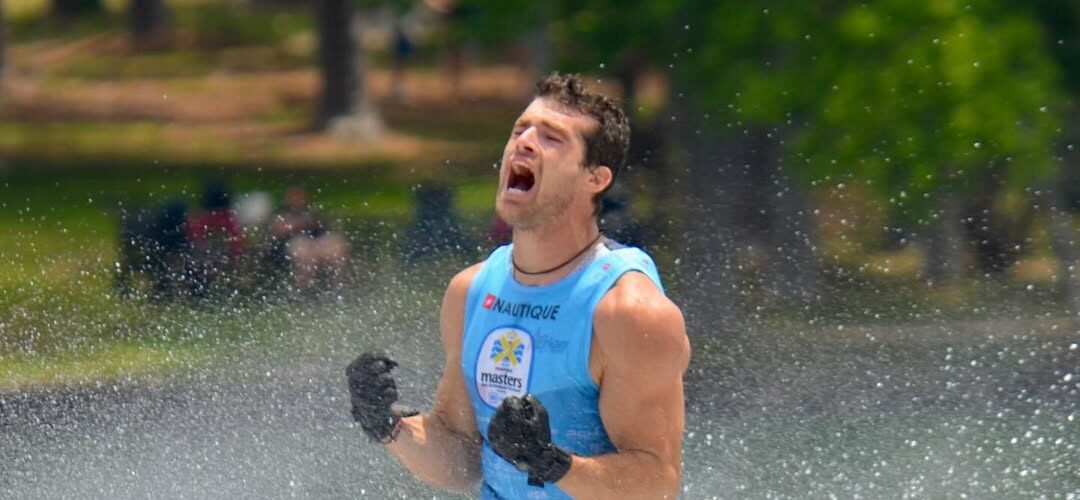
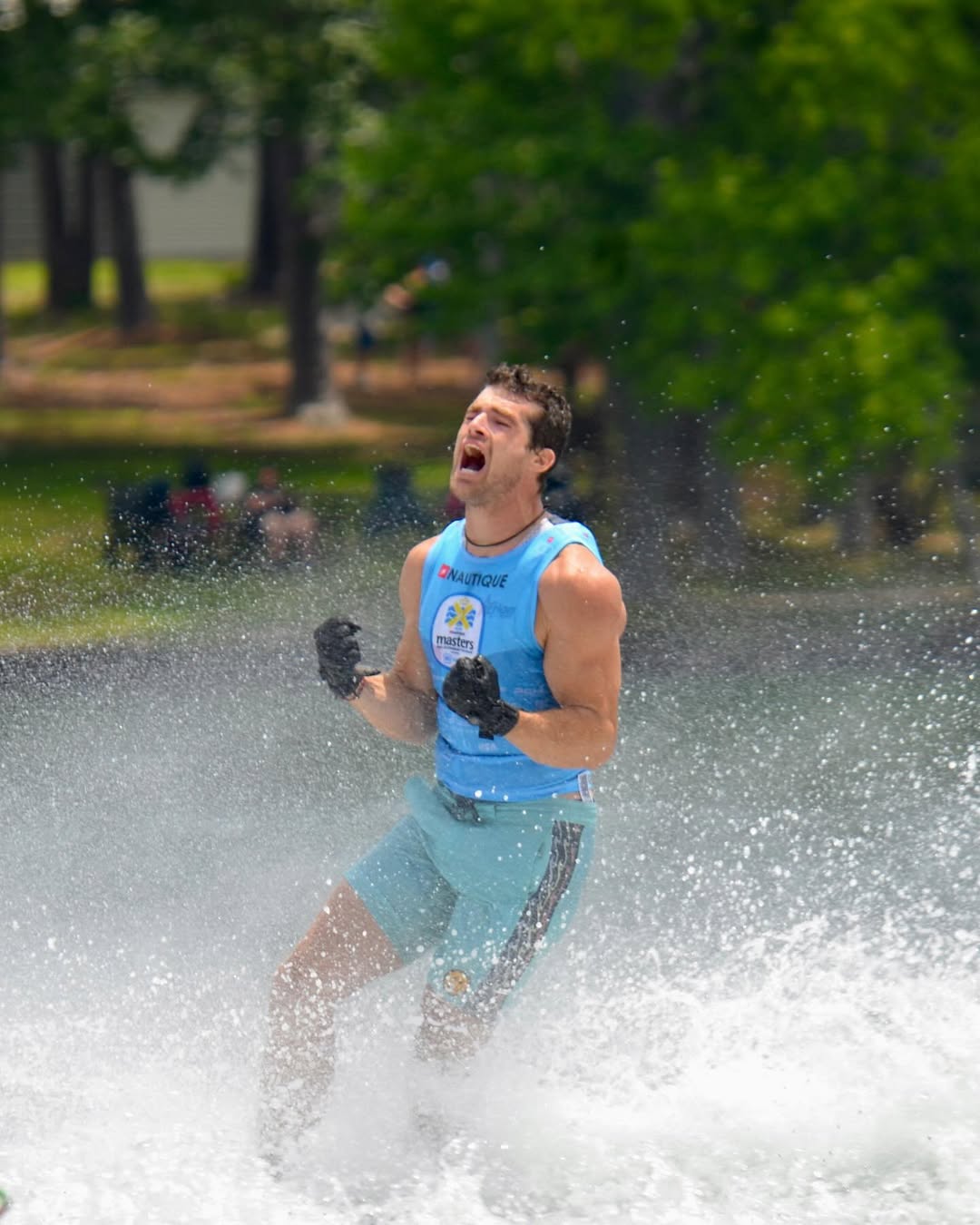
Now, back on Robin Lake, the fiery Brit skied like a man on a mission. Chasing a lead score of 2 @ 10.25m set by world record holder Nate Smith, Winter—last off the dock—threw himself outside of three ball for the win. His third Masters title. His sweetest yet.

“Probably the most emotional moment of my life,” Winter said. “So much self-doubt and fear I wouldn’t get back here over the last 10 months and 29 days.”

“I’ve won here before, but those meant nothing compared to this.”

In women’s jump, a Hanna Straltsova victory often feels inevitable in the post-Jacinta Carroll landscape. But this one felt anything but secure.

Americans Lauren Morgan and Brittany Greenwood Wharton came out swinging in prelims with 174- and 175-foot jumps, respectively—easily outdistancing Straltsova’s 169.

Then, skiing early in the finals, Straltsova posted 53.6 meters (176′). The door was open, but neither Morgan nor Wharton could capitalize.

“You are never prepared enough for the Masters,” shared a reflective Straltsova. “It shows you your weak points and teaches you lessons every time you come.”

Then came the grand finale.

Remember: Poland barely made the final, edging Louis Duplan-Fribourg by a single foot. First off the dock, he put any questions about his jump form to rest—launching a monster 70.1-meter (230′) leap to lay down a massive target.

The remaining finalists—Luca Rauchenwald, Igor Morozov, and Ryan Dodd—all charged hard at the lead. Poland watched nervously from the pavilion.

“Anticipation was 11/10,” he said. “Felt sick waiting for the results.”

Dodd, the world record holder and reigning world champion, came closest. But when the Canadian passed on his final attempt, Poland had his win—and a statement. It’s now been over a year since Dodd claimed a professional title, and the pressure is mounting ahead of his bid for an unprecedented sixth straight world championship.

By sunset, the story was clear. This wasn’t just another Masters. This was a turning point.

From milestone performances to long-awaited redemption, the 65th Masters was a showcase of resilience, risk, and razor-thin margins. And with the debut of the 2026 Ski Nautique onsite—complete with on-air walkthroughs—the event also hinted at what’s next.

For now, the numbers are in, the titles awarded, and the world’s best return to the road—leaving behind another unforgettable chapter on Robin Lake.

And the summer? It’s just getting started.

Introducing the All-New Ski Nautique

A New Ski Nautique Has Landed: End of an Era or Start of One?

News

A new Ski Nautique has landed. Is it the end of an era — or the start of one?

Introducing the All-New Ski Nautique

The Next Generation (image: Nautique)

By Jack Burden


After a cryptic teaser and months of whispered rumors, Nautique Boats today revealed the 2026 Ski Nautique — a redesigned, lighter-weight tournament towboat that promises flatter wakes, sharper responsiveness, and optimized performance across all three disciplines. It’s a bold new flagship for the brand, and one that likely signals the quiet retirement of the beloved 200 — a boat that, for over a decade, bridged the gap between elite competition and the everyday skier.

The new Ski Nautique, introduced Thursday, is billed by the company as “an evolution of a true icon.” Marketing materials highlight refined hull geometry, reengineered engine and propeller interactions, and integrated Zero-Off enhancements designed to maximize acceleration in jump, control in trick, and efficiency in slalom. The result, according to Nautique, is “naturally flatter wakes” and performance that “sets a new standard in three-event waterskiing.”

Technical specifications have been released, but how those changes translate on the water remains to be seen. Nautique has a track record of innovation — features such as the hydrogate, MicroTuners, and integrated ballast — but its last major redesign wasn’t universally embraced. With early impressions coming almost exclusively from sponsored athletes and insiders, objective feedback is still in short supply.

What the announcement didn’t include was a single mention of the 200 — the model that’s anchored Nautique’s lineup since 2010. Built on versatility and reliability rather than flash, the 200 earned its place in clubs, ski schools, and family garages around the world. Though Nautique has yet to confirm its future, there is widespread speculation that the 200 will be phased out as early as the 2026 model year, consolidating the company’s ski offerings into a single, high-end hull.

That would leave a noticeable gap. The 200, while never inexpensive, occupied a relative middle ground — priced below Malibu and MasterCraft for much of the last decade, and far cheaper than the current-generation Ski Nautique introduced in 2019. As that price gap widened, the 200 took on a new role: not just a classic, but a fallback option for skiers priced out of the top shelf. Despite being largely absent from tournaments in recent years, the 200 remains deeply relevant: three of the eight current world records were set behind it — as many as the outgoing Ski Nautique, and more than any of its competitors.

If rumors hold, the 2026 Ski Nautique may slot slightly below the current top-end MSRP — but still well above the 200. That could make it more appealing to price-conscious buyers at the elite level, though likely still out of reach for much of the grassroots scene the 200 quietly supported.

Whether the new model is a true leap forward or simply a refined refresh is a question that will be answered not by brochures, but by ski rides. For now, only a handful of insiders have had the chance — and most are under contract to sing it’s praises.

Update: “Drastically Better Wakes”: Pros Weigh In on the 2026 Ski Nautique

Still, this launch is more than a product release — it’s a clear statement of direction from a company continuing to invest in the future of tournament water skiing. The scope of R&D behind a new three-event hull signals a level of financial and engineering commitment rarely seen in niche sports.

While no public figures are available, it’s widely believed that Nautique invests more in tournament skiing than any other manufacturer. From supporting elite athletes to backing professional events and the IWWF, the company remains a central force in shaping the competitive landscape.

That next chapter begins in earnest this weekend. The new Ski Nautique is expected to appear at the Masters Water Ski & Wakeboard Tournament at Callaway Gardens, with on-water demos, detailed on-air walkthroughs, and early impressions likely featured throughout the webcast.

The 2026 Ski Nautique is slated to be available later this year. Pricing and final specifications are still to come.

Erika Lang sets a new pending world record of 11,450

Erika Lang Reclaims Edge in World Record Duel with Neilly Ross

News

Erika Lang reclaims edge in world record duel with Neilly Ross

Erika Lang sets a new pending world record of 11,450

Image: @shotbythomasgustafson

By Jack Burden


PANAMA CITY, Fla. — Erika Lang, the most dominant women’s tricker of the past decade, has once again scaled the sport’s highest peak. On Sunday, at the Florida Inboards Open at Ski Lake Jillian, Lang laid down an 11,450-point run—her best ever, and a new pending world record.

If ratified, the score would reclaim the world record from Canadian rival Neilly Ross, who currently holds the official mark at 11,430, approved last fall after a dizzying back-and-forth between the two that turned the record chase into a season-long thriller.

Lang’s latest score is the highest ever tricked by a woman, equaling her previous pending mark of 11,450 from Timber Cove last November, which was ultimately not ratified. While the point total matches her earlier attempt, the sequence was slightly different—subtle evidence of offseason refinement and relentless pursuit.

Erika Lang's pending world record trick run

Lang’s world record run

The Lang-Ross duel has breathed life into women’s tricks, a discipline that often struggles for visibility in a sport calendar dominated by slalom and jump. In an era where trickers can go entire seasons without meaningful prize money or true head-to-head battles, Lang and Ross have made record-breaking the main event.

Last fall, Ross snapped Lang’s eight-year reign as world record holder with an 11,380 at Okeeheelee. Lang responded seven days later in Texas with 11,450, a performance many believed had sealed her return to the top. But Ross struck back—double-tapping 11,430 in both rounds at Lake Ledbetter. That score was ratified. Lang’s was not.

Their duel has played out not on primetime broadcasts or in front of roaring crowds, but on quiet lakes, with just a camera, a few judges, and a tight circle of competitors. And yet, the skiing—like pirouettes on glass—has been nothing short of electric.

Ross’s rise has been more than just a challenge—it’s a shift. Young, fearless, and technically daring, she splits her six flips down the middle to perform a series of wake spins and ski line tricks with speed that’s redefining what’s possible. Her toe pass? Over 5,000 points—a rare feat for female skiers. She’s not following Lang’s footsteps—she’s forging her own path.

Lang, though, is far from fading. Since breaking her first world record in 2013, she’s extended the mark from just over 10,000 to a pending 11,450. Since the start of 2023, she’s won the world title, the Pan American Games, and 9 of 11 pro events, including this year’s Moomba Masters and Swiss Pro Tricks. She remains the only woman to score over 11,000 in professional competition.

Now, with her latest score under review by the International Waterski & Wakeboard Federation, Lang may finally reclaim the official record she first set more than a decade ago. Whether or not it’s ratified, she’s made a statement—and the timing couldn’t be sharper.

This coming weekend, Lang, Ross, and Anna Gay Hunter will go head-to-head at the U.S. Masters on Robin Lake, the richest trick skiing event of the year. It will mark the latest chapter in a rivalry that has defined women’s trick skiing for over a decade.

Between them, the trio has claimed 25 of the past 27 professional trick titles—a decade of dominance passed like a baton from one to the next and back again. There have been shifts in technique, peaks and valleys in form, and trick runs that redrew the boundaries of what’s possible. But the cast hasn’t changed.

And now, as Lang reasserts her hold on the highest score the sport has ever seen, the balance tips again. The story isn’t over. It’s just entering its next round.

Smoke on the Water

A New Nautique? Speculation Swirls Ahead of the Masters

Archived

A new Nautique? Speculation swirls ahead of the Masters

Smoke on the Water

Smoke on the Water

By Jack Burden


Something’s Coming. Maybe. Probably.

There’s been no press release, no teaser post, no flashy reveal. But in the murky world of online forums and dockside whispers, the chatter is getting harder to ignore: Nautique might be preparing to retire both the Ski Nautique and the 200 in favor of a single, consolidated tournament boat.

Update: A New Ski Nautique Has Landed: End of an Era or Start of One?

No one’s saying it outright. But a growing chorus of off-the-record comments, speculation, and enough smoke to signal a new Pope suggest that something is in the works. Rumor has it AWSA certification may already be complete. If true, that would mean production is well underway.

What this would mean for the world of waterskiing is unclear. The 200, released in 2010, became a staple at every level of the sport. Its successor, the 2019 Ski Nautique, brought a radically different hull and tech-forward redesign. But despite the newer hull’s credentials, the 200 never went away. For years now, two official “tournament boats” have coexisted on Nautique’s lineup like divorced parents sharing custody of Regionals.

A move to consolidate would make sense. Two molds, two marketing campaigns, two price lists—all for a niche sport with declining tournament participation. But while a unified boat might simplify things for the manufacturer, it’s less certain what it would do for skiers.

Especially when it comes to cost.

The pricing trajectory for tournament boats over the past few decades has been, frankly, astronomical. In 2000, a new Nautique cost around $32,000. By 2010, the 200 launched at roughly $59,000. Today, the Ski Nautique lists at over $170,000. Meanwhile, median household income has climbed by less than half that rate. The result is a widening affordability gap that’s pushed new boats out of reach for most ski clubs and families.

While by no means cheap, the 200 has consistently been the most affordable tournament boat on the market since the Ski Nautique leapfrogged it as their flagship model. It’s remained a favorite of ski clubs and programs precisely because it undercuts the higher-end offerings from MasterCraft and Malibu, both of which have largely mirrored the Ski Nautique’s price trajectory.

Whether this new boat—if it exists—will change that is anyone’s guess. Any kind of price cut seems unlikely. But with the Masters, Nautique’s flagship event, coming up later this month, all eyes will be on Callaway Gardens. Not just for the skiing.

It may be nothing. Or it may be the start of a new chapter for tournament water skiing.

Either way, people are talking.

Masters Waterski & Wakeboard Tournament qualification criteria continues to raise eyebrows

Masters Invites Finalized: So Why Are There Empty Spots?

News

Masters invites finalized: So why are there empty spots?

Masters Waterski & Wakeboard Tournament qualification criteria continues to raise eyebrows

Image: pinemountain.org

By Jack Burden


The second Masters Qualifier wrapped last weekend at Championship Ski Lake in Auburndale, Florida, sending a baker’s dozen of the sport’s top athletes to Callaway Gardens later this month. Yet despite the roster of world-class names advancing, quiet concerns about the qualification system continue to simmer.

Dane Mechler, Freddie Winter, Allie Nicholson, Alexandra Garcia, and Neilly Ross secured berths in slalom; Dorien Llewellyn, Adam Pickos, Kennedy Hansen, and Aliaksandra Danishueskaya punched their tickets in tricks; while Emile Ritter, Igor Morozov, Aaliyah Yoong Hanifah, and Valentina Gonzalez qualified in jump.

All elite skiers, all deserving. And yet, in four of the six events contested, the cut line was barely there.

In men’s tricks and women’s jump, every entrant advanced. In women’s slalom and men’s jump, all but one skier qualified. In some disciplines, simply paying the entry fee and showing up was enough to earn a Masters spot.

It’s an awkward look for a tournament that bills itself as “the most prestigious event of the year.” And it’s not a one-off—it reflects a recurring pattern within the current qualification system.

While Masters organizers have long prioritized a high standard of excellence, their bespoke and exacting qualification pathway has, perhaps unintentionally, increased the likelihood of unusually small fields and unclaimed invites—even in disciplines with deep talent pools.

By contrast, virtually every other professional tournament—including the growing slate of Waterski Pro Tour stops—leans on established systems like the Waterski Pro Tour standings, the IWWF performance-based ranking lists, or some combination of the two to shape fields. The Masters’ decision to chart its own course has left rosters thinner than the sport’s current depth suggests.

Nowhere is this more visible than in men’s tricks. Once considered a sleepy corner of tournament skiing, men’s tricks is now arguably the sport’s hottest discipline, thanks to a recent flurry of world record activity, rising prize purses, and a wave of emerging talent. Yet despite that momentum, the Masters field remains thin.

Stringent entry criteria for the qualifiers required male trickers to have averaged over 11,000 points in world ranking competition over the past 12 months—a benchmark met by only 12 skiers worldwide. Of those, four are still juniors; one, the defending champion Martin Labra, is injured; another, Danylo Filchenko, has rarely left Ukraine since Russia’s 2022 invasion; and one more, Martin Kolman, did not attend. The result: only seven eligible and willing competitors across two qualifiers, and at least one invite expected to go unclaimed.

For comparison, the recently concluded Swiss Pro Tricks tournament drew 16 male entrants—more than double the presumed Masters field—despite offering less than a third of the prize money. The appetite among athletes is clear; the bottleneck lies in the qualification process.

The Masters’ tightly gated system seems increasingly out of step with the sport’s evolving landscape. While trick skiing pushes forward—with new pro events in Morocco, Monaco, and Portugal, rising stars breaking records, and social media drawing fresh audiences—the Masters remains constrained by criteria that no longer fully reflect that growth.

The Masters still carries immense cachet. It boasts water skiing’s richest prize purse and an iconic venue that has crowned champions since 1959. But prestige, hard-earned, can be fragile. Keeping pace with the sport’s expanding depth will be key to preserving that legacy.