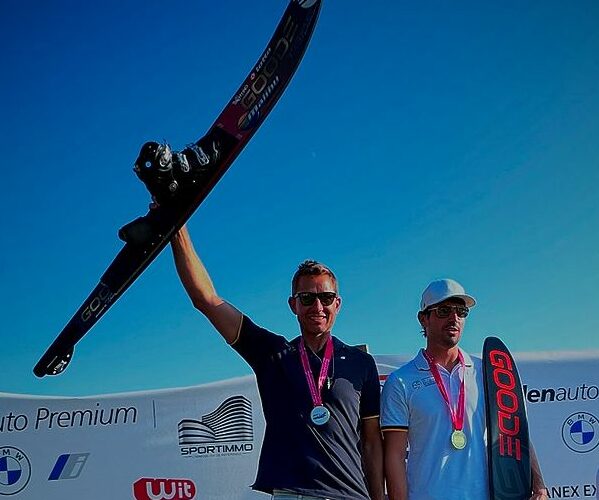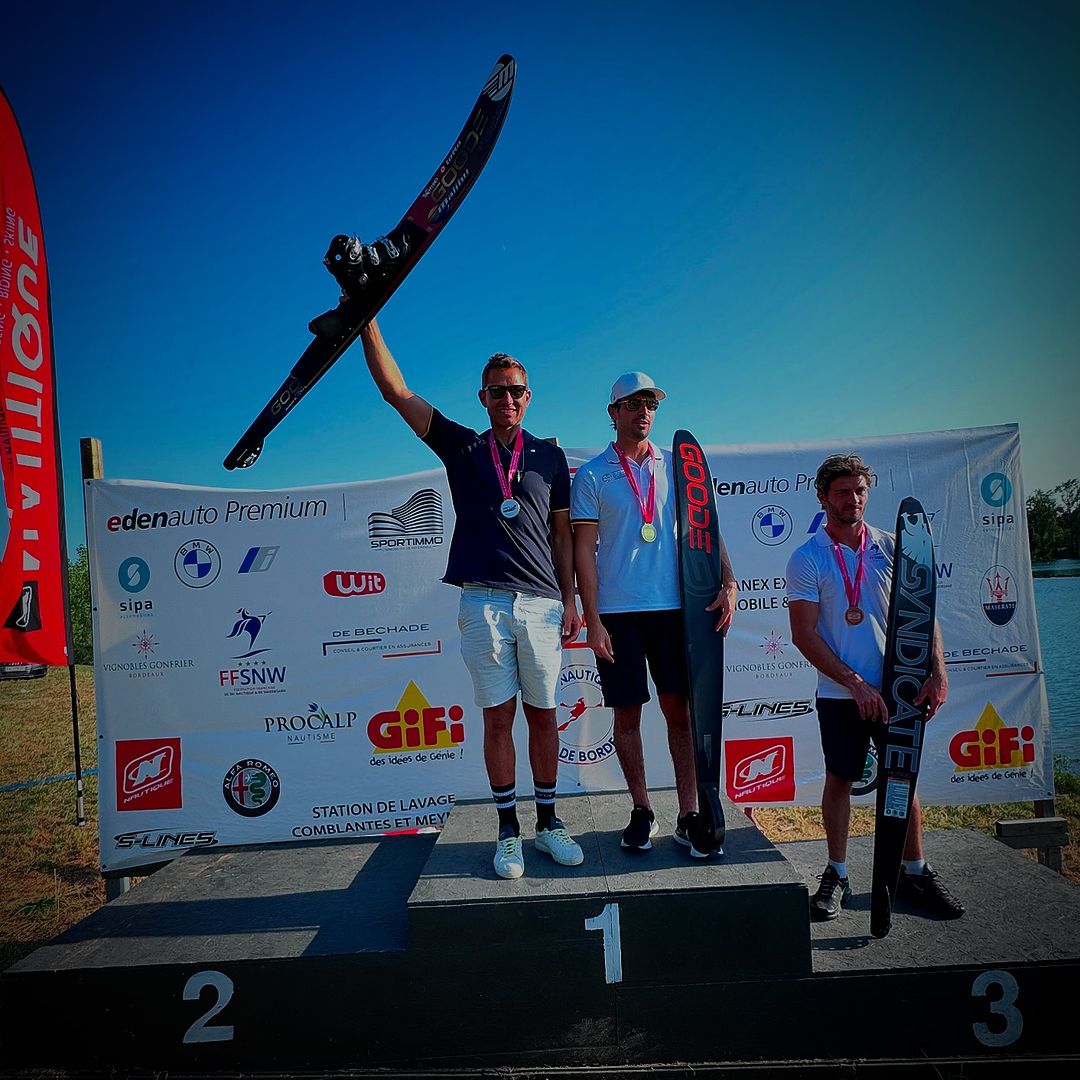
Ryan Dodd Recetto Pro Am

Six Takeaways From the European Leg of the 2026 Professional Water Ski Season

News

Six takeaways from the European leg of the 2026 professional water ski season
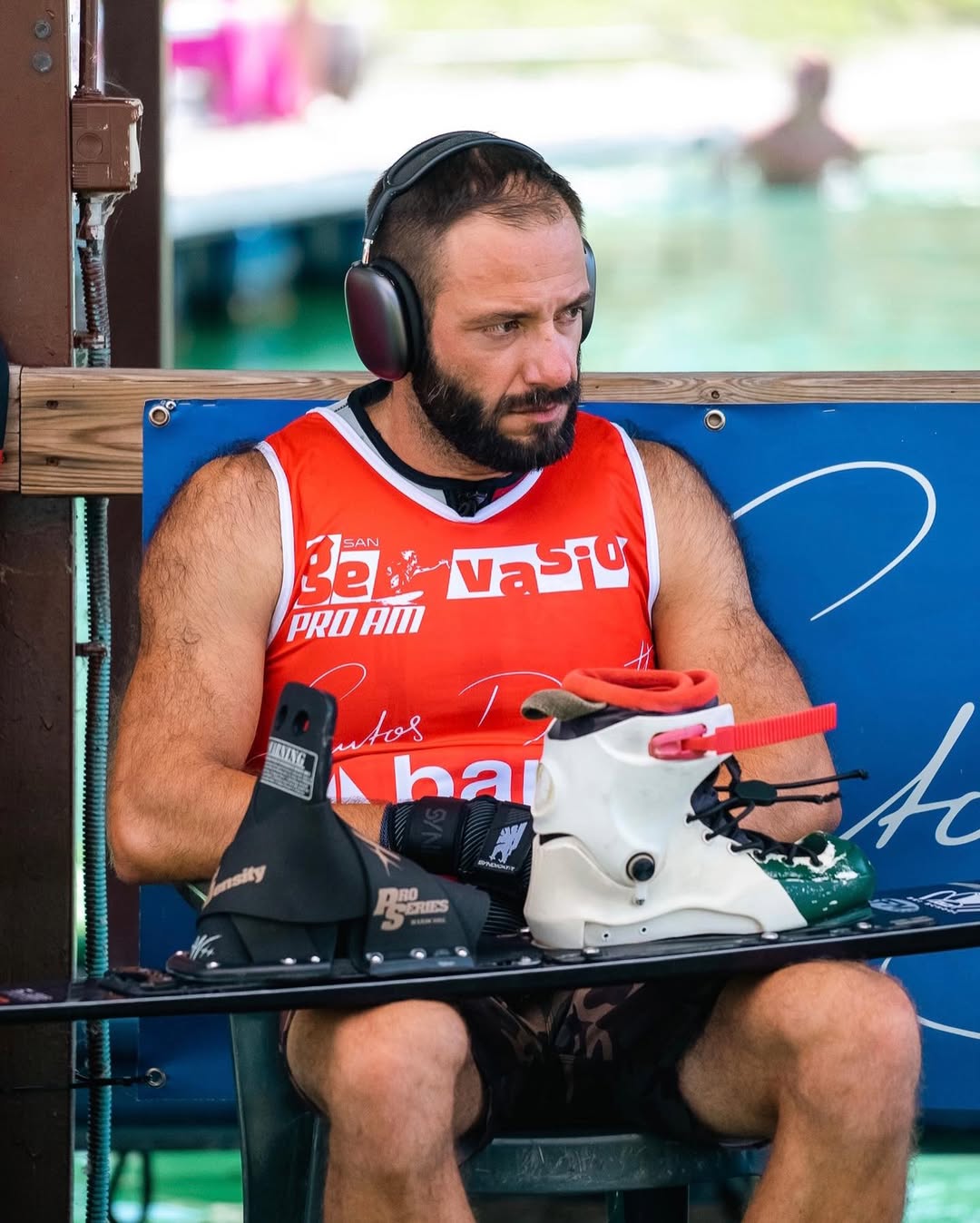
Ryan Dodd Recetto Pro Am

Image: @andrea_gilardi_fotografo

By Jack Burden


Five consecutive weekends. Five countries. Countless storylines.

From the tidal waters of Rabat, Morocco, to last weekend’s inaugural Recetto ProAm in Italy, the European leg of the 2026 professional water ski season has reshaped the outlook for the remainder of the year. With only the introductory Poti ProAm remaining in Europe later in the month, here are the biggest storylines to emerge from one of the busiest stretches of the professional calendar.

Charlie Ross is still the man to beat—but Freddie Winter has made it interesting

No athlete left Europe with a stronger grip on their discipline than Charlie Ross.

Ross won three consecutive events at Monaco, Fungliss and Botaski after opening the European swing with a runner-up finish to Freddie Winter in Morocco. His consistency throughout the season has been remarkable, and he remains comfortably atop the prize money standings.

Yet the final weekend in Italy suggested the battle may not be over.

Winter closed the European block with his third victory of the season—and arguably his most important, while Ross endured his least convincing tournament of the year, finishing sixth. Combined with Winter’s dramatic runoff victory over Ross in Rabat, the psychological momentum may have shifted slightly heading into the North American events.

Ross remains the favourite, but for the first time in months, the men’s slalom title race feels genuinely alive.

Jake Abelson and Patricio Font are taking men’s tricks to another level

Professional trick skiing has entered territory that seemed unimaginable only a year ago.

Jake Abelson won consecutive titles in Morocco and Spain while posting three pending world record performances in the span of two weekends. Even when he wasn’t breaking records, winning required scores that would have comfortably stood as world records at the beginning of 2025.

Perhaps just as significant has been the resurgence of Patricio Font.

After narrowly missing out to Abelson at the Royal Nautique Pro and producing 12,840 points without winning at Botaski, Font finally broke through at Recetto. Rather than a one-man show, the event has become a four-way arms race between Abelson, Font, Matias Gonzalez and Martin Labra, with world-record-level performances now expected almost every weekend.

A new generation has arrived in jump

The depth of emerging talent may be the biggest reason for optimism in the discipline.

Eighteen-year-old Tim Wild finished on the podium at both Botaski and Recetto while also establishing himself as one of the sport’s most versatile young athletes by competing across all three events.

In the women’s field, 18-year-old Maise Jacobsen claimed consecutive runner-up finishes behind Aliaksandra Danisheuskaya, confirming that her breakthrough is no longer a glimpse of future potential but present reality.

Neither teenager looks overawed by the professional stage.

Luca Rauchenwald has announced himself

While the teenage stars grabbed much of the attention, Luca Rauchenwald quietly produced one of the defining stories of the European swing.

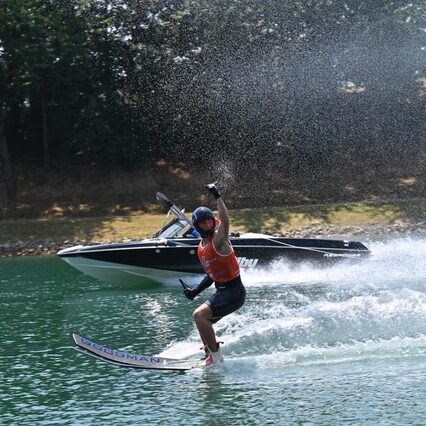
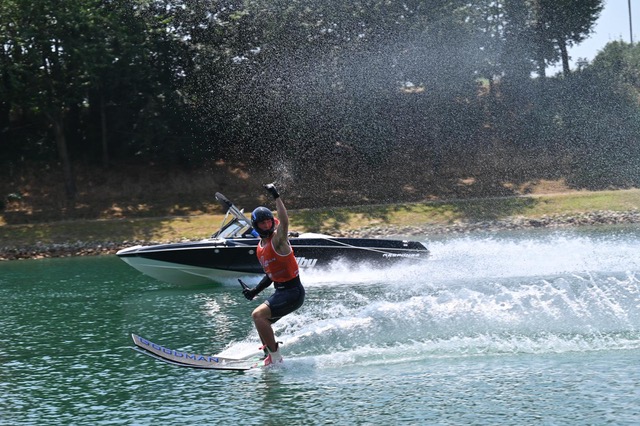
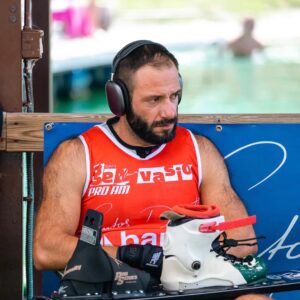
After finishing third at Botaski, the Austrian broke through for his maiden professional victory at Recetto, defeating a world-class field that included five-time world champion Ryan Dodd.

The victory was made even more memorable by the circumstances. Rauchenwald set a huge target, then watched as Dodd pushed to the limit trying to answer. The dramatic final-round battle captured exactly what makes professional jump skiing so compelling: established champions refusing to yield and emerging stars proving they belong.

“I’ve been chasing this win for a long time,” Rauchenwald said after the victory. “You never want to see somebody crash, especially not Ryan… but it’s awesome to have a guy like Ryan to compete with.”

European jump has long searched for fresh contenders. Rauchenwald’s breakthrough suggests another has arrived—and he may not be content stopping at one victory.

Dodd is not ready to step aside

Dodd opened the season by winning the Moomba Masters, reinforcing that even at 41 years old he remains one of the sport’s most dangerous competitors.

The European leg did not produce the victories he was chasing, but it did produce a reminder that the competitive fire remains intact. Third at Masters, fourth at Botaski, and runner-up at Recetto are respectable results by almost any standard, but by Dodd’s own lofty expectations they represent near misses rather than triumphs.

The defining moment came in the Recetto ProAm final.

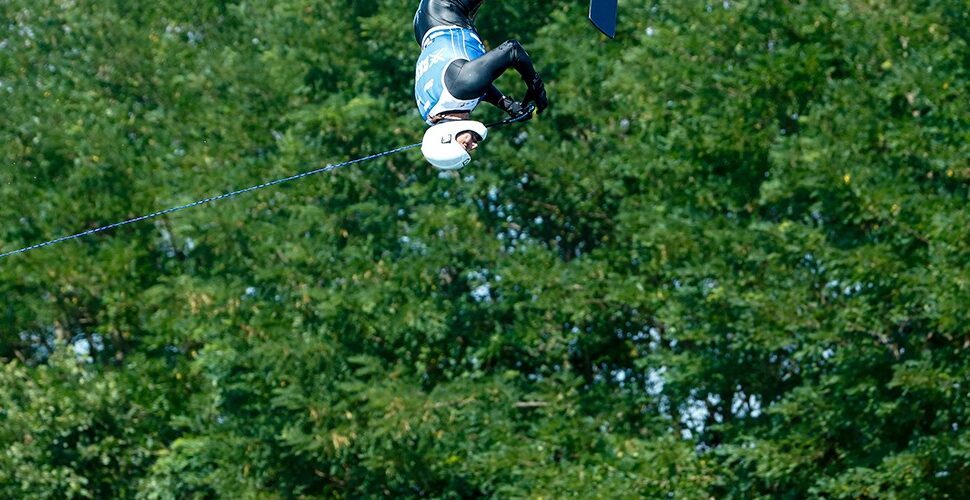
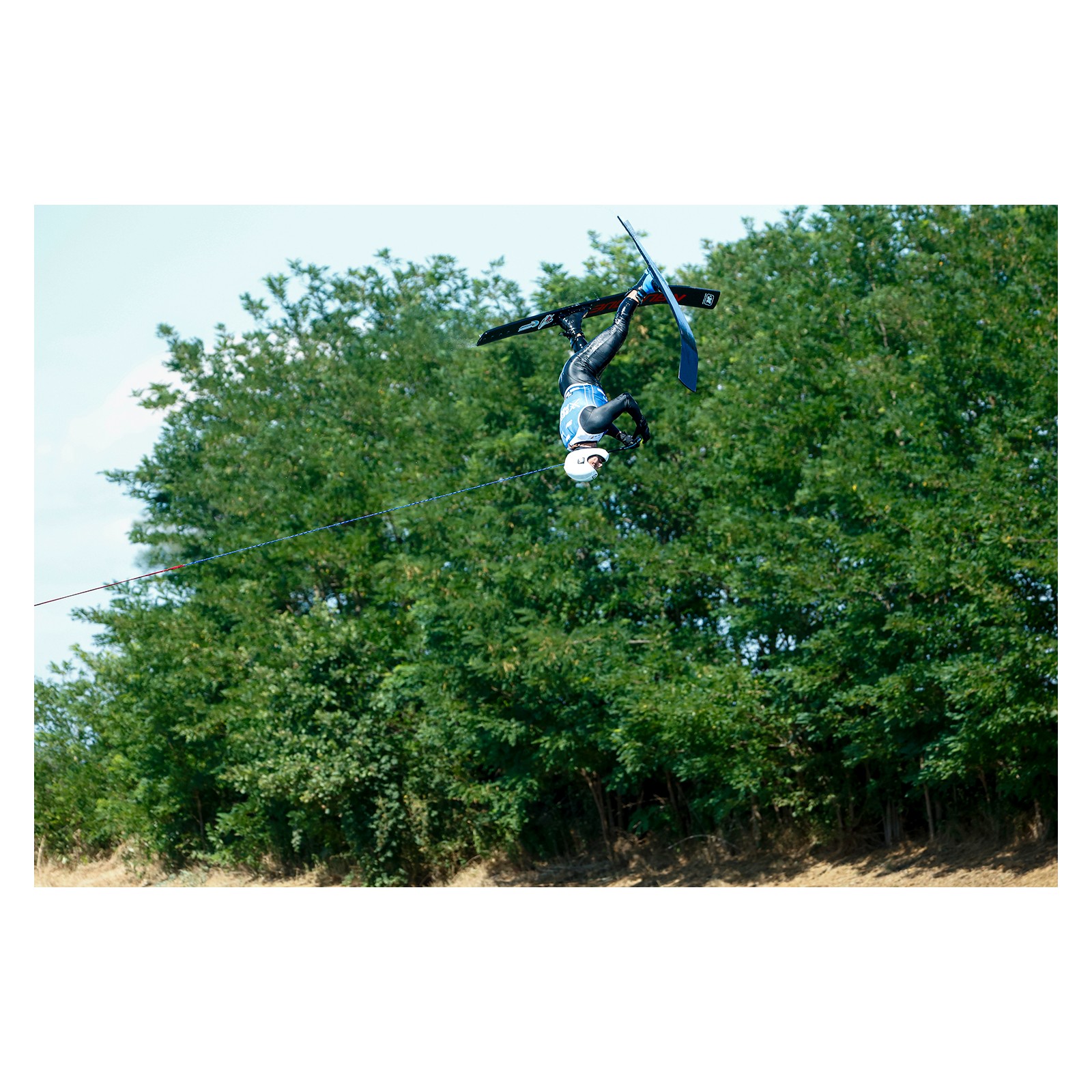
With Luca Rauchenwald setting the pace and chasing his maiden professional victory, Dodd responded by opening with a huge 70.2-metre jump. Searching for the distance needed to challenge Rauchenwald’s lead, Dodd went after an even bigger score on his final attempt. The result was a spectacular out-the-front—but also a reminder that Dodd remains willing to take the risks required to win.

“I don’t jump to win tournaments anymore. I jump to jump far,” While Dodd’s words suggested his motivation has evolved, his final jump attempt showed that the desire to win remains unchanged. When Rauchenwald put pressure on him, Dodd went hunting for the biggest jump of the day.

With a new generation beginning to emerge, the second half of the season may reveal whether Dodd can reassert himself or whether men’s jump is entering a changing of the guard.

Kennedy Hansen is becoming the sport’s ultimate all-rounder

Still in the early stages of her professional career, Hansen produced perhaps the most complete European campaign of any athlete, setting personal-best scores in all three disciplines while reaching the podium at least once in every event she attended.

In an era where professional skiing has become increasingly specialized, Hansen continues to stand apart. Her European campaign included four consecutive top-three placements in tricks, personal bests and top-five finishes in jump, and consecutive podiums in slalom at Botaski and Recetto.

The significance of her progress is not just the results—it is the rate of improvement. Hansen continues to raise her ceiling across every event, proving that her three-event ability is not simply a product of versatility, but of genuine world-class potential.

Now attention turns to the Overall discipline, where the WorldWaterSkiers Overall Tour begins this coming weekend. With overall combining the very skills Hansen has been refining throughout her young career, she enters the next phase of the season as the skier to beat.

Looking ahead

The European tour has left the professional season with more questions than answers.

Can Ross hold off a resurgent Winter? Will Abelson’s extraordinary record-breaking pace continue, or has Font rediscovered the form to stop him? Are Wild and Jacobsen already contenders rather than prospects? And can veterans such as Dodd halt the momentum of the next generation?

If the first half of 2026 has demonstrated anything, it’s that professional water skiing is entering a new era—one where established champions remain capable of brilliance, but the next generation is no longer waiting for its opportunity.
Matteo Luzzeri of Jolly Ski

Calendar Controversy: Why Europe’s Longest Running Pro Event Was Forced Out

Articles

Calendar Controversy: Why Europe’s Longest Running Pro Event Was Forced Out

Matteo Luzzeri of Jolly Ski

Image: @waterski_nation

By Jack Burden


For more than a decade, the San Gervasio ProAm has acted as a kind of gravitational centre for European professional slalom skiing — a fixed point on the calendar around which other events quietly arranged themselves.

In 2026, it disappears.

Organizers confirmed this week that the San Gervasio ProAm — Europe’s longest-running active professional tournament — will not take place after the Italian Federation declined to sanction the event on its traditional July 3–5 weekend. That slot has instead been awarded to the inaugural Recetto ProAm, a new tournament at the site of the 2025 World Championships.

The decision abruptly halts one of the sport’s most stable modern traditions.

First held in 2014, San Gervasio has staged 11 editions, distributed more than $200,000 in prize money, and attracted the world’s best slalom skiers each summer. Only the pandemic-disrupted 2020 season broke its run.

In a European landscape where professional tournaments often appear and disappear within a few seasons, its longevity has become unusual. The next closest active event — the Botaski ProAm — has staged six elite-level editions since 2018.

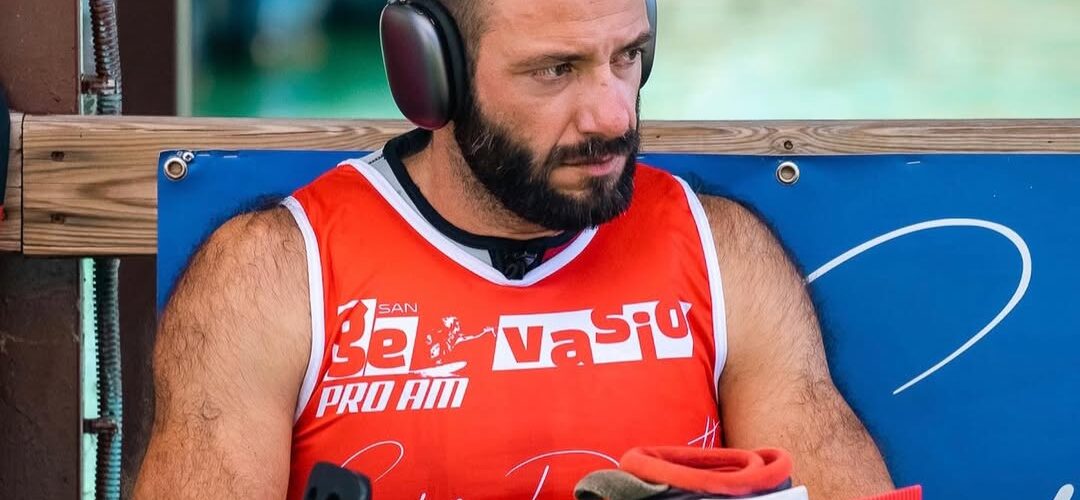
For founder and organizer Matteo Luzzeri, the cancellation ultimately came down to a single issue: dates.

“We were informed by the Italian Federation that we could not organize the San Gervasio Pro Am on our traditional weekend of 3–5 July,” he said in a statement released by Jolly Ski. “We evaluated alternative dates, but none would have ensured proper participation from professional and amateur skiers alike.”

The federation offered July 10–12 instead — a solution Luzzeri says was unworkable due to clashes with several European national championships.

“Amateur participation is not an add-on,” he said. “It is a core pillar of the ProAm format — for the atmosphere, and for the financial sustainability of the event.”

A crowded July

Ironically, the dispute emerged during what initially looked like a sign of strength for Italian water skiing.

Early versions of the 2026 calendar showed three professional tournaments scheduled within nine days: San Gervasio on July 3–5, the PKB ProAm in Ivrea shortly after, and the new Recetto ProAm the following weekend.

For traveling athletes, it promised a lucrative European tour block.

“It’s unbelievable,” Luzzeri exclaimed on the TWBC podcast in February, when the sequence still appeared intact. “To have three tournaments in Italy, on top of everything else happening in Europe — it speaks to the quality of organization here.”

But the excitement did not last.

Records show San Gervasio applied for the July 3–5 dates first. Recetto subsequently submitted an application for July 10–12 before later modifying its request to the same early-July weekend.

“We were asked over the phone to renounce our date because of a conflict with a WWS event on July 10–11,” he said. Recetto’s organizers hoped to expand their event beyond slalom to include trick and jump, potentially overlapping with the WWS Overall Tour’s Granite Cup in New Hampshire.

The proposed solution was straightforward in the Federation’s mind: San Gervasio would move.

Luzzeri declined.

“We explained that July 10–12 would not work for us due to conflicts with amateur competitions and chose to stand by our original date.”

Without federation sanction, however, the event could not proceed.

Who really runs the calendar?

The episode highlights the complicated governance structure of professional water skiing.

While San Gervasio was part of the IWWF-affiliated Waterski Pro Tour, which gives priority to existing events, the authority to sanction competitions ultimately rests with national federations.

“The Pro Tour can decide whether to include an event,” Luzzeri said. “But first the tournament must be sanctioned by the national federation.”

In practice, this means the Pro Tour can shape rankings and visibility — but not guarantee that an event takes place.

The situation also raises a more delicate structural question.

The Recetto venue is operated by FISSW Servizi, a non-profit organization wholly owned by the Italian Federation — the same body responsible for approving the national calendar.

In Luzzeri’s view, that dual role created an uneven playing field.

“The main issue revolves around FISSW being the organizer of a Pro Tournament and at the same time the entity that approves events,” he said. “They enacted a power grab by sidelining us and forcefully grabbing our date.”

Tradition versus scale

Not everyone will interpret the decision the same way.

San Gervasio offers history and consistency. Recetto is expected to offer scale — more than doubling the available prize money by matching San Gervasio’s slalom purse and adding roughly $30,000 across trick and jump divisions.

In a crowded calendar, there is a reasonable argument to be made that larger multi-event competitions deserve priority.

Yet the broader context suggests a deeper structural tension.

In 2026, elite tournaments will operate across three separate circuits: the Waterski Pro Tour, the WWS Overall Tour, and the new Nautique Water Ski World Series. Each creates opportunity — and scheduling friction.

At one point this winter, a provisional schedule showed as many as 12 professional events worldwide, nine of them in Europe or Africa, packed into roughly six weeks across June and July.

Fellow organizer Francisco Rodrigues, whose Portugal Pro will also sit out the 2026 season, believes the sport may be reaching a breaking point.

“It makes absolutely no sense to have three professional tours in a shrinking sport,” he wrote online. “Sooner or later the calendar will become a nightmare for organizers — and especially for the athletes.”

It is a striking warning — yet one that feels almost unthinkable when viewed through the lens of where professional skiing was a decade ago.

There is a popular narrative that San Gervasio “brought professional skiing back to Europe.” That is slightly romanticized. When the event debuted in 2014, it was one of four professional tournaments on the continent that year — though notably the only one featuring slalom.

Still, its timing mattered.

The early 2010s were a fragile period for European pro skiing, with limited prize money and only sporadic elite events. San Gervasio did not revive the circuit on its own — but it helped stabilize it. Over the next decade, more competitions filled the calendar around it.

In a sense, the current conflict is a by-product of that very growth.

A pause — not an ending

For Luzzeri, the impact is both logistical and personal.

Much of the preparation for 2026 had already been completed.

“Most of it,” he said. “Sponsors were largely secured. Skiers were already asking about entries. We had even declined ski-school bookings for that period.”

The goal now is recovery.

“Our priority is to create the conditions for a proper return in 2027.”

For an event that became a fixture of the European summer, the hope is that this year’s absence proves temporary.

But the questions raised by its cancellation are likely to linger.

As professional water skiing expands — and fragments — who ultimately decides where, and when, the sport’s biggest stages are built?

Correction: A previous version of this article stated that the Botaski ProAm had staged five editions. It has, in fact, held six editions with elite status, along with several additional years featuring Big Dawg cash-prize competition.

We are deeply saddened to hear of the death of Aubrey Sheena

Remembering Aubrey Sheena | IWWF

Repost

Remembering Aubrey Sheena

We are deeply saddened to hear of the death of Aubrey Sheena

Image: IWWF

IWWF


Today, our sport mourns the passing of Aubrey Sheena,  a remarkable leader, mentor, and friend. Few individuals have shaped the world of water skiing with such enduring dedication, wisdom, and integrity. For more than half a century, Aubrey served our community with unwavering commitment, guiding its evolution with both passion and an unmatched sense of responsibility.

Aubrey’s journey in water skiing began in the 1950s at the historic Ruislip Water Ski Club, where he first took to the water as an enthusiastic young skier. His dedication and skill led him to represent Great Britain throughout the 1960s, laying the foundation for a lifetime of service to the sport he loved.

Professionally a Chartered Accountant, Aubrey quickly became the trusted guardian of financial stewardship within the sport. He served the British Federation multiple times as Treasurer, and his colleagues recognized his leadership by electing him President for four years. His influence extended far beyond titles. Aubrey spent over four decades as a guiding member of the federation’s management committee, offering vision, stability, and steadfast commitment.

In 1984, Aubrey was elected President of the IWSF European, African & Middle Eastern (EAME ) (Group II), beginning a remarkable 14-year tenure. Under his leadership, the region flourished. Aubrey fostered not only fiscal soundness but also a genuine spirit of unity and friendship among nations. A legacy that continues to define the region today.

Simultaneously serving as EAME President and a member of the IWSF Executive Board, Aubrey accepted the newly created role of IWSF Treasurer, a position he held with distinction until 2002. Even after stepping down, Aubrey continued to share his invaluable business insight, always ready to help strengthen the sport at every level.

In 2007, we proudly celebrated his lifelong contributions with his induction into the International Hall of Fame,  a fitting honour for one of water skiing’s most dedicated volunteers, and a man whose quiet strength and generosity left an extraordinary mark on our community.

Eight months ago, Aubrey experienced the profound loss of his beloved wife Arlette, who had always been a constant pillar of support throughout his decades of service to water skiing. Today, we also honour her memory and the partnership that helped shape so much of Aubrey’s legacy. As we mourn his passing, our deepest sympathies go out to his children and grandchildren.

In keeping with Jewish tradition, Aubrey’s funeral was held today, marking his peaceful farewell and the beginning of a period of remembrance for all who knew and admired him.

Today, as we remember Aubrey Sheena, we honour not only the roles he held, but the spirit with which he served; calm, principled, thoughtful, and endlessly devoted. His legacy will continue to inspire future generations of athletes, volunteers, and leaders.

Aubrey’s impact on our sport is immeasurable. His friendship, wisdom, and leadership will be deeply missed and forever remembered.

May he rest in peace.

Golden Lake Ski Club in Poti Georgia

Crumbling Concrete, Pristine Waters: Pro Tour Lands in Georgia’s Forgotten Ski Mecca

Media

Crumbling concrete, pristine waters: Pro Tour lands in Georgia’s forgotten ski Mecca

Golden Lake Ski Club in Poti Georgia

Image: TWBC

By Jack Burden


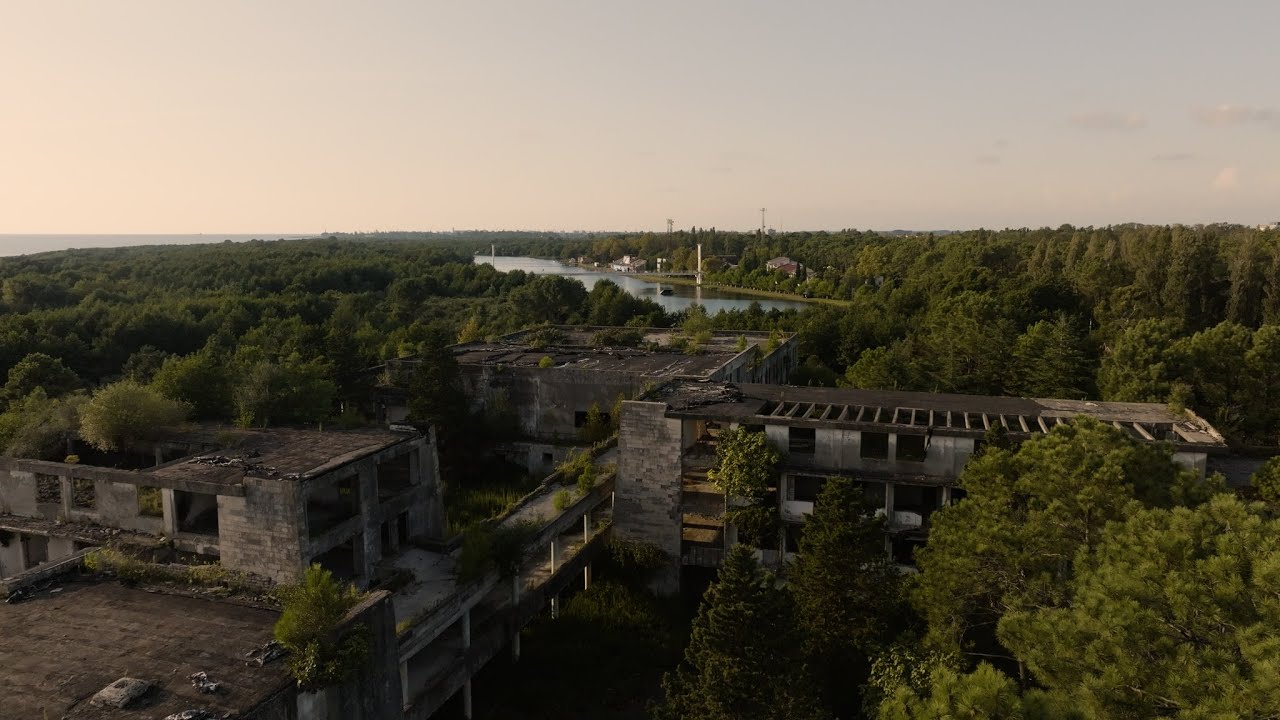
The Waterski Pro Tour lands in Georgia this weekend, bringing world-class skiing to Poti — a city steeped in history, now staging its sporting revival on the Black Sea. Golden Lake, surrounded by the crumbling concrete shells of a bygone empire, will host slalom and jump finals under the lights on TWBC.

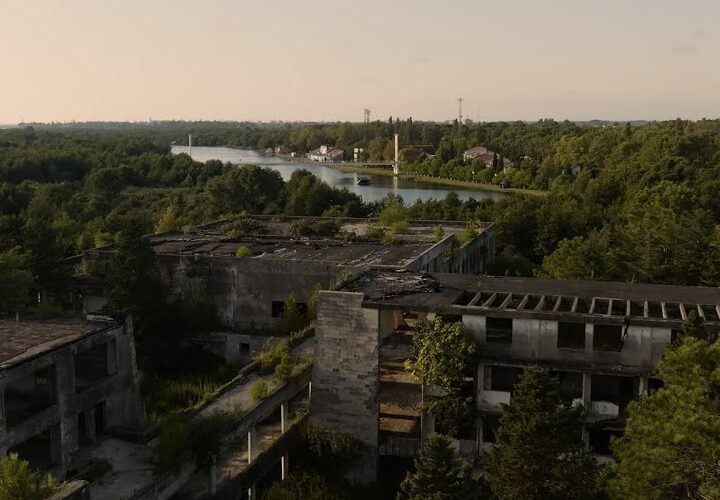
Just two hours inland lies Gori, birthplace of Josef Stalin, and Poti itself was once a Soviet naval hub before years of neglect left its infrastructure to rot. Today, the aerial view looks like something from a post-apocalyptic film: vegetation reclaiming vast concrete blocks, with a pristine waterski lake cutting through the middle.

“The city of Poti, it was a cradle of water skiing,” said Mikheil Gioradze, the tournament’s executive director. “The sport in this country started from right here. People around here consider water skiing almost part of their identity.”

He didn’t shy from the region’s turbulent history. “As it happened in all the countries of the former Soviet Union, after the collapse of that evil empire the countries went through very hard times. Everything went down, nobody was looking after this place. And here we are today, trying to revive it… to bring this historical place and this sport back to life.”

Gioradze calls this first Poti Pro the beginning of a larger rebirth: “We really want this place back on the sports map of the world, and we very much hope this Pro Tour will be the start of a new era.”

Fifteen skiers have made the journey to Golden Lake despite a modest prize purse and a clash with the WWS Overall Tour in Austria. Italy’s Thomas Degasperi and Brando Caruso headline men’s slalom, while New Zealand’s Jamie Metcalfe and Ukraine’s Danylo Filchenko bring international firepower to women’s slalom and men’s jump.

For Poti, and for water skiing, the symbolism is undeniable: a sport nearly forgotten here is rising again, in Stalin’s homeland, from the shadows of the Soviet past.

12 times European & Africa Champion.

44 and Still on Top: Degasperi’s Record-Breaking European Win

News

44 and still on top: Degasperi’s record-breaking European win

12 times European & Africa Champion.

Image: @this_is_tgas

By Jack Burden


At 44 years old, Thomas Degasperi is still rewriting water skiing’s record books. Over the weekend, the Italian captured his 12th European & Africa Slalom Championship—his sixth consecutive—cementing his place as one of the sport’s enduring greats.

“12 times European & Africa Champion. No words,” Degasperi posted afterward.

With the win, Degasperi moves into second all-time for most European titles in a single discipline, trailing only Patrice Martin’s 15 trick titles. He also climbs to 10th on the all-time titles list, but holds the record for the most titles by a single-event specialist. His 12 slalom crowns are more than double the total of the next closest men’s champions—Martin and Roby Zucchi—who each own six.

The latest triumph comes in the middle of another age-defying season. Degasperi currently sits third on the Waterski Pro Tour leaderboard after a string of podiums and a home-soil victory at July’s San Gervasio Pro Am. Only tour leader Freddie Winter has stood on more professional podiums in 2025 than the ever-present Italian.

A two-time world champion and five-time worlds medalist, Degasperi now turns his focus to the World Championships later this month, where he will once again ski in front of a home crowd.

In the European final, Degasperi held off a stacked field that included Sacha Descuns, Brando Caruso, and Tim Tornquist to extend his continental reign.

Other champions crowned in the tournament included Ukraine’s Danylo Filchenko, who took gold in both tricks and overall—mirrored on the women’s side by new mother Giannina Bonnemann Mechler, also winning tricks and overall. Additional titles went to Katerina Vrabcova, Luca Rauchenwald, and Jutta Menestrina.

Oscar Domino jumps at the 20th International San Gervasio

Jolly Ski Celebrates 20 Years of the International San Gervasio

Media

Jolly Ski celebrates 20 years of the International San Gervasio

Oscar Domino jumps at the 20th International San Gervasio

Oscar Domino of Denmark jumps during the XX International San Gervasio

By Michela Luzzeri

Jolly Ski


SAN GERVASIO, ITALY — From June 20th to 22nd, the 20th edition of the International San Gervasio took place at Jolly Ski in San Gervasio Bresciano. This historic three-event tournament (slalom, tricks, and jump) has been attracting young talent from across Europe—and beyond—for two decades. 62 athletes from 10 different countries competed in a weekend full of excitement and unforgettable performances.

As tradition goes, the first day of the tournament concluded with the awarding of the Trofeo Josè, given to the junior slalom skier who comes closest to the Italian National in their age group’s. This year’s sixth edition of the trophy went to U14 German skier Maja Leonhardt, who scored an excellent 1@12m. During the awards ceremony, we also celebrated the 20th anniversary of the event with a toast and refreshments, joined by athletes, coaches, officials, and friends who’ve been part of this journey.

Among the standout performances, Austria’s Lili Steiner impressed with a 47-meter jump, confirming her status as one of the top contenders for the upcoming U21 World Championships in Canada. Austria showed up strong this year, having selected the International San Gervasio as one of its official qualifiers for the national youth team ahead of the European Championships.

Many athletes set new personal bests. Among them was local athlete from Alfianello, Edoardo La Malfa, who scored a personal best in tricks (8120 points) and a new overall personal best, thanks to a strong slalom score of 1.5@11.25m and a 55.5m jump.

One of the most emotional moments came from Ukrainian athlete Mykhailo Mykhailichenko, who has found a second skiing home in Italy since the beginning of the war. At just 15 years old, he delivered an outstanding slalom performance with 1@10.75m.

Oscar Domino of Denmark also celebrated a major milestone by qualifying for the U21 World Championships with a new personal best of 54.9m jump. Another strong U21 Worlds prospect is hometown skier Florian Parth, who showed great form with 5.5@10.75m. 

Last but not least, promising signs from the Italian National Team: both Matteo Luzzeri and Nicholas Benatti showed grit and determination, bouncing back after injury-plagued seasons in 2024. The road to the Open Worlds is officially underway!

11 times and 5 times back to back champion of Europe

Degasperi Secures 11th European Championship in Dramatic Fashion

News

Thomas Degasperi secures 11th European Championship in dramatic fashion

11 times and 5 times back to back champion of Europe

Image: @this_is_tgas

By Jack Burden


The 2024 European Water Ski Championships, the world’s longest-running international water ski tournament, delivered yet another chapter of thrilling competition. Held annually since 1947, this prestigious event has a rich legacy, drawing Europe’s finest competitors, particularly from federations with strong government backing. The latest edition was no exception, featuring standout performances from past and present World Champions, including Louis Duplan-Fribourg, Manon Costard, Martin Kolman, and Elena Thomsen.

However, the highlight of the tournament was undoubtedly the men’s slalom event, which culminated in a dramatic finish between two Italian skiers. The field was stacked with Waterski Pro Tour regulars, including the formidable 41-off club member Sacha Descuns. But it was the Italian contingent, with veteran Thomas Degasperi and rising star Brando Caruso, who stole the spotlight.

In a gripping showdown, Degasperi and Caruso both scored 3@10.25m (41′ off), forcing a runoff. The two teammates navigated the 10.75m (39.5′ off) course with precision, tying again at three buoys—not just once, but twice. In a third runoff, the pair remained locked at two buoys, showcasing their incredible consistency in running their fourth 10.75m of the day. Exhausted and running out of time to conclude the event, Degasperi and Caruso agreed to share the European title, a fitting end to an inseparable battle.

Reflecting on the event, Caruso expressed his excitement: “It was a great tournament, it’s always a battle. Last year we had a huge battle, so it’s a pleasure to share the podium with my teammate and to be here and put up big scores.”

Degasperi, too, was pleased with the outcome: “It was a battle with three runoffs; it was a lot of fun and very challenging. He’s a great competitor, so I’m very happy to share the podium with him.”

For Caruso, this title marks his first European Championship, while for Degasperi, it’s his fifth consecutive win since 2019 and his 11th overall. His impressive tally places him second only to Patrice Martin, who holds the record for the most European Championships in a single discipline, with 15 trick titles.

At 43, Degasperi remains in incredible form, currently sitting in 6th place on the Waterski Pro Tour leaderboard at the halfway point of the season. His latest triumph further cements his status as one of the sport’s all-time greats.

Mike Hazelwood European Water Ski Champion

Quiz: Most Consecutive European Men’s Titles

Quizzes

Quiz: Most consecutive European men’s titles

Mike Hazelwood European Water Ski Champion

Image: Wikimedia Commons

By RTB


4 minute play

In this quiz, you have to name the male skiers with the most consecutive European titles of all time.

The list contains 18 skiers, all of whom have won at least three consecutive European championships. One of England’s most dominant skiers sits atop this list with an eight-year streak in overall. We have mentioned their country, the event and years of their consecutive titles.