
After a Lost Year, Martin Labra’s Long Road Leads Back to Moomba
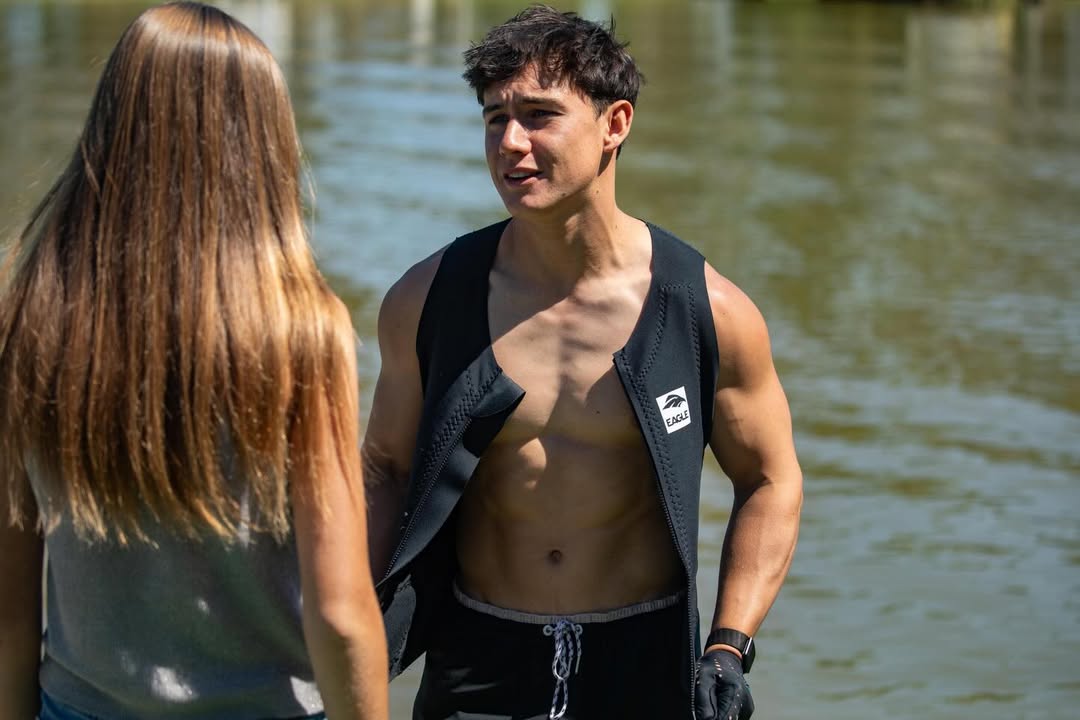
Image: @tiaremirandaphotography
By Jack Burden
For the past 12 months, Martin Labra’s world shrank to rehab rooms, gym sessions, and the distant whine of boats he could hear—but not chase—on the lake outside his home. Next week in Melbourne, the Chilean phenom finally gets it back.
After a knee injury forced him out of competition in early 2025, Labra has quietly rebuilt his form across record tournaments in Chile, posting multiple scores back over 12,000 points, including an equal personal best of 12,590 — the highest trick score recorded anywhere this year. Now the 19-year-old returns to the professional stage at the Moomba Masters, entered in both tricks and slalom and slated to appear earlier in the week in the event’s inaugural Under-21 competition.
It is a compelling return for one of the sport’s most promising young athletes, with the coliseum-like atmosphere of the Yarra River providing a potentially blockbuster backdrop for Labra’s comeback arc.
Labra had been a name to watch for several years — the most decorated skier in the history of the Under-17 World Championships, his four gold medals unmatched on the men’s side. But in 2024 he truly announced himself to the water ski world with a breakout season. Labra captured his first professional title at the U.S. Masters, then added another at the Botaski ProAm later that summer.
It wasn’t just the hardware. It was the composure — the unusual calm of a teenager skiing with the tactical patience of a veteran. Trick specialists took notice when Labra unveiled a new trick live in professional competition and reset benchmarks for the highest-scoring toe pass, pushing himself into the rarefied 12,500-point club and into quiet world-record conversations.
Speaking last July on the Chilean podcast Escala del 1 al 10, Labra described the Masters victory as one of the defining moments of his life.
“The Masters was a very, very beautiful moment and something I’ll never forget, I think, for the rest of my life,” he said.
But Labra is not a one-discipline curiosity. While tricks remain his professional calling card, his rapid rise in jump and overall — where he ranked sixth in the world pre-injury — signaled broader ambitions. He closed his 2024 campaign with two finals appearances on the WWS Overall Tour, the résumé of an athlete expanding faster than most expected.
Then the trajectory snapped.
This time last year, Labra was riding the momentum of his breakout season. The calendar ahead was crowded: multiple professional stops, an Under-21 World Championships where he entered as favorite in both jump and overall, and his first Open World Championships with a credible shot at the title.
What followed was a familiar but still brutal reminder of elite sport’s fragility.
In training the week before the 2025 Moomba Masters, Labra’s season unraveled in an instant.
“It happened on February 27th… I fell jumping… my knee went inwards and I tore my cruciate ligament,” he said. “Definitely one of the hardest moments, I think, in my sporting career.”
The timing made it sting more.
“I think it hit me very hard, coming from such a good year as 2024,” Labra admitted.
Surgery followed. Then the long, quiet work of return.
Physically, the roadmap was straightforward. Mentally, it was not.
“I live by the lake, I hear the boats all day long,” Labra said. “Not being able to go to the lake… was getting me down, because I love being at the lake. I love this world and the lake life.”
In the early weeks after surgery, he relocated north to, in his words, “clear my head a little from all the bad things I was going through.” The reset helped. So did the infrastructure around him.
Few athletes are better resourced for rehabilitation. His father is a physical therapist who guided the early recovery phases. His mother, a Chilean representative and Pan American Games field hockey medalist, understands elite-sport pressure. And his stepfather — trailblazing Chilean professional jumper Rodrigo Miranda — knows exactly what it takes to rebuild a body and a season.
“Paso a paso,” Miranda posted — step by step. A mantra that has quietly defined Labra’s year.
For all the physical rebuilding, the more revealing work has been internal. Labra repeatedly circles back to the influence of his family in keeping his rapid rise in perspective.
“My family… that support I have from them is unconditional,” he said. “That’s what helps me stay grounded… because in the end, I’m just an ordinary person.”
The injury also created something elite athletes rarely get: time to recalibrate. Unlike many of his contemporaries, Labra had already chosen to remain in Chile rather than enter the U.S. collegiate system — a decision that, in hindsight, gave him unusual flexibility during rehabilitation.
“I think… being able to do your sport at high performance and study at a very good university, it was the best decision I could have made,” he said.
With competition temporarily removed, Labra leaned into structure. Gym sessions multiplied. University life became a second arena of focus. The routine, he admits, was not accidental.
“Now I try… to focus on recovery, on the gym, on studying,” he said. “I feel like I’ve also improved outside of it.”
There is a quiet maturity in how he frames the lost season — not as empty time, but as reclaimed margin.
“I’m taking advantage of this injury to do well with university,” Labra said. “If I had been competing, I could have traveled more and had less time… but now I can stay more up to date and get to know my friends and classmates better.”
That perspective was not formed in isolation. Labra points back to 2022 — a season that fell short of his own expectations — as an earlier inflection point.
“I think those were the most difficult moments of my career,” he said of that year’s struggles.
What followed was a deeper investment in the mental side of performance, including ongoing work with a sports psychologist, who remains part of Labra’s inner circle.
“He’s helped me a lot… especially in these difficult times,” Labra said.
If there is a defining thread in Labra’s young career, it may be an unusual comfort with the uncomfortable — the moments where momentum stalls and most athletes tighten.
“I love being under pressure,” he said. “The more pressure, the better for me.”
Melbourne will test that claim immediately.
His comeback event features one of the deepest men’s trick fields assembled: reigning world champion Matias Gonzalez, world record holder and defending Moomba champion Jake Abelson, former world champions Patricio Font and Dorien Llewellyn, plus the ever-dangerous Joel Poland.
There will be no gentle runway back.
Early signs out of Chile have been quietly encouraging — not just flashes of the old Labra, but a slightly more measured version. Training alongside the sport’s elite at the now-informal “trick camp,” he has worked methodically toward peak form.
As recently as November, his public tone was cautious: “Slowly getting back to it…”
Now the scores — and the body language — point toward readiness.
Even so, Labra frames the comeback with characteristic restraint. Asked what advice he would offer athletes facing setbacks, his answer was simple: “That first step is always the hardest. If you can’t do it alone, you look for help… lean on the people who love you.”
Moomba will not fully define Martin Labra’s return. Not yet.
A year on from the injury that stalled his momentum, Labra arrives in Melbourne with something simpler in mind: competing again.
And if his own words are any guide, he is exactly where he wants to be.
“I enjoy the nerves,” he said. “I know how to use them.”