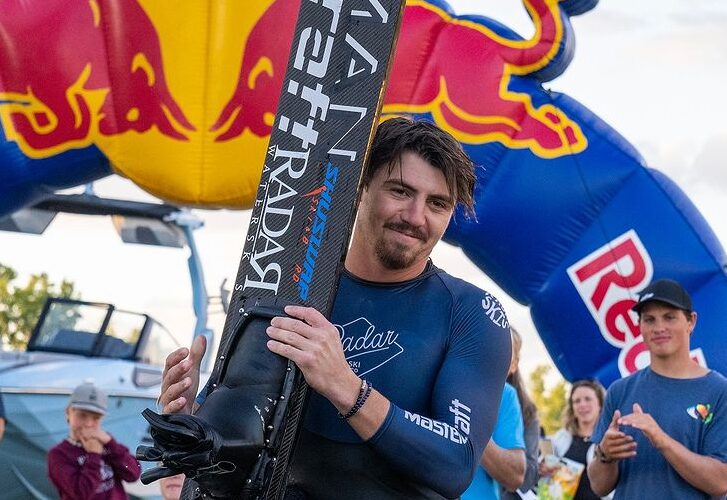
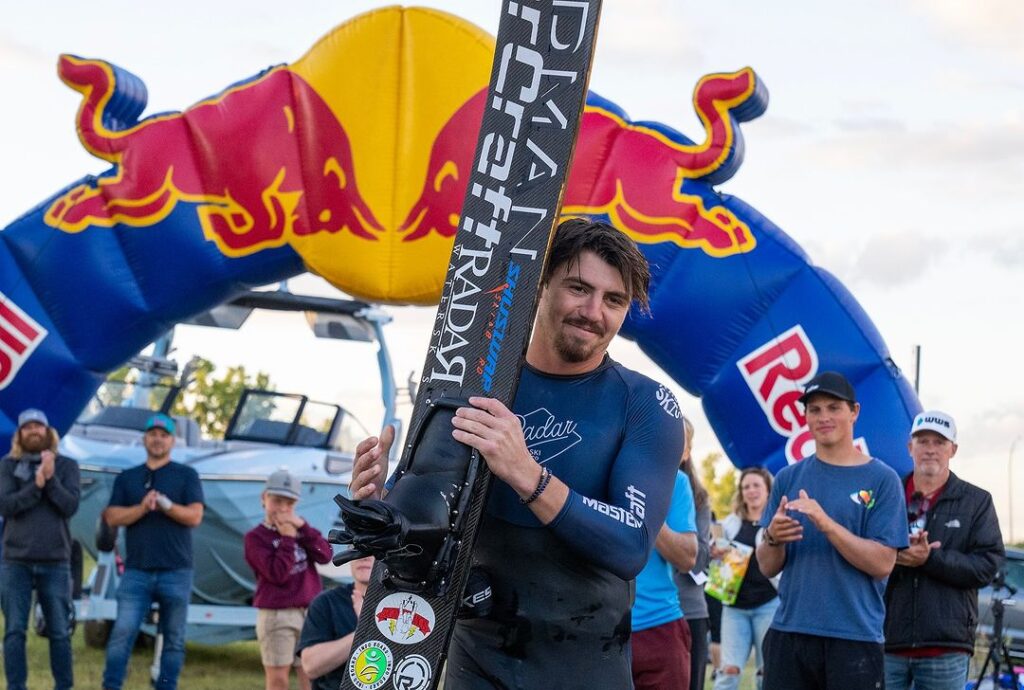
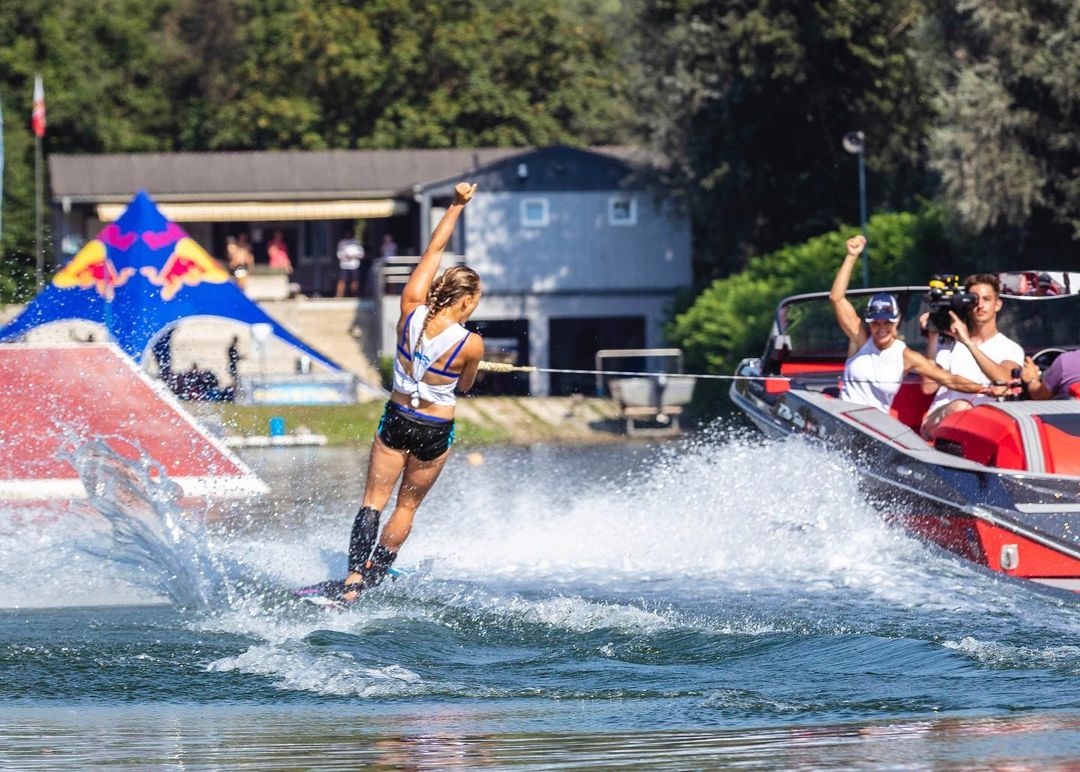
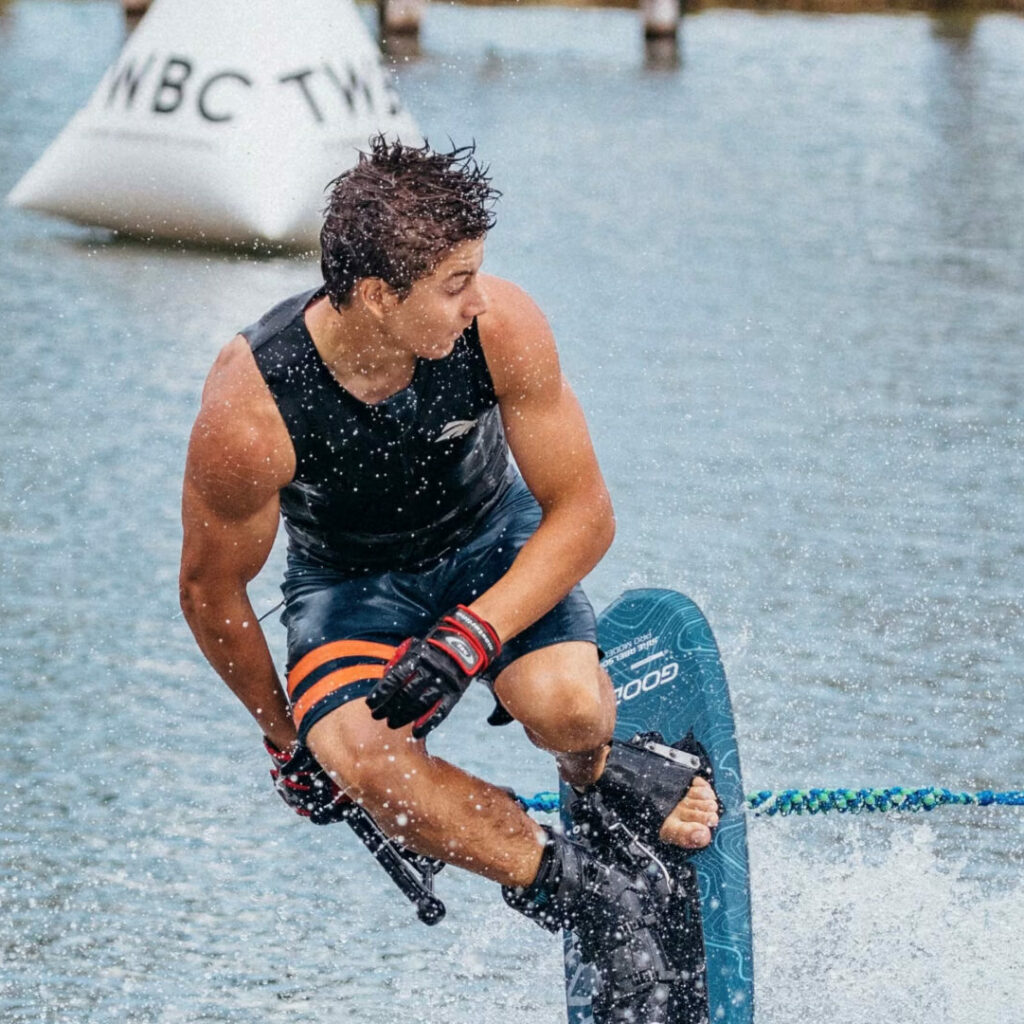
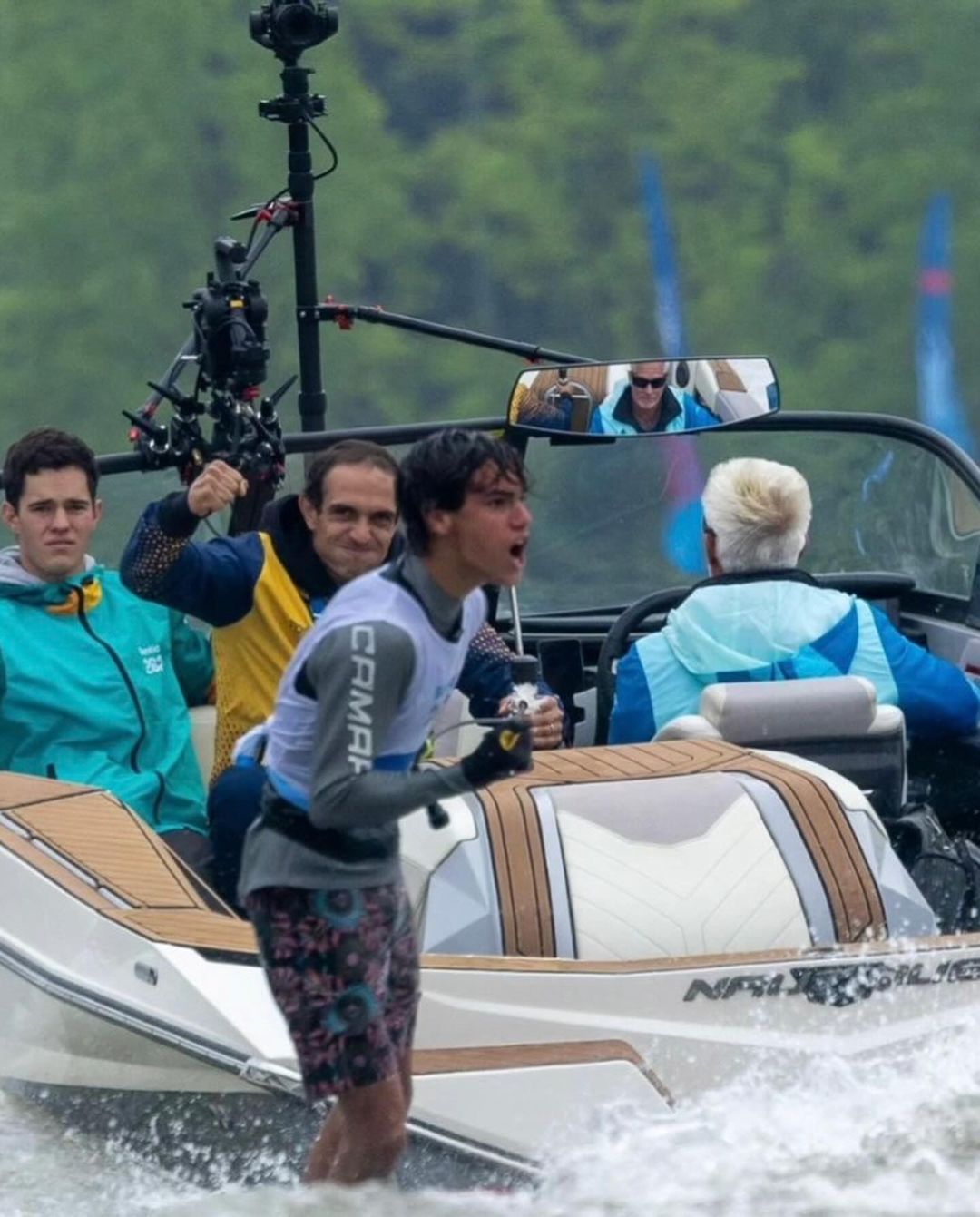
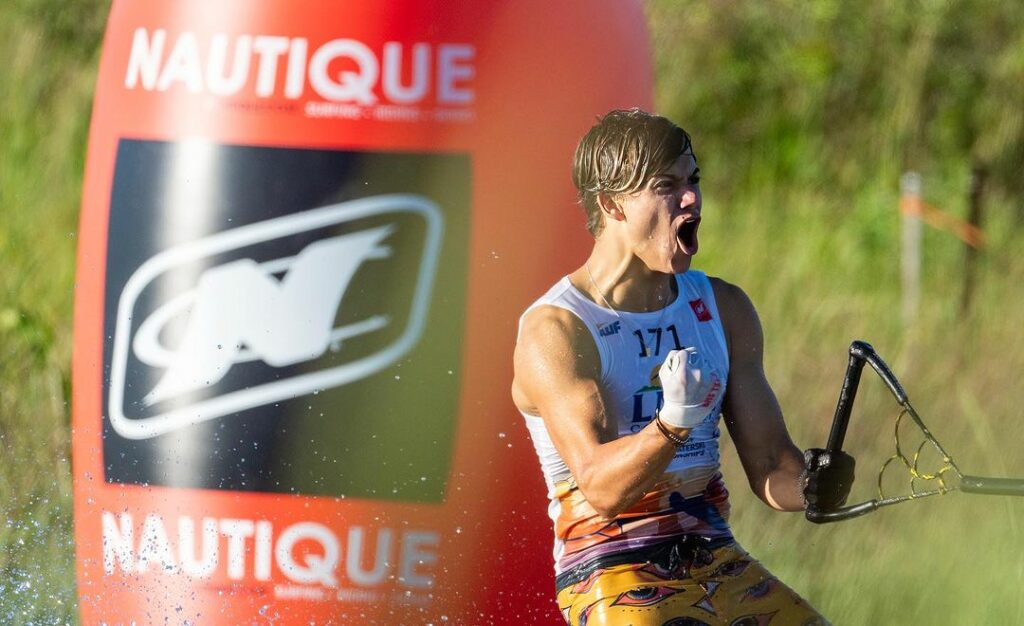
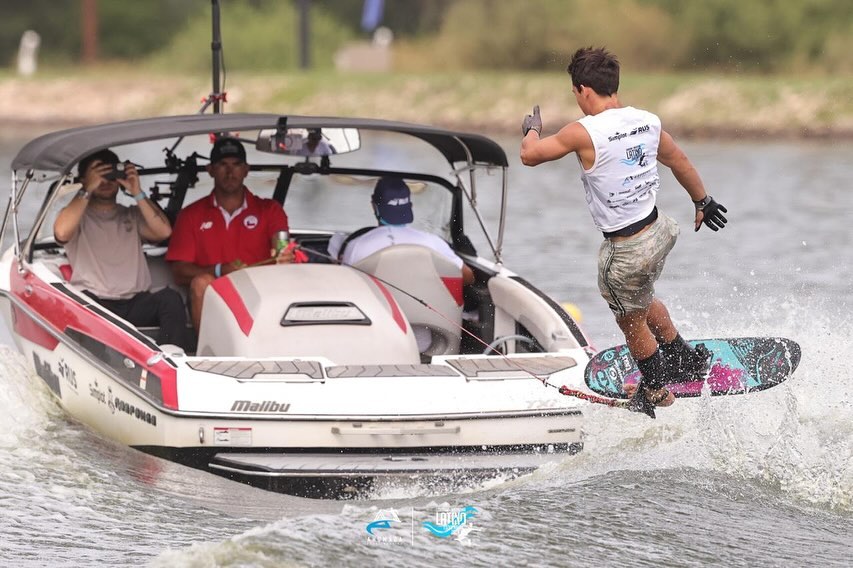
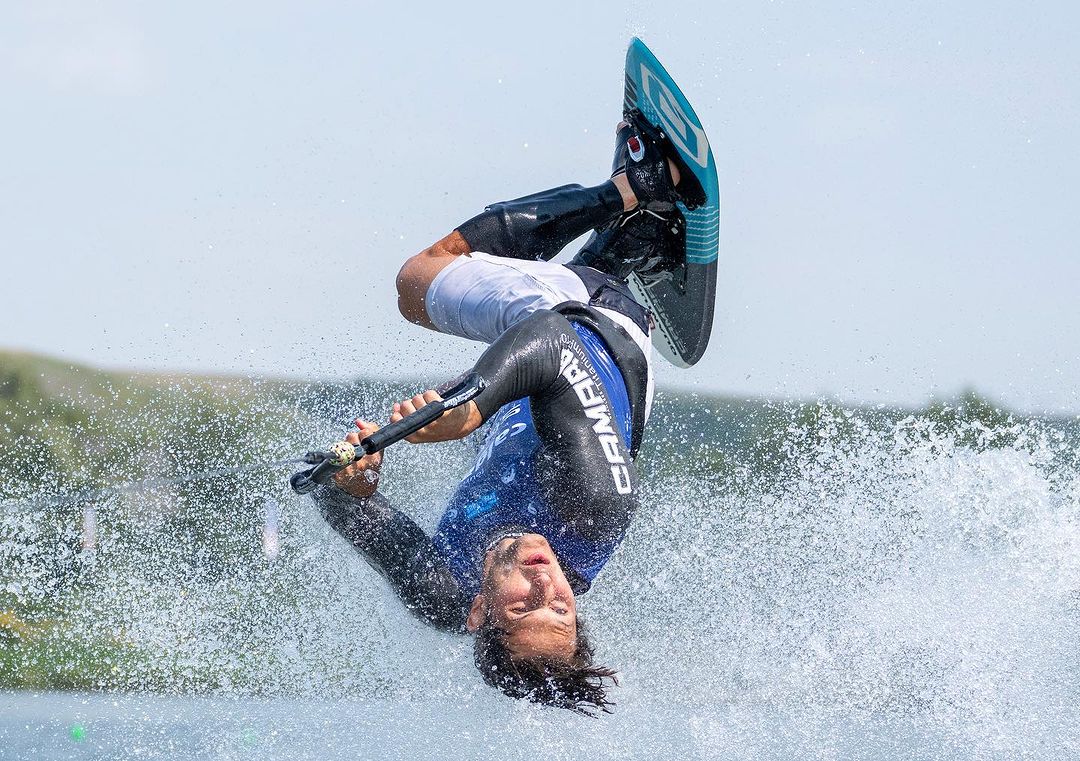
Joel Poland has been on an incredible hot streak over the past few seasons. The 25-year-old is currently leading the Waterski Pro Tour jump standings and the World Water Skiers Overall Tour, taking home more prize money than any other water skier so far in 2024. He has officially broken the world overall record five times, with a sixth record pending as of last weekend. His versatility across all three events—slalom, trick, and jump—is unparalleled in the modern era, consistently competing with the best in the world in each discipline.
This raises the question: Has anyone ever been this good across all three events? While numerous factors contribute to any GOAT debate—such as longevity, consistency, world titles, and professional victories—Poland, still in the early stages of his career, has a long way to go before reaching the heights of legends like Sammy Duvall, Jaret Llewellyn, and Patrice Martin. However, over the past four decades, since systematic record-keeping began, has any skier ever been as close to the top scores in all three events as Poland? Below, we rank the top five streaks in men’s overall:
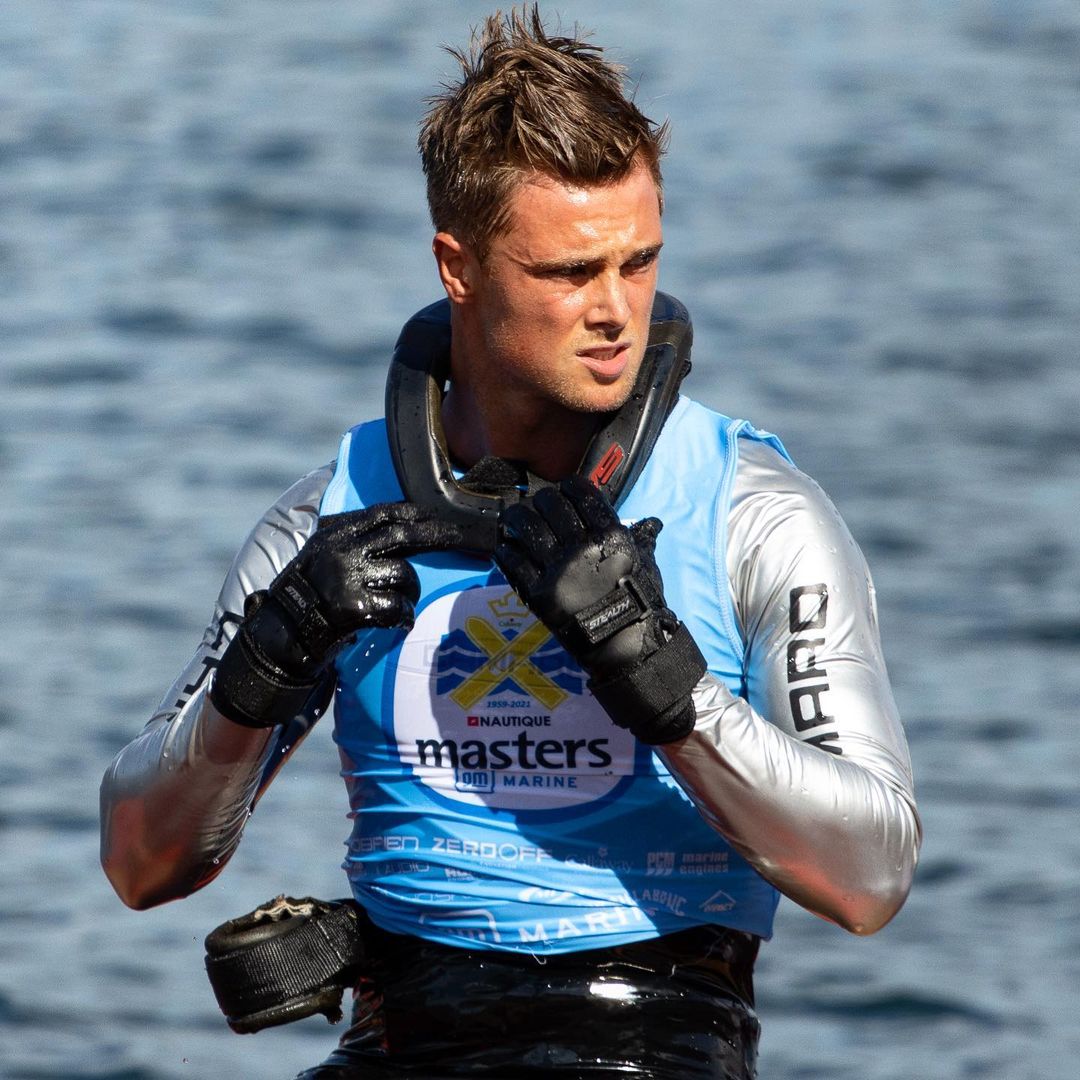
Dorien’s achievements often get overshadowed by Joel Poland’s rise to world dominance, but the second-generation Llewellyn is the best in his storied family by some metrics. At the 2021 World Championships, his scores across the prelims and finals would have broken his own world overall record—had they been performed in the same round. Unfortunately for him, Poland’s scores were even better, snatching Llewellyn’s world record on his way to the title.
During this period, Dorien posted scores into 10.25m (41′ off), tricked just shy of 12,000 points, and jumped 70 meters (230 feet), placing him within 90% of the top specialist scores in each event. Only Dorien and Joel have achieved this since world rankings began in 1979. Sidelined with injury in 2023, Llewellyn has shown promising signs of a return to form across the first two stops of the WWS Overall Tour.
Image: Yvon le Gall
4. Mike Hazelwood (1979-1981)
92% of Individual Top Scores
92% of Individual World Records
Hazelwood’s dominance in overall skiing is unmatched in many ways. From the late 1970s through the early ’80s, the British skier won five consecutive Moomba Masters and four consecutive US Masters overall titles. At the height of his powers in 1980, Hazelwood held the world jump record, was less than 1,000 points short of the world trick record, and within a pass of the world slalom record.
He remains one of only two men in the past half-century to win professional titles in all three events, including victories in slalom and tricks at the Moomba Masters, alongside his string of jump and overall titles across the globe. Hazelwood might have ranked even higher on this list if records had extended further back, as they only began near the end of his dominant run.
Carl Roberge, known for his imposing athleticism, holds a strong claim as the greatest skier never to win an individual gold at the World Championships. He was ranked either first or second in the world for overall from 1980 to 1990, helping Team USA to five consecutive victories.
In 1982, Roberge was just one buoy shy of the LaPoint brothers’ jointly held world slalom record, less than two meters short of Hazelwood’s world jump record, and still ranked fourth in the world for tricks despite it being his weakest event. To this day, Roberge is the only man to simultaneously hold top-five world rankings in all three events and the only man to win a season championship on the Pro Tour in both slalom and jump.
Patrice Martin is best remembered for his six consecutive world overall titles from 1989 to 1999, including a nail-biting victory over Kreg Llewellyn by just 0.2 overall points—the smallest margin of victory ever recorded.
Martin’s performances in 1996 remain the closest anyone has come to the world record marks in all three events over the past four decades. He held the world trick record, was less than three buoys shy of the slalom record, and trailed Bruce Neville’s jump record by only 20 feet. At his peak, Martin was awarded the IWWF’s first-ever overall record, which he went on to break three times through the twilight of his career.
In an era where specialization reigns supreme, Joel Poland’s prowess across all three events is astonishing. In 2023, Poland ran 10.25m (41’ off), getting within 2.5 buoys of Nate Smith’s decade-old world slalom record. He tricked within 500 points of Patricio Font’s world record and jumped 71.7 meters (235 feet), just half a meter shy of the highest score that year.
While Patrice Martin’s golden run in the years leading up to Poland’s birth was technically closer to world record marks, the context is different. In the 1990s, scores were steadily climbing, whereas today, Poland is competing in an era where jump scores, at least at the highest level, have been declining. In the past five years, only one 240-foot jump has been recorded, and the world jump record hasn’t been seriously challenged in nearly a decade.
In 2023, Poland’s scores were within 95% of the top specialist scores in all three events, a feat previously unheard of in the sport’s recorded history. Statistically speaking, no one has ever been this good at water skiing.
Honorable Mentions:
Jaret Llewellyn (2002-2004)
93% of Individual Top Scores
90% of Individual World Records
Jaret famously held the “unbreakable” world overall record for 15 years, but his slalom performances fall short in this purely score-driven analysis. While undoubtedly one of the greatest overall skiers of all time, Jaret’s success stemmed more from longevity, consistency, and clutch performances than raw talent.
Sammy Duvall (1984-1988)
92% of Individual Top Scores
89% of Individual World Records
The most dominant skier of the 1980s, Duvall won four consecutive world overall titles despite fierce competition. A legendary jumper and consistent slalom and trick skier, Duvall’s era saw specialists like Andy Mapple and Cory Pickos pushing the envelope in slalom and tricks, leaving overall skiers like Duvall playing catch-up.
Pre-1979 Skiers
Early greats like Mike Suyderhoud, Ricky McCormick, George Athans, and Chuck Stearns may well have had periods rivaling Poland, but without systematic tracking of scores, we will never know for sure.
WWS Overall Tour: Cancellations Highlight Ongoing Issues in Women’s Professional Water Skiing
Giannina Bonnemann Mechler, 2023 WWS Overall Tour champion, will not be competing in 2024 as she and her husband Dane expect their first child in August (image: @world.water.skiers)
Last September, the world’s best female overall skiers, past and present, gathered in Central Florida for the WWS Overall Tour final. Regina Jaquess, widely considered the GOAT of women’s slalom and overall, competed alongside Hanna Straltsova, who would go on to win dual World Championship golds a month later, and Giannina Bonnemann Mechler, who had swept the previous three tour stops. In a fiercely contested final with less than 60 overall points separating the top three (roughly three buoys in slalom), Bonnemann Mechler emerged victorious, going undefeated on the Tour. Sadly, we will not witness the women battle it out again in 2024.
Despite months of planning and communication with the athletes, World Water Skiers has made the difficult decision to cancel the women’s event due to an insufficient number of entries across the four-stop Tour in 2024. “Just really disappointed,” shared Tour organizer Jaret Llewellyn. “We continue to get great support from the men, but, unfortunately, the state of the sport makes being a professional athlete unattainable [for most].”
Instead, the Tour will move forward in 2024 as a male-only competition, where a core group of six of the best overall skiers in the world will travel to three countries alongside a rotating cast of local challengers. The cancellation of the women’s event is a significant blow and speaks to larger issues around participation and gender equity in the sport.
Water skiing, much like other professional sports, has made significant strides toward achieving gender equity in recent years. This year, an impressive 13 out of 15 slalom events and all five professional trick events offered equal prize money for men and women. This commitment to equality has resulted in the largest total prize purse for women’s slalom in the past 20 years, potentially the highest ever recorded.
Despite these positive developments, there remains a notable disparity in participation rates between male and female athletes in professional competition. Across the first nine professional slalom tournaments of 2024, all of which featured equal prize money, male participants have outnumbered female participants by almost two to one.
Professional events rely on athlete participation, whether directly through entry fees, or in the case of the WWS Overall Tour, to justify their value proposition to sponsors. If the women’s side of the field is consistently light, more tournament organizers might follow suit, jeopardizing the recent gains in gender equity.
So how do we increase female participation at professional events? The ‘host it and they will come’ strategy appears to be failing.
A simple answer could be that pay equity in professional water skiing is still a relatively new development. It may take time for this change to encourage more female athletes to pursue water skiing at the highest level. The visibility of equal prize money could gradually attract more women to stay in the sport past the junior ranks as they see professional water skiing as a viable career option.
Beyond prize money, other financial factors come into play. Industry support and sponsorship opportunities skew heavily male. Boat manufacturers sponsor over 40% more male water skiers than female, and among major ski manufacturers, the ratio of ‘team’ skiers is four-to-one male. These disparities illustrate the challenges faced by female athletes wanting to join the professional circuit.
The larger challenge may have to do with female participation across all levels of the sport. Amateur tournament participation is heavily male-dominated, although most of this is driven by the senior divisions. Women make up approximately 40% of tournament participants under 30, which is significantly better than many sports, particularly outdoor sports, which are notoriously seen as ‘boys’ clubs.’
This is encouraging, but there is clearly room for improvement. Water skiing is championed as a family sport and, at its best, is a beautiful way to bring mothers, sons, fathers, and daughters together on the water. But to meet this goal, we must foster a culture that encourages female participation.
Some of this is circular too. Having visible role models and mentors on the professional circuit can inspire more young girls to pursue water skiing. Successful female athletes can play a crucial role in mentoring and motivating the next generation.
Sadly, there will be no platform for the world’s best female overall skiers in 2024. A confluence of injuries, work commitments, major life events, scheduling conflicts, and financial pressures have coincided to deprive us of showcasing these important role models. Without greater support for women’s skiing across all levels of the sport, this could be the start of a worrying trend. Hopefully, it turns out to be just a speed bump on the road to success.
Anyone tuning into the Pan American Games last October witnessed one of the most farcical scenes in the history of our sport when American slalom specialist Nate Smith took to the water in the trick event, scoring only side slides. The reason behind this spectacle was the Games’ selection criteria, mandating each country to send both a male and female overall competitor. Rather than taking a chance on emerging talents like Jake Abelson or Blaze Grubbs, the U.S. selection committee opted for Smith to attempt beginner tricks and pass a jump live on television. The decision was just the latest in a long history of neglect for the overall event in the U.S.
Since Jimmy Siemers’ last World Championships in 2009, the U.S. has not selected a single male overall skier to compete at the World Championships. Freddy Krueger is the only other male to represent the U.S. in overall this century. No American male competed in overall, even as an independent, for a decade between 2011 and 2021.
Relying on specialists on the men’s side has proven costly for the U.S. Team over the last three decades. After an undefeated streak through the first 40 years of the World Championships, the U.S. Team has won only 7 out of 17 since 1991. Men’s overall has been a crucial factor, with only four victories occurring without Siemers on the team.
For a nation that produced three-event water skiing legends like Duvall, Roberge, and Suyderhoud, the disappearance of overall skiers raises questions. Mastering all three events is incredibly difficult, is this just a pipeline issue? Unlikely. Since 2010, the U.S. has had 10 different skiers ranked within the top 20 for men’s overall performances, no other country had more during this period. Four of these skiers have been within the top 10, with only Australia and Great Britain having more, with five each.
However, a closer look at U.S. Team selection reveals consistent neglect of emerging overall talent. In 2011, without Siemers for the first time in a decade, the U.S. overlooked Storm Selsor, who finished the previous season as the 5th ranked overall skier in the world. Instead, they selected a team of three single-event specialists, including a 15-year-old Erika Lang. Had they included Selsor, who skied as an independent and placed 8th in overall, they would have finished within striking distance of Belarus, the winners, rather than the distant third they achieved.
The issue seems to be a lack of support and encouragement for young talent. Zack Worden, simultaneously ranked in the top 3 for men’s jump and top 10 for men’s overall as a teenager, never made a U.S. Team and effectively retired from overall at 19 to focus on jump. The list of such talents denied the opportunity to represent the USA is extensive, including Mike McCormick, Scott Smith, Ryan Fitts, Dylan Schaffer, and Nick Lang.
While the U.S. has shown more support on the women’s side, selecting three overall skiers for the most recent World Championships, the absence of Regina Jaquess, arguably the greatest skier of all time, leaves a void. Beyond Jaquess, the U.S. has won only three women’s overall medals this century, and just one since 2003. With Jaquess approaching 40, supporting young talents like Brooke Baldwin, Kennedy Hansen, and Anna Gay becomes critical for the future.
The most challenging discipline in water skiing requires encouragement and support to thrive. While the U.S. may lack the government funding of some other federations, it can still nurture young athletes, providing them with the recognition and opportunities to represent their country. Without overall talent, America will continue to fall behind countries like Canada and France on the world stage. One thing is certain: putting a novice on the water to trick and jump on a major platform for the sport does no good for anyone.
The year is 2011. Barack Obama is in his first term as US President, LMFAO’s “Party Rock Anthem” is at the top of the charts, and the iPhone has just become the most popular smartphone in the world. In the world of tournament water skiing, the brand new Nautique 200 is in its second year of production, and a 31-year-old Belarusian is challenging one of the longest-held records in the sport.
On the same day that Prince William and Kate Middleton tied the knot, Aliaksei “Ace” Zharnasek tricked 12,570 points at a record tournament at Lake Hancock in Florida, breaking Nicolas Le Forestier’s decade-long hold on the men’s trick record.
Until 18 months ago, Zharnasek’s mark seemed unassailable. The only skier to come close was Ace himself, who, during one remarkable period, set five pending records from 2015 to 2017. However, each application was rejected by the IWWF after review, where every trick record is subject to immense scrutiny.
Fast forward to 2022. At 42, Zharnasek, now an all time great, has faded into retirement, and the new kid on the block is young Patricio Font from Mexico. On the eve of Halloween, Font eked out an extra 20 points to break the longest-standing open record in the sport, which had stood for 11.5 years.
Since then, it has been as if the floodgates have opened. Font has started to consistently score in the high 12,000s, and a new generation of trick skiers is starting to push up toward 13,000 points. How has the most stagnant event in water skiing, with only a single record broken from 2005 to 2022, suddenly become one of the most competitive and fastest-evolving fields in the sport? To find out, we spoke to skiers at the forefront of this evolution.
With a water ski pedigree that includes two elite-level skiers as parents and none other than Patricio Font as his cousin, this American-Canadian-Mexican teenager has had a stratospheric rise through the first half of 2024. He broke 12,000 points for the first time to clinch a runner-up finish at the Swiss Pro Tricks and followed that up with two world record-setting performances over the next month.
Abelson draws inspiration from a variety of sources: the speed and efficiency of Font’s hand pass, the boundary-pushing tricks of Joel Poland, and the blistering pace of Matias Gonzalez and Martin Labra’s toe tricking, to name a few. Far from occurring overnight, the sudden rise in trick scores is the product of “the collective knowledge” of generations of skiers and coaches who have laid the blueprint.
With other skiers demonstrating what is possible, the process becomes relatively straightforward. “At a high level, more speed is required to add another trick or upgrade an existing one,” shared Abelson. For him, this has meant “learning to perform my runs at a higher pace without losing composure, as well as building the endurance necessary to trick at a high level for the entire 20 seconds.” On his signature wake-seven-front, “I spent the winter practicing and repeating” to fit that trick in time.
Perhaps no skier moves faster on a trick ski than the young Chilean, the current Under-17 World Champion and winner of the 2024 Swiss Pro Tricks. Gonzalez’s toe run plays out like a sped up tape, and now with a whole host of ski line tricks added to his repertoire over the winter he is ready to challenge the best of the best.
“To consistently trick over 12k, the most important thing for me was to focus on speed,” shared Gonzalez. He too is following in the footsteps of those who paved the way before him, learning from past legends such as Cory Pickos and more recent stars like Patricio Font. “Pato showed that 11 tricks on hands were possible, that set the new standard for everyone coming up.”
The two-time world champion and former world record holder’s résumé would be impressive for any skier, doubly so for one so young. Patricio Font has been the standard bearer for this new generation of trick skiers, breaking a slew of records on his way up through the junior ranks.
Speaking on how trick skiing has evolved even during his tenure at the top of the sport, Font attributed recent gains to everyone pushing the field higher and higher. He shared on the TWBC podcast, “I think now trick skiing has changed so that to win, you kind of have to do the world record or come close to it because you’ve got everyone chasing behind you.”
The Chilean three-event phenom has forged a different path to the top of the tricking world, earning comparatively more points through toe tricks than many of his contemporaries. With innovations like the ‘reverse’ toe-wake-five-back and his metronomic efficiency and speed, Labra is now the highest scoring toe tricker in living memory. Fresh off his victory at the 2024 US Masters, the most decorated skier in the history of the Under-17 Worlds is ready to make his presence felt on the professional circuit.
“In my case, what helped me a lot was being with Mati [Gonzalez] since we were like 4 and 2,” shared Labra, who credits close competition with other rising stars in the sport for the dramatic rise in trick scores. “I think we helped each other to be better… we started pushing ourselves to a better level.” Labra emphasized that this is not solely about competition, but also about camaraderie and friendship. “Starting to know each other and be close to each other helped in a good way to improve the scores in tricking”
While the proliferation of Latin American trick skiers among the elite ranks is undoubtedly one of the key storylines of the past few years, one skier is working hard to maintain France’s historical dominance in the event. The current world overall champion, Duplan-Fribourg, is perhaps the most well-rounded of the new generation of trick skiers. Capable of both a hand run over 7,000 points and a toe run at 5,500, there doesn’t appear to be any weaknesses in the Frenchman’s routine.
“New trick combinations [are the key] for me,” shared Duplan-Fribourg. This includes both following successful trends, such as the now-ubiquitous mobe-mobe-half jack sequence, and thinking outside the box, like adopting the unconventional “French” run, which seamlessly intersperses big-ticket ski line tricks with a front flip in the middle. Ultimately, it is all about finding sequences that work for you. His other key: speed in toes. For Louis, that is what makes or breaks a 12k trick run.
From professional victory milestones to world records and more, it’s a parade of unbelievable stats for the greatest jumper of all time. With his entry in the US Masters this weekend, Freddy Krueger steps into his 30th consecutive year of professional water ski jumping. Here are 30 career stats to celebrate this remarkable achievement:
He has won a professional jump event for 26 consecutive calendar years. Only in the 1997 season of his 30-year career did he fail to secure at least one victory.
His first professional victory came at the Shreveport, Louisiana stop on the 1995 Bud Pro Tour. Over two-thirds of his competitors on the Waterski Pro Tour last year were not born at that time.
He took 21 out the fronts in his first three seasons as a professional. While we associate Krueger with longevity today, his path to the top was anything but easy.
He set his first world record at the 1999 U.S. Open, taking the record off Bruce Neville and Jaret Llewellyn, the latter of whom had set his mark in the preliminary round of the same tournament.
He has broken the world jump record more times than any skier, male or female. His eight world records surpass Sammy Duvall’s six.
His reign as the world record holder, from 2005 to 2017, is the longest in the jump event. Only Tawn Larsen Hahn (tricks) and Jaret Llewellyn (overall) have held records for a longer duration.
He holds the world Ski Fly record as the first and only man to jump over 300 feet. His mark of 95 meters (312 feet) from 2015 may never be broken as the discipline is no longer practiced.
He has the most professional victories of any skier, male or female, in the 21st century. Krueger has won over 100 professional events since the turn of the century.
He is the oldest skier, male or female, to win a professional water ski event at 48 years, 4 months, 13 days. The next oldest is Thomas Degasperi at 42 years.
He is the only jumper to win a professional event over the age of 40. Ryan Dodd is the next oldest at 39.
He’s tied with Jacinta Carroll and Ryan Dodd for the most world titles in jump, with five. Only Patrice Martin (men’s overall) and Andy Mapple (men’s slalom) have more in a single event.
He now has the most World Championships medals in a single event. His silver in 2023 brought his total to 11 podium finishes in men’s jump, surpassing Andy Mapple’s 10 in men’s slalom.
He’s now tied for the longest span between first and last World Championships medals, winning his first in 1999 and most recently 24 years later in 2023. Jaret Llewellyn’s first and last were also 24 years apart, from 1991 to 2015.
He has a winning record against every single jumper in professional events for the last 20 years. His closest rival in this period, Ryan Dodd, has beaten Krueger at 42 out of 96 events since 2005 for a 44% winning record.
He has not missed the podium at a jump event he has entered since 2017. That’s over 30 consecutive podium finishes.
His first season championship came on the 2000 U.S. Pro Water Ski and Wakeboard Tour. Krueger edged out Jaret Llewellyn despite only winning a single stop to Llewellyn’s three.
His most recent season championship came on the 2023 Waterski Pro Tour, 23 years after his first.
He has been on the professional circuit so long that he now competes against his main rival’s son. Krueger and Jaret Llewellyn were one of our sport’s greatest rivalries through the 2000s; now, however, Krueger regularly competes against Dorien Llewellyn, Jaret’s son.
He was the number one ranked elite men’s jumper for 11 consecutive years from 2004 to 2014. Jimmy Siemers and Ryan Dodd were the only other skiers to claim the top ranking during the 18 years of the list’s existence.
He matched Andy Mapple’s 14 U.S. Masters titles, the most by a man. Liz Allan still has the most of any skier with 24.
He has won more Moomba Masters jump titles than any other man. Krueger has nine victories on the Yarra between 2004 and 2020, before even counting his night jump titles.
He has won over 50% of all jump events on the Waterski Pro Tour. That’s a lot considering he was 45 when the Pro Tour began.
He is the only skier to make the finals on the U.S. Pro Tour in both jump and wakeboard. Krueger was a regular on the professional wakeboard circuit during the 1990s.
He has been a part of five World Championships winning teams for the U.S. In total, he has won nine medals as part of Team USA.
He was a strong three-event skier before specializing in jump in the mid-2000s. Krueger placed 10th in overall at the 2001 World Championships and competed in all three events through to the 2005 Worlds.
He jumped 200 feet for the first time in 1995, making him the 16th member of the 200-foot club. He won two pro tour stops that year, his debut season.
He jumped 70 meters (230 feet) for the first time in 2002, making him the 4th member of the 70m (230’) club. He was preceded only by Jaret Llewellyn, Scot Ellis, and Jimmy Siemers.
Since then, he has jumped 70 meters (230 feet) more times than all other skiers combined. Krueger has scored over 70 meters 139 times.
He holds the World Championship tournament record. His mark of 72.4 meters (238 feet) was set during the 2007 Worlds in Linz, Austria.
He has the record for the longest distance at night, jumping 73.1 meters (240 feet) at the 2011 Louisiana Night Jam.
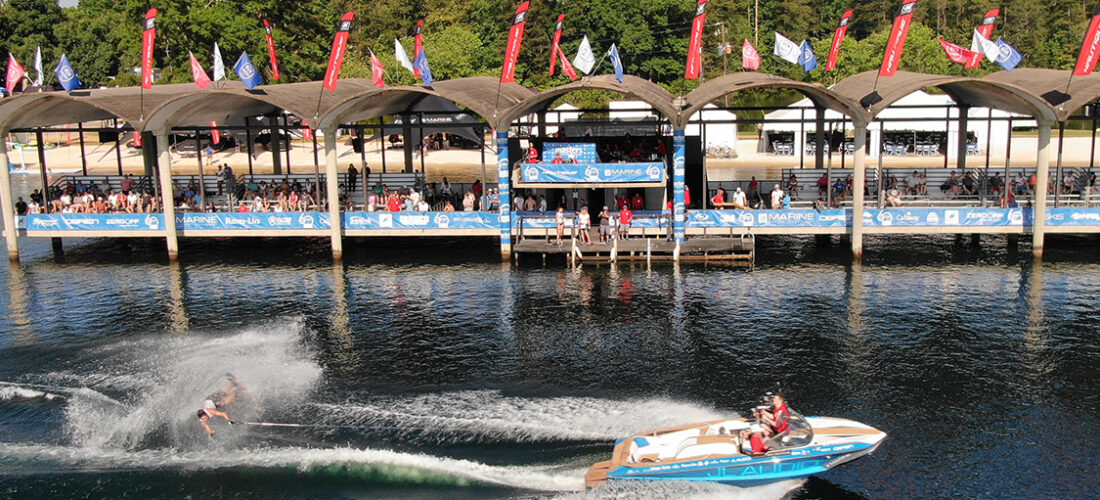
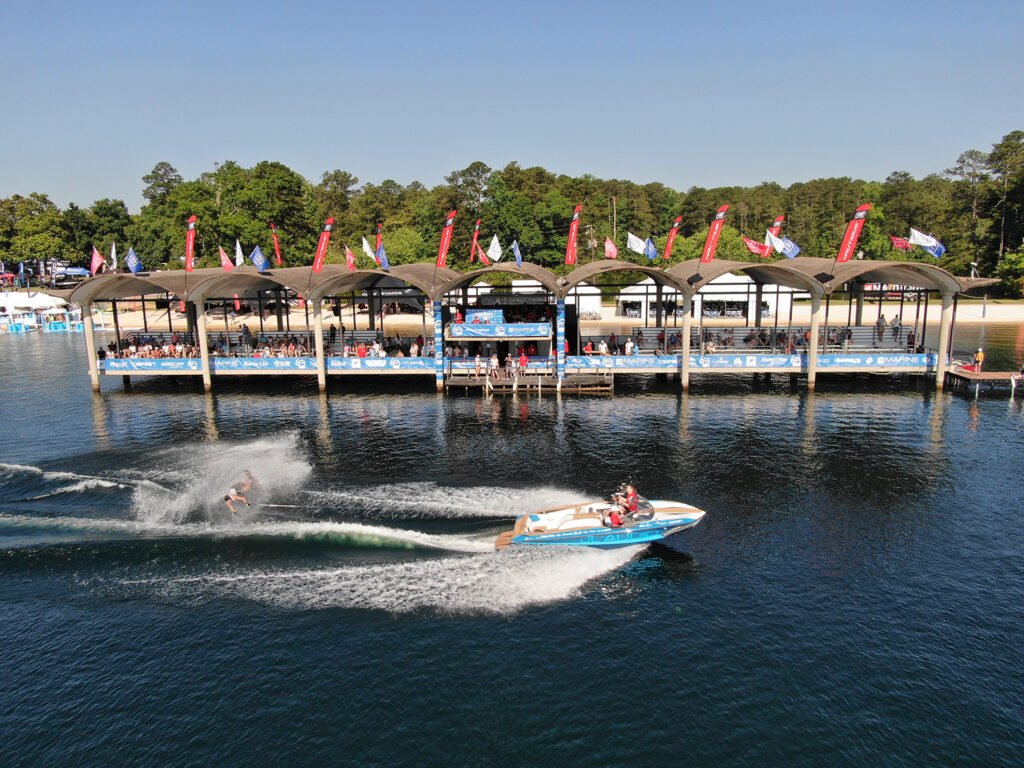
For over six decades, the Masters Waterski and Wakeboard Tournament has built one of the most enduring brands in our sport. Hosted annually at Robin Lake in Callaway Gardens, Georgia, this event has been a proving ground for many of our sport’s greatest athletes. The Pavilion, built for the inaugural Masters in 1959 is iconic. The Master’s even has its own song.
However, as the saying goes, it takes decades to build a reputation and only moments to jeopardize it. The Masters was primarily a U.S. domestic competition until it turned professional in 1985. Less than 15% of titles were claimed by non-Americans in the amateur era, compared to 55% since it turned professional. Despite maintaining one of the largest prize purses in the sport, the current qualification criteria raise concerns about potentially limiting the event to a local derby once again.
The current criteria, introduced during the height of the pandemic in 2021, was a sensible response to the lack of events, both elite and amateur, in the prior year. Since the elite ranking list was effectively defunct and there had been limited opportunities to post scores to the performance based ranking list, the Master’s organizers decided to hold a series of qualifying tournaments to determine invitees. However, as we move into 2024, the continuation of this system, with only minimal adjustments, could be hindering the event’s potential.
For the upcoming 2024 Masters, reserved spots for the defending Masters champion, current world champion, and winners of three other Nautique-sponsored events are in place. However, these slots often represent only one or two individuals. The majority of invitations will be determined through two ‘Last Chance Qualifier’ (LCQ) tournaments in Florida. While having a true last chance qualifier adds excitement, allocating most invitations through amateur events in Central Florida in the month leading up to the Masters seems arbitrary and potentially exclusive.
This approach raises questions about the accessibility of the Masters for international athletes, particularly those from the Southern Hemisphere. Imagine the burden on a skier from this region, leaving their home during comfortable skiing weather, incurring expenses for accommodation and training in Florida, all for the off chance of qualifying. This situation would be akin to the Moomba Masters requiring entrants to travel to Australia in early February for two tournaments in New South Wales (a neighboring state) for the opportunity to compete on the Yarra. The expenses and risks involved would deter many.
This isn’t just an unnecessary burden for Southern Hemisphere skiers. Conditions are comfortably skiable through much of Southern Europe and North America in May. Even domestically, it seems unfair that a skier in a different part of the country is forced to spend the better part of a month in Florida, incurring significant personal expenses, to qualify for the Masters. The situation is even more challenging for juniors, who must sacrifice school time for a chance at qualification.
While there might not be a perfect solution, protecting spots for defending champions and winners of major tournaments is a good start. For slalom, considering the Waterski Pro Tour standings could be a viable option, perhaps leaving one spot open for an LCQ. The challenge for trick and, to some extent, jump is that there are far fewer professional events. Despite valid concerns with the IWWF performance-based ranking lists, they could offer an opportunity for athletes training outside Florida. The amateur performance-based ranking lists seem a logical choice for Junior Masters, an amateur competition.
While many elite athletes currently reside and train in Florida, it doesn’t have to be the exclusive norm. California once rivaled Florida’s dominance, Australia has produced many of the world’s best jumpers, and France countless top trickers. Making residency in Florida a prerequisite for elite competition risks limiting the diversity of our talent pool.
The event, Nautique’s flagship, has lost some of its sheen in recent years. Proactively revising the qualification criteria to embrace diversity and inclusivity could ensure its continued prominence. With its substantial prize purse and multi-event format, paralleled only by Moomba, the Masters will always be a major draw, but evolving with a more inclusive approach can secure its legacy as a global waterskiing spectacle. The same allure that consistently brought in the best skiers in America and further abroad for over 25 years as an amateur event still holds today, although it is perhaps in danger.
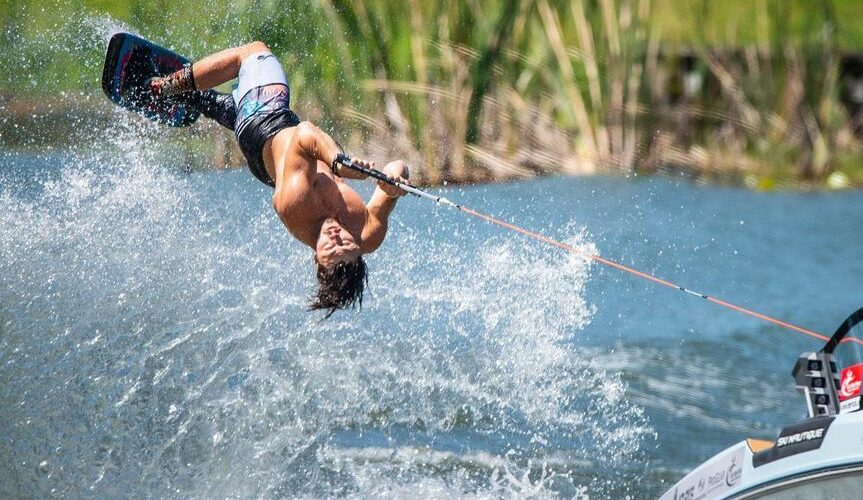
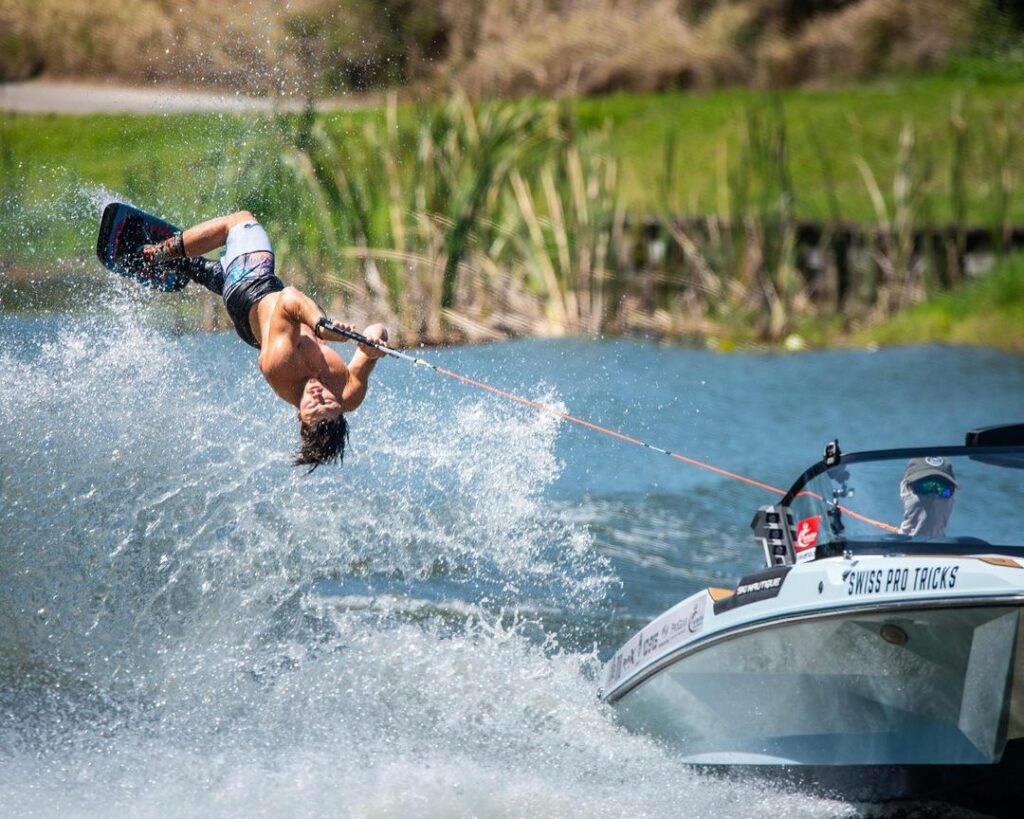
Hardest, bestest, fastest, strongest – Announcer Tony Lightfoot may have found himself rifling through the thesaurus as he searched for more superlatives during Sunday’s exhilarating action. The second edition of the Swiss Pro Tricks marked the kickoff of the 2024 Waterski Pro Tour in spectacular fashion, showcasing the remarkable talent of elite trick skiers and leaving fans yearning for more. Could trick skiing be on the brink of a surge in popularity?
A survey of the most popular waterski athletes on social media certainly suggests so. Athletes like Joel Poland, Neilly Ross, and Nikolas Plytas routinely draw hundreds of thousands of views with their trick-based content, hinting at the potential for trick skiing to reach a wider audience.
Unlike distance jumping, where it can be difficult to appreciate the speed and scale on a phone screen, trick skiing thrives in the digital realm. Close-up angles captured from the boat provide viewers with an intimate look at the intricacies of high-level trick skiing, making it a captivating spectacle even through video streams. Sunday’s live action during the Swiss Pro Tricks event exemplified this, quickly becoming one of the most anticipated TWBC broadcasts of the season.
Advancements in technology, such as EyeTrick, utilized throughout the WWS Overall Tour, have further enhanced the viewer experience by providing close-to-real-time scores. This innovation has eliminated one of the biggest headaches in presenting competitive trick skiing to the public.
It seems that trick skiing may be on the cusp of a significant breakthrough, transitioning from a supporting role to a main attraction in the sport. With its fast-paced nature and compatibility with the streaming era, trick skiing is well-positioned to seize the spotlight. Tournament organizers are taking notice, recognizing the potential to elevate the sport’s profile.
Alongside the legacy ‘majors’, the US and Moomba Masters, there are three relative newcomer professional trick events in 2024, including the Swiss Pro Tricks, Monaco Slalom Cup, and BOTASKI ProAm.
Clint Stadlbaur, tournament director for the Swiss Pro Tricks, reflected on the genesis of the event, sharing, “We had this idea for about 3-4 years… The level of tricking is incredible, I think it’s very spectacular, very exciting.” Ultimately, his goal is to expand the exposure of the discipline. “I hope there will be many [events] to follow from us and other sites also.”
During a recent episode of the TWBC podcast, Stadlbaur spoke about how the trick event is often relegated to early morning or the back lake, stating, “We want to showcase this beautiful discipline… and have the trickers at the center of the event.” Recognizing the potential of trick skiing to captivate audiences, he added, “If you look at slalom, you see the top slalom skiers go through 13, 12, 11 [meters]; it’s a bit repetitive. Trick skiing [is] very dynamic from the get go.”
Similary, Gregoire Desfond, who organizes the Monaco Slalom Cup alongside Alexis Keusseoglou, sees adding tricks to the event for its second edition in 2024 as “a logical path to step up the quality of the show.” Since launching Waterski Nation in 2017, he has dreamed of creating a professional event. After a successful first year in 2023, they are excited to expand the event to include trick skiing.
The event is a fitting homecoming for trick skiing, which has been dominated by France for much of recent decades. The tournament, hosted just outside Monaco in the south of France, is the first professional trick event on the French mainland since 2005. Desfond sees the platform provided by the Waterski Pro Tour as a major factor in the willingness of sponsors to support professional events. The news that they were adding tricks in 2024 was well received by the event sponsors.
Ricardo Botas, organizer of the BOTASKI ProAm, has ambitions to bring a 3-event pro tournament to Spain. While adding professional jumping remains a challenge, 2024 will be the third consecutive year that tricks will be featured alongside slalom at the event. In 2023 the action was intense, with Patricio Font equaling the world record of 12,690 on his way to the title.
Credit is due also to Nautique, who are currently the only boat manufacturer offering meaningful support to trick events, sponsoring four out of five events in 2024. Brian Sullivan, Nautique’s VP of Marketing, shared after the first edition of tricks at the BOTASKI ProAm: “we want to keep doing bigger and better events, we want to keep growing the sport, at Nautique that’s one of our main goals.”
For now, the prize purses for these new trick events are relatively small. The combined purse from Swiss, Monaco, and BOTASKI for the trick event is less than some individual tournament prize purses for slalom this year. But it is a great starting point for showcasing trick skiing on the elite stage. The top trickers are hungry for more exposure and chances to compete, as evidenced by the 2023 Malibu Open, which attracted five 11,000 point trickers despite offering only a nominal $3,000 prize pool. This added another layer of excitement to the tournament, culminating in Poland setting a new world overall record.
The International Waterski and Wakeboard Federation (IWWF) is also working to establish new platforms for showcasing elite trick skiing. IWWF president, José Antonio Priego Perez, recently shared at the European Congress that two potential World Cup stops are in the works, which would include trick skiing alongside slalom and jump. Historically, the IWWF World Cup series throughout the 2000s was the golden age for professional trick skiing, offering the highest prize purses in the history of the sport.
Overall, these developments highlight numerous positive signs for the event, potentially signaling an end to water skiing’s best-kept secret. Trick skiing’s resurgence on the professional stage holds the promise of an exciting future for the sport and its dedicated athletes.
Ultimately, Desfond sums up the sentiment of many tournament organizers when he speaks to the endeavor as a labor of love, adding “it’s a guilty pleasure to bring [the best trickers] to our event. I cannot wait to see them fight for the title.”
Neilly Ross is really good at water skiing. One of only three women to score over 11,000 points in trick skiing, her resume includes multiple junior world titles, professional victories, and being crowned world trick champion in 2017. In slalom, she tied Allie Nicholson for third place at last year’s World Championships, narrowly missing out on a medal based on preliminary scores.
Yet, she’s not quite as dominant as Erika Lang or Anna Gay, and the majority of her success has come in the trick event, which gets far less exposure than water skiing’s most popular discipline – slalom. However, if you were to open Instagram, you’d probably understand why the 22-year-old Canadian is, by certain metrics, the most popular water skier in the world right now.
Ross has more than 200 thousand followers on Instagram, which is more than the top 20 men’s slalom skiers from the 2023 Waterski Pro Tour combined. Across Instagram and TikTok, her videos have amassed millions of views. Most of the pictures and videos involve water skiing. But Ross, tall and athletically built with model-like features, attracts a large audience with seemingly little interest in her buoy count.
Most of her videos follow a routine formula, starting with Ross in a bikini getting ready for her set, warming up on a foam roller or getting suited up, before showing off her world-class skills on the water.
The comments section of her videos is dominated by older men, largely reminiscing about experiences on the water from decades past. But other comments reveal a darker side to her popularity. “Sexy,” “perfect body,” and graphic speculation about her performance “in bed” appear below one popular video of her slalom skiing.
Ross made headlines at the 2022 Moomba Masters, a tournament she won, but not, sadly, for her on-water achievements. A prominent tabloid drew clicks with the title “Water skier Neilly Ross does flips in a VERY skimpy bikini live on the Today show”
Ross, whose father and uncle were both professional slalom skiers, began skiing at a young age and amassed an impressive list of junior records and titles. Growing up in the water skiing Mecca of Central Florida, she dedicated her childhood to honing her skills in both slalom and tricks. Following in the footsteps of her father, Drew Ross, she proudly represents Team Canada and has contributed to multiple World Championship-winning teams.
She pursued her education at Rollins College, where she clinched back-to-back national titles in 2022 and 2023 and set the NCWSA women’s trick record. While most of her major victories occurred during a golden run from 2017 to 2018 while still in high school, Ross has continued to consistently podium at both professional trick and, more recently, slalom events.
With her increasing online popularity, Ross’s social media presence may soon evolve into a significant income source. Earlier this month, she inked a deal with talent agency Tonbara Management Group, known for their expertise in connecting athletes with top-tier brand partners such as Adidas, Amazon, and Lululemon. Both Ross and the agency’s CEO, Partik Darabont, expressed enthusiasm for their upcoming collaboration.
Ross is not the only female water skier gaining traction online; Kennedy Hansen has seen her following grow nearly sevenfold over the past year after a viral video of her toe tricking garnered over 4 million views on Instagram. However, the comments section suggests that many viewers are more interested in the 20-year-old’s anatomy than her advanced toe-line tricks. One comment, which received over 10 thousand likes, sarcastically declared, “men of culture, we meet again.” Some of the female skiers who attract a wide audience with the bikini warm-up-then-skiing video format are as young as 16 or 17.
Depending on whom you ask, the popularity of Ross and other female water skiers on social media is either a bellwether for growth in the sport or a symptom of a toxic culture. Female athletes face a paradox on their journey to success: while sex appeal can bring publicity, sponsorship, and fame, it can also undermine the athleticism of female athletes and perpetuate the notion that women’s sports are not as serious as men’s.
Beach volleyball has grappled with similar issues for decades. Like water skiing, the standard attire for women in beach volleyball is a two-piece bathing suit, ideal for the heat and sand conditions. However, this attire often attracts significant male attention. Olympic gold medalist April Ross expressed her optimistic view to the Washington Post, stating, “I have always felt that when you draw someone into beach volleyball, regardless of how you do it, they fall in love with the sport.”
Perhaps water skiing, a niche sport, could benefit from this style of exposure? Hundreds of thousands of people regularly watch these water skiing videos online, arguably the largest consistent audience since the Pro Tour aired on ESPN.
Not all of the popularity is solely due to sexualization. Many skiers, both male and female, are gaining immense popularity online with content that appeals to a different audience. Joel Poland routinely garners comparable views to Ross’s content, and Erika Lang is among the most popular female water skiers on social media, despite posting content in much more conservative attire than many of her peers.
Trick skiing, a sport where a single video frame can determine the winner, has always been a labor of love. At its elite level, tricking requires its best and brightest to dedicate countless hours of training for only a few events each year. The prize money and industry sponsorship are nowhere near enough to cover expenses, which is why many elite trickers are teenagers still supported by their parents. For these athletes, newfound online popularity offers a chance to make a living pursuing the sport they love.
Ross is focused on forging a new career path, aiming to bring water skiing to a broader audience. Fame always comes with its costs, and while she may attract some degree of toxicity, we hope that many people who discover the sport through her will stick around for the skiing.
After all, Ross is really good at water skiing. It would be nice to live in a world where that was the headline.
Finally, we wrap up the series with the overall event, honoring some of the true legends of the sport. In this domain where versatility is key, these athletes stand out from the crowd. While calling someone the “greatest athlete” is a matter of opinion, here, we explore the incredible journeys of those who haven’t just achieved excellence but have mastered three distinct disciplines—slalom, trick, and jump—earning them the title of the sport’s greatest overall skiers.
These individuals haven’t just succeeded; they’ve gone beyond what was thought possible. Our journey takes us from the early pioneers through the sport’s golden age in the 1990s to today’s modern day greats. Along the way, we dive into each skier’s successes and challenges. These overall skiers represent the pinnacle of the sport, demonstrating unmatched athleticism and skill across all aspects of water skiing.
‘Greatest Of’ lists in any sport are inherently subjective and water skiing is no exception. There’s no definitive checklist to crown someone as the absolute best. Every fan out there has their own opinion. But decisions had to be made. We proudly present our picks for the 10 best female overall skiers in the history of competitive water skiing. So sit back, enjoy, and maybe even debate a little over our choices—after all, that’s the fun of it!
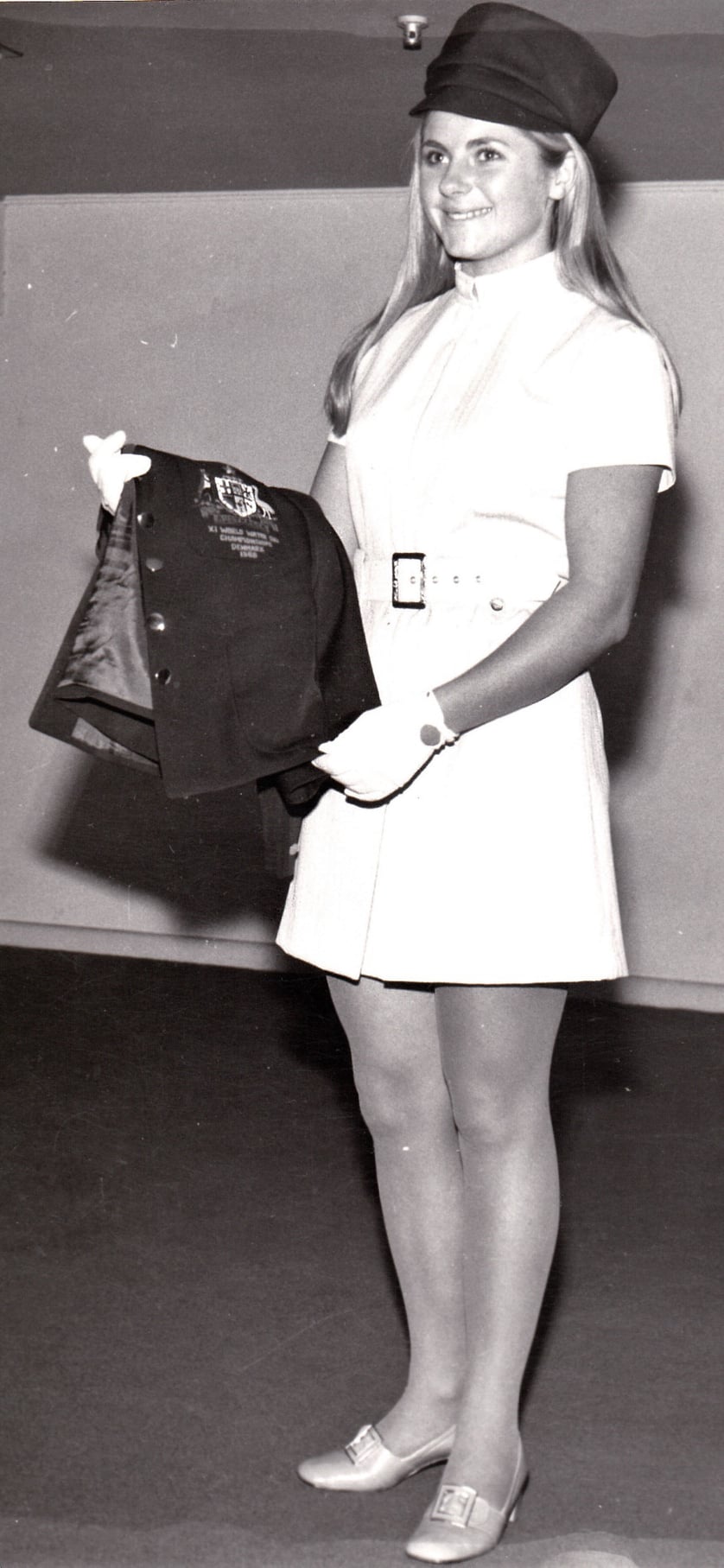
Kaye Thurlow receives her Australian team blazer for the 1969 World Championships in Denmark (image: VINTAGE WATER SKI PHOTOS)
10. Kaye Thurlow Faulkner
Representing Australia in five consecutive World Championships from 1967 to 1975, she earned eight medals across trick, jump, and overall, including two bronze medals in the latter event. Additionally, Kaye competed in the water skiing demonstration at the 1972 Munich Olympics, securing runner-up finishes in trick and jump.
Virtually unbeatable at the Moomba Masters, she secured an incredible 20 titles on the Yarra River, including eight titles in her favored overall event. Kaye deservedly makes this list as the most dominant skier in the only professional event of her era.
McClintock won an incredible eight consecutive Moomba Masters slalom titles from 2011 to 2019 (image: @desburkekennedy)
9. Whitney McClintock Rini
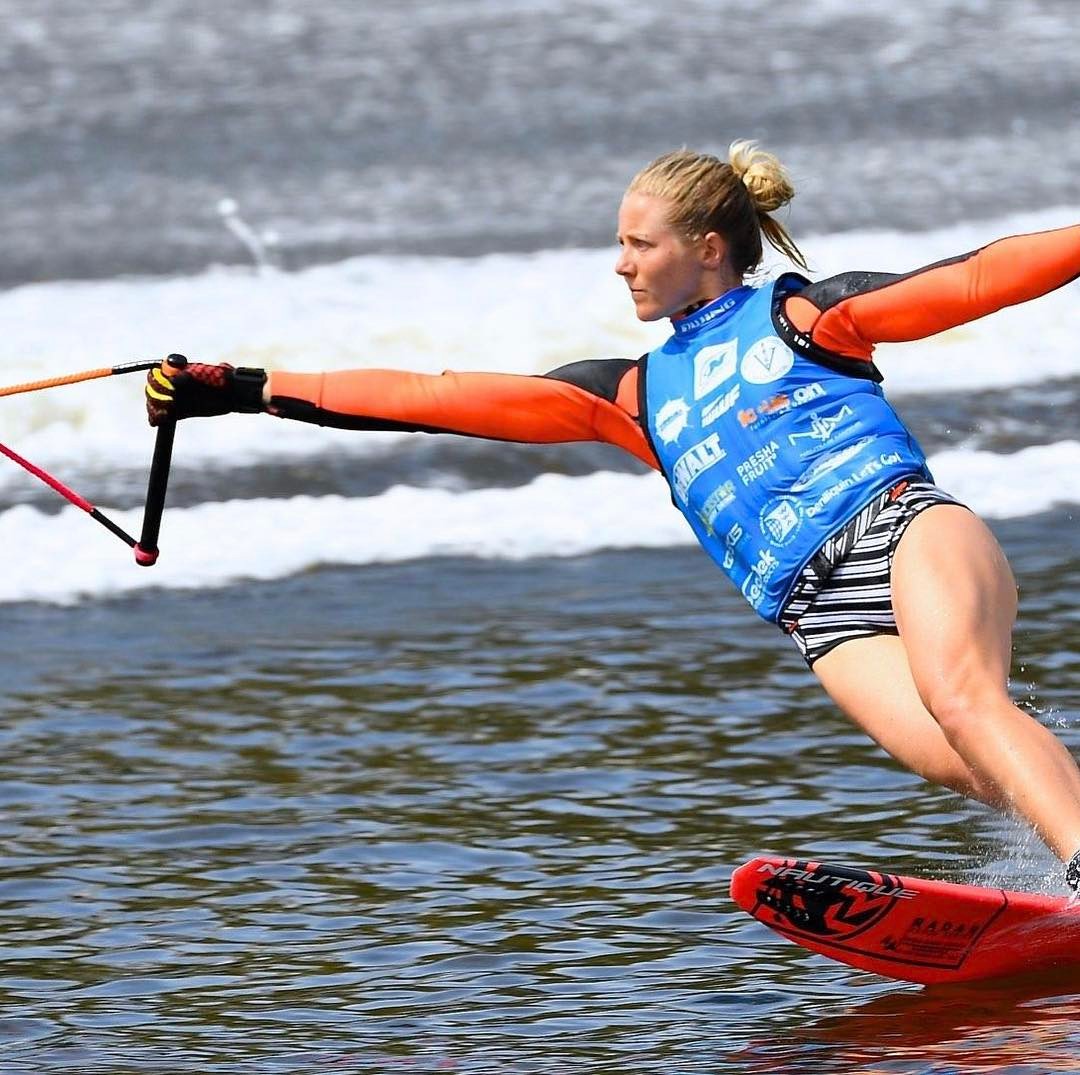
Between 2009 and 2019, Whitney achieved remarkable success with two World Championship overall titles and two runner-up finishes. Her impressive collection at the World Championships includes 10 medals, with five of them being gold, spanning slalom, trick, and overall.
Excellent as a junior, Whitney secured multiple junior world championships, including an under-17 overall title and back-to-back under-21 overall titles. Despite her exceptional skills, she faced the unfortunate circumstance of never having the opportunity to compete in a professional overall tournament throughout her career.
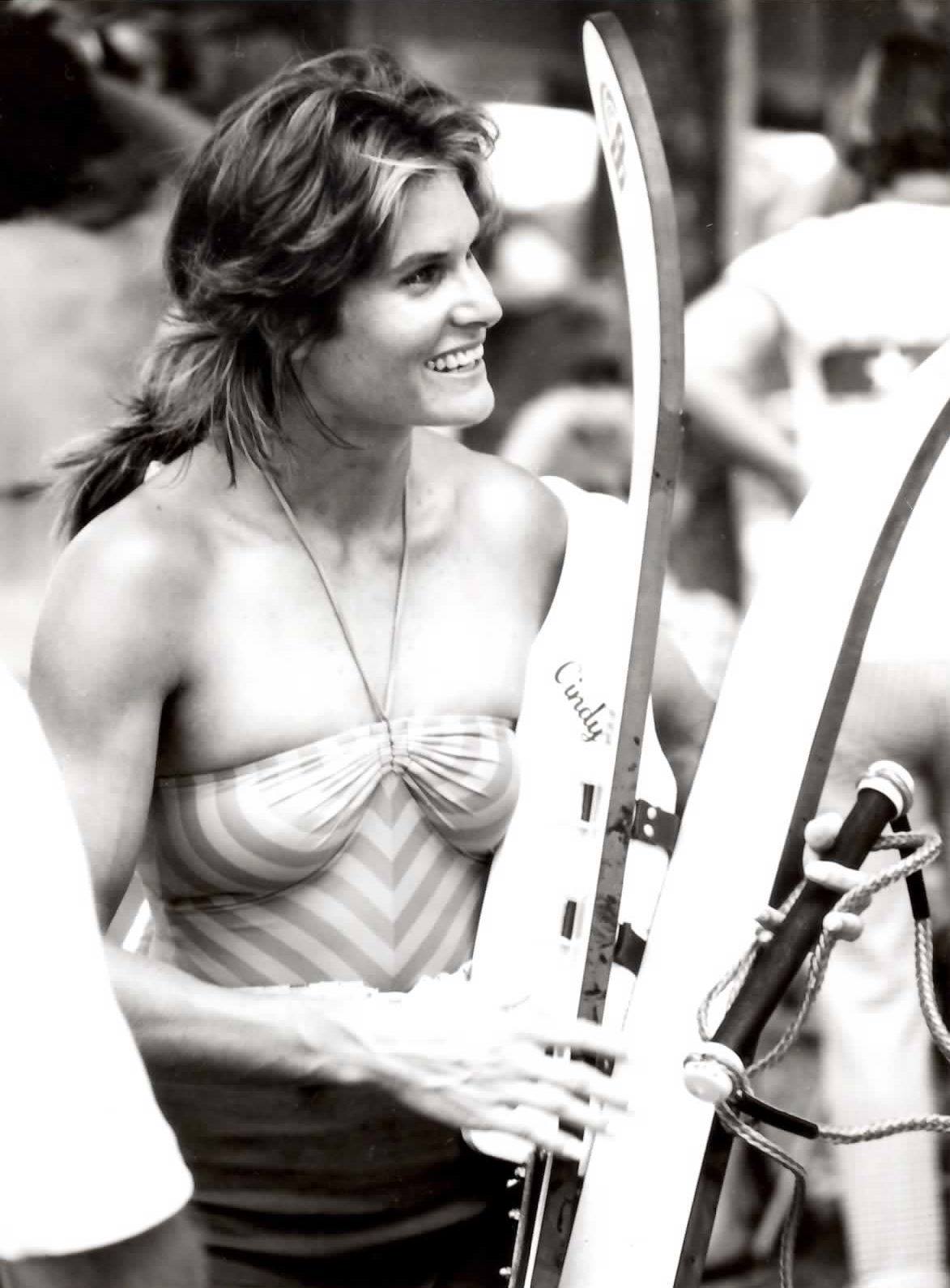
Between 1977 and 1983, the Florida transplant secured an incredible seven World Championship titles spanning slalom, jump, and overall, with back-to-back victories in the overall category in 1977 and 1979.
Cindy’s dominance extended to the U.S. Masters, where she asserted herself as a four-time overall champion. Stepping into the void left by Liz Allan’s retirement, Todd claimed three consecutive titles from 1976 to 1978. Her supremacy wasn’t limited to a singular discipline; across slalom, jump, and overall, Cindy clinched a total of eight titles at the Masters, solidifying her reputation as one of the greatest skiers of her era.
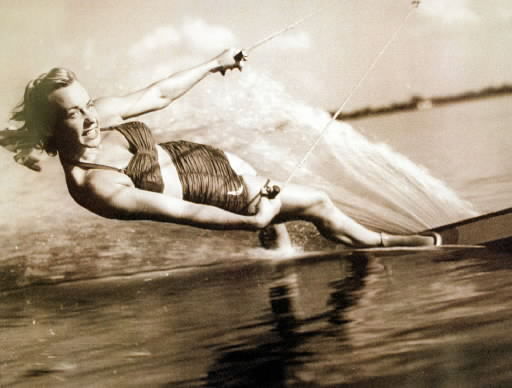
Willa Worthington’s father taught her to water ski on Oswego Lake in 1942 when she was 14.
7. Willa Worthington
Water skiing’s first ever world champion, Willa came agonizingly close to sweeping a World Championships, winning slalom, jump, and overall and finishing runner-up in tricks at the inaugural event in 1949. She would go on to win a total of 14 World Championships medals, eight of them gold. At her last World Championships in 1955, she narrowly missed the clean sweep again, repeating her placements from the first event.
At the U.S. Nationals she won nine overall titles, losing only once from 1946 to 1955. Three times she clean swept the competition, winning all four gold medals. In total, she was a 29-time U.S. National women’s champion, unmatched by any skier to this day.
The only reason she is not placed higher on this list is because of the difficulty in gauging performances from this far in the past. While she was incredibly dominant, the women’s field was often thin in the 1940s and 1950s, with only three women competing at the inaugural World Championships.
Berdnikava held the world trick, jump, and overall records throughout her career (image: @natiski200)
6. Natallia Berdnikava
With an impressive tally of ten World Championship medals earned between 2007 and 2017, Natallia Berdnikava stands as one of the most formidable figures in water skiing. Her crowning achievement unfolded at the 2011 World Championships in Dubna, Russia, where she achieved an extraordinary sweep in women’s trick, jump, and overall events. This remarkable feat laid the foundation for Belarus’ team victory, securing its place as only the fourth nation to claim that prestigious title.
Despite limited opportunities to compete professionally in overall competitions throughout her career, Natallia clinched the 2018 Latrobe City International. Regarded among the greatest trickers and jumpers of all time, she has emerged as one of the dominant athletes in the 21st century.
A trailblazer in the sport, Natallia still holds the distinction of being the highest-scoring female of all time. She has broken the world overall record three times, maintaining her grip on it since 2012, making it one of the longest-standing records in the sport.
Elena Thomsen-Milakova excelled in trick, jump, and overall (image: Swiss Waterski & Wake)
5. Elena Milakova
The Russian dominated the sport at the turn of the century, clinching three consecutive world overall titles from 1997 to 2001. Throughout her career, she amassed a total of nine World Championship medals, demonstrating her skills across the trick, jump, and overall events.
Her other major achievements include overall victories at the 1999 U.S. Masters and 2001 World Games, underlining her consistent excellence on the international stage. During a remarkable run of form in 2001, Elena broke the world overall record three times. This incredible feat included setting new records in both the preliminary and final rounds of the European Championships.
Karen and her husband Mick made up one of the sport’s greatest duos through the 1980s (image: VINTAGE WATER SKI PHOTOS)
4. Karen Bowkett Neville
The standard-bearer for Australia’s golden generation, Karen graced the overall podium in four consecutive World Championships from 1985 to 1991 and claimed the top spot twice. Her instrumental role in the Australian team led to three consecutive second-place finishes from 1985 to 1989, bringing them on the cusp of dethroning the United States’ decades-long reign. Her remarkable achievements include breaking Deena Brush Mapple’s four-year winning streak in 1989 to secure the U.S. Masters overall title, and she added another feather to her cap by winning the U.S. Open in 1991.
Karen dominated the Moomba Masters throughout the late 1980s, securing eight overall titles between 1984 and her retirement in 1993. Her remarkable tally of 20 titles across all four disciplines places her on par with Kaye Thurlow Faulkner as the most successful skier in the history of the Moomba Masters. Karen’s outstanding achievements in water skiing became a source of national pride, leading to her recognition as the Australian Sportswoman of the Year in 1985.
From 1979 to 1989, the Sacramento native played a pivotal role in guiding the U.S. Team to an impressive seven consecutive World Championship team titles, showcasing her consistency by only missing the overall podium twice during this period. Following two runner-up finishes and a bronze, she solidified her legacy by claiming back-to-back world overall titles in 1987 and 1989. Her illustrious career boasts a total of 15 World Championship medals, spanning slalom, jump, and overall events, with an impressive six golds.
Renowned as one of the most dominant skiers in the history of the U.S. Masters, Deena secured a remarkable 20 titles across slalom, jump, and overall, with 14 of them earned after the Masters became professional in 1985. Her prowess in women’s overall was particularly noteworthy, experiencing only one loss between 1985 and 1993 on Robin Lake. Similarly, at the U.S. Open, she won four consecutive overall titles from 1987 to 1990, before taking the 1991 season off for the birth of her first child.
Deena stands as the sole female athlete to simultaneously hold the world slalom and jump records. Among her many accomplishments, the Grand Slam Victory in 1987 stands out, securing overall wins at the World Championships, U.S. Nationals, U.S. Masters, and the Pro Tour—a feat only matched by one other athlete. Known fondly as the ‘Queen of Water Skiing,’ Deena’s achievements place her among the greatest of all time.
Liz Allan revolutionized women’s jumping through the 1960s and 70s (image: VINTAGE WATER SKI PHOTOS)
2. Liz Allan
At just 14 years old, the American phenom announced her arrival on the global stage by becoming only the second woman to jump 100 feet. In that same remarkable year, she clinched her inaugural world titles, seizing gold in both the jump and overall events.
Liz’s dominance in water skiing is unparalleled, as evidenced by her incredible tally of 15 World Championship medals between 1965 and 1975, boasting an impressive 11 golds—the highest count by any skier in history. Notably, she stands alone as the only skier to secure World Championships in all four disciplines: slalom, trick, jump, and overall, winning the latter event three times throughout her illustrious career.
In 1969, at the age of 18, Liz showcased near invincibility, very nearly effecting a clean sweep across all three events and overall at the U.S. Masters, U.S. Nationals, and World Championships. Her sole defeat that season came in slalom at the Masters. Liz’s dominance at her peak has yet to be surpassed by any other skier.
Her legacy extends to the U.S. Masters, where she reigns as the most successful skier in its storied history. Liz secured a staggering 24 titles, including an unmatched nine overall titles, with only one loss between 1966 and 1975. Liz’s extraordinary accomplishments reached their peak before she made the decision to retire from top-level competition at the remarkably young age of 24.
Jaquess is arguably the greatest water skier of all time, male or female (image: @regina_jaquess)
1. Regina Jaquess
Displaying exceptional talent from a young age, Regina Jaquess received her inaugural invitation to the Junior Masters at the tender age of 12. At 16, she nearly achieved a clean sweep at the Under-17 World Championships, securing victories in slalom, jump, and overall, only stumbling in the trick final, despite posting the highest score of the tournament in the preliminary round.
Undeterred, Regina clinched her first open world title in the trick event the following year at 17. She continued her dominance into the first two editions of the Under-21 World Championships, amassing a total of six gold medals. Her illustrious career includes five world overall championships, with back-to-back titles in 2003 and 2005, and an impressive three consecutive titles from 2013 to 2017. In total, Regina boasts 19 World Championship medals across slalom, trick, jump, and overall, securing 10 golds. A record-breaker, she has broken the world overall record four times and holds the World Championship tournament record.
Regina’s prowess extends to the Pan American Games, where she is a three-time overall champion, triumphing in 2011, 2019, and the most recent victory in 2023. Her outstanding performance in Chile last year, clinching gold in slalom, jump, and overall, earned her a nomination as the female athlete of the games.
Despite her remarkable achievements, Regina has faced a scarcity of opportunities to compete in professional overall tournaments, her career coinciding with a two-decade drought of events. Nonetheless, she made her mark by winning tricks and overall at the 2002 U.S. Open as an 18-year-old. In recent years, she has reached the podium on the WWS Overall Tour, reaffirming her enduring excellence in water skiing.
Honorable Mentions:
Clementine Lucine
While Clem may be best remembered as the first woman to trick 10,000 points, she boasts an impressive collection of eight World Championships medals, with four earned in overall competitions from 2003 to 2013. Her crowning achievement came in 2007 when she stood atop the podium in both the trick and overall events. Notably, she held the overall world record for an impressive five years, breaking it twice in 2004 and 2006.
Rhoni Barton Bischoff
While Rhoni could never secure top honors at the World Championships, she earned four medals, including back-to-back bronzes in the overall event in 1999 and 2001. On the professional circuit she was a two-time U.S. Masters overall champion and multiple-time U.S. Open champion. Making history, Rhoni became the first-ever world record holder in the overall category when the IWWF started recording records in the late 1990s.
Judy McClintock Messer
Between 1985 and 1995, Judy featured on the World Championships overall podium five times, finally clinching the coveted gold in 1995. She emerged as the backbone of the Canadian team, playing a pivotal role in their groundbreaking victories during the 1990s.
Ana-Maria Carrasco
Despite her greatest achievements coming in tricks, Ana-Maria secured a world overall title in 1983, alongside two runner up finishes throughout the 1980s. Throughout the decade, Carrasco consistently performed at an elite level, claiming gold in overall and trick at the inaugural World Games in 1981, and earning a U.S. Masters overall title in 1984.
Karin Roberge Woodson
The first Roberge to make their mark on the world stage, Karin secured back-to-back U.S. Masters overall titles in 1979 and 1980. She then claimed the title of world overall champion in 1981, showcasing her skills with podium finishes in both the slalom and trick events. Throughout the 1980s, she continued to shine, adding three consecutive Moomba Masters overall titles to her career achievements.
Giannina Bonnemann Mechler and Hanna Straltsova
These two young stars have been at the forefront of women’s overall for the last few seasons and are beginning to post scores that could threaten Berdnikava’s longstanding world record.
The sport of water skiing farewelled an all time great this past weekend. The lively Moomba Masters crowd relished the chance to witness Jacinta Carroll hit the jump ramp one last time, even as she pushed herself to compete just 100 days after giving birth. No woman, perhaps no skier, attacks the ramp with quite the same intensity as the powerful Australian.
Carroll, who grew up just outside Melbourne in Geelong, has dominated women’s jump for over a decade. Her most recent achievement, securing her 10th consecutive Moomba Masters jump title just three months after giving birth, serves as further evidence of her brilliance. No one would have blamed her for skipping this year’s tournament as she recovered from her pregnancy.
Yet, at the same time, the occasion was bittersweet. As I watched her take to the water, I didn’t want it to end, because, even before she officially announced her retirement, her recent absences had hammered home the fact that the greatest female jumper of all time wouldn’t be around forever.
Despite her ongoing dominance, Carroll has stepped back from elite-level competition while still at the pinnacle of her career. Her last competitions outside Australia were in 2021, where she secured her fifth consecutive world title. Since then, she has continued to compete at the Moomba Masters but has primarily focused on her career as a physical therapist and her growing family.
Carroll’s achievements have completely overhauled expectations in women’s jump. As the first and only woman to surpass the 200-foot mark, she has maintained an undefeated streak in professional events since 2013. Carroll hasn’t just won every event; she has won them by unprecedented margins, commonly beating the rest of the field by up to 5 meters.
Yet, this dominance has prompted reflection within the sport. Carroll herself has expressed unease about the unintended consequences of her success, with some competitors assuming a secondary position before even competing.
In a candid discussion on The Water Ski Podcast, Carroll highlighted the dilemma: “It’s good that girls now can pursue 200 [feet] and can go ‘she can do it, why can’t I?’ That barrier is not there anymore. On the flip side, I know in the past there have been girls that have said ‘why would I come to Moomba for second place?’ Now they’ve lost it already.”
The debate centers on whether close competition or the pursuit of the highest possible performance is more captivating for the sport. Carroll poses the question, “Is it more exciting to see two girls battle it out, somebody has to win on their last jump, they win by 10 centimeters, is that more exciting? Or is seeing somebody go much further trying to chase a record more exciting?”
While a hyperfocus on records and performance can sometimes be detrimental to the sport, ultimately, it is big names and storylines that draw people’s attention. Asking if Carroll’s dominance has hurt women’s jumping is a bit like asking if other dominant athletes like Serena Williams or Lindsey Vonn were detrimental to their respective sports. We wouldn’t ask an athlete like Usain Bolt to run a little slower to make the race more interesting.
In fact, having one or two dominant competitors can be beneficial for a sport, at least for a period. This dominance can inspire others to strive for similar heights. Look at Andy Mapple; his prolonged dominance significantly raised the bar in men’s slalom.
For a generation of water ski fans, Carroll epitomizes women’s jump. Storylines like her quest for 200 feet have captivated us. Everyone’s had a favorite pick at some time or another for who the next skier, perhaps still an up-and-coming junior, would be to beat Carroll. Most importantly, she has redefined the expectations for women’s jump.
Women’s skiing, and in particular jump, has always struggled for the same recognition and publicity as the men. Even looking at the sport’s so-called golden age, women’s jumpers had a hard road to becoming professional. It was ultimately the star-power of Deena Brush Mapple, Carroll’s closest historical peer, that helped to get jump added to the Coors Light Pro Tour for its 4th season in 1987. Brush went undefeated for over 20 tour stops, including the entirety of the 1988 and 1989 seasons, yet no one looks back and speculates that her dominance hurt the sport.
In the post-Jacinta landscape, women’s jumpers have a hard road ahead. It’s true that everything they do will always come with comparisons to Carroll. But this is no different from the shadow of Andy Mapple hanging over men’s slalom. Ultimately, having a GOAT to compare and contrast the current athletes creates intrigue around each new milestone. Certainly, no one would question Mapple’s legacy on the sport; likewise, we applaud Carroll for all her sacrifices and contributions to women’s jump.
Monday’s performance seemed like the perfectly orchestrated exit, a final victory at the event that launched her professional career. A lap of honor in front of the hometown crowd. Retiring with her undefeated streak intact, stretching across 12 consecutive seasons. Few athletes are given the opportunity to retire on their own terms, at the top of their game. But then Jacinta has always been special.
Is it too much to ask, as fans, to see Carroll jump just a few more times? It appears so. She has given everything she has and more. It is our loss; the sport is just a little bit richer with her in it.
Independent perspectives on tournament water skiing