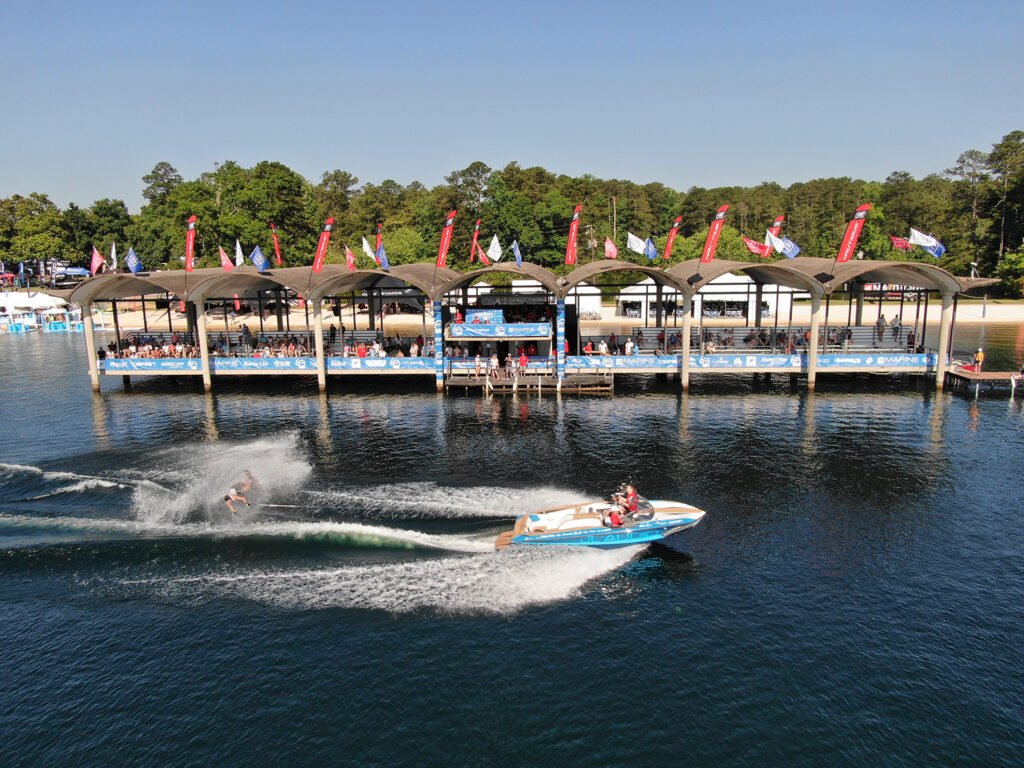
The Year Slalom Became a Coin Toss: Inside Water Skiing’s Wild 2024

Articles

The year slalom became a coin toss: Inside water skiing’s wild 2024
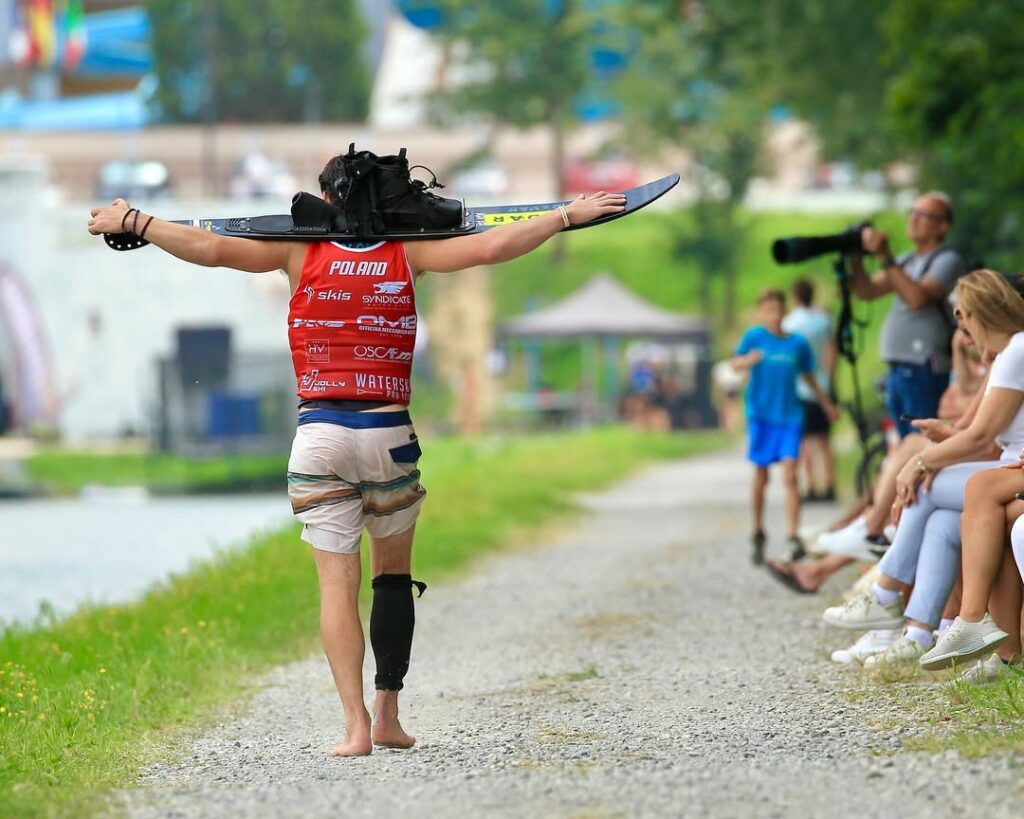
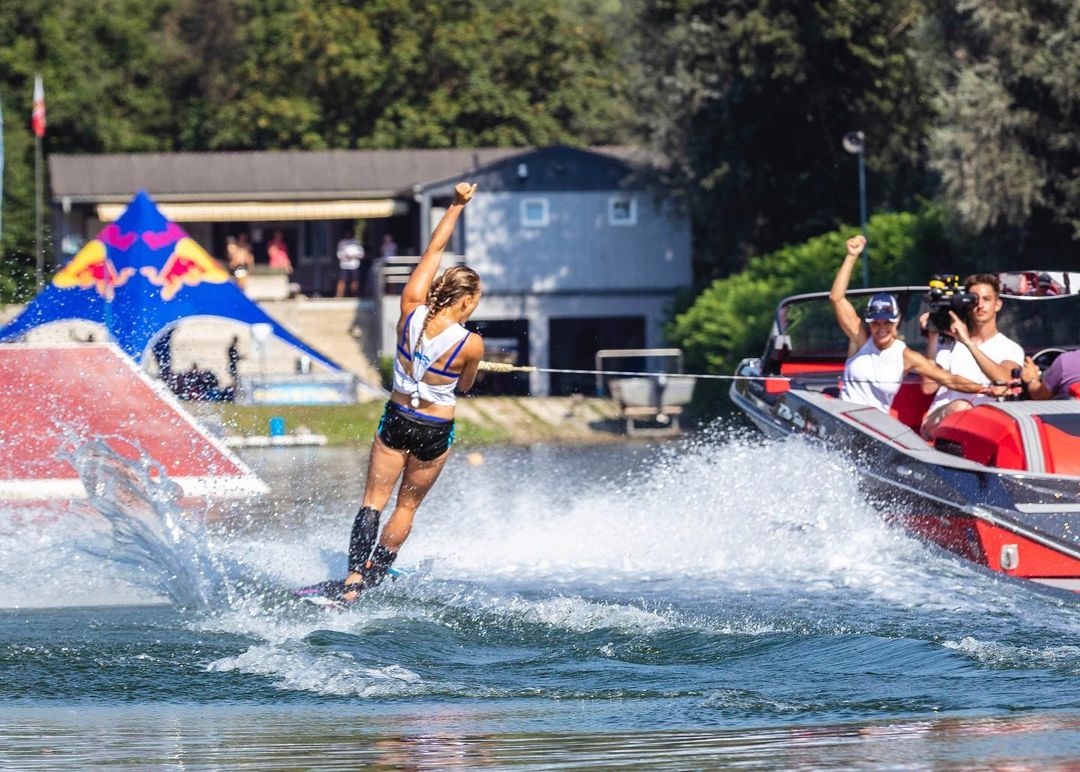
2024 San Gervasio ProAm

Image: @thomasgustafson

By Jack Burden


If 2024 goes down in the annals of waterski history, it will likely be remembered as the year when everything that was supposed to be stable turned upside down. Down was up, men’s slalom was a coin toss, and the podium was filled with new faces—high schoolers, middle-aged men, you name it. Yet, as chaotic as the men’s field was, the women’s side was almost eerily predictable. In fact, it may have been the least surprising year since the condensed 2020 season, with fewer fresh faces than an IWWF board meeting.

The men’s side, though? That’s where things got interesting. Nine different men claimed their first professional victories this season—an all-time record. Nine! That’s not just unprecedented; it’s a complete game-changer. From seasoned pros finally putting it all together to newcomers who seemed like they’d been training in secret since birth, the sport had never seen such a diverse group of first-time winners. Sure, Nate’s decision to get a “real job” and Freddie’s little misunderstanding with a dock opened a few doors in slalom, but still—this is a sign of the sport’s growing depth. New blood has arrived, and they’re coming for the top spots.

Let’s take a look at the nine who made history:
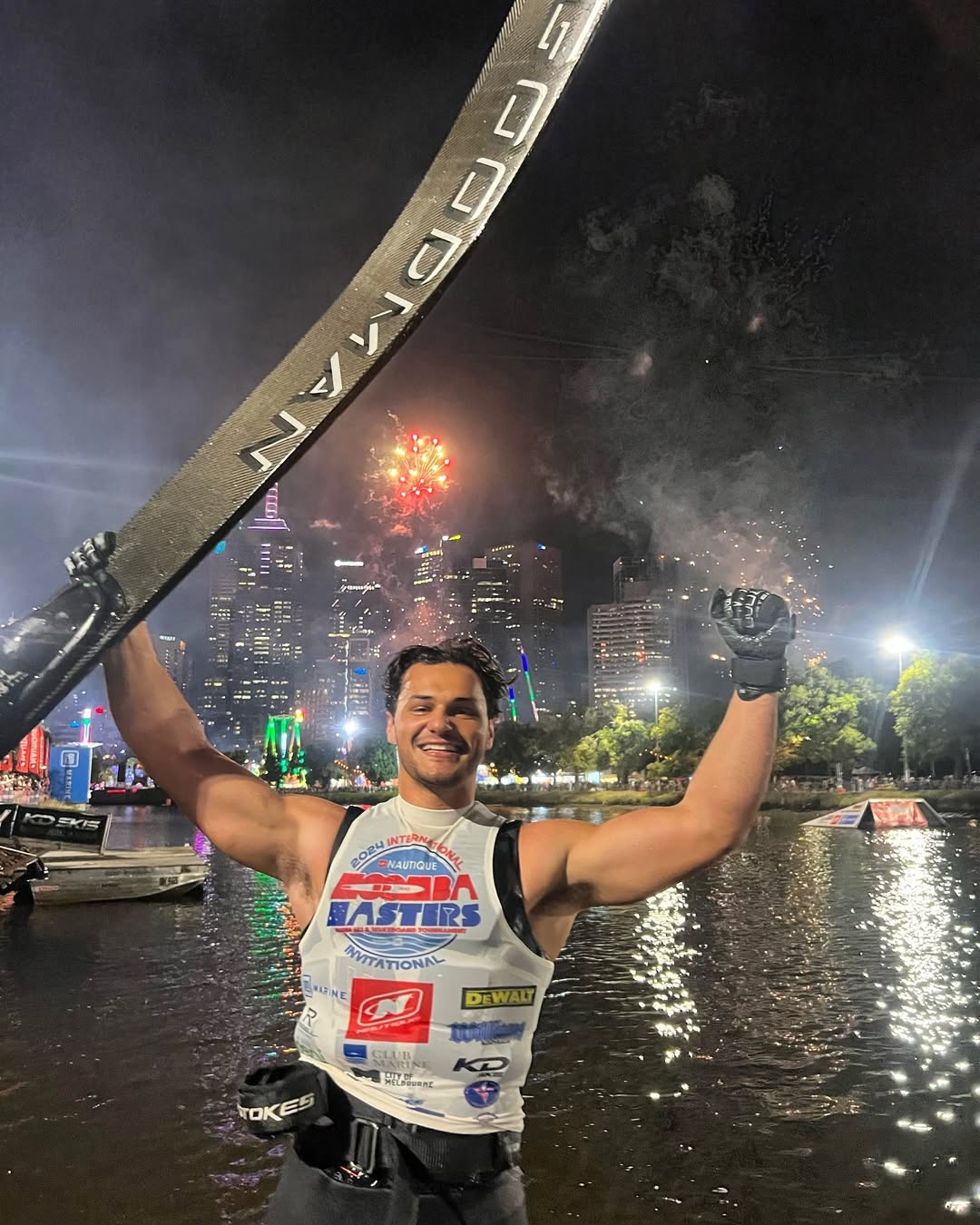
Pol Duplan-Fribourg wins Moomba Masters Night Jump

Image: @poldf

1. Pol Duplan-Fribourg – Moomba Night Jump

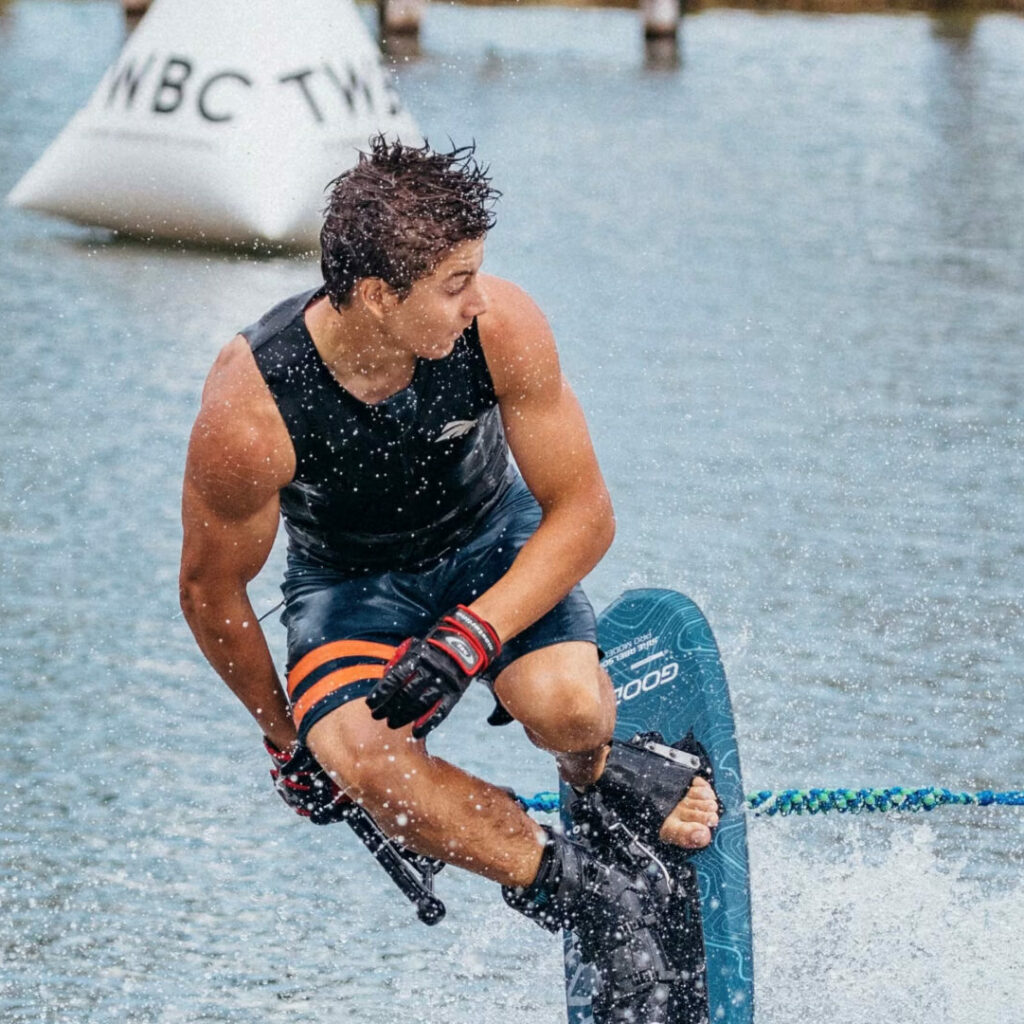
Brash. Arrogant. French. Pol Duplan-Fribourg is like the second coming of Aussie folk hero Timothy Bradstreet, and not just because of his impressive bodybuilder physique. This year, the 21-year-old Frenchman made his debut at the Moomba Masters—his first-ever professional jump event. Yes, you read that right. His first. And in true Duplan-Fribourg style, he went full throttle, falling short in the daylight final to the experienced Ryan Dodd and Jack Critchley but turning up the heat when the lights came on, taking down Dodd in a one-jump shootout to clinch the win.

It was a pivotal moment: he became the youngest jumper to win a pro event since 2017. Let’s take a moment to appreciate the immense talent of the Duplan-Fribourg family. His older brother Louis holds the world overall crown, while his younger brother Tristan was leading the charge in junior jumping before the Robin Lake ramp literally cut him in half. Unfortunately, Pol’s season was also cut short by injury—a herniated disc and a fractured ankle sidelined him by late spring.

But that Moomba win? It set the tone for what would become the year of the first-time champion.
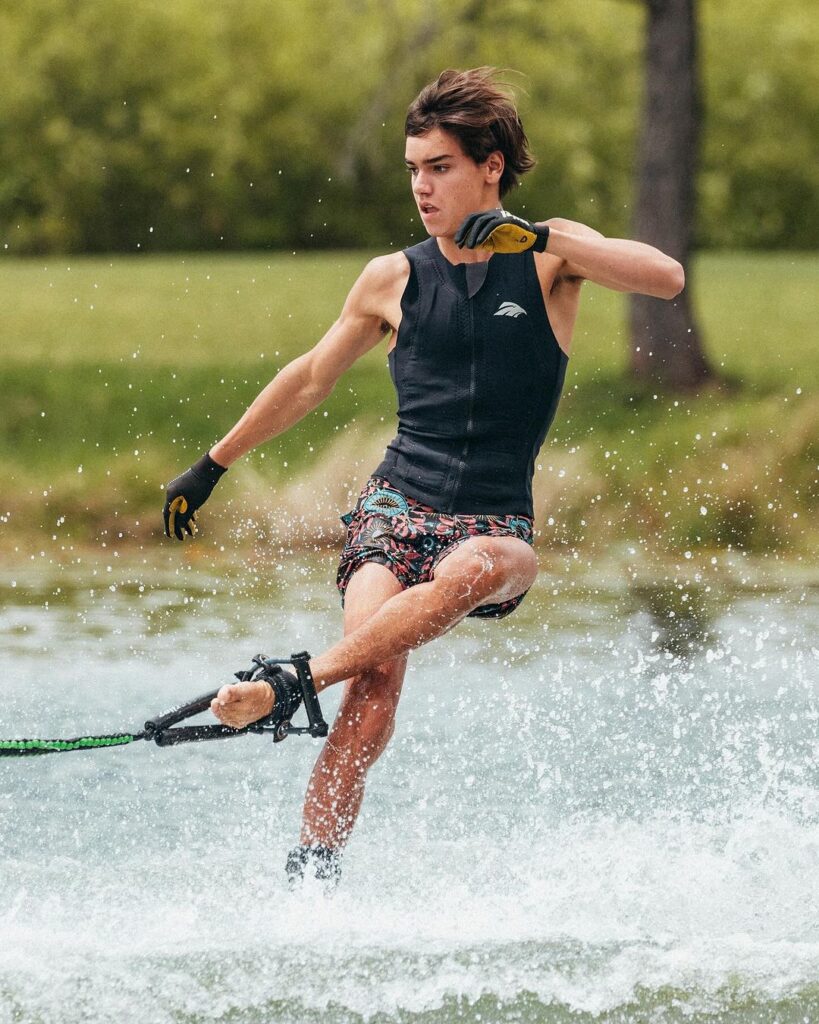
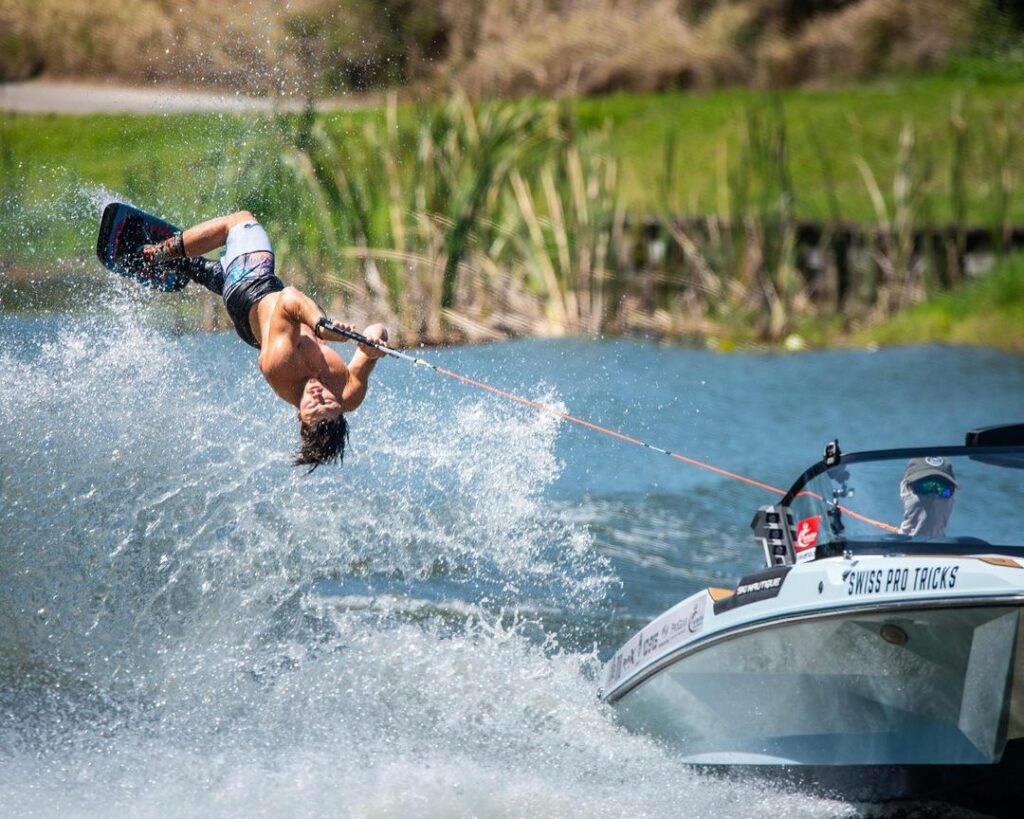
Matias Gonzalez wins the 2024 Swiss Pro Tricks

Image: @tiaremirandaphotography

2. Matias Gonzalez – Swiss Pro Tricks

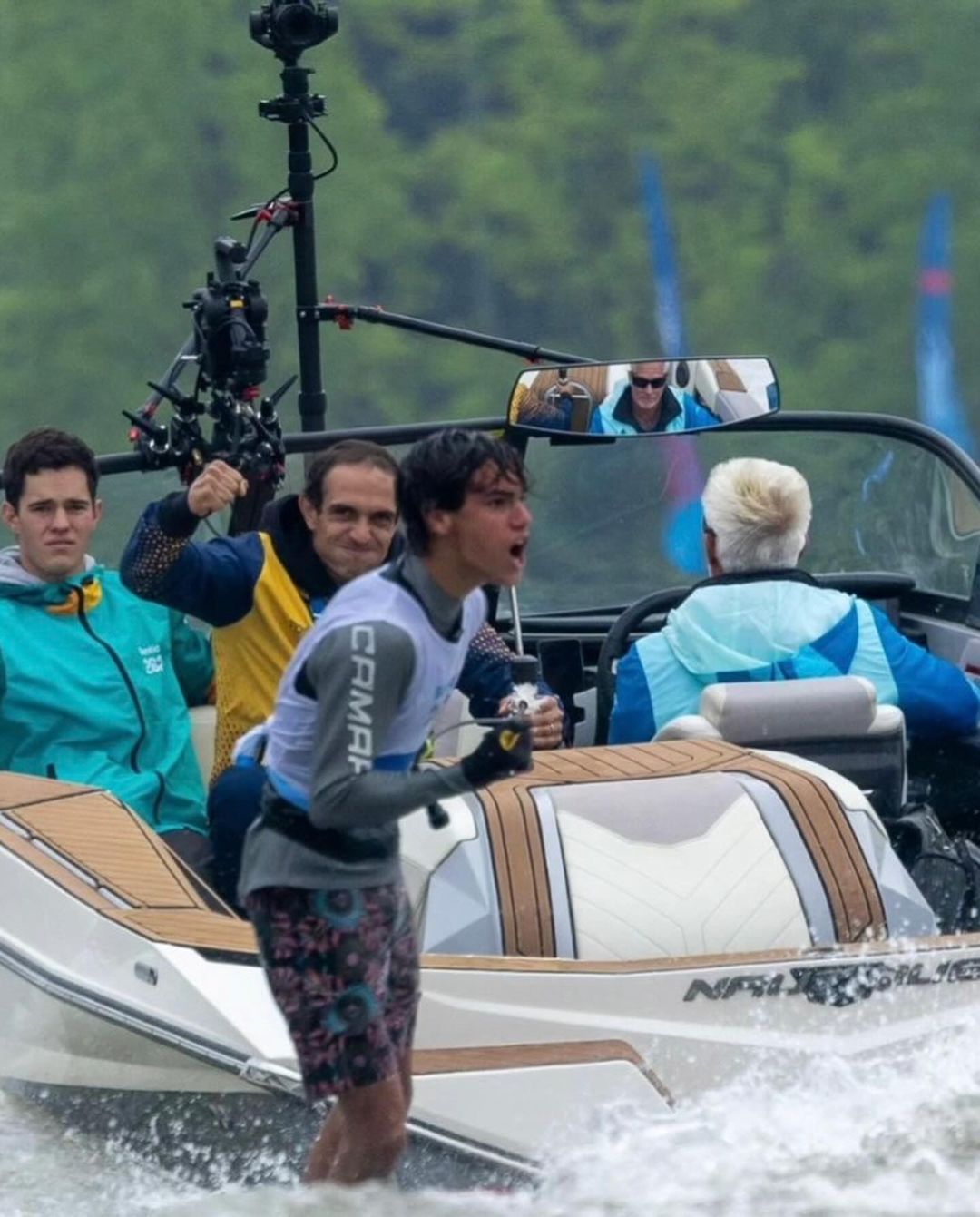
If you’re looking for the polar opposite of the muscled, stocky trick skiers who dominate the sport, look no further than Matias Gonzalez. Small, rakish, and soft-spoken, he somehow manages to look younger than his already juvenile 16 years. He’s a featherweight in a field of heavyweights—more Manny Pacquiao than Mike Tyson. Coming into the first event of the Waterski Pro Tour as the Under-17 World Record Holder, Gonzalez wasn’t exactly a dark horse, but in a field that included world champion Pato Font (who was eyeing records before the final even started), few expected him to clinch the win.

But that’s exactly what he did. In the final, Gonzalez scored 12,440, matching his personal best and junior world record to claim his first professional victory. The rest of the season saw him finish on the podium at every trick event, culminating in the Waterski Pro Tour season championship.

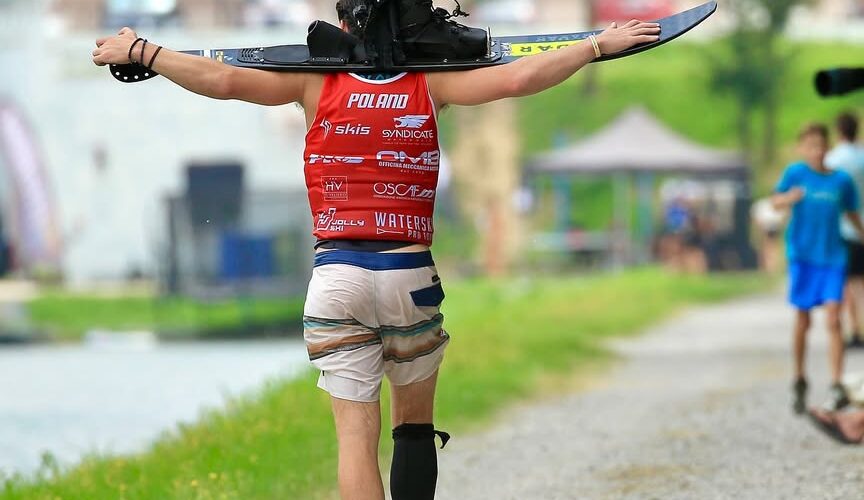
The lineup for the Swiss Pro Tricks final was striking, with 25-year-old Joel Poland standing out like a sore thumb among a group mostly too young to order a drink—a clear reminder that Trix are for kids. Gonzalez proved the point.
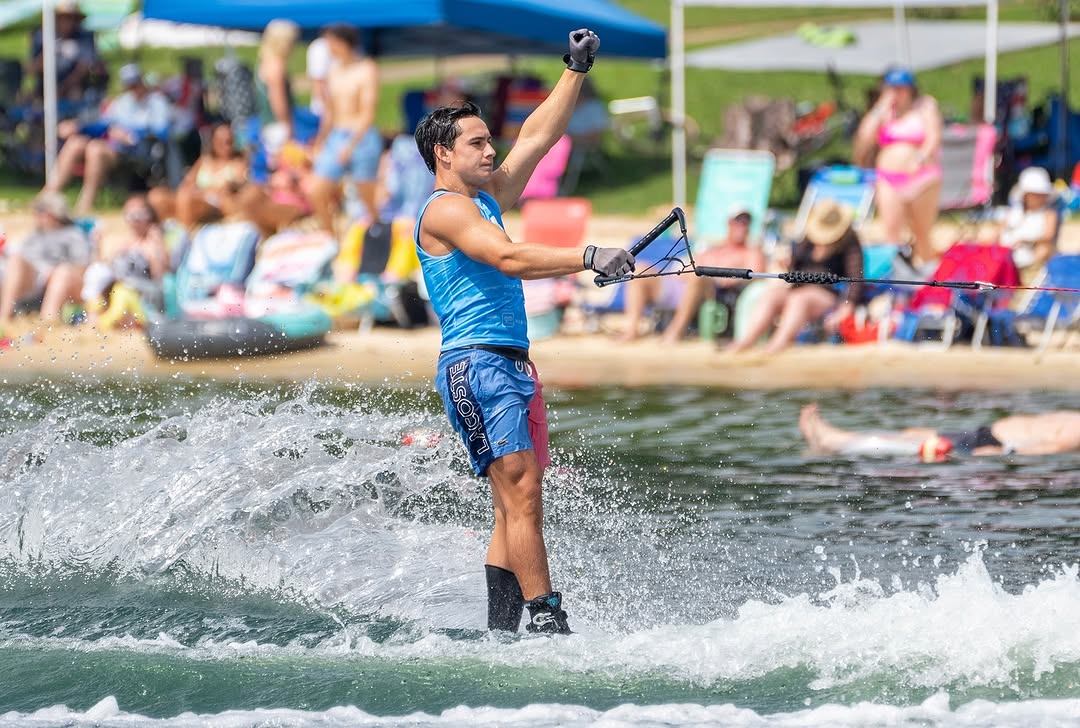
Martin Labra wins tricks at the 2024 US Masters

Image: @johnnyhayward_photo

3. Martin Labra – U.S. Masters

The build-up to the men’s tricks at the Masters was all about the big names—Abelson’s new world record, Joel Poland’s insane form, and Pato Font’s imminent comeback. But quietly, another teenage Chilean phenom was working his way into the conversation: Martin Labra. After grinding relentlessly through the Chilean summer, Labra—already the most decorated skier in Under-17 World Championship history—stepped onto the professional circuit with a vengeance.

He’s the poster child for ‘nurture over nature.’ The stepson of a professional jumper, Labra was raised across Pan-American ski schools with access to the world’s best coaches. A perfect blend of brawn and finesse, he looks equally at home muscling through a scrappy ski-line sequence as he does executing complex toe tricks with speed and precision. Labra stormed the Masters’ tricks event, securing the win with a standout performance in a final where several seasoned competitors faltered.

And he didn’t stop there. Labra followed up with another victory at the Botaski ProAm. In the coming years, he’s set to become a serious force in tricks and overall. Don’t be surprised if he starts cropping up on even more podiums.
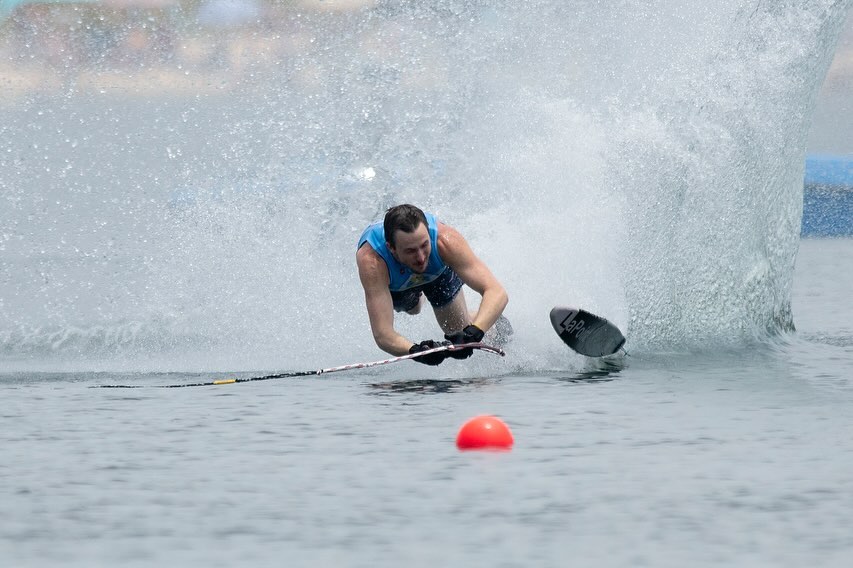
Colle McCormick wins slalom at the 2024 U.S. Masters

Image: Mitchell Miller

4. Cole McCormick – U.S. Masters

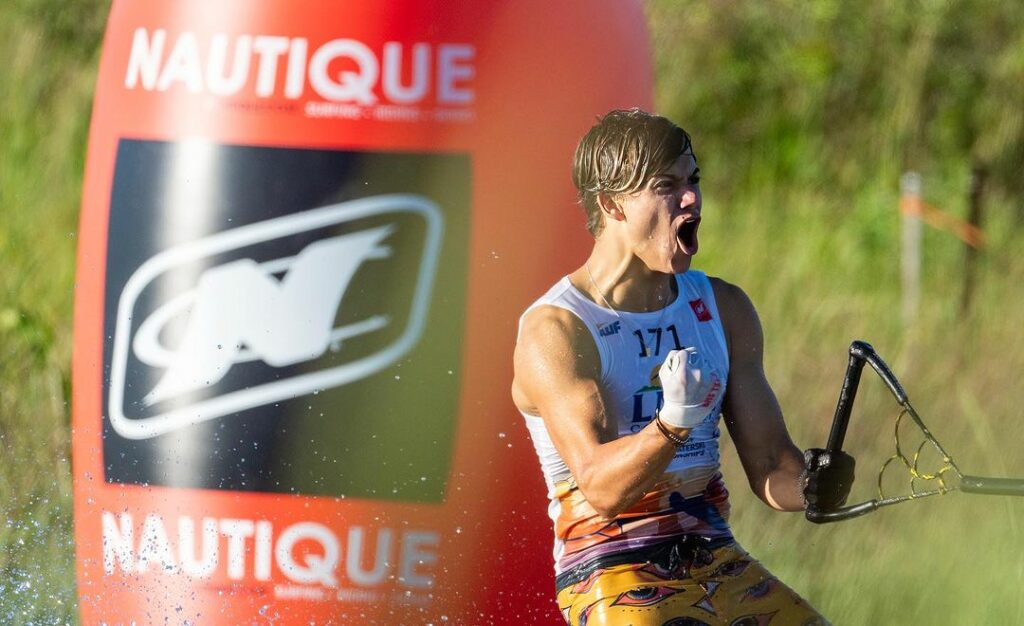
Forget the last name. Forget the Hall of Fame parents. Forget the legacy. Strip it all away, and what do you get? Cole McCormick, 28, a software engineer who looks more at home on a Discord server than on a slalom course. Hell, he even toe-tricked in college.

But here’s the twist: you’d be wrong.

The McCormick of 2024 is a late-blooming slalom maestro. Shredded, laser-focused, and a true student of the sport. This Memorial Day weekend, he made history as the first second-generation winner of the prestigious Masters title, following in the footsteps of his multiple Masters-winning parents, Susi and Ricky McCormick.

His win didn’t come easy. Conditions were tough, but McCormick was the only skier to run the 10.75m (39.5’) pass in the preliminary round. As the top seed, he secured five-and-a-half buoys in the final to clinch the win. And even after a high-speed faceplant out of six, that grin didn’t leave his face.

McCormick’s victory ended nearly four years of dominance by Nate Smith, Freddie Winter, Will Asher, and Thomas Degasperi in men’s slalom. And just like that, the floodgates opened for what was to come.
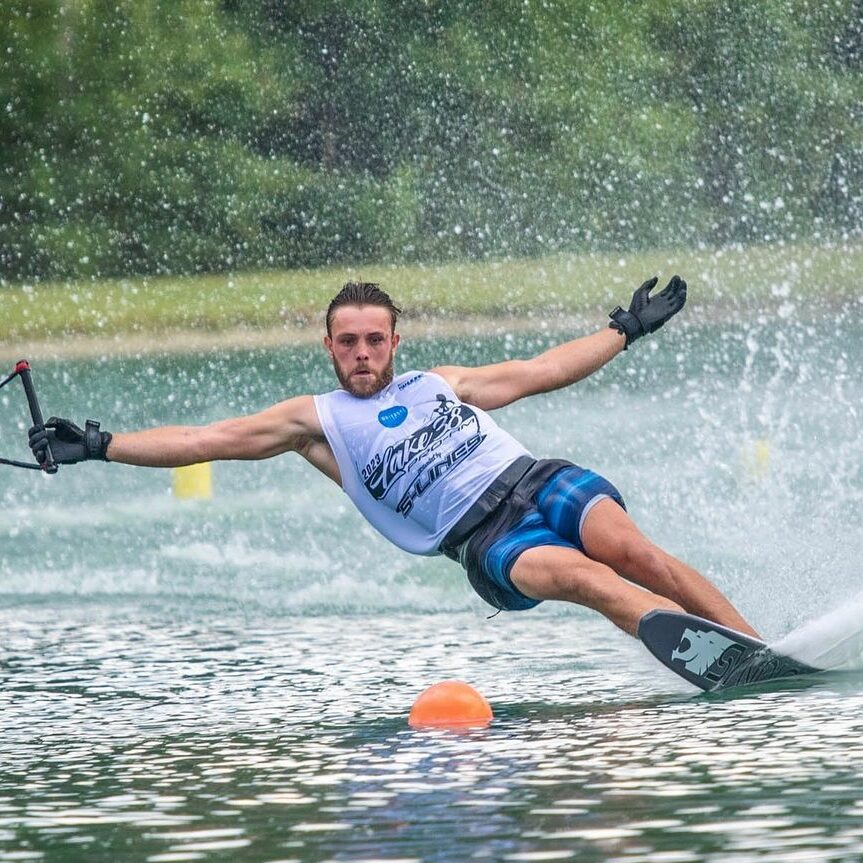
Rob Hazelwood wins Lake 38 ProAm

Image: @waterskibroadcasting_

5. Robert Hazelwood – Lake 38 ProAm

Before Robert Hazelwood was the YouTube vlogger we all secretly watch when we should be working, he was just a kid from Northern England with the unenviable task of trying to keep Joel Poland humble. Whether he succeeded? Well, that’s up for debate.

Snubbed by the Masters, Hazelwood came out swinging the next weekend at the Lake 38 ProAm. At 24, he had been lurking in the shadows for years—always there, always a threat, but never quite crossing the line. Until now. This time, he was all business. In a final that could’ve been an intense poker match—coming down to a three-way runoff with McCormick and Winter—it was Hazelwood who kept his cool and showed the most skill. His win was a moment he’d dreamed of since he was old enough to tie his own ski boots.

Hazelwood’s victory seemed to signal a changing of the guard. He became the youngest men’s slalom champion since 2019, and suddenly, the balance of power in the sport didn’t seem so solid.

Perennially inconsistent, however, Hazelwood’s form yo-yoed between triumph and missing finals throughout the rest of the season. He found the top step again at the Botaski ProAm, but with plenty left to work on, don’t be surprised if Hazelwood’s climb up the standings is a bit of a rollercoaster.
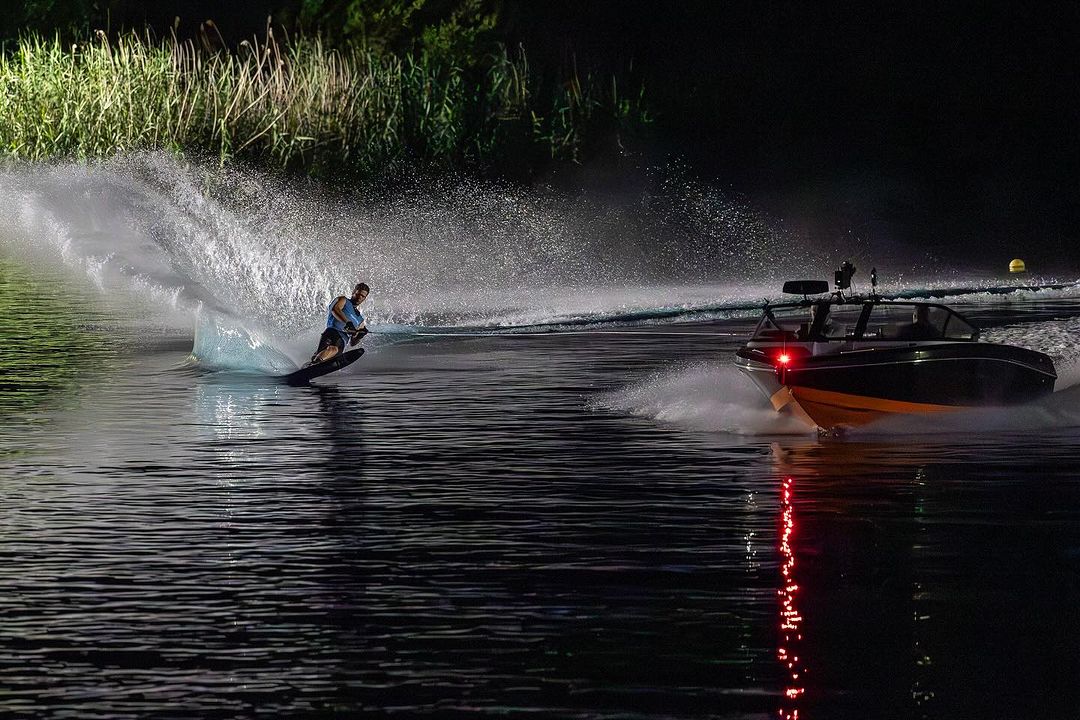
Corey Vaughn wins the 2024 Oxfordshire ProAm

Image: @waterski_photography

6. Corey Vaughn – Oxfordshire ProAm

Among the fresh-faced talents and rising stars stood Corey Vaughn, the veteran journeyman. For over a decade, he has been a fixture on the professional circuit—solid and dependable but never quite a threat. Until now. At 38, Vaughn finally broke through at the Oxfordshire ProAm, becoming the oldest skier to claim his first professional slalom title.

Yes, this is the same Vaughn who once donned a cape and cap as “Buoy Wonder,” only to mellow into the barefoot philosopher affectionately known as “Mr. Peace, Love, and Waterskiing.” For years, we’ve watched him grind it out on the pro circuit, collecting more life lessons than titles.

But under the Oxfordshire lights, Vaughn rose to the occasion in challenging nighttime conditions. A career of near-misses, sweat-soaked toil, and unwavering belief finally bore fruit. At 38 years and 9 months, he reminded the world that persistence can be the ultimate trump card.

Far from a one-off triumph, Vaughn backed it up throughout the season. Finishing fourth on the Pro Tour, he delivered the season of his life, even running the elusive 10.25m pass—one of only three skiers to achieve it this year.
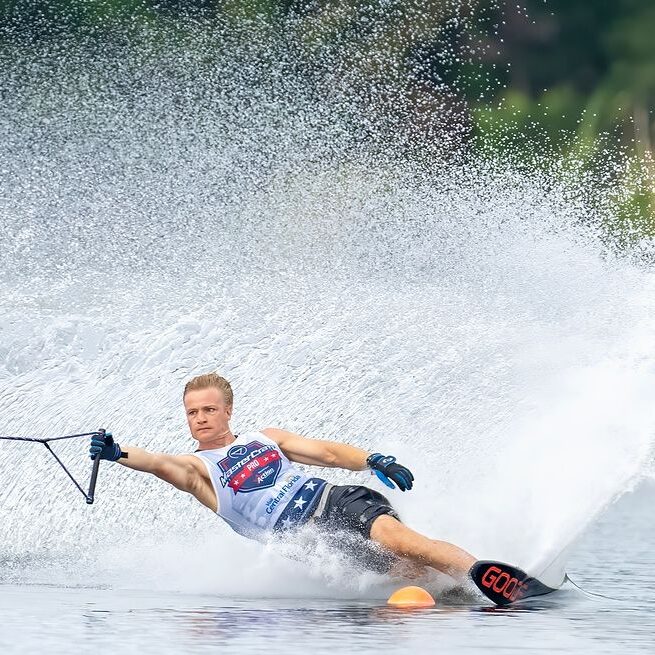
Dane Mechler wins his first pro title at the Mastercraft Pro

Image: @johnnyhayward_photo

7. Dane Mechler – MasterCraft Pro

Dane Mechler’s victory at the MasterCraft Pro felt like the culmination of a long, hard-fought journey. For years, Mechler had been the “nearly man” of pro slalom—always consistent, always in the mix, but never quite able to claim the top step. This time, the story ended differently.

His season had been anything but smooth. A broken foot, courtesy of an ill-fated leap through a CorrectCraft hoop and the challenges of balancing family responsibilities could have derailed him. Yet, when it mattered most, Mechler delivered. Skiing early in the final, he laid down a 4.5 at 10.25m—a score that stood tall against a stacked field, including favorites Nate Smith and Will Asher.

The celebration that followed was a moment to savor. With his picture-perfect family cheering from the sidelines, it was a victory that felt as personal as it was professional.

For Mechler, this wasn’t just another tournament; it was the tournament. A skier often labeled “the best never to win” finally got his moment, and the emotions at the finish said it all—relief, pride, and the satisfaction of proving that perseverance pays off.
Lucas Cornale Wins Travers Grand Prix

Image: @robhazelwoodcreative

8. Lucas Cornale – Travers Grand Prix

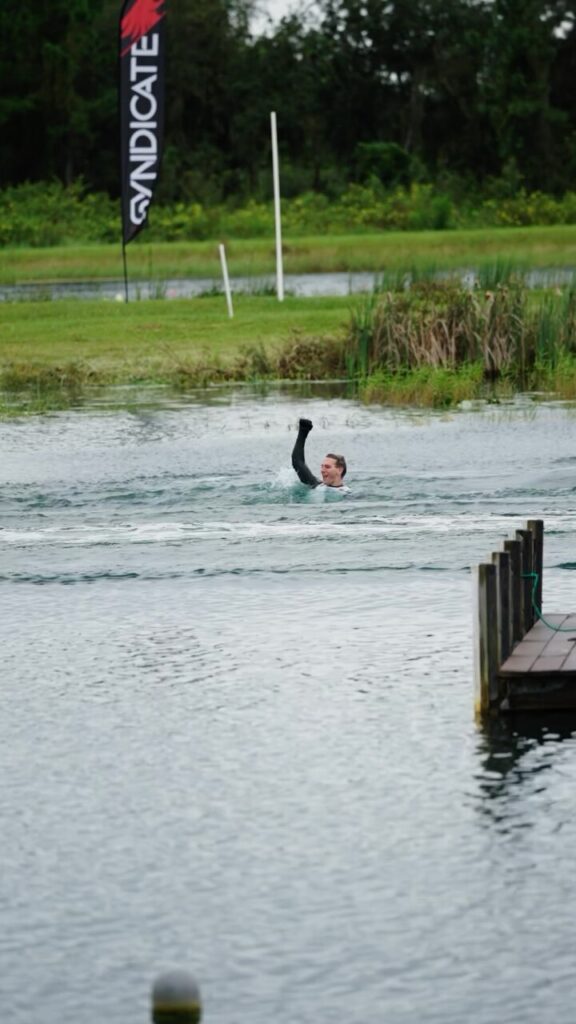
Lucas Cornale is 19. Let that sink in. Nineteen. And in 2024, the Queenslander smashed his way into the history books as the youngest male to win a pro slalom event this century. Just two days after blowing out his birthday candles, Cornale lit up the Travers Grand Prix, claiming his first pro title.

In a sport often mired in safe, predictable skiing, Cornale is pure adrenaline. He doesn’t seem to know—or care—what an S-turn is. While others might have played it cautiously for a full five, Cornale went for broke, gunning to run the 10.25m (41′ off) pass. His 4.5 held up, delivering not just a win but a statement: fearless beats conservative.

And this wasn’t a one-off. Earlier in the season, Cornale had already turned heads with standout performances at Moomba and the Lake 38 ProAm. His Travers triumph wasn’t luck; it was inevitable.

With a mix of audacity and raw skill that makes veterans sweat, Cornale isn’t just a rising star—he’s the future. Get used to his name. This is only the beginning.

Brando Caruso at the Miami Pro Slalom

Image: Waterski Pro Tour

9. Brando Caruso – Miami Pro

I’ve got mixed feelings about Italians. Part of me leans toward distrust—after all, history reminds us which side they fought on. But if I’m honest, it’s probably jealousy. No nation exudes cool quite like Italy, the land of the Corleones, Ferrari, and Sophia Loren. When I think Italian, I picture the tall, dark, cigarette-smoking guy who effortlessly steals your girl.

No slalom skier embodies that aura of effortless cool better than Brando Caruso. He’s the anti-hero of water skiing, unapologetically marching to his own beat. Feigned courtesy isn’t his style—he’s the guy throwing a death glare while reluctantly posing on the lower steps of a podium. Smooth, elegant, and unmistakably Italian, his skiing is a perfect reflection of who he is.

In the season’s finale, with the biggest cash prize up for grabs, Caruso took down a stacked field—Smith, Asher, Travers, and the rest of slalom royalty. This wasn’t just another win; it was a mic drop moment in a season that saw a record-breaking 10 different winners in men’s slalom.

His triumph was the perfect conclusion to a season full of surprises. It was a showcase of timing, perseverance, and talent, and for Caruso, it was a breakthrough that felt both satisfying and long overdue. Some moments in life are worth the wait—and this was one of them.


2024 was a year that flipped the script on everything we thought we knew about pro waterskiing. It was chaos, unpredictability, and opportunity all wrapped into one, especially in the men’s field, where a record number of first-time winners emerged. Old names faded, and new ones stepped up with the audacity to take it all. From teenagers defying expectations to veteran journeymen finally getting their due, the sport showed that it’s more open than ever to fresh faces. Meanwhile, the women’s field remained more stable, but even that seemed like the calm before the storm. This season didn’t just change the standings; it changed the very tone of the sport. We’ve entered an era where anything is possible, and it’s only going to get more interesting from here. Strap in—2025 might just be the year we see everything we thought was impossible, come true.
Jonathan Travers - professional water skier

Jonathan Travers Speaks Out: Inside the Controversy that Ended a 14-Year Sponsorship

Articles

Jonathan Travers speaks out: Inside the controversy that ended a 14-year sponsorship

Jonathan Travers - professional water skier

Image: @hoskis

By Jack Burden


The world of professional waterskiing is no stranger to high-stakes competition, moments of glory, and, occasionally, controversy. Earlier this year, veteran athlete Jonathan Travers found himself at the center of a storm—both literal and metaphorical. After a contentious Masters Last Chance Qualifier (MLCQ) event, Travers was dropped by his long-time sponsor, Nautique, after 14 years of partnership. Now, he has decided to speak out about the controversy that stemmed from that event, sharing his side of the story, how it has impacted his career, and the broader implications for the sport.

In an exclusive interview with Tony Lightfoot on the TWBC Podcast, Travers expressed frustration and disappointment with how the situation was handled. He believes his side of the story hasn’t been properly shared, and that many key factors leading to the dispute were overlooked.

Masters Qualifier Turns Sour

The incident occurred at Winter Garden Water Ski during the first MLCQ Series event of the year. This qualifier is crucial for skiers hoping to secure spots at the Masters Waterski and Wakeboard Tournament, one of the sport’s longest-running and most prestigious competitions.

Travers, along with five other athletes, tied for second place after two rounds, each scoring 4@10.25m (41′ off). With only three spots available, a runoff was scheduled to determine the qualifiers. However, strong winds had worsened conditions, making it unsafe for skiing. According to Travers, the Safety Director initially called off the runoff due to the weather, but the tournament organizers insisted that the competition continue.

“There’s a time and place for skiing in rough conditions,” Travers said, reflecting on the situation. “But when we’re skiing… at that kind of level… where there’s nothing on the line except to pay another entry [fee] to go to another tournament, it’s hard to make the the athletes ski in that.”

Travers voiced his concerns to the Chief Judge, requesting a brief break to let the weather improve. “I said, ‘We need to stop. There’s no reason to make us ski in [conditions like this]… In 20 minutes the weather says its going to blow through—it’s Florida.’” According to Travers, the conditions were so bad that he hadn’t skied in winds that rough even at Callaway Gardens, home to the US Masters, in over a decade of competing there.

Despite these concerns, the competition continued. Travers, who was first off the dock, managed only 1.5 buoys on his first pass, with the skiers having to tackle 10.75m (39.5’ off) in what multiple competitors described as a white capping tailwind. Travers believed it was too dangerous to continue. “I told the guys in the boat, ‘This is unskiable. Someone’s going to get hurt, and it’s not worth it at this event.’”

As Travers returned to the dock, he gestured toward the officials in the judges’ tower. He claims that he simply raised his hand as if to say, “What are we doing?” but others interpreted it as an obscene gesture. Upon reaching the dock, Travers discussed the conditions with the officials, reiterating his concerns. “I might have said some words I shouldn’t have, and I’m sorry for saying those if anyone was there but I have a lot of passion for this sport, I have a lot of passion for every single athlete, I care about every single person.”

Despite the ongoing objections, the runoff continued. Of the six skiers, only Joel Poland successfully completed his opening pass, earning his spot in the Masters alongside Will Asher, the only other skier to make it past three ball. Tragically, Dane Mechler broke his foot during the runoff, an injury that would force him to miss most of the 2024 season.

“What are we doing?” Travers asked, still incredulous. “We’re not at a pro event, we’re not at an event that someone ever should get hurt at from a conditions standpoint, if I got out there and I hit a buoy and break my foot, that happens, but when you’re trying to turn three ball at [10.75m] after an hour break, cold [start], in white capping conditions, that’s not fair”

The Fallout and the Dismissal

Following the event, Travers was asked to participate in an interview with tournament officials regarding a gesture he made toward the judges’ tower during the runoff. Travers explained that he had raised his hand in a questioning motion to express frustration about the unsafe conditions.

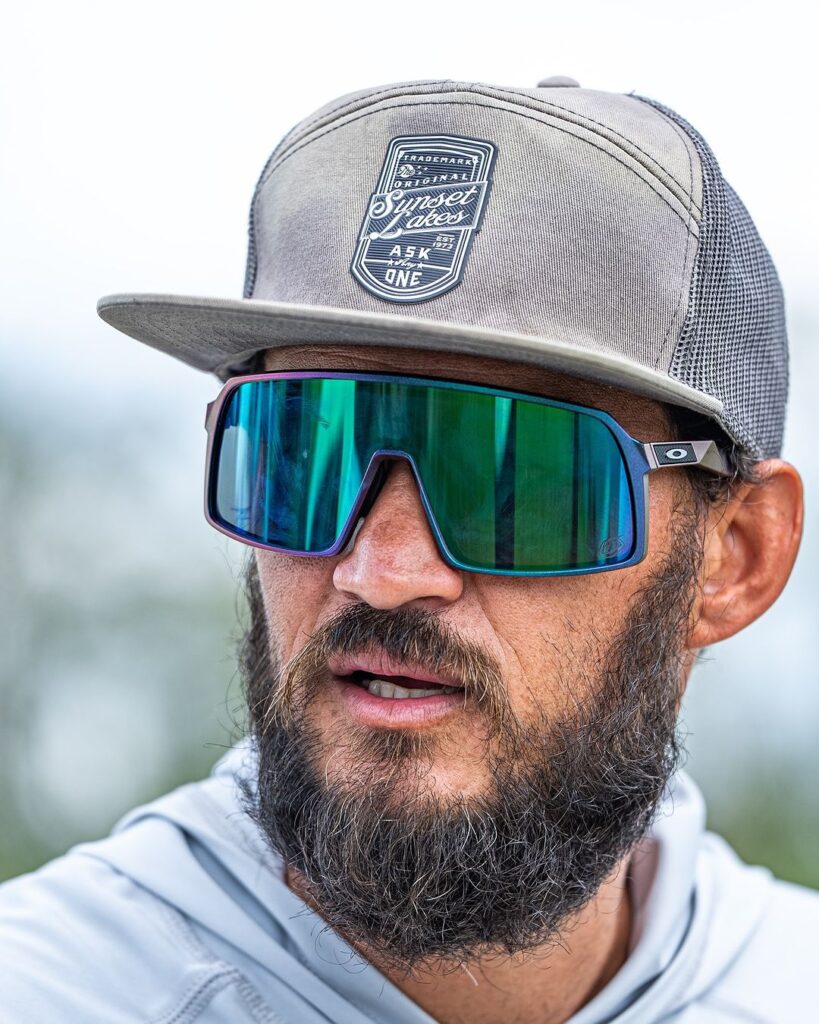
However, rumors began circulating that Travers had made an inappropriate gesture, alleging that he had flipped off the judges. This accusation led to his eventual dismissal from Nautique Boats. According to Travers, this claim was false. “No one even looked into the situation enough to realize for 21 years, I’ve used Clincher or Syndicate Connect gloves,” he explained, noting that these gloves make it physically impossible to separate the middle and index fingers or straighten your hand, let alone give someone the finger.

Travers expressed disbelief over the lack of investigation into the matter. He explained that several judges in the tower worked for Nautique, and he feels the incident was mishandled, resulting in what he describes as a “setup” that led to his firing. ” I wrote emails, I texted, I called—no one replies to me,” he said, adding, “I feel like I got bullied.”

A 14-Year Relationship Ends

For Travers, the dismissal was especially painful given his long relationship with Nautique, a company he had represented for nearly 14 years. “[I’ve] done everything possible for that company… I still believe in that brand, I still love that boat… but the people involved in it really hurt me.”

Despite the turmoil, Travers continues to train behind a Nautique boat daily. “We’re still a Nautique family,” he said, but voicing his disappointment with the individuals involved in his dismissal. Reflecting on the LCQ, Travers admitted that, in hindsight “I would change my attitude when I came back to the dock, but there’s nothing I did on the water to the judges that I could ever say that I wish I did something different.”

The incident also raises questions about Nautique’s consistency in handling skier conduct and disciplinary actions. Five years ago, another Nautique athlete, Ryan Dodd, gave a fiery and emotional speech after winning the World Championships, criticizing event organizers following an injury to Jack Critchley during challenging conditions. The speech led to the webcast of the finals being taken down and reuploaded with the speech censored. However, Dodd, a world record holder and world champion, appeared to receive more leniency from the company. Similarly, world record holder Nate Smith remained with Nautique for years despite facing far more serious allegations within the waterski community. Perhaps this was just a convenient way to get Travers, now 36, off the books?

A Call for Change in the Sport

Travers believes the incident at the MLCQ sheds light on larger issues within the sport, particularly around athlete safety and the Masters qualification process. He criticized the current system, which was altered during the pandemic, for incentivizing participation in the MLCQ over professional events. “Now they’re pushing for people not to got to pro events, not to do the [Waterski] Pro Tour and just to go to their [MLCQ] tournaments,” adding “In my opinion, it’s kind of like a monopoly where May is a Nautique month and they want us to go pay multiple entry fees for no cash prize to try qualify for their Masters.”

He also voiced concerns about the timing of the LCQ event, which takes place just a week before the Masters, making travel and accommodations extremely expensive and difficult to arrange. “If you qualify the weekend before the Masters, there’s no hotels available, there’s no houses available—everything’s outrageously expensive. [But] if you could book it in when you already know, in December or November, you have options.”

Travers calls for a return to the old Masters qualification system, where skiers earned their invitations based on their performance on the Waterski Pro Tour or the World Ranking List. In his view the previous system encouraged young skiers to compete in more pro events. That’s what motivated him when he was starting out.

Looking Forward

Despite the personal and professional setbacks, Jonathan Travers remains committed to the sport. He is currently ranked sixth on the Waterski Pro Tour slalom leaderboard after one of his best seasons in years, including a victory at the San Gervasio Pro-Am. By speaking out, he hopes to inspire change in how the sport is governed and how athletes are treated.

“It’s not fair to the athletes, and it’s not fair to the [Nautique] team—that they call a ‘team’—when they don’t have meetings or talk to us and understand our side of things.” He added, “Without athletes, our sport is nothing,” stressing, “we [can’t] keep beating ourselves up at events that don’t really matter.”

For now, Travers remains focused on moving forward, competing at the highest level, and continuing his work as one of the world’s most sought-after technical controllers. While his relationship with Nautique may have ended, his love for waterskiing remains as strong as ever.

Note: Return to Baseline reached out to a representative from Nautique Boats for comment prior to publishing this article but received no response.

Joel Poland at the WWS Canada Cup

Is Joel Poland the Greatest All-Around Skier Ever? A Look at His Unprecedented Streak

Analysis

Is Joel Poland the greatest all-around skier ever? A look at his unprecedented streak

Joel Poland at the WWS Canada Cup

Image: @johnnyhayward_photo

By Jack Burden


Joel Poland has been on an incredible hot streak over the past few seasons. The 25-year-old is currently leading the Waterski Pro Tour jump standings and the World Water Skiers Overall Tour, taking home more prize money than any other water skier so far in 2024. He has officially broken the world overall record five times, with a sixth record pending as of last weekend. His versatility across all three events—slalom, trick, and jump—is unparalleled in the modern era, consistently competing with the best in the world in each discipline.

This raises the question: Has anyone ever been this good across all three events? While numerous factors contribute to any GOAT debate—such as longevity, consistency, world titles, and professional victories—Poland, still in the early stages of his career, has a long way to go before reaching the heights of legends like Sammy Duvall, Jaret Llewellyn, and Patrice Martin. However, over the past four decades, since systematic record-keeping began, has any skier ever been as close to the top scores in all three events as Poland? Below, we rank the top five streaks in men’s overall:

Dorien Llewellyn US Masters

Image: @dorienllewellyn

5. Dorien Llewellyn (2020-2022)

  • 94% of Individual Top Scores
  • 89% of Individual World Records

Dorien’s achievements often get overshadowed by Joel Poland’s rise to world dominance, but the second-generation Llewellyn is the best in his storied family by some metrics. At the 2021 World Championships, his scores across the prelims and finals would have broken his own world overall record—had they been performed in the same round. Unfortunately for him, Poland’s scores were even better, snatching Llewellyn’s world record on his way to the title.

During this period, Dorien posted scores into 10.25m (41′ off), tricked just shy of 12,000 points, and jumped 70 meters (230 feet), placing him within 90% of the top specialist scores in each event. Only Dorien and Joel have achieved this since world rankings began in 1979. Sidelined with injury in 2023, Llewellyn has shown promising signs of a return to form across the first two stops of the WWS Overall Tour.

World Overall Champion Mike Hazelwood

Image: Yvon le Gall

4. Mike Hazelwood (1979-1981)

  • 92% of Individual Top Scores
  • 92% of Individual World Records

Hazelwood’s dominance in overall skiing is unmatched in many ways. From the late 1970s through the early ’80s, the British skier won five consecutive Moomba Masters and four consecutive US Masters overall titles. At the height of his powers in 1980, Hazelwood held the world jump record, was less than 1,000 points short of the world trick record, and within a pass of the world slalom record.

He remains one of only two men in the past half-century to win professional titles in all three events, including victories in slalom and tricks at the Moomba Masters, alongside his string of jump and overall titles across the globe. Hazelwood might have ranked even higher on this list if records had extended further back, as they only began near the end of his dominant run.

Carl Roberge Slalom Skiing

Image: Carl Roberge (via about.me)

3. Carl Roberge (1981-1983)

  • 93% of Individual Top Scores
  • 93% of Individual World Records

Carl Roberge, known for his imposing athleticism, holds a strong claim as the greatest skier never to win an individual gold at the World Championships. He was ranked either first or second in the world for overall from 1980 to 1990, helping Team USA to five consecutive victories.

In 1982, Roberge was just one buoy shy of the LaPoint brothers’ jointly held world slalom record, less than two meters short of Hazelwood’s world jump record, and still ranked fourth in the world for tricks despite it being his weakest event. To this day, Roberge is the only man to simultaneously hold top-five world rankings in all three events and the only man to win a season championship on the Pro Tour in both slalom and jump.

Le Petit Prince of Water Skiing

Image: Graine de Sport

2. Patrice Martin (1994-1996)

  • 95% of Individual Top Scores
  • 93% of Individual World Records

Patrice Martin is best remembered for his six consecutive world overall titles from 1989 to 1999, including a nail-biting victory over Kreg Llewellyn by just 0.2 overall points—the smallest margin of victory ever recorded.

Martin’s performances in 1996 remain the closest anyone has come to the world record marks in all three events over the past four decades. He held the world trick record, was less than three buoys shy of the slalom record, and trailed Bruce Neville’s jump record by only 20 feet. At his peak, Martin was awarded the IWWF’s first-ever overall record, which he went on to break three times through the twilight of his career.

Joel Poland performs a Raley on his Radar trick ski

Image: @radarskis

1. Joel Poland (2021-Present)

  • 97% of Individual Top Scores
  • 92% of Individual World Records

In an era where specialization reigns supreme, Joel Poland’s prowess across all three events is astonishing. In 2023, Poland ran 10.25m (41’ off), getting within 2.5 buoys of Nate Smith’s decade-old world slalom record. He tricked within 500 points of Patricio Font’s world record and jumped 71.7 meters (235 feet), just half a meter shy of the highest score that year.

While Patrice Martin’s golden run in the years leading up to Poland’s birth was technically closer to world record marks, the context is different. In the 1990s, scores were steadily climbing, whereas today, Poland is competing in an era where jump scores, at least at the highest level, have been declining. In the past five years, only one 240-foot jump has been recorded, and the world jump record hasn’t been seriously challenged in nearly a decade.

In 2023, Poland’s scores were within 95% of the top specialist scores in all three events, a feat previously unheard of in the sport’s recorded history. Statistically speaking, no one has ever been this good at water skiing.

Honorable Mentions:

Jaret Llewellyn (2002-2004)

  • 93% of Individual Top Scores
  • 90% of Individual World Records

Jaret famously held the “unbreakable” world overall record for 15 years, but his slalom performances fall short in this purely score-driven analysis. While undoubtedly one of the greatest overall skiers of all time, Jaret’s success stemmed more from longevity, consistency, and clutch performances than raw talent.

Sammy Duvall (1984-1988)

  • 92% of Individual Top Scores
  • 89% of Individual World Records

The most dominant skier of the 1980s, Duvall won four consecutive world overall titles despite fierce competition. A legendary jumper and consistent slalom and trick skier, Duvall’s era saw specialists like Andy Mapple and Cory Pickos pushing the envelope in slalom and tricks, leaving overall skiers like Duvall playing catch-up.

Pre-1979 Skiers

Early greats like Mike Suyderhoud, Ricky McCormick, George Athans, and Chuck Stearns may well have had periods rivaling Poland, but without systematic tracking of scores, we will never know for sure.

Giannina Bonnemann Mechler celebrates after winning the WWS Austrian Open

Cancellations Highlight Ongoing Issues in Women’s Professional Water Skiing

Articles

WWS Overall Tour: Cancellations Highlight Ongoing Issues in Women’s Professional Water Skiing

Giannina Bonnemann Mechler celebrates after winning the WWS Austrian Open

Giannina Bonnemann Mechler, 2023 WWS Overall Tour champion, will not be competing in 2024 as she and her husband Dane expect their first child in August (image: @world.water.skiers)

By Jack Burden


Last September, the world’s best female overall skiers, past and present, gathered in Central Florida for the WWS Overall Tour final. Regina Jaquess, widely considered the GOAT of women’s slalom and overall, competed alongside Hanna Straltsova, who would go on to win dual World Championship golds a month later, and Giannina Bonnemann Mechler, who had swept the previous three tour stops. In a fiercely contested final with less than 60 overall points separating the top three (roughly three buoys in slalom), Bonnemann Mechler emerged victorious, going undefeated on the Tour. Sadly, we will not witness the women battle it out again in 2024.

Despite months of planning and communication with the athletes, World Water Skiers has made the difficult decision to cancel the women’s event due to an insufficient number of entries across the four-stop Tour in 2024. “Just really disappointed,” shared Tour organizer Jaret Llewellyn. “We continue to get great support from the men, but, unfortunately, the state of the sport makes being a professional athlete unattainable [for most].”

Instead, the Tour will move forward in 2024 as a male-only competition, where a core group of six of the best overall skiers in the world will travel to three countries alongside a rotating cast of local challengers. The cancellation of the women’s event is a significant blow and speaks to larger issues around participation and gender equity in the sport.

Water skiing, much like other professional sports, has made significant strides toward achieving gender equity in recent years. This year, an impressive 13 out of 15 slalom events and all five professional trick events offered equal prize money for men and women. This commitment to equality has resulted in the largest total prize purse for women’s slalom in the past 20 years, potentially the highest ever recorded.

Despite these positive developments, there remains a notable disparity in participation rates between male and female athletes in professional competition. Across the first nine professional slalom tournaments of 2024, all of which featured equal prize money, male participants have outnumbered female participants by almost two to one.

Professional events rely on athlete participation, whether directly through entry fees, or in the case of the WWS Overall Tour, to justify their value proposition to sponsors. If the women’s side of the field is consistently light, more tournament organizers might follow suit, jeopardizing the recent gains in gender equity.

So how do we increase female participation at professional events? The ‘host it and they will come’ strategy appears to be failing.

A simple answer could be that pay equity in professional water skiing is still a relatively new development. It may take time for this change to encourage more female athletes to pursue water skiing at the highest level. The visibility of equal prize money could gradually attract more women to stay in the sport past the junior ranks as they see professional water skiing as a viable career option.

Unfortunately, the reality is that despite the recent proliferation of professional events and the growth in prize money, the sport can still only support a very limited pool of truly ‘professional’ athletes, defined as individuals who can sustain themselves primarily off prize money and sponsorship.

Beyond prize money, other financial factors come into play. Industry support and sponsorship opportunities skew heavily male. Boat manufacturers sponsor over 40% more male water skiers than female, and among major ski manufacturers, the ratio of ‘team’ skiers is four-to-one male. These disparities illustrate the challenges faced by female athletes wanting to join the professional circuit.

The larger challenge may have to do with female participation across all levels of the sport. Amateur tournament participation is heavily male-dominated, although most of this is driven by the senior divisions. Women make up approximately 40% of tournament participants under 30, which is significantly better than many sports, particularly outdoor sports, which are notoriously seen as ‘boys’ clubs.’

This is encouraging, but there is clearly room for improvement. Water skiing is championed as a family sport and, at its best, is a beautiful way to bring mothers, sons, fathers, and daughters together on the water. But to meet this goal, we must foster a culture that encourages female participation.

Some of this is circular too. Having visible role models and mentors on the professional circuit can inspire more young girls to pursue water skiing. Successful female athletes can play a crucial role in mentoring and motivating the next generation.

Sadly, there will be no platform for the world’s best female overall skiers in 2024. A confluence of injuries, work commitments, major life events, scheduling conflicts, and financial pressures have coincided to deprive us of showcasing these important role models. Without greater support for women’s skiing across all levels of the sport, this could be the start of a worrying trend. Hopefully, it turns out to be just a speed bump on the road to success.

Siemers poses next to his photo on the USA Water Ski Museum

America Has an Overall Problem and it’s Costing them World Championships

Articles

America has an overall problem and it’s costing them World Championships

Siemers poses next to his photo on the USA Water Ski Museum

Jimmy Siemers was the last American to win a World Championships medal in men’s overall, that was in 2005 (image: @jimmy_siemers)

By Jack Burden


Anyone tuning into the Pan American Games last October witnessed one of the most farcical scenes in the history of our sport when American slalom specialist Nate Smith took to the water in the trick event, scoring only side slides. The reason behind this spectacle was the Games’ selection criteria, mandating each country to send both a male and female overall competitor. Rather than taking a chance on emerging talents like Jake Abelson or Blaze Grubbs, the U.S. selection committee opted for Smith to attempt beginner tricks and pass a jump live on television. The decision was just the latest in a long history of neglect for the overall event in the U.S.

Since Jimmy Siemers’ last World Championships in 2009, the U.S. has not selected a single male overall skier to compete at the World Championships. Freddy Krueger is the only other male to represent the U.S. in overall this century. No American male competed in overall, even as an independent, for a decade between 2011 and 2021.

Relying on specialists on the men’s side has proven costly for the U.S. Team over the last three decades. After an undefeated streak through the first 40 years of the World Championships, the U.S. Team has won only 7 out of 17 since 1991. Men’s overall has been a crucial factor, with only four victories occurring without Siemers on the team.

For a nation that produced three-event water skiing legends like Duvall, Roberge, and Suyderhoud, the disappearance of overall skiers raises questions. Mastering all three events is incredibly difficult, is this just a pipeline issue? Unlikely. Since 2010, the U.S. has had 10 different skiers ranked within the top 20 for men’s overall performances, no other country had more during this period. Four of these skiers have been within the top 10, with only Australia and Great Britain having more, with five each.

However, a closer look at U.S. Team selection reveals consistent neglect of emerging overall talent. In 2011, without Siemers for the first time in a decade, the U.S. overlooked Storm Selsor, who finished the previous season as the 5th ranked overall skier in the world. Instead, they selected a team of three single-event specialists, including a 15-year-old Erika Lang. Had they included Selsor, who skied as an independent and placed 8th in overall, they would have finished within striking distance of Belarus, the winners, rather than the distant third they achieved.

The issue seems to be a lack of support and encouragement for young talent. Zack Worden, simultaneously ranked in the top 3 for men’s jump and top 10 for men’s overall as a teenager, never made a U.S. Team and effectively retired from overall at 19 to focus on jump. The list of such talents denied the opportunity to represent the USA is extensive, including Mike McCormick, Scott Smith, Ryan Fitts, Dylan Schaffer, and Nick Lang.

While the U.S. has shown more support on the women’s side, selecting three overall skiers for the most recent World Championships, the absence of Regina Jaquess, arguably the greatest skier of all time, leaves a void. Beyond Jaquess, the U.S. has won only three women’s overall medals this century, and just one since 2003. With Jaquess approaching 40, supporting young talents like Brooke Baldwin, Kennedy Hansen, and Anna Gay becomes critical for the future.

The most challenging discipline in water skiing requires encouragement and support to thrive. While the U.S. may lack the government funding of some other federations, it can still nurture young athletes, providing them with the recognition and opportunities to represent their country. Without overall talent, America will continue to fall behind countries like Canada and France on the world stage. One thing is certain: putting a novice on the water to trick and jump on a major platform for the sport does no good for anyone.

Meet The Trick Skiers on the Verge of 13,000 Points

Meet The Trick Skiers on the Verge of 13,000 Points

Articles

Meet The Trick Skiers on the Verge of 13,000 Points

Meet The Trick Skiers on the Verge of 13,000 Points

After years of stagnation, men’s tricks has become the fastest evolving discipline in the sport.

By Jack Burden


The year is 2011. Barack Obama is in his first term as US President, LMFAO’s “Party Rock Anthem” is at the top of the charts, and the iPhone has just become the most popular smartphone in the world. In the world of tournament water skiing, the brand new Nautique 200 is in its second year of production, and a 31-year-old Belarusian is challenging one of the longest-held records in the sport.

On the same day that Prince William and Kate Middleton tied the knot, Aliaksei “Ace” Zharnasek tricked 12,570 points at a record tournament at Lake Hancock in Florida, breaking Nicolas Le Forestier’s decade-long hold on the men’s trick record.

Until 18 months ago, Zharnasek’s mark seemed unassailable. The only skier to come close was Ace himself, who, during one remarkable period, set five pending records from 2015 to 2017. However, each application was rejected by the IWWF after review, where every trick record is subject to immense scrutiny.

Fast forward to 2022. At 42, Zharnasek, now an all time great, has faded into retirement, and the new kid on the block is young Patricio Font from Mexico. On the eve of Halloween, Font eked out an extra 20 points to break the longest-standing open record in the sport, which had stood for 11.5 years.

Since then, it has been as if the floodgates have opened. Font has started to consistently score in the high 12,000s, and a new generation of trick skiers is starting to push up toward 13,000 points. How has the most stagnant event in water skiing, with only a single record broken from 2005 to 2022, suddenly become one of the most competitive and fastest-evolving fields in the sport? To find out, we spoke to skiers at the forefront of this evolution.

Abelson Sets Pending World Tricks Record At Masters Qualifier

Image: @tiaremirandaphotography

Jake Abelson

  • Age: 16
  • Personal Best: 12,970
  • Personal Best Two Years Ago: 11,720

With a water ski pedigree that includes two elite-level skiers as parents and none other than Patricio Font as his cousin, this American-Canadian-Mexican teenager has had a stratospheric rise through the first half of 2024. He broke 12,000 points for the first time to clinch a runner-up finish at the Swiss Pro Tricks and followed that up with two world record-setting performances over the next month.

Abelson draws inspiration from a variety of sources: the speed and efficiency of Font’s hand pass, the boundary-pushing tricks of Joel Poland, and the blistering pace of Matias Gonzalez and Martin Labra’s toe tricking, to name a few. Far from occurring overnight, the sudden rise in trick scores is the product of “the collective knowledge” of generations of skiers and coaches who have laid the blueprint.

With other skiers demonstrating what is possible, the process becomes relatively straightforward. “At a high level, more speed is required to add another trick or upgrade an existing one,” shared Abelson. For him, this has meant “learning to perform my runs at a higher pace without losing composure, as well as building the endurance necessary to trick at a high level for the entire 20 seconds.” On his signature wake-seven-front, “I spent the winter practicing and repeating” to fit that trick in time.

Matias Gonzalez competes at the 2023 Pan American Games

Image: @mati.waterski

Matias Gonzalez

  • Age: 16
  • Personal Best: 12,860
  • Personal Best Two Years Ago: 11,000

Perhaps no skier moves faster on a trick ski than the young Chilean, the current Under-17 World Champion and winner of the 2024 Swiss Pro Tricks. Gonzalez’s toe run plays out like a sped up tape, and now with a whole host of ski line tricks added to his repertoire over the winter he is ready to challenge the best of the best.

“To consistently trick over 12k, the most important thing for me was to focus on speed,” shared Gonzalez. He too is following in the footsteps of those who paved the way before him, learning from past legends such as Cory Pickos and more recent stars like Patricio Font. “Pato showed that 11 tricks on hands were possible, that set the new standard for everyone coming up.”

Trick action at the 2023 IWWF world waterski championships

Image: @johnnyhayward_photo

Patricio Font

  • Age: 22
  • Personal Best: 12,770
  • Personal Best Two Years Ago: 12,220

The two-time world champion and former world record holder’s résumé would be impressive for any skier, doubly so for one so young. Patricio Font has been the standard bearer for this new generation of trick skiers, breaking a slew of records on his way up through the junior ranks.

Speaking on how trick skiing has evolved even during his tenure at the top of the sport, Font attributed recent gains to everyone pushing the field higher and higher. He shared on the TWBC podcast, “I think now trick skiing has changed so that to win, you kind of have to do the world record or come close to it because you’ve got everyone chasing behind you.”

Tremendo torneo + tremenda experiencia!

Image: @nicoaguilera22

Martin “Tincho” Labra

  • Age: 18
  • Personal Best: 12,590
  • Personal Best Two Years Ago: 11,710

The Chilean three-event phenom has forged a different path to the top of the tricking world, earning comparatively more points through toe tricks than many of his contemporaries. With innovations like the ‘reverse’ toe-wake-five-back and his metronomic efficiency and speed, Labra is now the highest scoring toe tricker in living memory. Fresh off his victory at the 2024 US Masters, the most decorated skier in the history of the Under-17 Worlds is ready to make his presence felt on the professional circuit.

“In my case, what helped me a lot was being with Mati [Gonzalez] since we were like 4 and 2,” shared Labra, who credits close competition with other rising stars in the sport for the dramatic rise in trick scores. “I think we helped each other to be better… we started pushing ourselves to a better level.” Labra emphasized that this is not solely about competition, but also about camaraderie and friendship. “Starting to know each other and be close to each other helped in a good way to improve the scores in tricking”

@world.water.skiers Florida Cup

Image: @johnnyhayward_photo

Louis Duplan-Fribourg

  • Age: 24
  • Personal Best: 12,510
  • Personal Best Two Years Ago: 12,280

While the proliferation of Latin American trick skiers among the elite ranks is undoubtedly one of the key storylines of the past few years, one skier is working hard to maintain France’s historical dominance in the event. The current world overall champion, Duplan-Fribourg, is perhaps the most well-rounded of the new generation of trick skiers. Capable of both a hand run over 7,000 points and a toe run at 5,500, there doesn’t appear to be any weaknesses in the Frenchman’s routine.

“New trick combinations [are the key] for me,” shared Duplan-Fribourg. This includes both following successful trends, such as the now-ubiquitous mobe-mobe-half jack sequence, and thinking outside the box, like adopting the unconventional “French” run, which seamlessly intersperses big-ticket ski line tricks with a front flip in the middle. Ultimately, it is all about finding sequences that work for you. His other key: speed in toes. For Louis, that is what makes or breaks a 12k trick run.

Freddy Krueger: 30 years of professional water ski jumping

Freddy Krueger: 30 Stats For His 30th Season of Professional Jumping

Articles

Freddy Krueger: 30 stats for his 30th season of professional jumping

Famed waterski jumper Freddy Krueger is entering his 30th season as a professional jumper

The winningest men’s jumper in history (image: MasterCraft)

By Jack Burden


From professional victory milestones to world records and more, it’s a parade of unbelievable stats for the greatest jumper of all time. With his entry in the US Masters this weekend, Freddy Krueger steps into his 30th consecutive year of professional water ski jumping. Here are 30 career stats to celebrate this remarkable achievement:

He has won a professional jump event for 26 consecutive calendar years. Only in the 1997 season of his 30-year career did he fail to secure at least one victory.

His first professional victory came at the Shreveport, Louisiana stop on the 1995 Bud Pro Tour. Over two-thirds of his competitors on the Waterski Pro Tour last year were not born at that time.

He took 21 out the fronts in his first three seasons as a professional. While we associate Krueger with longevity today, his path to the top was anything but easy.

He set his first world record at the 1999 U.S. Open, taking the record off Bruce Neville and Jaret Llewellyn, the latter of whom had set his mark in the preliminary round of the same tournament.

He has broken the world jump record more times than any skier, male or female. His eight world records surpass Sammy Duvall’s six.

His reign as the world record holder, from 2005 to 2017, is the longest in the jump event. Only Tawn Larsen Hahn (tricks) and Jaret Llewellyn (overall) have held records for a longer duration.

He holds the world Ski Fly record as the first and only man to jump over 300 feet. His mark of 95 meters (312 feet) from 2015 may never be broken as the discipline is no longer practiced.

He has the most professional victories of any skier, male or female, in the 21st century. Krueger has won over 100 professional events since the turn of the century.

He is the oldest skier, male or female, to win a professional water ski event at 48 years, 4 months, 13 days. The next oldest is Thomas Degasperi at 42 years.

He is the only jumper to win a professional event over the age of 40. Ryan Dodd is the next oldest at 39.

He’s tied with Jacinta Carroll and Ryan Dodd for the most world titles in jump, with five. Only Patrice Martin (men’s overall) and Andy Mapple (men’s slalom) have more in a single event.

He now has the most World Championships medals in a single event. His silver in 2023 brought his total to 11 podium finishes in men’s jump, surpassing Andy Mapple’s 10 in men’s slalom.

He’s now tied for the longest span between first and last World Championships medals, winning his first in 1999 and most recently 24 years later in 2023. Jaret Llewellyn’s first and last were also 24 years apart, from 1991 to 2015.

He has a winning record against every single jumper in professional events for the last 20 years. His closest rival in this period, Ryan Dodd, has beaten Krueger at 42 out of 96 events since 2005 for a 44% winning record.

He has not missed the podium at a jump event he has entered since 2017. That’s over 30 consecutive podium finishes.

His first season championship came on the 2000 U.S. Pro Water Ski and Wakeboard Tour. Krueger edged out Jaret Llewellyn despite only winning a single stop to Llewellyn’s three.

His most recent season championship came on the 2023 Waterski Pro Tour, 23 years after his first.

He has been on the professional circuit so long that he now competes against his main rival’s son. Krueger and Jaret Llewellyn were one of our sport’s greatest rivalries through the 2000s; now, however, Krueger regularly competes against Dorien Llewellyn, Jaret’s son.

He was the number one ranked elite men’s jumper for 11 consecutive years from 2004 to 2014. Jimmy Siemers and Ryan Dodd were the only other skiers to claim the top ranking during the 18 years of the list’s existence.

He matched Andy Mapple’s 14 U.S. Masters titles, the most by a man. Liz Allan still has the most of any skier with 24.

He has won more Moomba Masters jump titles than any other man. Krueger has nine victories on the Yarra between 2004 and 2020, before even counting his night jump titles.

He has won over 50% of all jump events on the Waterski Pro Tour. That’s a lot considering he was 45 when the Pro Tour began.

He is the only skier to make the finals on the U.S. Pro Tour in both jump and wakeboard. Krueger was a regular on the professional wakeboard circuit during the 1990s.

He has been a part of five World Championships winning teams for the U.S. In total, he has won nine medals as part of Team USA.

He was a strong three-event skier before specializing in jump in the mid-2000s. Krueger placed 10th in overall at the 2001 World Championships and competed in all three events through to the 2005 Worlds.

He jumped 200 feet for the first time in 1995, making him the 16th member of the 200-foot club. He won two pro tour stops that year, his debut season.

He jumped 70 meters (230 feet) for the first time in 2002, making him the 4th member of the 70m (230’) club. He was preceded only by Jaret Llewellyn, Scot Ellis, and Jimmy Siemers.

Since then, he has jumped 70 meters (230 feet) more times than all other skiers combined. Krueger has scored over 70 meters 139 times.

He holds the World Championship tournament record. His mark of 72.4 meters (238 feet) was set during the 2007 Worlds in Linz, Austria.

He has the record for the longest distance at night, jumping 73.1 meters (240 feet) at the 2011 Louisiana Night Jam.

Why it's time to rethink the Master's Florida-centric qualification criteria

Why It’s Time to Rethink the Masters’ Florida-Centric Qualification Criteria

Articles

Why it’s time to rethink the U.S. Masters’ Florida-centric qualification criteria

Why it's time to rethink the Master's Florida-centric qualification criteria

The Masters Water Ski & Wakeboard Tournament, presented by GM Marine (image: masterswaterski.com)

By Jack Burden


For over six decades, the Masters Waterski and Wakeboard Tournament has built one of the most enduring brands in our sport. Hosted annually at Robin Lake in Callaway Gardens, Georgia, this event has been a proving ground for many of our sport’s greatest athletes. The Pavilion, built for the inaugural Masters in 1959 is iconic. The Master’s even has its own song.

However, as the saying goes, it takes decades to build a reputation and only moments to jeopardize it. The Masters was primarily a U.S. domestic competition until it turned professional in 1985. Less than 15% of titles were claimed by non-Americans in the amateur era, compared to 55% since it turned professional. Despite maintaining one of the largest prize purses in the sport, the current qualification criteria raise concerns about potentially limiting the event to a local derby once again.

The current criteria, introduced during the height of the pandemic in 2021, was a sensible response to the lack of events, both elite and amateur, in the prior year. Since the elite ranking list was effectively defunct and there had been limited opportunities to post scores to the performance based ranking list, the Master’s organizers decided to hold a series of qualifying tournaments to determine invitees. However, as we move into 2024, the continuation of this system, with only minimal adjustments, could be hindering the event’s potential.

For the upcoming 2024 Masters, reserved spots for the defending Masters champion, current world champion, and winners of three other Nautique-sponsored events are in place. However, these slots often represent only one or two individuals. The majority of invitations will be determined through two ‘Last Chance Qualifier’ (LCQ) tournaments in Florida. While having a true last chance qualifier adds excitement, allocating most invitations through amateur events in Central Florida in the month leading up to the Masters seems arbitrary and potentially exclusive.

This approach raises questions about the accessibility of the Masters for international athletes, particularly those from the Southern Hemisphere. Imagine the burden on a skier from this region, leaving their home during comfortable skiing weather, incurring expenses for accommodation and training in Florida, all for the off chance of qualifying. This situation would be akin to the Moomba Masters requiring entrants to travel to Australia in early February for two tournaments in New South Wales (a neighboring state) for the opportunity to compete on the Yarra. The expenses and risks involved would deter many.

This isn’t just an unnecessary burden for Southern Hemisphere skiers. Conditions are comfortably skiable through much of Southern Europe and North America in May. Even domestically, it seems unfair that a skier in a different part of the country is forced to spend the better part of a month in Florida, incurring significant personal expenses, to qualify for the Masters. The situation is even more challenging for juniors, who must sacrifice school time for a chance at qualification.

While there might not be a perfect solution, protecting spots for defending champions and winners of major tournaments is a good start. For slalom, considering the Waterski Pro Tour standings could be a viable option, perhaps leaving one spot open for an LCQ. The challenge for trick and, to some extent, jump is that there are far fewer professional events. Despite valid concerns with the IWWF performance-based ranking lists, they could offer an opportunity for athletes training outside Florida. The amateur performance-based ranking lists seem a logical choice for Junior Masters, an amateur competition.

While many elite athletes currently reside and train in Florida, it doesn’t have to be the exclusive norm. California once rivaled Florida’s dominance, Australia has produced many of the world’s best jumpers, and France countless top trickers. Making residency in Florida a prerequisite for elite competition risks limiting the diversity of our talent pool.

The event, Nautique’s flagship, has lost some of its sheen in recent years. Proactively revising the qualification criteria to embrace diversity and inclusivity could ensure its continued prominence. With its substantial prize purse and multi-event format, paralleled only by Moomba, the Masters will always be a major draw, but evolving with a more inclusive approach can secure its legacy as a global waterskiing spectacle. The same allure that consistently brought in the best skiers in America and further abroad for over 25 years as an amateur event still holds today, although it is perhaps in danger.

Joel Poland wins the inaugural Swiss Pro Tricks

The Rise of the Trick Event, Water Skiing’s Best Kept Secret

Articles

And now, for our next trick… The rise of water skiing’s best kept secret

Joel Poland wins the inaugural Swiss Pro Tricks

Joel Poland often appears to be a one-man excitement machine (image: @johnwaldronimages)

By Jack Burden


Hardest, bestest, fastest, strongest – Announcer Tony Lightfoot may have found himself rifling through the thesaurus as he searched for more superlatives during Sunday’s exhilarating action. The second edition of the Swiss Pro Tricks marked the kickoff of the 2024 Waterski Pro Tour in spectacular fashion, showcasing the remarkable talent of elite trick skiers and leaving fans yearning for more. Could trick skiing be on the brink of a surge in popularity?

A survey of the most popular waterski athletes on social media certainly suggests so. Athletes like Joel Poland, Neilly Ross, and Nikolas Plytas routinely draw hundreds of thousands of views with their trick-based content, hinting at the potential for trick skiing to reach a wider audience.

Unlike distance jumping, where it can be difficult to appreciate the speed and scale on a phone screen, trick skiing thrives in the digital realm. Close-up angles captured from the boat provide viewers with an intimate look at the intricacies of high-level trick skiing, making it a captivating spectacle even through video streams. Sunday’s live action during the Swiss Pro Tricks event exemplified this, quickly becoming one of the most anticipated TWBC broadcasts of the season.

Advancements in technology, such as EyeTrick, utilized throughout the WWS Overall Tour, have further enhanced the viewer experience by providing close-to-real-time scores. This innovation has eliminated one of the biggest headaches in presenting competitive trick skiing to the public.

It seems that trick skiing may be on the cusp of a significant breakthrough, transitioning from a supporting role to a main attraction in the sport. With its fast-paced nature and compatibility with the streaming era, trick skiing is well-positioned to seize the spotlight. Tournament organizers are taking notice, recognizing the potential to elevate the sport’s profile.

Alongside the legacy ‘majors’, the US and Moomba Masters, there are three relative newcomer professional trick events in 2024, including the Swiss Pro Tricks, Monaco Slalom Cup, and BOTASKI ProAm.

Clint Stadlbaur, tournament director for the Swiss Pro Tricks, reflected on the genesis of the event, sharing, “We had this idea for about 3-4 years… The level of tricking is incredible, I think it’s very spectacular, very exciting.” Ultimately, his goal is to expand the exposure of the discipline. “I hope there will be many [events] to follow from us and other sites also.”

During a recent episode of the TWBC podcast, Stadlbaur spoke about how the trick event is often relegated to early morning or the back lake, stating, “We want to showcase this beautiful discipline… and have the trickers at the center of the event.” Recognizing the potential of trick skiing to captivate audiences, he added, “If you look at slalom, you see the top slalom skiers go through 13, 12, 11 [meters]; it’s a bit repetitive. Trick skiing [is] very dynamic from the get go.”

Similary, Gregoire Desfond, who organizes the Monaco Slalom Cup alongside Alexis Keusseoglou, sees adding tricks to the event for its second edition in 2024 as “a logical path to step up the quality of the show.” Since launching Waterski Nation in 2017, he has dreamed of creating a professional event. After a successful first year in 2023, they are excited to expand the event to include trick skiing.

The event is a fitting homecoming for trick skiing, which has been dominated by France for much of recent decades. The tournament, hosted just outside Monaco in the south of France, is the first professional trick event on the French mainland since 2005. Desfond sees the platform provided by the Waterski Pro Tour as a major factor in the willingness of sponsors to support professional events. The news that they were adding tricks in 2024 was well received by the event sponsors.

Ricardo Botas, organizer of the BOTASKI ProAm, has ambitions to bring a 3-event pro tournament to Spain. While adding professional jumping remains a challenge, 2024 will be the third consecutive year that tricks will be featured alongside slalom at the event. In 2023 the action was intense, with Patricio Font equaling the world record of 12,690 on his way to the title.

Credit is due also to Nautique, who are currently the only boat manufacturer offering meaningful support to trick events, sponsoring four out of five events in 2024. Brian Sullivan, Nautique’s VP of Marketing, shared after the first edition of tricks at the BOTASKI ProAm: “we want to keep doing bigger and better events, we want to keep growing the sport, at Nautique that’s one of our main goals.”

For now, the prize purses for these new trick events are relatively small. The combined purse from Swiss, Monaco, and BOTASKI for the trick event is less than some individual tournament prize purses for slalom this year. But it is a great starting point for showcasing trick skiing on the elite stage. The top trickers are hungry for more exposure and chances to compete, as evidenced by the 2023 Malibu Open, which attracted five 11,000 point trickers despite offering only a nominal $3,000 prize pool. This added another layer of excitement to the tournament, culminating in Poland setting a new world overall record.

The International Waterski and Wakeboard Federation (IWWF) is also working to establish new platforms for showcasing elite trick skiing. IWWF president, José Antonio Priego Perez, recently shared at the European Congress that two potential World Cup stops are in the works, which would include trick skiing alongside slalom and jump. Historically, the IWWF World Cup series throughout the 2000s was the golden age for professional trick skiing, offering the highest prize purses in the history of the sport.

Overall, these developments highlight numerous positive signs for the event, potentially signaling an end to water skiing’s best-kept secret. Trick skiing’s resurgence on the professional stage holds the promise of an exciting future for the sport and its dedicated athletes.

Ultimately, Desfond sums up the sentiment of many tournament organizers when he speaks to the endeavor as a labor of love, adding “it’s a guilty pleasure to bring [the best trickers] to our event. I cannot wait to see them fight for the title.”

Neilly Ross is the most popular water skier in the world right now.

Is All Exposure Good Exposure? Ross Highlights Challenges for Female Athletes

Articles

Is all exposure good exposure? Neilly Ross highlights the challenging path for female athletes

Neilly Ross is the most popular water skier in the world right now.

Neilly Ross is arguably the most popular water skier in the world right now. (image: neillyross.com)

By Jack Burden


Neilly Ross is really good at water skiing. One of only three women to score over 11,000 points in trick skiing, her resume includes multiple junior world titles, professional victories, and being crowned world trick champion in 2017. In slalom, she tied Allie Nicholson for third place at last year’s World Championships, narrowly missing out on a medal based on preliminary scores.

Yet, she’s not quite as dominant as Erika Lang or Anna Gay, and the majority of her success has come in the trick event, which gets far less exposure than water skiing’s most popular discipline – slalom. However, if you were to open Instagram, you’d probably understand why the 22-year-old Canadian is, by certain metrics, the most popular water skier in the world right now.

Ross has more than 200 thousand followers on Instagram, which is more than the top 20 men’s slalom skiers from the 2023 Waterski Pro Tour combined. Across Instagram and TikTok, her videos have amassed millions of views. Most of the pictures and videos involve water skiing. But Ross, tall and athletically built with model-like features, attracts a large audience with seemingly little interest in her buoy count.

Most of her videos follow a routine formula, starting with Ross in a bikini getting ready for her set, warming up on a foam roller or getting suited up, before showing off her world-class skills on the water.

The comments section of her videos is dominated by older men, largely reminiscing about experiences on the water from decades past. But other comments reveal a darker side to her popularity. “Sexy,” “perfect body,” and graphic speculation about her performance “in bed” appear below one popular video of her slalom skiing.

Ross made headlines at the 2022 Moomba Masters, a tournament she won, but not, sadly, for her on-water achievements. A prominent tabloid drew clicks with the title “Water skier Neilly Ross does flips in a VERY skimpy bikini live on the Today show”

Ross, whose father and uncle were both professional slalom skiers, began skiing at a young age and amassed an impressive list of junior records and titles. Growing up in the water skiing Mecca of Central Florida, she dedicated her childhood to honing her skills in both slalom and tricks. Following in the footsteps of her father, Drew Ross, she proudly represents Team Canada and has contributed to multiple World Championship-winning teams.

She pursued her education at Rollins College, where she clinched back-to-back national titles in 2022 and 2023 and set the NCWSA women’s trick record. While most of her major victories occurred during a golden run from 2017 to 2018 while still in high school, Ross has continued to consistently podium at both professional trick and, more recently, slalom events.

With her increasing online popularity, Ross’s social media presence may soon evolve into a significant income source. Earlier this month, she inked a deal with talent agency Tonbara Management Group, known for their expertise in connecting athletes with top-tier brand partners such as Adidas, Amazon, and Lululemon. Both Ross and the agency’s CEO, Partik Darabont, expressed enthusiasm for their upcoming collaboration.

Ross is not the only female water skier gaining traction online; Kennedy Hansen has seen her following grow nearly sevenfold over the past year after a viral video of her toe tricking garnered over 4 million views on Instagram. However, the comments section suggests that many viewers are more interested in the 20-year-old’s anatomy than her advanced toe-line tricks. One comment, which received over 10 thousand likes, sarcastically declared, “men of culture, we meet again.” Some of the female skiers who attract a wide audience with the bikini warm-up-then-skiing video format are as young as 16 or 17.

Depending on whom you ask, the popularity of Ross and other female water skiers on social media is either a bellwether for growth in the sport or a symptom of a toxic culture. Female athletes face a paradox on their journey to success: while sex appeal can bring publicity, sponsorship, and fame, it can also undermine the athleticism of female athletes and perpetuate the notion that women’s sports are not as serious as men’s.

Beach volleyball has grappled with similar issues for decades. Like water skiing, the standard attire for women in beach volleyball is a two-piece bathing suit, ideal for the heat and sand conditions. However, this attire often attracts significant male attention. Olympic gold medalist April Ross expressed her optimistic view to the Washington Post, stating, “I have always felt that when you draw someone into beach volleyball, regardless of how you do it, they fall in love with the sport.”

Perhaps water skiing, a niche sport, could benefit from this style of exposure? Hundreds of thousands of people regularly watch these water skiing videos online, arguably the largest consistent audience since the Pro Tour aired on ESPN.

Not all of the popularity is solely due to sexualization. Many skiers, both male and female, are gaining immense popularity online with content that appeals to a different audience. Joel Poland routinely garners comparable views to Ross’s content, and Erika Lang is among the most popular female water skiers on social media, despite posting content in much more conservative attire than many of her peers.

Trick skiing, a sport where a single video frame can determine the winner, has always been a labor of love. At its elite level, tricking requires its best and brightest to dedicate countless hours of training for only a few events each year. The prize money and industry sponsorship are nowhere near enough to cover expenses, which is why many elite trickers are teenagers still supported by their parents. For these athletes, newfound online popularity offers a chance to make a living pursuing the sport they love.

Ross is focused on forging a new career path, aiming to bring water skiing to a broader audience. Fame always comes with its costs, and while she may attract some degree of toxicity, we hope that many people who discover the sport through her will stick around for the skiing.

After all, Ross is really good at water skiing. It would be nice to live in a world where that was the headline.