IWWF President José Antonio Pérez Priego

IWWF President Strongly Hints at Towboat Shakeup: “We’re in the Process of Moving On”

Media

IWWF President strongly hints at towboat shakeup: “We’re in the process of moving on”

IWWF President José Antonio Pérez Priego

Image: IWWF

By Jack Burden


CALGARY, Alberta — It’s not official, but it might as well be.

Speaking during an episode of the TWBC Podcast last weekend at the Under-21 World Championships, IWWF President José Antonio Pérez Priego all but confirmed that Nautique’s time as the federation’s official towboat partner is over.

“Our relationship with Nautique will end at the end of the year,” Pérez said. “They have been a great partner to us… but we’re in the process of moving on.”

While Pérez stopped short of naming the successor, his comments added fuel to long-circulating rumors that Malibu Boats is set to take over the coveted contract starting in 2026.

When pressed directly about whether Nautique would continue, Pérez replied, “Nothing is cast in stone. It could change, but at this moment it doesn’t look like that.”

The IWWF issued a tender earlier this year to six major boat manufacturers, receiving three bids—among them, it’s widely assumed, Malibu, MasterCraft, and Nautique. According to Pérez, the bids were reviewed not only for boat performance but also for financial support, global reach, and logistical capacity across all disciplines, including wakesports.

All boats under consideration have already been approved by the IWWF Tournament Council, Pérez said, and an announcement will come “in the next few weeks.” But the federation will do no more than announce its next partner until Nautique’s contract expires on December 31.

“For us, honoring our commitments is extremely important,” Pérez added. “We will not make any other comments until the first of next year.”

Despite the formality of that timeline, the writing seems to be on the wall. And for many within the sport, it’s the worst-kept secret on the circuit: Malibu is back.

Charlie Ross wins slalom at the 2025 IWWF Under-21 World Waterski Championships

Triumph, Turmoil, and Tears at the Under-21 World Championships in Calgary

News

Triumph, turmoil, and tears at the Under-21 World Championships in Calgary

Charlie Ross wins slalom at the 2025 IWWF Under-21 World Waterski Championships

Image: @johnnyhayward_photo

By Jack Burden


CALGARY, Alberta — The Under-21 World Waterski Championships have long served as the bridge between promise and prominence, a proving ground where rising stars and already-seasoned professionals collide. But even by its high standards, the 2025 edition—held at the picturesque Predator Bay Water Ski Club just outside Calgary—delivered a week of soaring highs, crushing lows, and a final day that left the waters of Alberta rippling with both celebration and controversy.

This was an event marked by breakout performances and premature heartbreak, where future world champions were minted and the sport’s deeper fissures were exposed for all to see.

Before the finals even began, the undercurrents of chaos were already pulling the field in unpredictable directions. In men’s tricks, a rash of early falls upended the leaderboard and torpedoed the hopes of several title contenders. Chile’s Matias Gonzalez, one of the pre-event favorites, fell early on his toe pass—then tried to mount a Patrice Martin-style resurrection. It wasn’t enough. His exit took with it any hopes of challenging Jake Abelson for the title.

By the end of qualifying, Team USA had built an insurmountable lead in the team standings, while Germany’s Tim Wild—still riding the momentum from his historic sweep at the Junior Masters—put the men’s overall title virtually out of reach before the final round even began.

With forecasts shifting, organizers moved the jump finals to the front of the schedule—and the drama began immediately.

The women’s event mirrored last year’s Under-17 showdown, held at the same site. Denmark’s Maise Jacobsen, the reigning U17 world champion, went over 48 meters to stake her claim early. Then came Australia’s Kristy Appleton, launching a huge 48.7-meter (160-foot) jump on her final attempt to take the lead.

But what followed was a string of brutal setbacks. Austria’s Leona Berner took a violent out-the-front on her opening jump—only to have competitors rally around her, offering skis and helping switch bindings in a stirring act of sportsmanship. Her teammate, Lili Steiner, another podium hopeful, landed awkwardly and was forced to withdraw injured. Canada’s Nellie Allard secured bronze after a new personal best, but it was Appleton who stood tallest, earning her first world jump title in stunning fashion.

The men’s final followed a similar arc. With several top seeds falling short of their qualifying marks, it was France’s Antoine Morin, skiing from the middle of the pack, who set the distance to beat: a clean, composed 60.6-meter leap—his first time ever clearing 60 meters.

Nobody else could match it. Wild locked in bronze to seal his overall title. Italy’s Florian Parth, returning to form after a quiet season, came closest but had to settle for silver. The top seed, American Gage Kacprowicz, dislocated his shoulder after crashing on his opening jump and was helped from the water. In the week’s most unexpected result, Antoine Morin became a world champion—despite not featuring on most pre-event radar screens.

In women’s slalom, South America, the continent that has claimed the last three Under-17 world titles, continued its rise. Skiers from Chile and Peru claimed the top four spots in the final, culminating in a dramatic three-way runoff between Christiana De Osma, Daniela Kretschmer, and Trinidad Espinal. The reigning Under-17 World Champion, De Osma, emerged victorious—running into 10.75m (39.5’ off) to seal the title.

The men’s slalom final was perhaps the most anticipated event of the tournament. But what was expected to be a shootout at 10.25m (41’ off) turned into a survival test, with skier after skier falling victim to the 10.75m line.

Mexico’s Jaime Palomino was the first to break through, posting 1.25 at 10.25m to set the pace. Australia’s Lucas Cornale looked confident through 10.75m but failed to get out of the gates on 10.25m. Then, reigning Under-17 World Champion Jaeden Eade pulled up narrow at 10.75m and fell short.

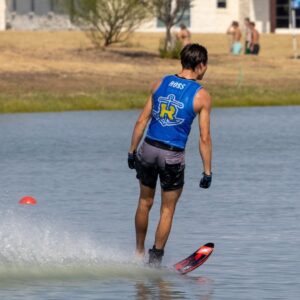
It was left to Canadian Charlie Ross, defending champion and home-country favorite, to finish the job. He didn’t disappoint. With measured aggression and trademark composure, Ross tied Will Asher’s 22-year-old World Championships record of 3@10.25m—matching the longest-standing mark in the sport’s history and becoming a two-time Under-21 World Slalom Champion.

The tournament ended with fireworks, and not just from the skiing.

Emma Davis of Team USA held a slim lead in the overall standings going into the trick final, with Alexia Abelson still within striking distance. But an off day in toes dashed Abelson’s chances in both tricks and overall.

Then came a trio of standout runs: Canada’s Hannah Stopnicki, Colombia’s Daniela Verswyvel, and Canada’s Olivia Chute all delivered strong performances. But when the scores dropped, controversy erupted.

Verswyvel’s reverse mobe—a pivotal 800-point trick—was unanimously ruled no-credit by the judging panel, dropping her to second behind Stopnicki. The TWBC live chat exploded with confusion and outrage. Elite skiers including Patricio Font and Neilly Ross voiced disbelief. Protests were lodged. Videos scrutinized. The call stood.

There’s an old adage in sport: the best judges are the ones you never notice. When they do their job well, the athletes—and not the adjudication—are the story. By that measure, the trick judging at this World Championships left much to be desired. This time, it was the judges, not the tricks, who stole the spotlight.

“I think that’s the discussion,” Gonzalez said on the TWBC broadcast. “In my opinion, it was pretty good—it is credit.”

What followed was a viral groundswell of support for Verswyvel, with her father sharing an emotional comment:

“After years of hard work and dedication, those who are supposed to be impartial lacked the humility to admit a mistake… Even if others refused to acknowledge it, the true champion proved it in the competition.”

But it’s worth stating clearly: Hannah Stopnicki is a phenomenal trick skier. She could easily have won with no drama had she landed her final flip. In a moment bigger than either athlete, Stopnicki and Verswyvel embraced after the final—two competitors in tears, caught in a storm they didn’t ask for.

“Honestly my toe run felt so good,” Stopnicki said. “I know the judges are looking at everything extra carefully today, so I was just trying to be as clean as I could be and stay on top of the water.”

In contrast, the men’s trick final was relatively sedate. With Mati Gonzalez relegated to the commentary box, only France’s Tristan Duplan-Fribourg looked like a potential challenger. The Frenchman earned plaudits with a gritty, chaotic, improvisational run that won over the crowd—but Jake Abelson was untouchable.

His 12,100-point performance set a new Under-21 World Championships record and added yet another accolade to what’s already one of the most decorated junior careers in water skiing history.

While the event featured standout performances across all disciplines, the shallow depth of the women’s field was a concerning undercurrent. The cutoffs to reach finals in slalom, tricks, and jump were among the lowest in tournament history—raising questions about development pipelines, participation, and long-term sustainability on the women’s side of elite water skiing.

But for one week in Calgary, the next generation took center stage—some rising, some falling, all reminding us why this sport, at its best, is one of the most beautiful and brutal in the world.


Erika Lang throws a frontflip

How Much Is a Trick Worth?

Articles

How much is a trick worth?

As the World Championships near, trick skiing faces a quiet reckoning

Erika Lang throws a frontflip

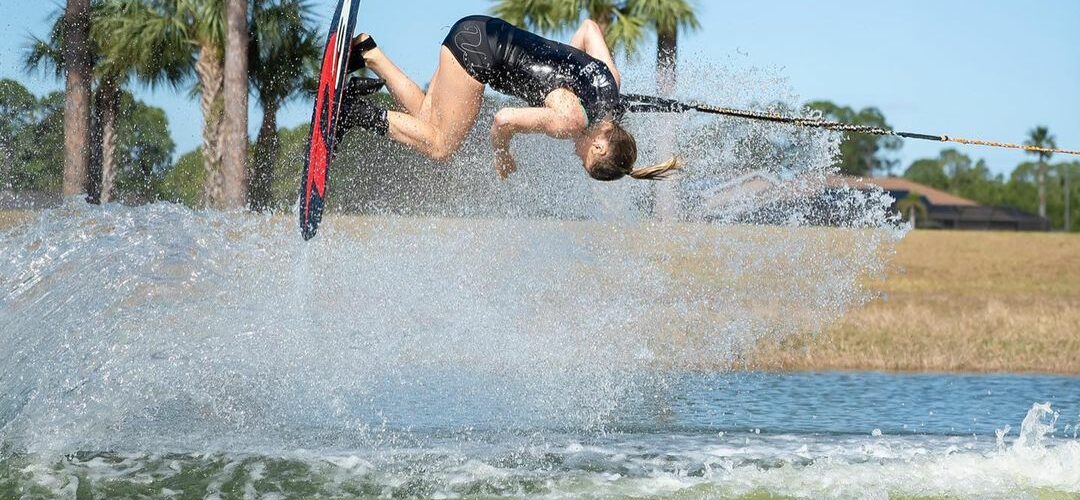
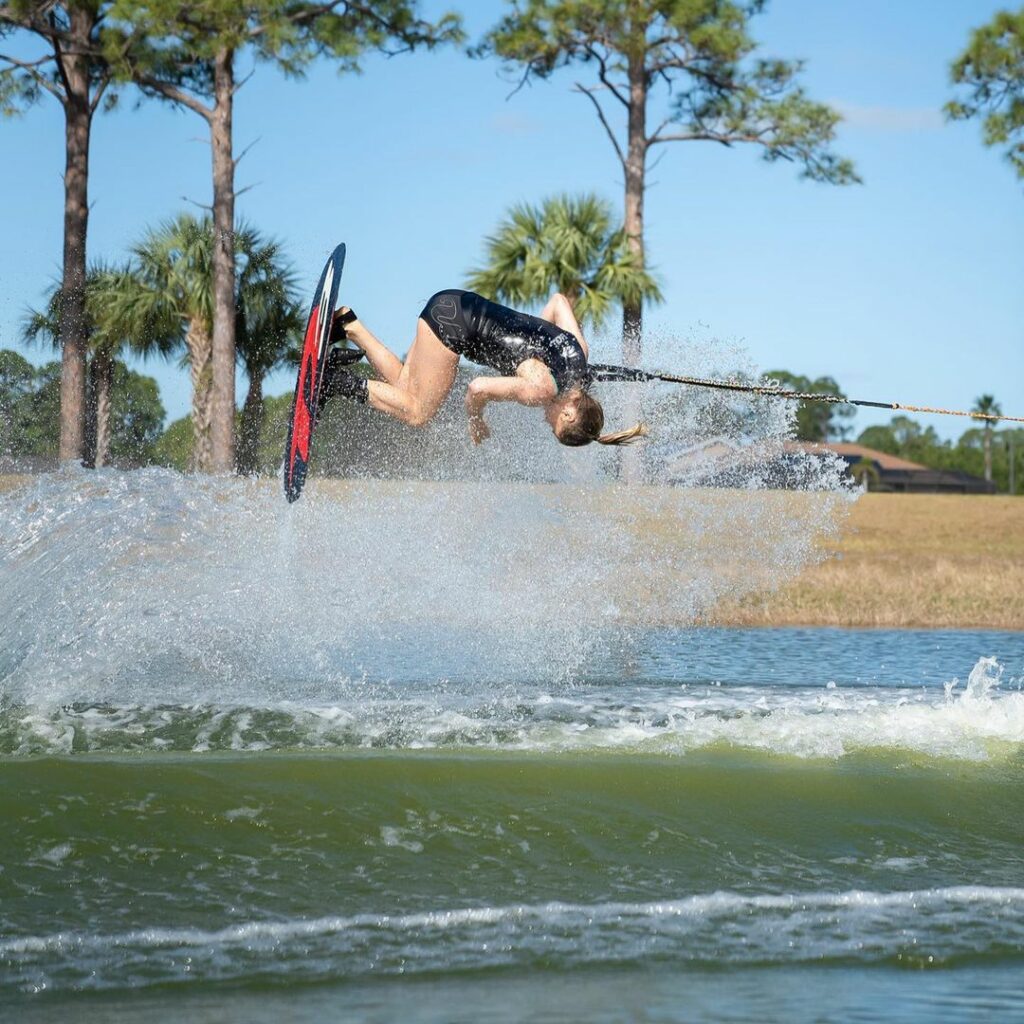
Trick skiers, like world record holder Erika Lang, have redefined what was though possible in the sport (image: @erikalang36)

By Jack Burden


As the World Championships approach, a quiet but consequential debate is coming to a head: how much is a trick really worth?

At stake is the very structure of trick skiing’s scoring system—a rigid points table that hasn’t fundamentally changed in more than two decades. For athletes like world record holder Joel Poland, that’s no longer acceptable.

“The point values for high-difficulty flips are crippling trick skiing,” Poland told the IWWF Water Ski Council. “It’s limiting what athletes can do.”

Poland should know. Two of his most innovative tricks—the 900-point “UFO” and the 950-point “Matrix”—were recently approved for competition but, in his own words, are “tricks you’ll never see in a tournament” unless something changes. He’s not alone in that sentiment.

A Broken Balance

Trick skiing is unique among board sports: every maneuver has a fixed value, from 40-point surface turns to 950-point flips. The goal is objective scoring. The result? Homogeny.

“Right now the trick point values reward doing more tricks versus doing harder tricks,” said Brooks Wilson on the GrabMatters podcast. “You can get more tricks in because you’re going fast. It’s a speed game.”

That tradeoff—efficiency over difficulty—has shaped elite competition. Instead of variety, most skiers now converge on the same sequence of reliable, high-value tricks.

“We want to see variation,” added Freddie Winter. “Instead, everyone’s forced to do the same kind of runs.”

The Repetition Problem

An analysis of over 100 score sheets at the 2023 World Championships shows just how narrow the tricking landscape has become.

Among hand tricks, backflips dominate. The half twist (BFLB), worth 750 points, appeared in every finalist’s run—typically paired with its reverse. In contrast, the only other trick worth 750, the ski-line seven back, was attempted just once.

The mobe (BFLBB), worth 800 points, was nearly as common, performed by three-quarters of the finalists—far outpacing other tricks in its point range. The basic backflip remains a staple, especially among intermediate-level skiers, tricks worth comparable points, such as W7B, SLBB, and SL5s, were attempted much less often and with much lower success.

Toe tricks show a similar pattern. Toe back-to-backs (TBB) are ubiquitous, appearing in 112 of 117 toe runs (the exceptions were early falls). Toe wake back-to-backs were also incredibly common; the regular and its reverse featured in every single finalist’s toe run. Toe wake tricks worth comparable points, such as TWO or TWLB, were less common, although some of this stems from them not having an easy reverse.

Misaligned Incentives

Not all frequently performed tricks are necessarily overvalued—some, like backflips, may be common because they serve as foundational building blocks for higher-scoring flips. And in toe runs, the inherent physical limitations naturally result in a narrower pool of viable tricks and sequences.

But some mismatches are hard to ignore. Why does the toe wake back-to-back (TWBB) score more than the toe wake 360 (TWO), despite similar difficulty? Why is the mobe front-to-front, attempted only three times at the tournament, valued the same as the standard mobe, which was performed over 100 times?

Take the half cab (BFLF) as another example. Worth 550 points, it was performed just once for every three half twists (BFLB), valued at 750. While it may be true that landing in the back is more difficult than taking off in the back, does that justify a 200-point gap? If so, why are half twists so common—and half cabs so rare?

Innovation Without Reward

In early 2024, the IWWF approved four new flips, including Clarens Lavau’s “Super Half Twist” and Poland’s “UFO.” But even with official approval, no one expects them to appear in major tournaments.

Poland’s “Matrix”—a frontflip with a ski-line 540 from the back position—was awarded 950 points. That’s just 150 more than a basic frontflip, and identical in value to the established super-mobe-five.

“There’s a point where you go, well, the slam it takes to learn this trick is just not going to be worth the extra 50 points,” said Poland. “I was trying to do a super-mobe-seven—a backflip 720 over the rope—but there’s not much point because they’ve made it very clear no trick can be worth more than 1,000 points.”

The scoring ceiling isn’t just discouraging; it’s actively stifling innovation.

“I tried three of them,” Poland added, “and they were the worst crashes of my life. I was like, ‘I’m never gonna try that again.’”

Without a meaningful scoring incentive, tricks like the Matrix may never make it into competition. Even Poland, one of the sport’s most creative skiers, is reconsidering the cost.

“You’re limiting creativity and progression,” said Winter. “Do we want to see the same runs forever—just a bit faster?”

A System Stuck in Neutral

The IWWF knows the problem exists. In a memo last year, Council Chair Candido Moz urged the Tricks Working Group to bring forward point values that better reflect “true difficulty levels.”

But attempts at reform have stalled for years.

“The skiers could never agree on point values,” Moz has explained. “So IWWF never received a proposal.”

That may change this September. A restructured Tricks Working Group, which includes Poland as a member, is expected to present formal recommendations during the World Championships in Recetto.

Time for a Reset?

Poland is done waiting. “In my opinion, [the current system] is crippling trick and limiting the athletes,” he said. He plans to stay vocal in the lead-up to Recetto.

Winter sees trick skiing as the discipline with the most untapped potential. “Right now, it’s just not reaching it,” he said. “But it could.”

The current system rewards repetition and safety. A modernized score table—one that truly values difficulty and risk—could transform the sport overnight.

“You’ve got to blow it up to build it up,” said Wilson.

The World Championships run August 27–31 in Recetto, Italy. A formal review of trick point proposals is expected to take place at the IWWF Water Ski Council meeting during the event.

Erika Lang's world record of 11,450 is officially approved by the IWWF

Erika Lang’s 11,450-Point Run Officially Recognized as World Record by IWWF

Repost

New IWWF World Open Women’s Trick Record

Erika Lang's world record of 11,450 is officially approved by the IWWF

Image: IWWF

IWWF


The IWWF is excited to announce the approval of a new IWWF World Open Women’s Tricks Record.

Erika Lang (USA) scored 11,450 points during the second round of the Bell Acqua Lake 3 Record Trick, held at Bell Acqua 3, in Rio Linda, California, USA on June 7th, 2025. Towed by the World Record-Setting Ski Nautique.

The record has been officially approved by the IWWF Waterski Council.

Congratulations Erika!

Ski Nautique 2026

IWWF Rejects 2026 Ski Nautique for Worlds, Citing Fairness and Timing

Media

IWWF rejects 2026 Ski Nautique for Worlds, citing fairness and timing

Ski Nautique 2026

Image: @nautiqueboats

By Jack Burden


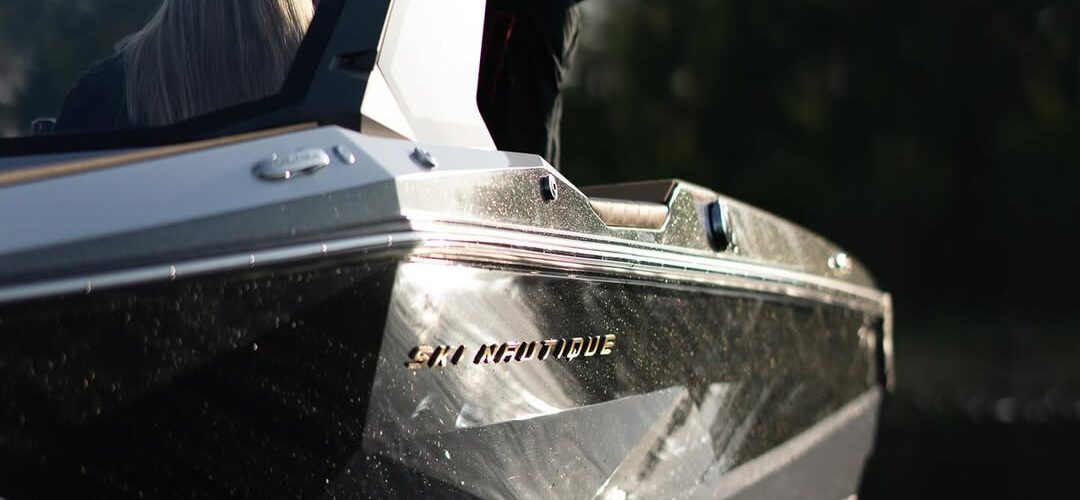
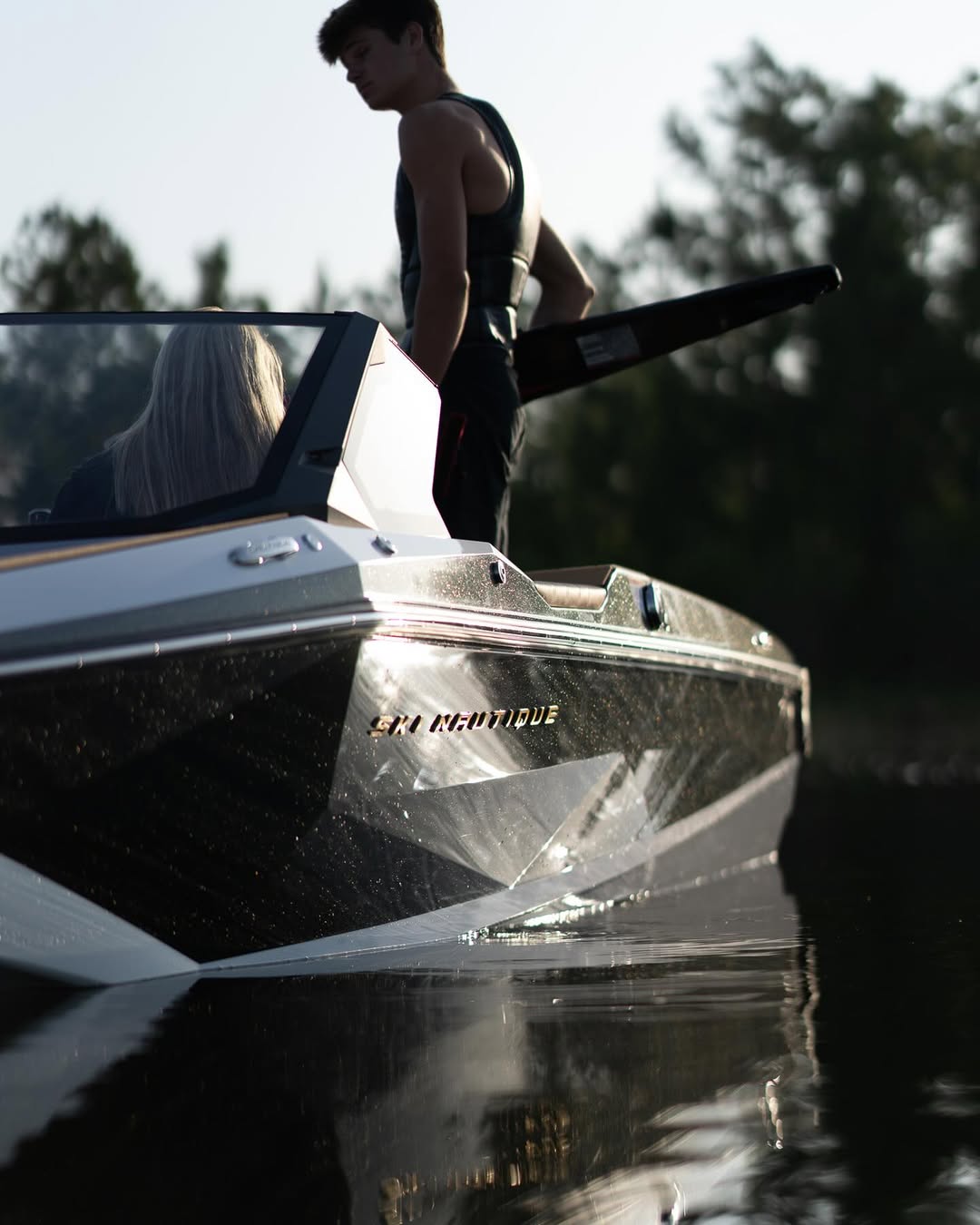
The IWWF World Waterski Council has unanimously rejected Nautique’s late-stage proposal to debut its newly announced 2026 Ski Nautique at this year’s World Championships in Recetto, Italy.

The request came just days after Nautique unveiled its next-generation towboat — a lighter, sharper redesign billed as an “evolution of a true icon.” With flatter wakes, a refined hull, and integrated Zero Off enhancements, the 2026 model is being positioned as a new benchmark in three-event performance. Early impressions from Team Nautique athletes and independent skiers alike have been glowing, with slalomers praising “drastically better wakes” and reduced speed drop out of the turn.

But when Nautique Vice President Brian Sullivan made the pitch during a Masters meeting with IWWF President Jose Antonio, the council’s response was cautious. According to minutes from the May 29 meeting, delegates from all regions agreed the change would unfairly disadvantage athletes outside the U.S., particularly in Oceania and Latin America, where access to the new boat in time for training was unlikely.

“The new boat is completely different, making it unfair for athletes,” said athlete rep Valentina Gonzales, noting that many skiers would have just “two passes (official familiarization) to test the new boat before the Worlds.”

Though Nautique offered to ship three boats to Europe within a week, council members pointed out that large parts of the world — and much of the athlete field — would be left without meaningful prep time.

Athlete chair Martin Kolman was more blunt: if Nautique wanted the boat used at Worlds, “they should have informed the waterski community in a timely manner.” Instead, the request came days after the launch — and just three months before the sport’s flagship event.

For now, the current Ski Nautique — introduced in 2019 and entering its final year of production — will remain in use. And while that may frustrate some, it aligns with the spirit of fair play: the playing field must come first.

Whether Nautique misread the timing or bet too heavily on post-launch momentum, one thing is clear — for all the engineering ambition the new boat represents, it arrived a season too late.

And perhaps, with more riding on this launch than meets the eye. Nautique’s long-held position as the exclusive towboat supplier for IWWF events is set to expire at the end of the year. Rumors have surfaced that Malibu — long absent from the international scene — could take over the contract beginning in 2026. If true, the 2026 Ski Nautique may never get the chance to pull a World Championships.

That’s not just a missed debut. It’s a boatload of R&D with nowhere to run.

Brisbane 2032 Games Vision

IWWF Urges Water Ski Community to Weigh In on Brisbane 2032 Olympic Vision

Media

IWWF urges water ski community to weigh in on Brisbane 2032 Olympic vision

Brisbane 2032 Games Vision

Shaping the Future: Brisbane 2032

By Jack Burden


The International Waterski & Wakeboard Federation (IWWF) is calling on athletes, fans, and anyone with a stake in the sport to speak up, as the Brisbane 2032 Olympic organizers open the door—just slightly—for public input on the Games’ direction.

A short survey, open to the public until June 20, invites people from around the world to help shape the vision for the 2032 Olympic and Paralympic Games. It’s a rare chance for the waterskiing community to register on the radar of Olympic decision-makers—and maybe, just maybe, push the sport one step closer to the five rings.

This campaign comes at a curious and potentially pivotal moment. For the first time in years, the Olympic conversation doesn’t feel like a one-way street. According to insiders, it was the Brisbane 2032 Organising Committee—not the waterski federations—that initiated talks about possible inclusion. That’s a reversal big enough to raise eyebrows across a sport long relegated to the Olympic sidelines.

Cindy Hook, the CEO of Brisbane 2032, may be part of the reason. She has a background in skiing—not just the kind with lift tickets and après, but the kind pulled behind a boat. How much that personal link matters is anyone’s guess, but in Olympic politics, connections have always mattered more than most people would like to admit.

USA Water Ski & Wake Sports Executive Director Kevin Michael recently confirmed that the organization has launched a new Olympic campaign, anchored by meetings with Brisbane officials. “We’re making the right pitch to the right people at the right time,” he said in The Water Skier magazine. “No promises yet, but this journey will absolutely pay dividends for the sport.”

Whether those dividends come in the form of Olympic inclusion—or simply more visibility and legitimacy—remains to be seen. The waterski world is split. Some see this as a tired, expensive dream that has sapped energy from more realistic efforts to grow the sport. Others view it as a necessary gamble, a long shot worth taking if only to show future generations that the sport hasn’t stopped dreaming.

Behind the scenes, there’s cautious optimism. Rumors are circulating of quiet support within the International Olympic Committee, and even whispers of water skiing being considered for exhibition status at the 2028 Los Angeles Games. But for now, it’s all speculation and strategy meetings.

What isn’t speculation is this: there’s a survey open, and the people running Brisbane 2032 say they want to hear from the public. So, if you’ve ever had an opinion about where the sport should be—or where it could go—now’s the time to speak up.

Take the Brisbane 2032 survey here. Deadline: June 20.

Poland Renews Calls for Trick Score Revision

Poland Renews Push for Trick Scoring Overhaul

News

Poland renews push for trick scoring overhaul

Poland Renews Calls for Trick Score Revision

Image: @mcboatcompany

By Jack Burden


Speaking at an IWWF World Waterski Council meeting earlier this year, world record holder Joel Poland called for a long-overdue overhaul of trick skiing’s point system. Citing current scoring as a barrier to innovation, Poland argued that high-difficulty tricks—like his own recently approved “Matrix” and “UFO”—aren’t making it into tournament runs because the reward doesn’t match the risk.

“The point values for high-difficulty flips are crippling trick skiing,” said Poland. One of the sport’s most creative and technically gifted athletes, he has been increasingly vocal about the need for reform. He points to discrepancies such as the “Matrix”—a frontflip with a ski-line 540—earning just 150 points more than a basic frontflip.

The Tricks Working Group, formed nearly two years ago to address point disparities, has yet to deliver a proposal. That responsibility now falls to Sergio Font, who will lead the review and deliver recommendations at the September Water Ski Council meeting.

While there is broad agreement that the current system needs revision, progress has been slow—largely due to competing interests among athletes. Council Chair Candido Moz has voiced support for reform, but the IWWF has so far deferred to the skier community, whose inability to reach consensus has stalled change.

With elite runs becoming increasingly repetitive, Poland’s push adds renewed urgency to a debate many in the sport feel is long overdue.