For decades, professional water skiing followed a singular, repeatable rhythm.
There was the season. And there was the offseason.
The season was airports and jet lag and sunburn and adrenaline. The offseason was recovery. Time to let the body heal. Time to step away from the course. Time to remember, briefly, that life existed outside start docks, line lengths, and Zero Off settings.
That rhythm is gone now.
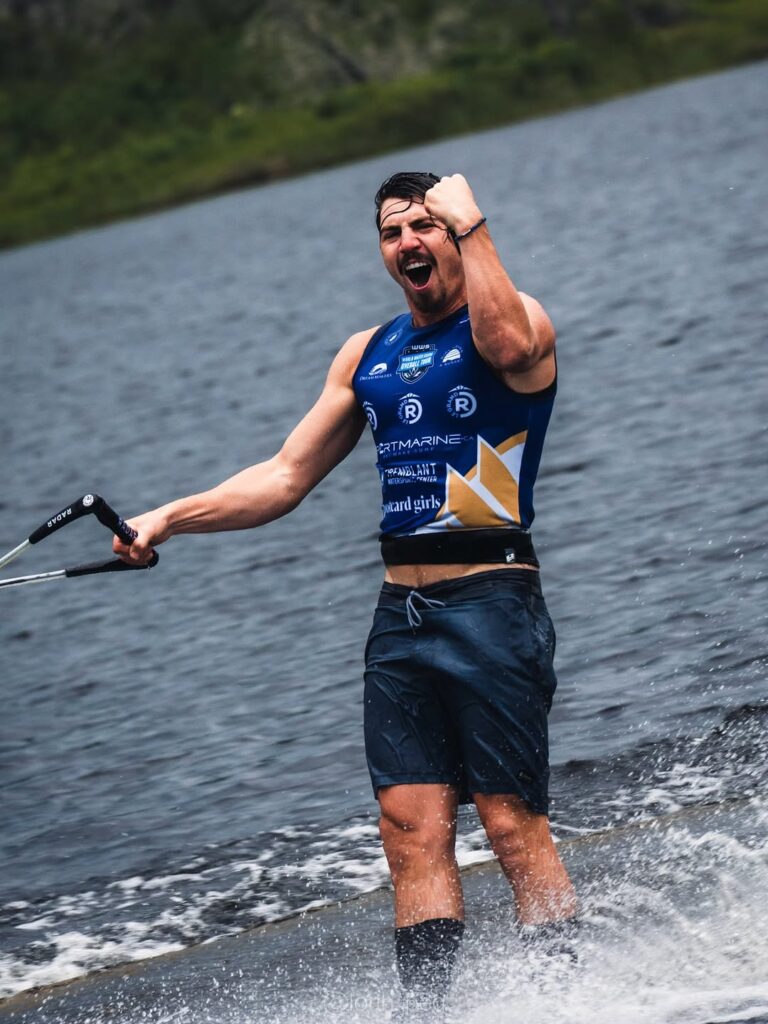
The 2027 World Championships in Mulwala, scheduled for February, have effectively turned the calendar into a never ending loop. Instead of a reset after the 2026 season, elite skiers are now staring down what Freddie Winter bluntly described as “two world years back to back.”
A competitive cycle stretched across continents and hemispheres has quietly produced something the sport has never really dealt with before at the elite level: a 14-month season.
The old model — peak in summer, recover in winter, rebuild in spring — no longer fits. Instead, skiers are being asked to maintain near-peak performance across an extended, continuous arc that runs through North America, Europe, and deep into the Southern Hemisphere summer, without ever fully shutting down.
Winter put it plainly on the TWBC podcast.
“The IWWF in their infinite wisdom has put the tournament in February less than 18 months after the previous one,” he said. “So we do have basically two world years back to back.”
Then, more tactically: “The season’s going to go on forever. We’re going to have to pull this year’s season into the following year because the last tour stop will be sometime in October or November and then two months later we’re going to be back at the World Championships on the other side of the world.”
On its own, a World Championships in an off-cycle year would be manageable. But the 2027 edition coincides with one of the busiest professional calendars in over two decades, with more titles up for grabs than in any season since 2000. The sheer density of events removes the clean psychological break that has always defined elite training cycles in the sport.
Winter’s framing keeps returning to the same place: not physical overload, but mental erosion.
“It’s going to be an absolute slog,” he said. “Mentally challenging.”
Across the elite field the physical demands are familiar. What changes here is duration. The ability to stay sharp, motivated, and emotionally engaged for more than a year without the usual offseason reset.
Which is why athletes are no longer talking about training and competing in the traditional sense. They are talking about serializing it.
“My goal is to be overall world champion in 2027,” said Louis Duplan-Fribourg. “So I’m like, okay, let’s go all in. Let’s make it happen.”
But even that “all in” is not a declaration of volume. It is a measured approach.
“We were just saying that yeah, I’m getting ready to ski for 14 months and not for 10 months as I’m usually doing,” he explained.
Then the practical reality: “You have to make choices. What tournament you’re doing, when you’re taking your days off, when you’re resting.”
That idea — making choices — has become the theme of this new era. Not every event can be treated as essential. Not every entry is worth the cost. The calendar no longer allows full participation without consequence.
Kennedy Hansen, one of 2025’s breakout stars, learnt this lesson the hard way after a marathon season.
“I didn’t really stop skiing,” she said, reflecting on her buildup to the 2026 season.
After choosing to compete at the 2026 Moomba Masters, she was forced into the same recalibration many athletes now face. It speaks to a sport where “offseason” has already begun to blur into continuity.
So her response has been to break the year apart deliberately, not as a single training block but as a series of managed pauses.
“I’m going to ski through the overall tournaments and all the Water Ski Pro Tour tournaments,” Hansen explained. “Then I think after that I’ll take a few weeks off, ski a little bit and then maybe take a few weeks off again.”
“But just try to spread it out so I’m not skiing the full year.”
Serialized training has become the new modus operandi. The offseason is no longer a season — it is something distributed across the calendar, inserted between events that are now too closely packed to allow for traditional recovery windows.
Winter himself plans to spend significant time training in Australia during the northern winter, hoping to avoid the traditional January reset where he admits he often returns needing to “lose a lot of weight,” rebuild strength, and rediscover timing on the water.
“What I don’t want to do,” he explained, “is start from zero.”
All of this is being shaped by a Southern Hemisphere stretch that, for younger athletes in particular, leaves almost no room for pause. January brings Under-21 Worlds in Peru. February brings the Open World Championships in Australia. March brings Moomba Masters. Three major events. Two countries. Two continents. One continuous competitive block.
For northern hemisphere athletes, this creates a challenge that has never really existed before: preparing for peak summer performance while physically located in winter, and then carrying that form across multiple continents without the usual reset.
It is also expensive. Winter has been open about the fact that Australian trips often become “money-losing” exercises once travel and accommodation are accounted for. Which, in a sport without deep prize purses, feeds back into decision-making about which events are even viable to attend.
“I’m probably not going to go to Moomba next year,” he admitted. “I’ll be so exhausted and mentally drained having gone through Christmas and not had any sort of an offseason.”
“I’m probably going to get Worlds done and then fly home and forget about water skiing for a few weeks.”
And there is an uncomfortable asymmetry running through all of this.
The 2027 Worlds will be only the third Open World Championships ever held in the Southern Hemisphere. The previous two — 1965 in Surfers Paradise and 2013 in Santiago — both still sat within late-autumn schedules, October and November respectively, that largely favored northern hemisphere preparation cycles. Even when hosted in the south, timing and structure meant northern calendars still defined the peak.
The hemisphere imbalance is not just theoretical. Only 2 World Championships (out of 39) have been held south of the Equator. Yet Southern Hemisphere athletes have won 22 world titles and over 10% of all medals — consistently competing at events timed more comfortably for their northern counterparts. Australia, despite hosting only once, sits fourth on the all-time Worlds medal table, ahead of countries like Italy and Great Britain, who have hosted far more frequently.
It is a quiet pattern in the sport: when the calendar bends, it usually bends toward the north.
There is a broader irony here. The sport is arguably healthier than it has been in years. More events, more depth, more visibility, more professional opportunity than at almost any point in its modern history.
“That’s also the beauty of it,” Duplan-Fribourg said. “Battles are going to be fierce every weekend.”
He is right.
But beauty in sport often comes with cost. And in this case, the cost is time — stretched, compressed, and redistributed until the idea of an offseason begins to dissolve entirely.
What remains is not a season in the traditional sense.
It is something longer, flatter, and more demanding. A calendar that does not reset so much as continue.
And for the first time at the elite level of water skiing, that continuity is not an advantage or an ambition.
Lausanne, Switzerland – The International Waterski & Wakeboard Federation (IWWF) is proud to announce a six-year global partnership agreement with Malibu Boats. Inc. , effective January 1, 2026, to December 31, 2031.
Under this partnership, Malibu Boats becomes the official Tow Boat of all IWWF World-Tiltled Waterski and Wake Sports events.
As the Official Tow Boat , Malibu will provide its world-renowned performance boats, ensuring the highest standards of quality, consistency, and innovation at the sport’s most prestigious global competitions
Beyond on-water support, Malibu will also provide global marketing and digital communication support to elevate the visibility of IWWF’s World Titled Events, engage the worldwide community of athletes and fans, and help grow participation and visibility in towed water sports worldwide
José Antonio Pérez Priego, IWWF President, commented: “Malibu’s decision to partner with us through this long-term agreement reflects their deep commitment to the global growth of waterskiing and wake sports. As one of the most recognized brands in the industry, Malibu’s innovation, performance, and worldwide distribution align perfectly with the IWWF’s vision to elevate our sport on the world stage.”
The first event of the new partnership will be the 2026 IWWF World Under 17 Waterski Championships, taking place at Lago Ahumada Esquí Náutico in Córdoba, Argentina from 30th March to 5th April, 2026. The Malibu Response TXi will serve as the Official tow boat for the event.
Rachael Green, Senior Vice President, Operations & Engineering, Malibu Boats Inc. commented: “This partnership with the IWWF is a powerful step forward for Malibu and the global towed water sports community. We’ve built our reputation on delivering the most precise, innovative, and competition-ready boats in the world. With the TXi and M230 leading the way, we’re excited to support athletes at every level and ensure that world-titled events are pulled y the very best”
As part of this groundbreaking partnership, Malibu Boats will serve as the official towboat for the following premiere IWWF competitions:
IWWF World Open Waterski Championships
IWWF World Over 35 Waterski Championships
IWWF Workd Under 21 Waterski championships
IWWF World Under 17 Waterski Championships
IWWF World Disabled Waterski Championships
IWWF World Waterski Show Championships
IWWF University Worlds (Waterski)
IWWF World Wakeboard Championships
IWWF World Wakesurf Championships
IWWF University Worlds (Wake Sports)
This partnership marks a new chapter in competitive towed water sports, uniting Malibu’s best-in-class innovation with the IWWF global stage.
Water skiing in 2025 was a year of rising performances and expanding possibility. Records fell, ceilings collapsed, and moments that once felt unimaginable became routine. From teenagers rewriting history to veterans redefining resilience, the season delivered a relentless stream of storylines that pushed the sport forward while constantly testing its limits. It was a year where brilliance arrived in waves, controversies lingered, and the level required to win climbed higher with every event.
Across the Waterski Pro Tour, WWS Overall Tour, IWWF world championships at every level, and legacy stages like Moomba and the U.S. Masters, the sport unfolded through breakthroughs, confrontations, and generational shifts. New rivalries ignited. Established orders were challenged. And in disciplines once thought to have plateaued, sudden surges forced a rethink of what elite performance truly means.
As we count down the most memorable moments of the 2025 season, this list captures more than just victories and records. It reflects a sport in full acceleration—deeper, bolder, and more competitive than ever—and the athletes who defined it when expectations were highest and the spotlight brightest.
There’s always a particular optimism baked into the first major tournament of the season. The days grow longer, boats are dewinterized, and spring fever sets in. In recent years, that role has belonged to Moomba. But in 2025, the season’s opening statement came a week earlier—and from an unexpected corner of the calendar.
The University World Championships returned for the first time since 2016, staged in Auckland’s Orakei Basin, salt water shimmering in the heart of the city. The “Collegiate Worlds” brought together student-athletes from five continents, blending future stars, established pros, and wide-eyed newcomers thrilled to wear national colors. There were personal bests everywhere. There was Aaliyah Yoong Hannifah making history. And then there was Austria.
What the four Austrians pulled off bordered on absurd.
Against a Team USA contingent 14 strong—including a stacked six-skier A-team—Austria arrived with just four athletes. One was a single-event skier. Another, their strongest overall threat, withdrew at the last minute. There were no alternates. No safety nets. In tricks and jump, one misstep would have ended everything.
Instead, every skier delivered.
Luca Rauchenwald won jump outright. Lili Steiner claimed silver in jump and overall. Nikolaus Attensam posted the top men’s slalom score of prelims, maximizing team points. And Dominic Kuhn’s bronze in tricks—behind a field loaded with world champions—proved decisive.
In the 80-year history of IWWF world championships, only six nations had ever finished ahead of the United States. Only five had ever won a team title.
Make it six.
Undermanned, unflinching, and utterly fearless, Austria didn’t just win Auckland—they announced themselves. And in doing so, gave the 2025 season its first unforgettable moment.
There was a time when 13,000 points in men’s trick skiing felt like a myth. A ceiling. A number whispered with admiration, then dismissed with realism.
Enter Jake Abelson.
On a hot June weekend at Ski Fluid in central Florida, the 17-year-old American became the first skier in history to cross the barrier, posting 13,020 points. When the IWWF ratified the score, it didn’t just crown a new world record holder—it confirmed that trick skiing had entered a new era.
The milestone was years in the making. For nearly two decades, progress at the elite end of men’s tricks had been incremental, almost stagnant. Then came a surge. Patricio Font reignited the discipline in 2022. Matias Gonzalez raised the ceiling with relentless speed and precision. Suddenly, 12,000-point runs weren’t exceptional—they were the price of admission. In 2025, every men’s professional trick event was won with a score north of 12K.
The race to 13K was on.
Abelson got there first—but only just. Gonzalez and Font were right behind, pushing from different angles: Font with ruthless hand-pass efficiency, Gonzalez with audacious toe speed. And while Abelson claimed the milestone, the season’s most compelling moment came later.
At the World Championships in Recetto, with titles—not records—on the line, Gonzalez edged Abelson by ten points. Ten. The smallest possible margin in trick skiing. A single freeze-frame separating gold from silver.
In that sense, 13,000 wasn’t the finish line. It was proof of how narrow the margins have become.
For decades, 10.25 meters—41 off—stood as men’s slalom’s final frontier. A pass reserved for the extraordinary, spoken about in reverent tones. By the time the sun set on the 2025 Travers Grand Prix, it felt like something else entirely: the new baseline.
At Sunset Lakes in Groveland, four different skiers ran 41 off a combined seven times, obliterating the previous record of four, set just two years earlier. It wasn’t an isolated spike, either. Across the back half of the season—World Championships, MasterCraft Pro, and now Travers—men’s titles have increasingly been decided at 9.75 meters (43 off). The ceiling didn’t just crack in 2025. It caved in.
Nate Smith and Charlie Ross had led the charge, but at the Grand Prix they were joined by Jonathan Travers and Freddie Winter, all four pushing through 41 and into rarified air. Winter went furthest when it mattered most, advancing to 43 and sealing both the event win and his first-ever Waterski Pro Tour season championship.
“This is the first season title I’ve ever won,” Winter said, emotion spilling over. “A year and a half ago I had a really terrible time, I hurt myself, and I worked really hard to come back… This one’s for everyone who helped me come back.”
The women matched the drama stride for stride. Regina Jaquess, Jaimee Bull, and Whitney McClintock Rini produced the first three-way tie at 41 off in waterski history, forcing a cold-start runoff at 10.75 meters. Jaquess prevailed on the water, but Bull walked away with the bigger prize—her fifth consecutive Pro Tour season title.
Seven 41s. Four skiers into 43. One unmistakable message: the sport’s limits are shifting, and fast.
Unfortunately, one of the most memorable moments of the 2025 season earned its place in this countdown for all the wrong reasons. The Under-21 World Championships in Calgary were meant to spotlight the sport’s next generation. Instead, they became a reminder that, at times, judging—not skiing—can define a championship.
Held at Predator Bay, the U21 Worlds delivered much of what the event promises: breakout performances, record scores, and glimpses of future world champions. But during the women’s trick final, the focus shifted abruptly from athletic brilliance to adjudication.
When Colombia’s Daniela Verswyvel had her reverse mobe—an 800-point, title-swinging trick—ruled no-credit, the reaction was immediate and explosive. Live chats lit up. Elite skiers voiced disbelief. Formal protests were filed in the aftermath by Colombia, Canada, and the United States. The call stood, awarding gold to Canada’s Hannah Stopnicki and leaving Verswyvel heartbroken.
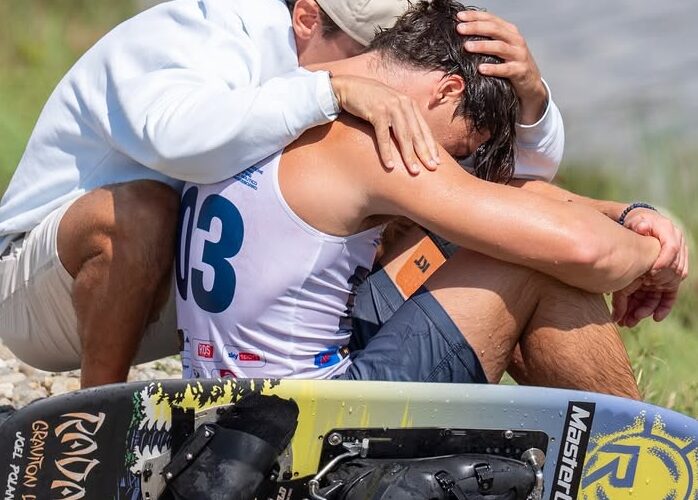
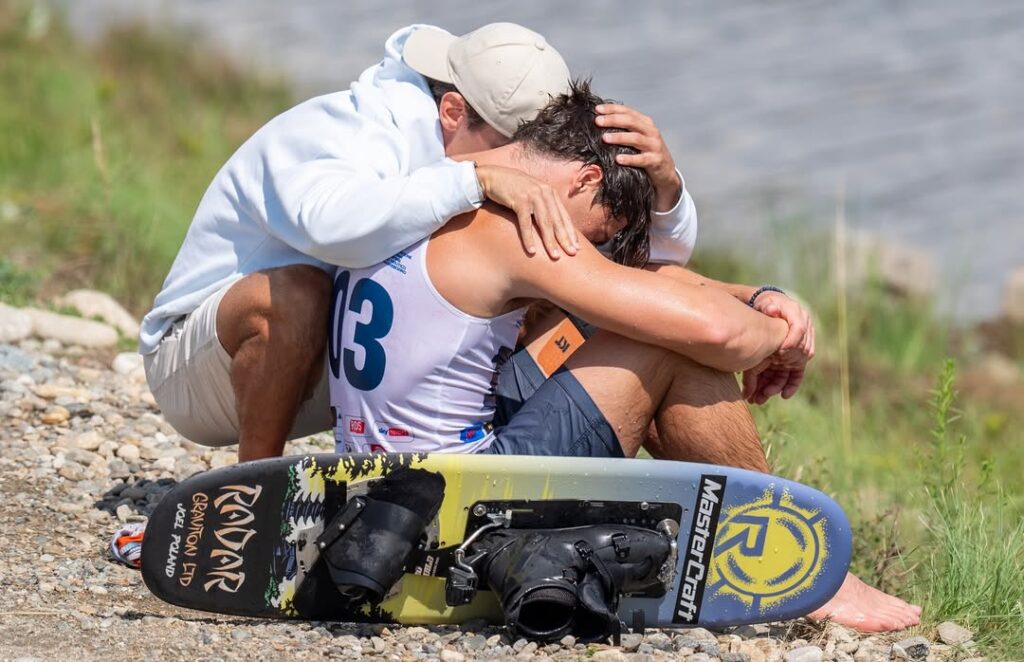
To her credit, Stopnicki—a deserving champion who could easily have won the title without controversy on another day—handled the moment with grace, embracing Verswyvel in a tearful scene that captured both the beauty and brutality of elite sport. “I know the judges are looking at everything extra carefully,” Stopnicki said afterward. “I was just trying to be as clean as I could be.”
The controversy didn’t end with the medals. The IWWF World Waterski Council launched a formal review, with Chief Judge Felipe Leal concluding—supported by EyeTrick data—that the panel was “very strict but consistent.” The issue, he stressed, was an unusually high number of non-credit calls that left many athletes dissatisfied.
The fallout reached beyond Calgary. Ahead of the Open Worlds in Italy, the Council committed to judge clinics aimed at improving consistency and restoring trust.
In a week meant to celebrate the future, Calgary instead exposed a fault line the sport can’t ignore. Trick judging, for all its tools and systems, remains far less objective than we’d like to believe.
The 64th Moomba Masters on Melbourne’s Yarra River wasn’t just another stop on the pro circuit—it was the crucible in which a new generation of champions was forged. Across the festival’s six professional events, four were won by first-time champions, setting the stage for breakthrough seasons.
In men’s tricks, 17-year-old Jake Abelson claimed his first professional victory, topping the highest-scoring podium in history. Moomba proved the launchpad for a meteoric season: Abelson went on to win the three largest prize-purse events, break the 13,000-point mark, and finish 2025 as the sport’s most dominant trick skier, despite a narrow World Championships defeat.
Slalom followed a similar trajectory. Nineteen-year-old Charlie Ross secured his first pro title with veteran composure, then rode that momentum to two pro wins, seven top-five finishes, U21 World Championships gold, and a silver at the Open Worlds—emerging as a genuine threat to Nate Smith and Freddie Winter for years to come.
The jump event crowned Joel Poland, returning from his Australian ban, as Moomba champion for the first time, launching an undefeated six-win season in men’s jump—a feat not achieved by any man since Freddy Krueger in 2006. Brittany Greenwood Wharton also claimed her debut professional victory, kicking off a season that included five podiums and a runner-up finish at the World Championships.
By the time the fireworks lit up Monday night’s jump finals, Moomba 2025 had delivered more than victories. Record-breaking performances, first-time champions, and a rising crop of elite athletes signaled a shift in the sport’s competitive landscape, reaffirming why the Moomba Masters remains water skiing’s ultimate proving ground.
The 2025 World Championships delivered countless historic moments, but perhaps none more electrifying than the men’s slalom final in Recetto—a showdown that redefined what elite slalom looks like.
When Nate Smith, one of the most reliable closers in water skiing history, posted one at 9.75m (43 off) skiing fourth off the dock, it seemed the title was settled. But over an hour later, 20-year-old Charlie Ross left the dock and matched him—forcing a sudden-death runoff for the world championship. For the first time in World Championships history, two skiers had to attempt 10.25m (41 off) cold, with gold on the line.
It was a generational collision. Smith, the standard-bearer of modern slalom. Ross, the breakout force of the year. Smith prevailed in the runoff, but the result felt secondary to the message: the gap had closed.
“I’ve never even tried 41 off the dock in practice,” Smith admitted afterward. “A lot goes through your head… but yeah, I’m pretty happy.”
The drama didn’t end in Italy. Weeks later, at the very next pro slalom event, Ross and Smith found themselves locked together again—tied once more at 43 off. Another runoff. Another razor-thin separation. Different venue, same script.
Back-to-back ties at the hardest line length in the sport, across two of the biggest stages of the season, felt less like coincidence and more like a turning point. Smith still claimed the crown, but Ross had firmly announced himself as his equal.
In a season defined by record-breaking depth and shrinking margins, no moment captured water skiing’s new reality quite like this one: the champion tested, the challenger confirmed, and a rivalry forged buoy by buoy at 43 off.
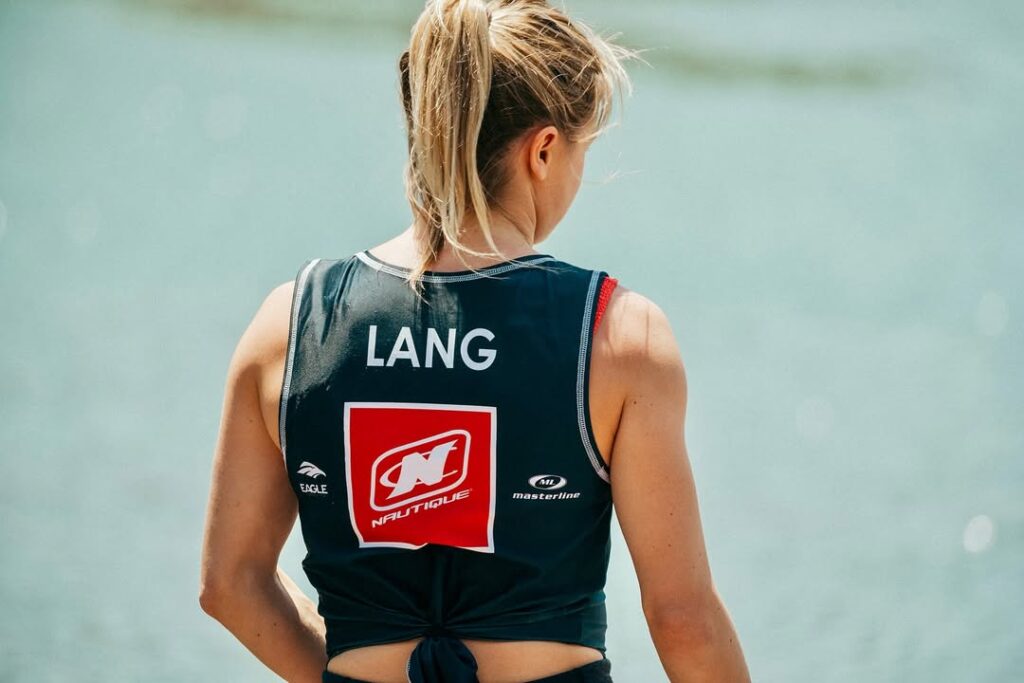
If 2025 has a defining rivalry, it has to be Erika Lang versus Neilly Ross. Lang started the season seemingly untouchable, going undefeated across Moomba, Swiss Pro Tricks, and the Masters, reclaiming the world record from Ross, and setting the tone for a dominant year.
Ross, meanwhile, looked out of sorts early on, traveling the globe and honing her craft in a grueling schedule that included competing in the men’s field in Monaco. It took six pro events, but in Portugal she finally broke through, clinching her first win of the season and nearly matching world record form—a statement that she was back.
The rivalry erupted at Botaski. Lang set a pending world record in the prelims, only for Ross to tie the current record in the finals, forcing Lang to chase a second world record just to win. Every trick, every frame, every point counted. Ross’ victory marked her first major triumph in three years and signaled a shift: Lang’s dominance was no longer assured.
The drama carried into the World Championships in Recetto, where both women arrived in red-hot form. Once again, victory was decided by a hair’s breadth, with Ross’ late-season momentum peaking at the perfect moment. Two athletes, pushing the limits of skill and precision, raised the standard for women’s trick skiing, making every pass a spectacle and every point a headline.
Lang remains one of the most successful women in the modern era, but Ross has proven she can match, and even surpass, the best—turning a personal comeback into one of the sport’s most thrilling storylines and taking women’s trick skiing to an entirely new level.
The men’s overall battle at the 2025 World Championships was the closest since 2009’s legendary three-way standoff, pitting Canada’s Dorien Llewellyn against defending champion Louis Duplan-Fribourg in a clash of precision, power, and pedigree.
The tournament began with a shock: Joel Poland, the sport’s most consistent tricker and early favorite, stumbled in the prelims. One front flip gone awry ended his flawless streak. Poland’s misstep became arguably the defining moment of the Worlds, a reminder that even the greatest can falter on the biggest stage.
From there, the men’s overall title came down to a hair. Duplan-Fribourg dominated tricks, setting the top score, and matched his personal best in slalom—but was penalized after a video gate review nullified his 10.75m pass, leaving him just 13 points behind Llewellyn. Every move counted.
Llewellyn, aiming to secure the title in the trick final, miscued on a landing and sank in disbelief, keeping the championship undecided. It all came down to jump. Duplan-Fribourg needed just 70 centimeters more to snatch the crown but came up short. In a performance echoing his 2021 duel with Joel Poland, Llewellyn soared 69.9 meters (229 feet), his best jump in years.
With that leap, Dorien Llewellyn followed in his father’s footsteps, claiming the World Overall title and cementing his place among water skiing royalty.
The 2025 World Championships proved that in overall competition, margins are measured in centimeters—and legends are defined by their ability to seize—or survive—the smallest of moments.
If Hollywood scripted a comeback, could it have been as dramatic as Freddie Winter’s at the 2025 U.S. Masters? Less than a year after shattering his femur in Monaco and missing most of 2024, the two-time world slalom champion returned to Robin Lake with history, expectations, and personal demons stacked against him. Winter’s fraught relationship with the Masters added another layer: banned in 2023 after an emotionally charged judging dispute, he had unfinished business on the event’s storied waters.
When the dust settled on Saturday’s brutal semifinals, the veterans were gone, leaving Winter as one of the few household names in the final. Last off the dock, chasing a lead set by Nate Smith, he hurled himself outside of three ball with trademark fearlessness. When the spray settled, Winter had done it—his first professional victory since his injury, his third Masters title, and arguably the most satisfying of his career. “Probably the most emotional moment of my life,” he said afterward. “So much self-doubt and fear I wouldn’t get back here over the last 10 months and 29 days.”
The Masters wasn’t just a singular triumph. It set the tone for the rest of Winter’s season: a string of consistent performances that saw him claim the Waterski Pro Tour title, rack up four pro victories (tying Nate Smith), and lead the year-end podium count. Though perhaps not fully back at 100 percent, Winter had reclaimed his place among the sport’s elite, proving that even after a potentially career ending injury, he could still define the men’s slalom narrative.
At Robin Lake, Freddie Winter reminded the water skiing world: the best stories aren’t just about victories—they’re about the journey to get there.
Across the sport, each new year seems to push performances to new and unprecedented heights. At many events, it has become commonplace for skiers to challenge—or even break—world records to clinch victory. It is, by almost any measure, a remarkable era to be a water ski fan.
One discipline, however, has largely resisted that trend. Jumping, with fewer events and shrinking opportunities, has seen its depth thin and top-end performances plateau. The concerning reality is that jump distances have not meaningfully improved this century and, by several metrics, have begun to decline.
All of which made what unfolded in Italy at this year’s World Championships all the more remarkable.
The tone was set in the opening days. Brandon Schipper arrived off a long-haul flight, skipped familiarization, and promptly unleashed the biggest jumps of his career. He wasn’t alone. Across the early rounds, season-bests and lifetime bests fell like dominoes. By week’s end, the cut to make the men’s jump final was the highest in World Championships history.
The finals delivered the crescendo. On the women’s side, personal bests stacked quickly—Maise Jacobsen and Aaliyah Yoong Hannifah both breaking 50 meters for the first time, with the entire top five clearing 170 feet. Brittany Greenwood Wharton, capping a career-best season, produced her longest jump in years to set the target. Hanna Straltsova, unflappable as ever, needed just two jumps to defend her title and complete another golden double.
Then came the men’s final—chaos, courage, and generational turnover wrapped into one shoreline spectacle. Eighteen-year-old Tim Wild, fresh off his first-ever 60-meter jump days earlier, flew 68.1m to announce himself on the sport’s biggest stage. Eight men cracked 220 feet. Schipper, giddy after another personal best, tapped home early, almost disbelieving what he’d just unleashed.
But the crown belonged to Joel Poland. His opening leap—72.1m, a personal best and new European record—froze the crowd. He passed his remaining jumps, gambling it would hold. It did. Ryan Dodd chased, cleared 70, and fell just short. With that, a three-decade lineage of North American jump dominance quietly ended.
In a discipline that had seemed stuck in neutral, Recetto felt like liftoff. Against every recent trend, jump delivered depth, drama, and distances that forced a recalibration of what was possible. Perhaps there is new life in water ski jumping after all.
Honorable Mentions
Aaliyah Yoong Hannifah’s triple-gold performance at the University World Championships, the first world titles ever won by an Asian competitor.
Tim Wild’s historic clean sweep at the Junior Masters—the first by a male skier in the event’s history.
Hanna Straltsova breaking the longest-standing record in the sport, by less than a third of an overall point.
Charlie Ross running 10.25m (41 off) at two different tournaments on the same day, breaking Will Asher’s 22-year-old collegiate record and tying for the lead at a professional event in the process.
Joel Poland setting yet another world record in professional competition to clinch the WWS Overall Tour season title.
RECETTO, Italy — Andy Mapple’s benchmark continues to stand tall. Despite a World Championships stacked with veterans — including seven serious title contenders over 40 — the younger generation of water skiers emerged decisively on top.
Only six athletes have ever claimed a world title past the age of 35, and Mapple’s 2001 triumph at 38 remains the high-water mark. With the likes of Regina Jaquess, Thomas Degasperi, Will Asher, and Ryan Dodd still in the mix, many expected that record to finally fall. Instead, the oldest champion crowned last week was Nate Smith at just 34 years, 9 months, while the average age of the winners was a youthful 27.
Time and again, youth edged experience. Jaimee Bull, 25, toppled 40-year-old Jaquess in women’s slalom. Joel Poland, 27, outshined Dodd, 40, in men’s jump. In the men’s slalom final, a field stacked with veterans — Degasperi, Vaughn, Asher, Travers, and Winter — produced just one top-five finish from the over-35s, courtesy of Asher. The sternest challenge to Smith came instead from the youngest skier in the final, 20-year-old Charlie Ross. In women’s jump, Hanna Straltsova (30) delivered as expected, but it was the younger duo of Brittany Greenwood Wharton and Aliaksandra Danisheuskaya who narrowly kept Jaquess (40) and Jutta Menestrina (38) off the podium.
Even in tricks, long a proving ground for the next generation, the pattern held. Teenagers Matias Gonzalez and Jake Abelson claimed the top of the podium, while 24-year-old Neilly Ross took down world record holder Erika Lang (29).
Sports science, training, and recovery may be prolonging careers, but for now Mapple’s mark remains untouched. Nearly a quarter century after his last title — also here in Recetto — the sport’s ultimate prizes still belong to the young.
RECETTO, Italy — For six days in northern Italy, water skiing seemed determined to burst out of its own history. The 2025 World Championships were not just a contest for medals but a collision of eras: champions fighting to defend their crowns, teenagers breaking through the gates, and performances that stretched the sport into new territory.
It didn’t start that way. The opening days were reshuffled by storms, rain smearing across the placid waters of Recetto. But by Friday the skies cleared, the wind fell flat, and the lake turned to stillness. What followed was a rush of personal bests — especially in jump, where skiers pushed themselves farther than anyone thought possible.
The Prelims: Cracks in the Armor
Joel Poland walked down the dock on Friday with the casual confidence of a man who had won everything there was to win. Tricks has always been his insurance policy in overall, the foundation of his dominance. And yet, in a mirror of his stumble at the last Worlds, he went down early.
“That was just heartbreaking,” Poland admitted later, frustration in his voice. “Like a dream… gone, again.”
The mistake rattled the field. Pato Font and Mati Gonzalez wobbled through their passes. The cut line fell to its lowest in nearly a decade — not from weakness, but nerves. Suddenly, the men’s trick final looked wide open.
On the women’s side, it was the opposite. Regina Jaquess and Jaimee Bull tore through 10.75m (39.5′ off) with machine precision, while 22-year-old Kennedy Hansen quietly put together personal bests in both slalom and jump. By the end of Friday, she was in the mix for overall medals — and a genuine threat to Hanna Straltsova’s iron hold on the crown.
Saturday Fireworks
By Saturday the tournament had caught fire.
Men’s slalom provided the starkest reminder of how far the sport has evolved. For the first time in history, a piece of three at 10.25m wasn’t enough to guarantee a finals spot. Twelve skiers, all within a buoy of one another, crammed the leaderboard. Even Poland, hoping to rebound, was squeezed out with 2.25 at the pass.
Tricks went ballistic: seven women cracked 9,000, with Erika Lang and Neilly Ross punching past 11,000 for the first time ever at Worlds. “It’s hard in prelims — you just want to secure your spot,” Ross said afterward. “Hopefully tomorrow I can just go and go fully.”
And then came men’s jump. Dorien Llewellyn, after three years battling injury and inconsistency, soared 69.6m (228 feet) — his longest since 2021. The leap pushed him into the overall lead, just 13 points clear of Louis Duplan-Fribourg, setting up the tightest overall showdown in recent memory.
Ryan Dodd and Poland tied for the lead at 70.5m (231′), a strange echo of their summer duel at the California ProAm. Everywhere you looked, it felt as if the old guard and the new blood were destined to collide.
Finals Sunday: A Collision of Eras
By Sunday the tournament had shed its nerves. The storms were gone, the prelim jitters gone. The water in Recetto lay flat, as if it knew history was waiting.
Tricks: Margins Measured in Frames
Tricks is the cruelest event because immortality and anonymity can hinge on a single freeze-frame. For decades, only the judges saw those margins. This time, thanks to EyeTrick, everyone did. Fans could watch a world title swing on whether a toe slide was rotated 90 degrees or 85.
The women’s final was billed as a heavyweight clash: Lang’s innovation, Ross’s precision, Anna Gay Hunter’s pedigree. But the first half of the field faltered, pressing too hard on risky runs. Hunter steadied things with 10,730, matching her prelims to lock in a medal. Lang went next, laying down a world record run, but missed the rope on her ski-line back-to-back. Three hundred points vanished in an instant.
That left Ross. At 24, she has often played second fiddle to the older Lang or Hunter. But in the past year has found another gear. Two immaculate passes later, the scoreboard confirmed what her posture already said: World Champion.
“I haven’t won a Worlds since 2017,” Ross said, shaking her head. “Every single one since then I’ve just kinda blown it. We made this the goal — do my run. Today I just went for it. I really wanted this one.”
The men’s event spiraled into chaos. Defending champion Font posted 12,010. Then Gonzalez — all velocity and audacity — strung together a blistering 5,500-point toe run, backing it with a clean hand pass for 12,410. It forced the rest into desperation.
Llewellyn, trying to put the overall race out of reach, sank in disbelief after a miscued landing. Abelson, the wunderkind and world record holder, seemed composed — until the scoring system caught him. A rushed toe slide, four judges ruling it under-rotated, pushed his buzzer beating toe-line-front out of time. His final total: 12,400. Ten points short.
Ten points. The smallest possible increment in trick skiing. The kind of number that sticks forever.
When Duplan-Fribourg couldn’t repeat his prelim magic, Gonzalez was champion — speechless on the dock. “It feels amazing,” he stammered. “It was my dream… now I can say I did it. Congrats to Jake too — he’s one of the best in the world. We have the best here.”
Slalom: The Old Guard Meets the Future
Women’s slalom opened with an unlikely spark. Sade Ferguson, once a junior jump prodigy until injuries derailed her career, returned as if she’d never missed a season. Her 5 @ 10.75m was a huge personal best and an early lead.
Allie Nicholson scraped half a buoy past it. Jaimee Bull, calm as a metronome, became the first to run 10.75, but faltered at 10.25 with a botched S-turn for just one and a half. Regina Jaquess, chasing history, fought through 10.75 off but couldn’t get her ski outside of two at 10.25. The shoreline knew instantly what it meant: Bull, 25 years old, three straight World titles.
“I can’t really believe three in a row,” Bull said. “Two felt crazy. Today I didn’t think that was enough — but it was.”
The men’s final felt like two different sports at once: veterans clinging to relevance and a new generation kicking the door down. Freddie Winter bowed out early. Will Asher, seemingly reborn, posted five at 10.25 and celebrated like a man half his age. Then Nate Smith made 10.25 look like a warm-up, forcing the others to gamble.
One by one they failed — until Charlie Ross, 20 and fresh off his first pro wins, matched Smith. He ran 10.25 smoother than anyone, tying at 9.75 to force the runoff. Smith, the most reliable closer the sport has ever known, prevailed. But Ross walked away with proof he belonged in the deepest end of the pool.
“I’ve never even tried 41 off the dock in practice,” Smith admitted afterward. “At two, a lot goes through your head — should I stand up, should I turn it? But today, yeah… I’m pretty happy. That’s cool.”
Jump: Shaved Heads and Broken Dynasties
Jump was the crescendo, the shoreline swelling with every flight. The women’s final opened with personal bests — Maise Jacobsen, Aaliyah Yoong Hannifah both cracking 50 meters — before Brittany Greenwood Wharton, back from injury, hit 54.4m (178 feet), her longest in years. Straltsova needed only two jumps to secure the crown and her golden double. “I’m so happy,” she said simply. “It’s hard to defend.”
The men’s jump final had more plotlines than an HBO drama. Tim Wild, just 18, came off the lower ramp and went 68.1m — ten days earlier he’d never cracked 60. Bronze overall, his name now etched into the sport’s future. Duplan-Fribourg faltered in his overall defense, leaving Llewellyn to claim the title he’d chased for years.
But the jump crown itself belonged to Poland. His opening leap — 72.1m, the biggest of his life and a new European record — stopped the shoreline in its tracks. He passed his next two, gambling it would hold. It did.
Ryan Dodd, five-time champion, threw everything he had, cracked 70, but fell short. With that, three decades of North American dominance — Krueger, Jaret, Dodd — ended. Poland’s elation as he hit the water carried something more than victory. It carried release.
“Yeah, that was unreal,” he said, still buzzing. “This shaved head… I might have to keep it. It seems to be working. Over the moon.”
A New Benchmark for the World Championships
In the end, the numbers told the story. Recetto didn’t just host a World Championships — it redefined what one looks like. The cut to make the finals in men’s slalom, men’s jump, and women’s tricks was the highest in history, a staggering testament to the depth of talent on display. Tournament records fell or were matched in women’s tricks, men’s slalom, and women’s slalom, while the podiums in both men’s and women’s slalom and tricks went down as the four highest-scoring in the sport’s history.
The pattern extended across every discipline. The men’s jump final produced the second-highest podium ever, as did the men’s overall — each pushed to the brink by athletes refusing to give an inch. And beyond the headlines and record books came the quieter triumphs: the countless personal bests, the season-best performances, the moments where skiers left the dock knowing they had just redefined their own ceiling.
That’s what made Recetto different. This wasn’t simply another Worlds where one or two stars lifted the level. It was a collective surge, a field-wide elevation that left even veterans shaking their heads. When the dust settles, 2025 may well be remembered as the World Championships where water skiing itself moved to the next level.
The storm had blown through. The lake flattened. The crowd, swelling with anticipation all week, angled in for a clear view of the skier many consider the greatest of his generation. After seven world records and nine consecutive professional overall titles, a Joel Poland world crown was beginning to feel like a foregone conclusion.
His toe pass was vintage Poland: powerful, explosive, all big tricks and high-octane energy where most competitors rely on precision and speed. Only a slight miscue at the end hinted at vulnerability. Then came his hand pass — his strongest suit. Commentators couldn’t help but bring up the ghosts of two years earlier, when he submarined on his signature super-mobe-five, only to mount one of the most famous comebacks in World Championship history.
But this time, Poland never even got that far. Midway through an otherwise routine sequence — mobe, mobe, half-jack — he stumbled on a front flip, one of the most basic tricks in his arsenal. Suddenly, the man who makes the impossible look effortless was swimming, staring in disbelief as the moment slipped away.
On the shore, images of Poland sitting slumped, head in hands, echoed the heartbreak of 2023. For the swashbuckling superstar who has turned everything he touches to gold, it was another inexplicable collapse on the sport’s biggest stage.
Since claiming his first world title in 2021, Poland has been untouchable on the professional circuit. He has entered 14 pro overall events, winning all but two, and hasn’t lost a WWS Overall Tour event since October 2022. Tricks — the most cutthroat of the three disciplines — have been the foundation of that success.
In 26 rounds of tricking on the Overall Tour, he’s dipped below 10,000 points only twice, both back in 2022. Across 35 pro starts in tricks, he’s failed to hit that mark only once in the last three years. His career average since 2021 sits comfortably above 11,000. Most remarkably, he has never missed a final at a professional overall or trick event.
Measured by consistency, no male tricker can match him. Pato Font and Matias Gonzalez have piled up more outright wins, but neither boasts Poland’s 80-plus percent podium rate. As Joel himself has put it countless times: “Overall’s about not screwing up.” For half a decade, no one has been better at not screwing up.
Except, it seems, at the World Championships.
For the second straight cycle, Poland’s Worlds campaign unraveled in tricks. The contrast couldn’t be sharper: invincible on the Tour, error-prone at the marquee event. It’s hard to reconcile the two Joels — the unstoppable force who has redefined overall skiing, and the athlete undone by the same mistakes at the same tournament.
This wasn’t always the case. Poland burst into public consciousness with a triple-gold performance at the 2019 Under-21 Worlds, nearly breaking the world overall record in the process. Later that year, he shocked pundits by medaling twice at the Open Worlds. His defining moment came in 2021, in a gladiatorial duel with Dorien Llewellyn that ended with Poland setting a new world overall record to clinch gold.
But since then, Worlds has turned from proving ground into stumbling block. Whether it’s the weight of favoritism, overtraining, or just cruel coincidence, no one — perhaps not even Poland himself — can explain why the sport’s most consistent tricker has reserved his only missed finals for its most important event.
Poland’s misstep reopens an old tension in water skiing: is the World Championships truly the measure of the world’s best?
Many argue no. After winning Worlds in 2023, Freddie Winter himself admitted he had spent the year chasing Nate Smith, usually finishing second to him on Tour. By every measure of consistency, Smith was the best slalomer that year — yet Winter walked away with the title that mattered most.
There’s logic in rewarding consistency. Series and season-long circuits, like the Waterski Pro Tour, offer larger sample sizes that cut through the noise of off-days or lucky breaks. By that standard, Poland — undefeated for 11 months in jump and two years in overall, breaking multiple world records, and banking more prize money than anyone else — is indisputably the best skier on Earth. No one, male or female, has been more dominant in 2024 and 2025.
But the counterargument carries weight too. Not every elite skier can travel the Tour. Financial realities mean many of the sport’s best — Nate Smith, Regina Jaquess — skip most pro stops. The Worlds remains the one event where the entire field gathers, each athlete peaking for that week. Its self-fulfilling prestige lies in that convergence.
For Poland, the paradox endures. By almost every metric, he’s the standard-bearer of modern skiing — a generational talent redefining what’s possible. Yet on the one stage that crowns legends, he has twice fallen short.
Maybe it’s fate. Maybe it’s the cruel symmetry of sport. Or maybe it’s just a reminder that no matter how inevitable greatness feels, nothing in the World Championships is ever guaranteed.
The World Championships run from August 26-31 and will be broadcast live on TWBC.
RECETTO, Italy — If the early rounds are any indication, the 2025 World Championships are on course to turn into a full-blown jump fest.
The headline act of the opening days belonged to Brandon Schipper, who delivered the performance of his life under unlikely circumstances. Landing in Italy at 9:30 a.m. Wednesday, the hulking Minnesotan skipped familiarization, strapped on his skis, and unleashed the three biggest jumps of his career. His best — 67.1 meters (220 feet) — was an eight-foot personal best that should all but secure him a spot in Sunday’s finals.
“I knew I had it in me,” Schipper said afterward, still buzzing from adrenaline. “But man, it’s so hard to stay calm at Worlds when you PB on your first jump.”
The 29-year-old, a CrossFit competitor off the water, has built a reputation for peaking when the lights are brightest. At the 2023 Worlds, he also reached the finals with a personal best. But this was another level.
Announcer Glen Williams could hardly believe what he was watching:
“Brandon Schipper just keeps spanking off big jump after big jump — the big man, it’s a herculean effort. Off a 10-hour flight, no famil, straight out there and over 66 meters on his first go. That 220-foot jump, that’s phenomenal. Absolutely phenomenal.”
Schipper wasn’t the only one flying. Of the 40 jumpers from series three and above, more than 60% posted season-bests — most of them all-time personal bests. Over 80% finished within a meter or better of their season’s best.
Strong performances at Worlds aren’t unusual; skiers spend years tailoring their training cycles to peak on this stage. But this sheer volume of PBs points to something more: near-perfect conditions and a towboat setup dialed in for distance.
“I’ve heard from a bunch of the guys — they say that Ski Nautique feels so dialed, super strong,” said announcer Zane Nicholson. “And with this lake being as perfect as it is, everything’s just set up for huge scores.”
Another breakout story belonged to Tim Wild, who cleared 60 meters for the first time just last weekend at the U21 Europeans. In Recetto, he smashed that mark again — flying 65.2 meters.
Jo Nakamura added a new Japanese national record, while Jake Abelson logged a two-meter PB to cement his rising status in men’s overall.
The slight tailwind that lingered through much of the day offered no artificial advantage, making the distances all the more impressive. And for Schipper — all drawn-out vowels, clipped consonants, and that unmistakable Upper Midwest hockey-bro cadence — the post-jump euphoria was impossible to miss.
“Ooooooh, oh my gosh, braaaah, let’s goooo! Holy buckets, dude,” he gushed after watching the replay of his longest jump.
With the sport’s biggest names still waiting in the wings, Wednesday felt less like a warmup than a warning shot.
This isn’t a routine Worlds performance lift. This feels like a signal for takeoff.
If the early rounds are a preview, Recetto may be about to host one of the greatest displays of jumping in World Championships history.
The World Championships run from August 26-31 and will be broadcast live on TWBC.
The World Championships are supposed to be about gold medals. But in Recetto this week, they feel like something else: a tug-of-war between history and the future.
On one side, the icons. Regina Jaquess, a win away from becoming the most decorated skier in tournament history. Ryan Dodd, who could leapfrog Sammy Duvall on the all-time medal table. Whitney McClintock Rini, chasing her 11th podium to edge past Andy Mapple. And Thomas Degasperi, Will Asher, Corey Vaughn — still hunting titles long after most of their peers retired.
They are proof that greatness can stretch across decades. Only six skiers have ever won Worlds gold after turning 35, yet here in Recetto half a dozen contenders over 40 could not only join that list, but even surpass Mapple’s record as the oldest ever world champion.
But tugging back are the new flag-bearers. Jake Abelson, just 17, who has pushed trick skiing to new heights. Mati Gonzalez, hot on his heels. Charlie Ross, a slalom prodigy itching to test himself against the names he grew up idolizing. Kennedy Hansen, the seventh woman in history to break 10,000 in tricks and still only scratching the surface of her potential in overall.
That’s the real drama of Recetto. Not just who wins medals, but whether this is the week the next generation steps out of the shadows — or the week the legends remind them the torch won’t be passed so easily.
The World Championships run from August 26-31 and will be broadcast live on TWBC.
The World Championships—waterskiing’s marquee event—return to Recetto, Italy this summer, the same site that saw a 17-year-old Regina Jaquess claim her first world title in 2001, and a then-titleless Freddy Krueger finish second in jump.
Two decades later, the names have (mostly) changed, but the stakes remain colossal.
With the biennial blockbuster on the horizon, we’re throwing caution, restraint, and any fear of being wrong to the wind—forecasting the head-to-heads, highlighting the spoilers, and offering our best guesses at who takes home gold.
For arguably the first time, Jaimee Bull enters a World Championships as the outright favorite. With back-to-back world titles and a dominant run on the Waterski Pro Tour, the young Canadian has earned her status. But Regina Jaquess is still Regina Jaquess. The world record holder may have scaled back her pro appearances, but her top-end scores remain unmatched.
A gold here would not only make Jaquess the most decorated women’s slalom skier ever—surpassing Helena Kjellander—but would also tie her with Liz Allan for the most world titles (11) in the sport’s history.
Frontrunners: Nate Smith (USA) vs. Freddie Winter (GBR)
Challengers: Thomas Degasperi (ITA), Charlie Ross (CAN), and honestly, about 10 others
Trying to pick a men’s slalom winner lately feels like trying to play darts in a hurricane. Smith and Winter—owners of five of the last six World titles—remain the obvious picks, but their form has diverged. Winter leads the 2025 Waterski Pro Tour and looks sharp in his comeback year. Smith has shifted focus off-tour but still shows flashes of brilliance.
Degasperi has the résumé, Ross has the momentum, and the rest of the pack is deep enough that a piece of three at 10.25m (41′) might not secure a finals berth. Buckle up.
Frontrunners: Erika Lang (USA) vs. Neilly Ross (CAN)
Challengers: Anna Gay Hunter (USA), Giannina Bonnemann Mechler (GER)
Lang looked untouchable all season—until she didn’t. Ross’s late-season charge and commanding win at Botas proved there’s still room for surprises. The margins are thin, the scores are huge, and it’s likely the winner will need to flirt with the world record to seal gold.
And if they falter? Don’t count out Hunter or Mechler, both capable of hitting big numbers when it counts.
Frontrunners: Jake Abelson (USA) vs. Patricio Font (MEX)
Challengers: Louis Duplan-Fribourg (FRA), Matias Gonzalez (CHI), Joel Poland (GBR)
We’re being unfair to Gonzalez by listing him as a “challenger.” He, Font, and Abelson have split almost every major final this season and regularly trade blows above 12,500.
Abelson gets the edge here: he broke the 13k barrier, swept the richest trick events of 2025, and looks nearly unbeatable. But tricks is chaos. A dropped handle or flubbed toe pass can flip the final standings in seconds. Expect fireworks.
Straltsova is in a league of her own. She’s jumped over four meters farther than her nearest rival in 2025, hasn’t lost a pro event in more than two years, and looks poised to defend her title with room to spare.
The only person who can beat Hanna right now is Hanna—injury, illness, or divine intervention aside. She’s as close to a lock as sport allows.
Frontrunners: Ryan Dodd (CAN) vs. Joel Poland (GBR)
Challengers: Jack Critchley (GBR), Luca Rauchenwald (AUT)
Since 1995, only three men—Jaret Llewellyn, Krueger, and Dodd—have won world jump titles. But with Krueger sidelined following knee surgery, only Dodd remains in the hunt. The defending champ will be aiming to tie Andy Mapple and Patrice Martin with a sixth title in a single event. If he pulls it off, he would also become the oldest champion in World Championships history.
But Poland is the favorite. Undefeated this year and winner of 9 of the last 11 major events, his flying form is undeniable. That said, jump finals are volatile. On any given day, anyone in the top eight could go 70+ and steal gold.
Straltsova is the reigning champion, and she’s been breaking records all season. But Bonnemann Mechler might be peaking at the right time. Already tricking near her best, the question is whether her slalom and jump can catch up in time.
Kennedy Hansen is the dark horse—only the seventh woman ever to score over 10,000 in tricks, and still on the rise. Danisheuskaya is consistent, and a past winner, but may need an upset to regain the top spot.
Frontrunners: Dorien Llewellyn (CAN) vs. Joel Poland (GBP)
Challengers: Louis Duplan-Fribourg (FRA), Martin Kolman (CZE)
Poland is the clear favorite, coming off back-to-back undefeated seasons on the WWS Overall Tour and a string of world records. Our pick for his biggest challenge goes to Llewellyn—more on potential than form—while Duplan-Fribourg, the reigning world champion, has consistently been second-best over the past two seasons.
Still, Llewellyn’s personal bests across the three events—into 10.25m (41′ off), just shy of 12,000 points in tricks, and over 70 meters (230 feet) in jump—make him the skier who can most seriously challenge Poland at his peak. If Poland stumbles, the depth in men’s overall is arguably at an all-time high, and several others could mount a title run.
Team USA are strong favorites to retain their title, with arguably their deepest roster in years. Canada will certainly keep them honest and has the firepower to reclaim the crown. And France—aka the Duplan-Fribourg family and friends—could very well stage an upset if the stars align. The stage is set for an intense battle for the World Championships title.
The World Championships run from August 26-31 and will be broadcast live on TWBC.
Quiz: Every medalist at the 2023 World Championships
Image: Johnny Hayward
By RTB
5 minute play
In this quiz, you have to name every medalist at the 2023 World Championships.
There were 24 medalists across 8 events at the 2023 World Championships held at Sunset Lakes in Groveland, Florida. The event is probably best remembered for the epic battle over the men’s overall title, following the presumed favorites shock exit and then near miraculous comeback. We have mentioned each medalist’s country, along with their placement in each event.
Independent perspectives on tournament water skiing