Ski Nautique | Nautique Boats

A House Divided: Nautique Splits from the Pro Tour

Articles

A house divided: Nautique splits from the Waterski Pro Tour

Ski Nautique | Nautique Boats

Image: Nautique Boats

By Jack Burden


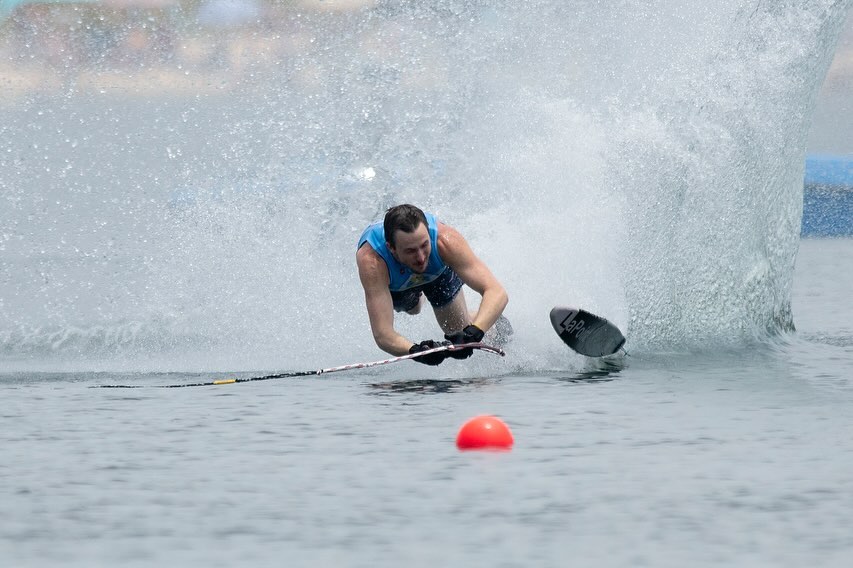
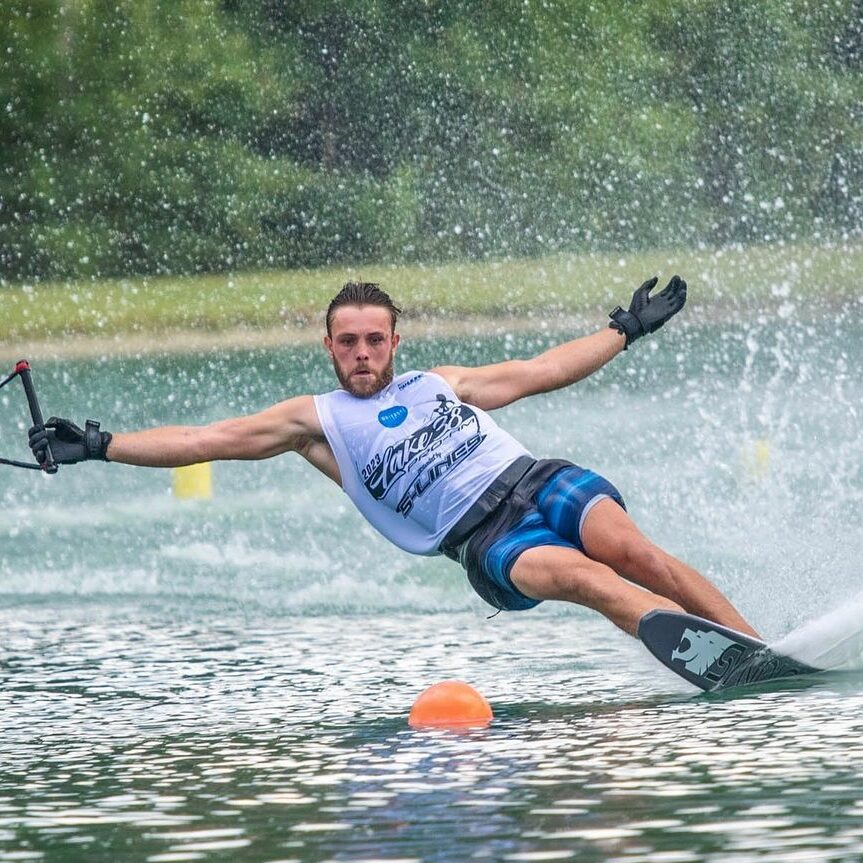
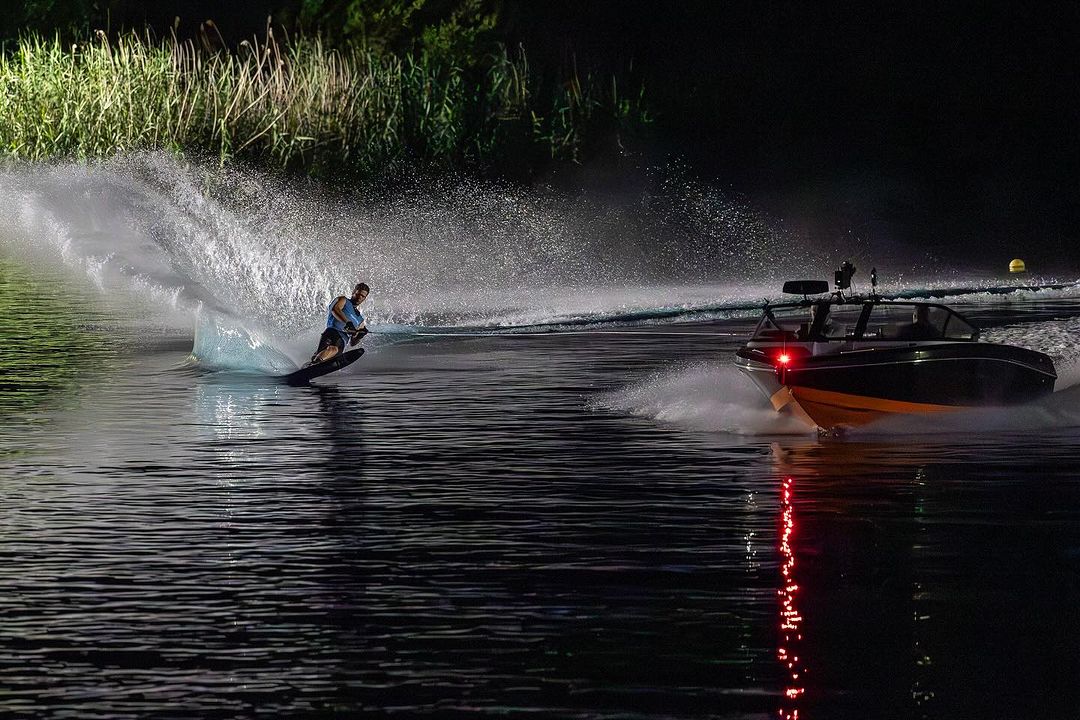
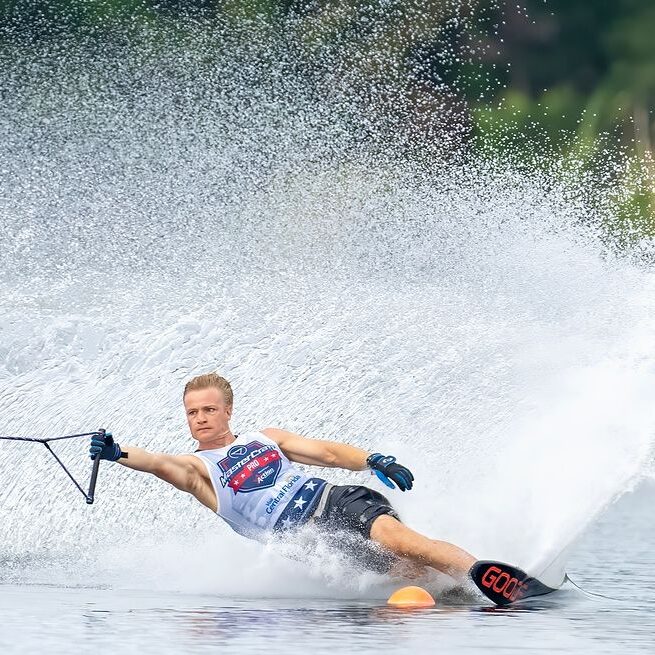
On a flawless summer morning, with water so flat it blurs the line between lake and sky, some of the world’s best slalom skiers wait their turn. They stretch, limber up, and ready themselves to launch down a course they know as intimately as their own signatures. The cameras roll. The engine’s roar cuts clean through the still air. From a distance, professional water skiing appears unshaken.

But beneath the polish, the sport stands once again on uncertain footing.

Fractured tours, softening prize purses, splintered sponsorships—and a question as old as the slalom course itself: who, exactly, is steering water skiing’s future?

This winter, as tournament schedules for another pro season locked into place, Nautique—the boat manufacturer as synonymous with waterskiing as Wilson is with tennis—quietly severed its final ties with the Waterski Pro Tour for 2025. On paper, it was a footnote. In practice, it was an earthquake.

This is the equivalent of Wimbledon quietly pulling out of the ATP Tour. Or if Augusta told the PGA: We’re good on our own this year, thanks.

Since its inception in 2021, the Pro Tour has been professional skiing’s most unifying force. Born out of pandemic-era recalibration, it bundled previously disconnected events into a coherent narrative, raising prize purses and driving a resurgence of fan interest. It created a season-long arc, elevating once-forgotten stops into destination tournaments. And for a few glorious seasons, the fractured sport of competitive skiing looked, briefly, like a professional tour again.

Nautique’s quiet exit cracks that illusion.

The writing, truthfully, has been on the wall for some time. Nautique is the primary sponsor of water skiing’s two longest-running and highest-paying events—the Moomba Masters and the U.S. Masters—both widely regarded as the sport’s equivalent of Majors. Nautique also serves as the primary organizer of the latter tournament. After its inclusion in the Pro Tour’s inaugural season in 2021, Nautique pulled the Masters out of the Tour. Then, when Moomba returned post-COVID in 2022, they too declined to participate.

A third blow came when the Botaski ProAm, a newer but increasingly important event, stepped away in 2023 after a single season of Pro Tour involvement. Another Nautique-sponsored event, Botaski’s withdrawal reinforced a trend.

Now in 2025, after four seasons as a fixture on the Pro Tour, the California ProAm will join the ranks of the two majors and Botaski on the sidelines. And just like that, the longest-running event on the Pro Tour is relegated to a sideshow—no longer relevant to any season-long narrative, unless one considers qualifying for the U.S. Masters to be the be-all and end-all of the water ski season.

Their reasoning? Officially muted. Representatives from Nautique Boats declined requests for an interview for this article.

It’s difficult—even when granting Nautique every benefit of the doubt—to formulate a coherent rationale for their aversion to the Pro Tour. Let’s be clear: it costs nothing for an event to be included on the Waterski Pro Tour. The perks are numerous—pre- and post-event marketing, social media exposure, highlight packages, and, most importantly, inclusion in an absorbing season-long narrative that gives any result the potential for broader ramifications.

Sure, there’s a reasonable argument for the majors to stay independent. They have the history, they have the brand. Arguably, the Masters’ decision to remain separate from the fledgling Coors Light Water Ski Tour in the 1980s saved it from the fate of other legacy tournaments like the California International Cup and the Tournament of Champions—both subsumed into the Tour brand and ultimately victims of the organization’s financial woes.

But the Waterski Pro Tour is just that: a brand name. It doesn’t take over existing tournaments. It supports them. It adds value. It’s hard to see how a tournament like the Botaski ProAm—begun as a small, men’s-only slalom event in 2018 and since expanded to include women and, more recently, tricks—has a brand strong enough to stand entirely apart. Surely the season-long narrative and visibility the Pro Tour brings is a value-add, not a liability.

The closest thing to a justification is a vision, hinted at publicly by Nautique insider Matt Rini during last year’s California ProAm: the idea of a Nautique-backed international circuit.

“Nautique is all about three-event—building a three-event boat,” he said. “The goal is to have four [tournaments], each featuring all three events, in a season. There’s no jump at Botaski, but they want to add it there. And they want tricks here [in California]. That would be amazing.”

That vision has been echoed before by Brian Sullivan, Nautique’s VP of Marketing, who once described the company’s ambition as “wanting to keep doing bigger and better events, to keep growing the sport—that’s one of our main goals.”

But even that ambition raises questions—chief among them, whether a parallel circuit run by a single manufacturer can truly grow the sport, or simply divide it further.

Nautique’s recent maneuvers, however, haven’t occurred in a vacuum. Taken alongside a string of recent controversies, they appear less like isolated strategic pivots and more like part of a broader pattern: control, consolidation, and increasingly contentious relations with athletes.

In recent years, the company has faced criticism for its rigid gatekeeping of the Masters — from Byzantine qualification procedures to the banning of a world champion for alleged unsportsmanlike conduct — as well as the contentious dismissals of top athletes like Jonathan Travers, Jacinta Carroll, and Patricio Font, raising concerns about its approach to athlete management.

Seen in that light, Nautique’s retreat from the Pro Tour looks less like a routine reshuffle and more like a tightening grip on the sport’s levers of power.

If so, they are not the first to try.

Competing pro tours have been attempted before in water skiing. Rarely with much success. In 1987, the American Water Ski Association launched the short-lived U.S. Grand Prix of Water Skiing to compete with the Coors Light Water Ski Tour. Then again, more dramatically, in 1990, Camille Duvall and a cadre of frustrated skiers attempted a coup. They launched an upstart circuit promising more prize money, athlete control, and safer skiing conditions.

For one turbulent season, skiing had two competing tours: the rebel PAWS circuit and the establishment Michelob Dry Tour. Sherri Slone famously won two pro jump titles on the same day.

The experiment imploded. Both tours crumbled under legal battles, sponsor fatigue, and logistical overload. By 1991, PAWS was gone. The old tour limped along, wounded but intact. The sport never fully recovered its eighties-era swagger.

Today, no one has openly declared “war” like Duvall once did. But Nautique’s move—alongside an already splintered calendar featuring the WWS Overall Tour and standalone events—feels eerily like history tightening its rope again.


On paper, these should be boom times. Each of the past three seasons has brought the highest prize purses in over 15 years. The gender pay gap has shrunk dramatically, from 60 cents on the dollar to near parity. The Waterski Broadcasting Company streams nearly every pro event, in crisp HD, for free. Fans can sit in their living rooms and watch the world’s best almost every weekend.

But peel back the webcast polish and cracks show.

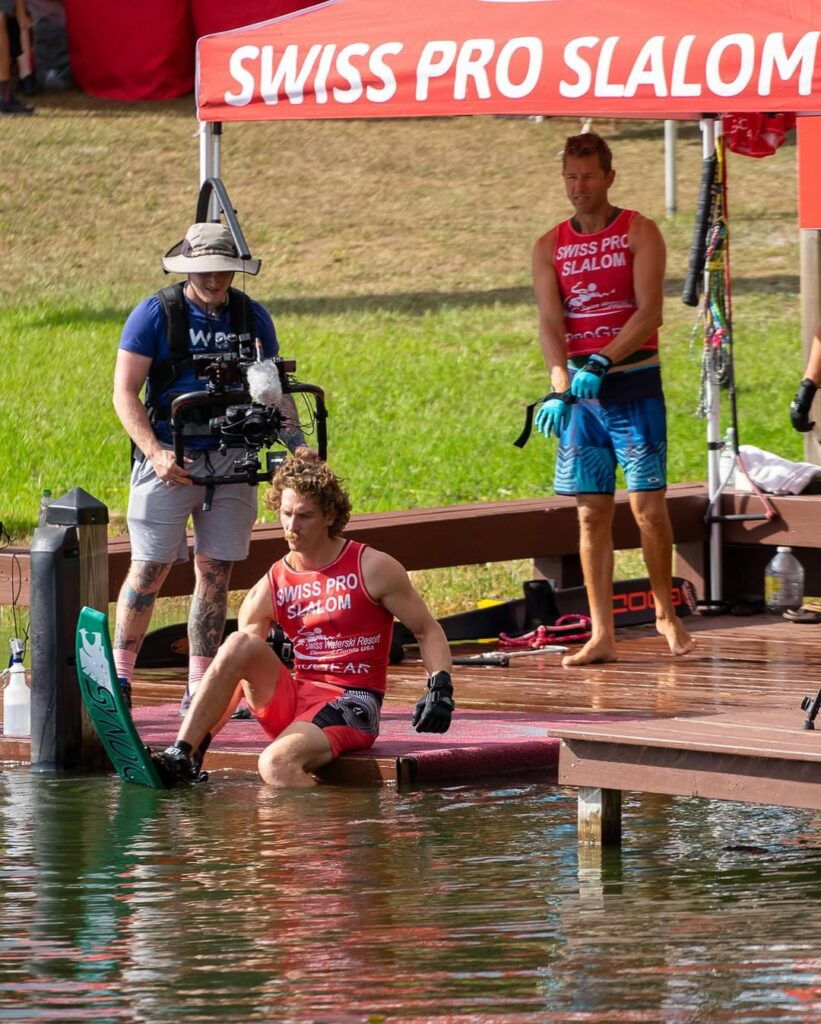
The Swiss Pro Slalom—the sport’s most-watched webcast annually—has just been demoted from the Pro Tour after failing to secure adequate sponsorship. Jumping, once the marquee discipline of water skiing, has seen prize money slashed by more than half in the last decade. Even trick skiing, despite a recent resurgence on the water, still lags far behind its 2000s heyday in financial support.

For the first time since 2020, when the global pandemic shuttered nearly all events, professional prize purses are forecast to decline in 2025.

Even Nate Smith, the most dominant slalom skier of his generation, has quietly taken on a “real job” in recent years to stay afloat. Coaching gigs and benevolent parents remain as crucial as gate setups at 41 off.

It begs the question: can the sport really sustain another professional circuit? Can a niche sport like water skiing afford this level of fragmentation?

The cameras are still rolling. The rope still hangs off the pylon. The skiers will ski. And for now, the sport holds together—if just barely.

But history in this sport doesn’t repeat itself quietly. Every time water skiing has splintered before, it’s taken years to recover. Some fractures have never fully healed.

Now, both sides risk losing something vital.

Nautique’s events—the crown jewels of professional skiing—draw their power from prestige, history, and the feeling that they are the center of the sport’s universe. Walling them off too far from the broader narrative risks dulling their shine, turning majors into outliers.

At the same time, the Pro Tour loses critical legitimacy without the weight of the sport’s longest-standing events on its calendar. Fans, athletes, and sponsors are left navigating a fragmented landscape—unsure which path truly leads to the sport’s future.

The truth is, no one wins a fractured season.

Not Nautique. Not the Tour. Not the athletes. Not the fans.

If the sport is to move forward, it needs everyone—manufacturers, organizers, and athletes—rowing in the same direction again.

There’s still time to course-correct.

Hopefully, someone picks up the rope.
Trick Skiing’s 13,000-Point Barrier Just Got Smashed

Articles

Trick Skiing’s 13,000-Point Barrier Just Got Smashed

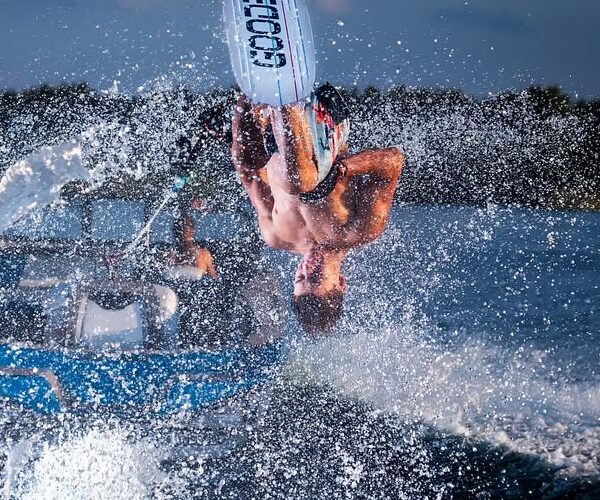
World record holder Jake Abelson

Image: Johnny Hayward

By Jack Burden


POLK CITY, FL — There was a time when 13,000 points in men’s trick skiing felt like a myth. A ceiling. A number whispered with admiration but dismissed with realism. This weekend, Jake Abelson achieved the unthinkable.

On a hot June weekend at Ski Fluid in central Florida, Abelson tricked 13,020 points in the first round of the Bill Wenner Memorial Record tournament. It was a staggering score—one that broke the world record, pending ratification. The next round, he went out and did it again. This time: 13,270.

In a sport where progress inches forward, he had just taken a leap.

In its early decades, the world record climbed by a thousand points every few years—1975, ’77, ’79, ’81, and ’84 each saw new milestones breached as Cory Pickos took the sport over the threshold of 10,000. But as the level of difficulty increased and the stopwatch refused to budge from its 20-second window, progress slowed. From there, each new thousand took longer to fall—six years to reach 11,000 in 1990, another 11 to reach 12,000 in 2001. But 13,000? That mark seemed out of reach. Until now.

From 2005 to 2022, only two men’s world records were ratified—170 total points of progress in 17 years. Trick skiing was often called the most stagnant of the three events. Then came a renaissance, kicked off in late 2022 by Mexico’s Patricio Font, who broke Aliaksei Zharnasek’s 11-year-old record. In the span of 18 months, the event transformed from glacial to white-hot.

That sudden acceleration in progression? It didn’t come from nowhere.

No one embodies that shift more than Jake Abelson.

Abelson is 17. His dad was an elite-level trick skier. His mom? A Junior Masters champion and a regular on the pro slalom and trick scene in the 2000s. His cousin is Patricio Font. He’s a second-generation athlete with deep family ties to the sport—raised with access to the best coaches, the best equipment, and the best ski sites in the world. His story isn’t one of accidental talent. It’s one of purposeful design.

What separates Abelson isn’t just his résumé. It’s the way he blends nearly every key ingredient that defines the modern trick skiing elite.

He has the raw power and strength of Zharnasek, enabling him to throw audacious tricks like wake-seven-front-to-front and ski-line-seven-back-to-back. He has the speed and precision of Font, unlocking the ability to squeeze in one more trick before the 20-second buzzer. And perhaps most importantly, he skis with the quiet poise of a gymnast who’s spent years training for perfection under pressure.

That’s not just metaphor. Jake still competes as a level 10 gymnast. Like Erika Lang, who transferred her tumbling background into becoming one of the greatest women’s trickers of all time, Abelson has brought aerial awareness and body control into a sport that now demands both in spades.

“In trick skiing, the goal is to perform as many high scoring tricks as possible in 20 seconds,” he said. “At a high level, more speed is required to add another trick or upgrade a preexisting one.”

Abelson spent last winter hammering one trick over and over—wake-seven-front-to-front, a brutally difficult 800-point move with a 720-degree spin and two handle passes. By April’s Swiss Pro Tricks, he could land it cleanly and on time, without derailing the rest of the run. In May 2024, he nearly broke 13,000 at a Masters Qualifier, missing the mark by inches—falling on the last two tricks. It was the proof of concept.

Fast forward to June 2025, and he executed.

But there’s a deeper layer to why this is happening now—and why it might not last forever.

Tricking is, at its core, a race against time. And to move faster, it helps to be lighter.

“You’ve got to look at body types,” said Joel Poland on a recent episode of the Grab Matters podcast. “When you’re smaller, you weigh 130 to 150 pounds, faster is easier. You can go slower with the boat, you can move a little faster. As you become a bigger person, you can keep that speed and learn to go fast—but it definitely gets harder.”

That dynamic makes Abelson’s moment feel especially fleeting and perfectly timed. He has the technical base, the gymnastic strength, the trick lineage—but also, the age and size to make speed work for him, not against him. In a few years, his approach might need to change. For now, it’s the perfect storm.

Abelson is quick to credit others. Matias Gonzalez and Martin Labra, the young Chileans pushing boundaries in toe tricks. Joel Poland, whose creativity and flair have inspired Abelson to explore more ambitious sequences. And Font, who reimagined the hand pass with blistering speed and composure.

As Gonzalez put it: “To consistently trick over 12k, the most important thing [is] to focus on speed,” said the 17-year-old Chilean, who already has multiple professional titles under his belt. “Pato showed that 11 tricks on hands were possible. That set the new standard.”

Abelson echoed the point almost word-for-word, crediting “the increase in speed which was demonstrated by Font” as the catalyst for this new era.

The skiing world was forced to take notice. From 2019 to 2023, Font won two World Championships and eight pro titles—one of the highest winning percentages in the history of modern trick skiing. “His consistency,” Abelson said, “[forced] the other competitors to put more time on the water just to be able to compete.”

Abelson’s rise feels sudden, but the data tells a deeper story. In April 2024, his personal best was 11,980. Then, in the span of one month: six scores over 12,000, including two world records at 12,720 and 12,970. His form in 2025 has been unmatched—winning the Moomba Masters, then the US Masters, and now potentially breaking the world record twice.

His record-setting run wasn’t a spike. It was a detonation—evidence not of a fluke, but of an athlete who’s shifted the benchmark.

And he’s not alone. Gonzalez and Labra are close behind. Louis Duplan-Fribourg of France, the reigning world overall champion, has a personal best over 12,500. Font still looms—consistent, decorated, and hungry.

“We started pushing ourselves to a better level,” said Labra. “Being with Mati [Gonzalez] since we were kids… and after that Jake, it helped me a lot to improve… to try to beat [them], we helped each other to be better.”

But Abelson’s ceiling might be higher still.

He’s not just a phenomenal tricker. He’s emerging as one of the most complete skiers in the world—just named to the 2025 U.S. World Championship team in overall. He skis all three events. He tricks like a specialist. And he’s the first American man to hold the world trick record since Cory Pickos in 2001.

In that sense, Abelson’s moment is bigger than a number. It’s a glimpse of what’s possible: not just in trick, but in the sport as a whole.

The only question now: is this the new ceiling—or just the start of something even bigger?

Brittany Greenwood Wharton jumps at the LA Night Jam

Why the LA Night Jam Left Us in the Dark — Literally and Digitally

Articles

Why the LA Night Jam left us in the dark — literally and digitally

Brittany Greenwood Wharton jumps at the LA Night Jam

Image: @lanightjam

By Jack Burden


Last weekend, some of the world’s best jumpers went soaring under the lights in Zachary, Louisiana. The LA Night Jam had it all: a packed shoreline, festival energy, world champions, rising stars, and Waterski Pro Tour points on the line.

But unless you were there in person, you didn’t see a second of it.

There was no webcast. No slo-mo replays. No expert commentary. No drone shots capturing heroic flight. Just the dry final results, posted to an anachronistic website after the spray had settled—black-and-white numbers standing in for what was, by all accounts, one of the most electric nights of the season.

And for diehard fans like me, that felt like a gut punch.

In the post-COVID era, we’ve grown used to watching every pro event live, for free, from anywhere in the world. The quality of these broadcasts has never been better, thanks in large part to The Waterski Broadcasting Company (TWBC). But cracks are starting to show in that model—and there’s a quiet, potentially growing shift away from relying on livestreams to carry the weight of an event.

Two of the four stops on the 2024 WWS Overall Tour were not broadcast, including the Canada Cup, which doubled as a Waterski Pro Tour jump stop and delivered some of the season’s most thrilling competition. The Fungliss ProAm, with the richest men’s slalom purse of the year, also eschewed a webcast.

Why? Because streaming costs money. And despite loyal viewership, the audience hasn’t really grown. TWBC’s YouTube views have plateaued since 2020. The downgrade of the Swiss Pro Slalom—still the most-watched water ski webcast every year—drives the point home: if the sport’s most visible livestream can’t generate enough sponsor revenue to stay on tour, something’s broken.

Still, many—including me—believe high-quality webcasts are a worthwhile investment. Maybe the audience isn’t there yet. But what better vehicle exists to grow the sport long-term? Who else is grinding to tell skiing’s story with the polish and persistence of TWBC?

That doesn’t mean, though, that every tournament needs to look the same.

The LA Night Jam reminds us there’s another way—one rooted in the past, but maybe just as vital to the future.

Rather than catering to a global digital audience, LA Night Jam pours its resources into the on-site experience. It’s a deliberate throwback—a water ski festival, as event coordinator Tucker Johnson described it in a local TV interview: “It’s fun for the whole family… a pro tournament set up with tons of events around it as well.”

There are trick exhibitions. Slalom head-to-heads. Freestyle skiers. Adorable kids on combos. In one memorable stunt, someone even barefooted out of a hot air balloon. It’s all designed to dazzle the crowd—many of whom arrive knowing nothing about water skiing and leave wanting more.

The funding model reflects that philosophy. Instead of relying on industry sponsors trying to reach a global audience, the event is backed by local businesses. Their website, perhaps vindictively, notes that the “event is not sponsored by MasterCraft Boat Co.”—a nod to the departure of their former headline sponsor and the pivot toward a community-first approach. It’s a stark contrast to the traditional, industry-funded model.

Here, the crowd isn’t just a backdrop. It’s the point.

And LA Night Jam isn’t alone. The 2024 WWS Canada Cup followed a similar formula: local crowd, local sponsors, no webcast. We’ve also praised the King of Darkness for its festival-like atmosphere and crowd engagement—though that event still pairs its in-person spectacle with a top-shelf livestream.

These formats don’t just recycle the same core audience—they expand it. They draw in new families, new eyeballs, and potentially new sponsors. Yes, physical crowds come with constraints—parking, logistics, capacity. But they offer something livestreams haven’t cracked yet: the ability to convert the curious into the committed.

As reigning world champion Freddie Winter put it recently on the TWBC podcast: “We shouldn’t just be skiing in backyard tournaments… getting in front of people is also fantastic.”

Back when waterskiing was booming, it had both—crowds and broadcasts. Passion and reach.

So maybe it’s not about choosing one or the other. Maybe it’s about trying everything, everywhere, all at once. Because if there’s one thing the sport can’t afford right now, it’s to put all its eggs in one basket.

It’s become cliché to quote the line about insanity being doing the same thing over and over while expecting different results. But it’s worth reflecting on. TWBC has poured heart and soul into their livestreams. And while their numbers are respectable, they haven’t meaningfully grown in five years. Meanwhile, their side projects like The Unknown Sport of Waterskiing and The Rise of Waterskiing arguably have the greatest potential of breaking through to new audiences.

At the same time, LA Night Jam and others like it are bringing fresh energy, new money, and new eyeballs into the sport—and paying athletes in the process.

With only five pro jump events on the 2025 calendar, every one counts. The fact that LA Night Jam delivered a full purse without a webcast isn’t a failure—it’s a sign of creativity and resilience.

So maybe the real takeaway is this: not everything in waterskiing needs to be built for people like me. Sometimes the best thing we can do for the sport is reach someone who’s never seen it before. Ideally, yes, we’d have both—a packed shoreline and a global livestream. But if resources are limited, I’m glad events are experimenting.

Throw enough at the wall, and something might just stick.

The future of water skiing won’t come from clinging to one tournament model. It will come from daring to try new ways to bring the sport to life.

If that means leaving some fans in the dark—so be it. But if it means lighting up a new generation, then the gamble is worth it.

Note: An earlier version of this article incorrectly implied that the Lake 38 ProAm had shifted away from TWBC for budget reasons. In fact, TWBC was the organizers’ first choice, but was unavailable due to scheduling conflicts.

William Asher slalom skier

The Relentless Reinvention of Will Asher

Articles

The relentless reinvention of Will Asher

William Asher slalom skier

Image: @jmommer2

By Jack Burden


In the early morning glass of a Florida lake, Will Asher slices the slalom course like a man trying to solve a riddle only he can hear. At 42, he shouldn’t be this vigorous. But this ride isn’t just about winning—it’s about understanding.

That understanding, it turns out, might be the only thing keeping him going.

In a season that was supposed to mark the rise of the next generation, it was the old master who stood tallest. Asher, already a two-time world champion and one of the most decorated slalom skiers of all time, didn’t just show up in 2024—he took over. Four professional wins, more than double the next closest competitor. A three-stop sweep through Morocco, the south of France, and Monaco, where he ran 10.25 meters (41’ off) not once, but twice. Against men half his age, Will Asher was untouchable.

Ask what changed, and he doesn’t talk about dominance—he talks about freedom.

“We made a breakthrough [with my equipment],” he said in a recent episode of the FPM Podcast with Marcus Brown. “And when you get to that point, you’re able to just switch off.”

There’s a calmness to Asher now—a kind of peace forged not by slowing down, but by refining his purpose. In a sport where most of his contemporaries have long since moved on, he’s still here. Still evolving. Still building.

Charting a New Course

What do you do when you’ve won almost everything? For Asher, the answer wasn’t to walk away. It was to go deeper.

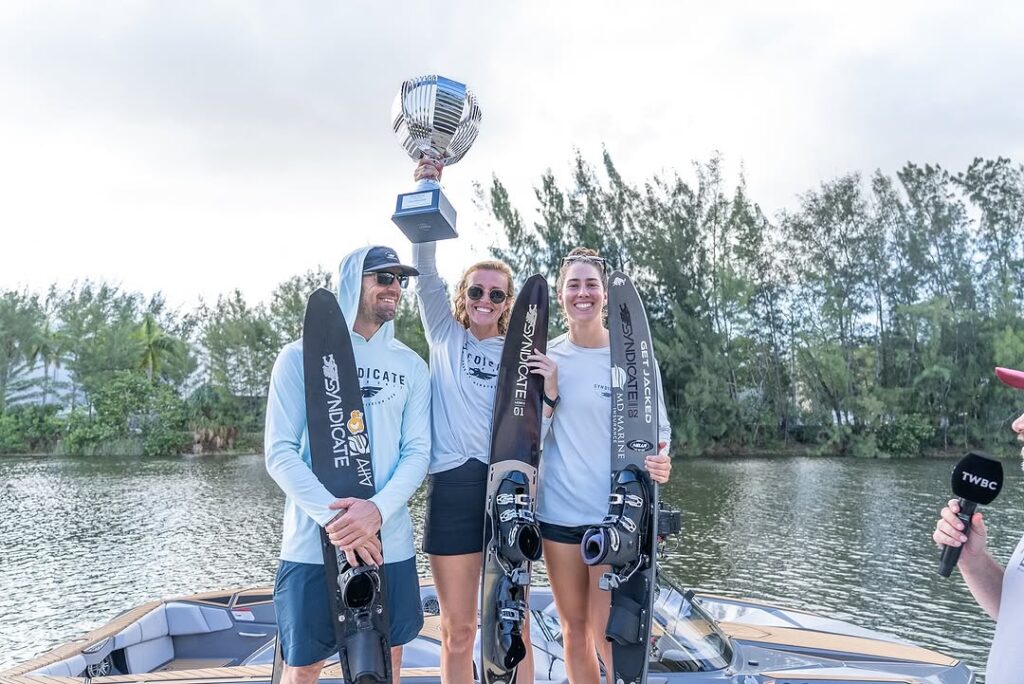
Ski design—once a curiosity, now an obsession—has become his new frontier. His latest creation, the Syndicate Works 01, isn’t just a ski. It’s the result of a decade-long search for feel, feedback, and flow. A physical manifestation of everything he’s learned—and everything he still doesn’t know.

For Asher, it’s not about tournament wins anymore. It’s about chasing the perfect feel.

And it’s not just about his performance. It’s about the craft. The satisfaction of building something that matters.

“It’s like my babies,” he says. “Thousands of my children out there that people are trying to experience. And it does feel good when people say, ‘That changed my life.’ That’s their release. Their enjoyment. Their pleasure.”

This isn’t legacy-building. It’s presence. Pride. Passion shared.

Asher often speaks of skiing as more than sport. It’s structure. It’s meaning. A daily ritual that gives shape to life.

“Yeah,” he says, when asked if skiing brings purpose. “It keeps me on the straight and narrow. Keeps me motivated. Gets me up in the morning. Makes me go to bed. Make good decisions… most of the time.”

But underneath the laugh is something harder. At 42, he knows his competitive days are numbered. And he’s honest about what comes next.

“Essentially a piece of me is going to die,” he says. “We don’t see the timer, but we know there’s a timer. [Maybe] this year, maybe next year, it could happen next week.”

Then, more quietly: “And when people put their whole life into one thing and it suddenly goes away—it’s full of depression and anxiety. You’ve got to fill that hole, right?”

That’s the part athletes don’t talk about. The collapse waiting just off-stage. The slow erasure of identity. For Asher, the antidote isn’t legacy. It’s curiosity.

“I think specialization is a terrible thing,” he says. “[It’s] one of the worst things that can happen for the potential of a child in athletics. I don’t understand why it’s not also true for adults.”

He finds refuge in other routines: cycling, lifting, running, foiling. “It’s like my kind of therapy,” he says. “To get away from everything.”

Even his on-water habits reflect that mindset. “I will actively go out of my way to not ski with people that are just too obsessed and cannot switch it off.”

Another form of escape? R&D.

Asher’s work with HO Skis has become a space beyond the slalom course. A place where he can tinker, rebuild, and reimagine what a ski can be.

He talks about design with reverence. Like a miner chasing gold.

“You know there’s gold down there,” he says. “You’ve done the tests. You’ve done the experiments. You see it—it’s there. But you still have to go dig it out.”

That treasure—the perfect ski—remains elusive. And maybe that’s the point.

“As crazy as it may sound, after 20 years I’m still trying to understand the basics,” he says. “It’s unbelievable how many variables there are in just one ski.”

Flex. Rocker. Width. Concave. Materials. Layup. The way a ski flexes and twists. It all matters. And yet, no formula guarantees feel.

“On paper, you can maximize everything. [But] if you maximize everything, that thing doesn’t work,” he says. “You can get performance, but sometimes it’s almost scary. To actually go to that place on the ski—it’s not comfortable.”

Still, he chases it.

“I feel like it’s my life’s work to get all that to come together into one place.”

Staying Unfinished

It’s not just theory. Asher’s skis are reshaping how elite skiers approach the sport. Team Syndicate riders won more than 40% of all professional slalom titles last season, with roughly the same share of podiums. An extraordinary haul in a field where seven different ski brands earned at least one win.

Less rigidity. More feel. Less fear. More flow.

The lab has become a second course. A proving ground for risk and reinvention.

Because perfection isn’t really the point. The point is to keep going.

What’s most remarkable about Asher isn’t the titles—though there are plenty. It’s that, two decades in, he still believes there’s something essential left to discover. That his life’s work isn’t a résumé of wins, but a trail of questions.

And that legacy is starting to echo—in younger skiers looking beyond the podium. In those chasing meaning, not just medals.

That’s Will Asher’s influence. Not just as a champion. But as a craftsman. A philosopher of flow. A man still mid-process.

Back on the lake, Asher is testing again. Not skiing for scores, but for feel. Riding a prototype. Making notes. Chasing something invisible.

It’s not about being the best anymore. It’s about staying unfinished.

Because the perfect ski—like the perfect run—probably doesn’t exist.

But if you spend your life looking for it… maybe that’s enough.

Charlie Ross attends Rollins College

How Charlie Ross Became the Youngest Ever to Conquer 41-Off

Articles

How Charlie Ross became the youngest ever to conquer 41-off

Charlie Ross attends Rollins College

Image: @rollinswaterski

By Jack Burden


CLERMONT, FLA. — One of water skiing’s most exclusive clubs has a new—and youngest ever—member.

On Sunday at the Swiss Spring Classic, 19-year-old Canadian phenom Charlie Ross ran 1 buoy at 9.75 metres (43-off), becoming just the 16th skier in history to complete the fabled 10.25-metre (41-off) pass in tournament conditions. The score not only joins him to slalom royalty—it also sets a pending World Under-21 and Canadian Open record.

At 19 years and eight months, Ross surpasses Nate Smith’s mark as the youngest skier ever to achieve the feat. Smith, who first ran 41-off at age 20 years and six months, has long been the benchmark for modern slalom skiing. Now, that mantle may have been taken.

For close watchers of the pro scene, Ross’s breakthrough is less a surprise and more an inevitability fulfilled. His rise has been relentless: six Under-17 world record slalom performances (including a staggering 4 @ 10.25m as a junior in 2022), three successive Under-21 world records, and, most recently, a debut professional victory at the Moomba Masters this March—where he outdueled veterans and prodigies alike to win men’s slalom at one of the sport’s most storied events.

That Moomba final felt like a preview of the chaos defining modern men’s slalom. In an era where parity reigns—ten different pro event winners in 2024 alone—the Melbourne showdown was vintage unpredictability. Sixteen-year-old Damien Eade flashed early brilliance; the ever-versatile Joel Poland showcased his strength; Freddie Winter, just nine months removed from a broken femur, clawed back into relevance; and Lucas Cornale ignited the home crowd before Thomas Degasperi, ever the tactician, set the mark to beat. Skiing last, Ross answered with the highest score of the event to clinch the title—becoming the youngest Moomba Masters champion since Carl Roberge in the early 1980s.

A statement win for a skier whose pedigree feels almost like destiny. His father, Drew Ross, was a mainstay on the pro circuit through the ’90s and 2000s, anchoring Team Canada’s success. His sister, Neilly Ross, holds the current women’s world record in tricks and is an elite slalom contender. Raised at a ski school in central Florida, Ross honed his craft under the dual pillars of year-round conditions and top-tier coaching.

But raw talent only explains so much. Ross has become a student of the sport in the purest sense—obsessing over historical footage, deconstructing the gates of legends like Andy Mapple, Will Asher, and Freddie Winter, and dissecting body position frame by frame to edge his form closer to perfection.

“You can’t substitute for volume, volume on the water,” Ross told Marcus Brown on The FPM Podcast earlier this year. He also stressed the value of “bouncing different ideas off different people,” citing the advantage of training at multiple sites and the dense concentration of world-class coaches in central Florida.

Ross’s rise has also been fueled by a deliberate transformation off the water. Long one of the lightest skiers on tour (a wiry 6’2” and 138 pounds last season), he dedicated his winter to gaining strength—adding 20 pounds of muscle to balance agility with durability. The payoff was evident in Melbourne and again this weekend in Clermont, where his composed, powerful style carried him into waterski immortality.

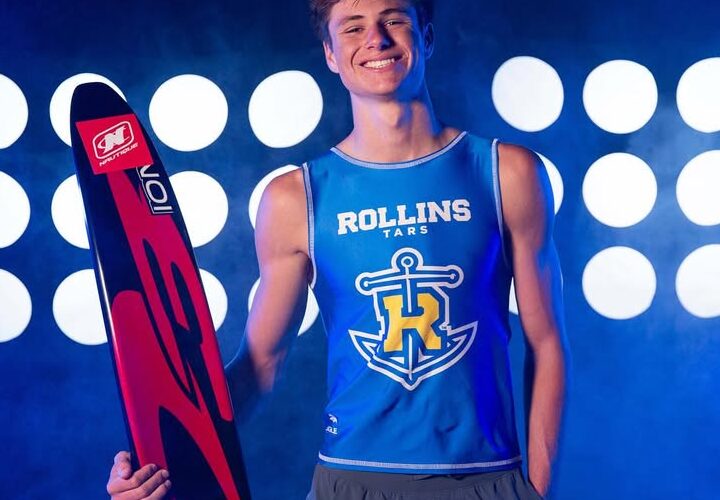
Remarkably, Ross balances his professional ascent with a heavy academic load. A freshman at Rollins College, he juggles coursework with a travel schedule stretching across hemispheres. As the packed 2025 season unfolds—with eyes on the Under-21 World Championships on home soil later this year and a full slate of pro majors—his trajectory shows no signs of slowing.

Beyond his own ambitions, Ross sees slalom entering a pivotal era—one that echoes the rapid evolution recently seen in men’s tricks.

“It was only a few years ago we were asking if tricking 13,000 points was possible, what’s the points per second?” Ross said. “Now it’s guys like Mati, Tincho, Jake, Pato, and Joel—all right on the door.”

He predicts a similar surge in slalom, as a wave of young talents—including Lucas Cornale and the Eade brothers—begin to challenge the sport’s established elite.

“In a couple years, every tournament might take a near world record to win,” Ross said. “It’s going to be crazy.”

As the sport braces for a wave of record-breaking performances, Ross intends to lead the charge. “I want to chase running 43,” he said, referencing the 9.75m line length where the current world record stands at 2.5 buoys. “I don’t know if it’s even close to possible,” he added, “but when I’m done with my career, I want to be able to say I did everything I can to run 43.”

On Saturday, he took the first giant step toward that future. The 41-Off Club has a new name on its roster—and he’s just getting started.

SWISS PRO SLALOM

Stream It and They Will Come?

Articles

Stream it and they will come?

SWISS PRO SLALOM

Image: @waterski_nation

By Jack Burden


The 2025 Swiss Pro Slalom will not feature on the Waterski Pro Tour after the event failed to meet the minimum prize purse threshold required for tour inclusion. A blip? A bureaucratic technicality? Or is it a mirror held up to the broader struggles of professional waterskiing?

The numbers are clear cut: a total prize purse of $12,000—half of last year’s offering—falls below the threshold required to maintain its star-level status. Technically, it could qualify as an introductory event, but only if it hadn’t worn the badge of a higher-tier competition in both 2023 and 2024. So here we are, with a top-tier webcast and world-class athletes, but an event that no longer qualifies for the official tour it helped define.

And therein lies the tension.

In many ways, the Swiss Pro Slalom is the blueprint for modern waterski events. Held in the heart of Central Florida—a stone’s throw for most of the world’s elite—it minimizes travel costs and sidesteps the logistical sprawl of international hosting. There’s no scramble to pack bleachers with spectators. Instead, the focus is squarely on the screen, with a heavy investment in producing a polished, professional webcast. In fact, the Swiss Pro has served as the unofficial proving ground for The Waterski Broadcasting Company (TWBC), the undisputed titan of waterski streaming. It’s their backyard. It’s their home court. And it shows.

But for all its polish, the money has rarely matched the production quality. Since its 2015 inception, the Swiss Pro Slalom has usually operated on the financial fringes. Its status has bobbed between introductory and non-qualifying levels, only recently ascending to a more lucrative tier in 2023 and 2024—before falling back again this year.

Yet despite modest prize purses, Swiss Pro Slalom remains TWBC’s most viewed webcast every year. It routinely eclipses richer, flashier tournaments with deeper sponsor pockets. Which begs the obvious question: does prize money matter as much as we think it does?

If viewership is the metric that counts, then maybe not. But if professional waterskiing becomes a loop of Central Florida-based events rewarding only the top three athletes, the ceiling lowers fast. There’s a real danger the sport becomes a closed circuit: elite, expensive to enter, and hard to sustain.

Current event funding models lean heavily on a trio of lifelines—endemic sponsors, community benefactors, and increasingly, athlete entry fees. That’s a brittle structure. One good gust and it all falls apart. And yet, the answer may not be to pour more into the prize pot, but to grow the audience instead.

Which is precisely what TWBC is trying to do.

Armed with high-tech cameras, drones, slick graphics, and expert commentators, TWBC has become the face of waterski broadcasting. In 2024 alone, it streamed 10 of the 13 Waterski Pro Tour events. Its influence is unmissable. Since COVID-era lockdowns drove viewership online, TWBC’s numbers have surged—at least initially. But since 2020, YouTube viewership has plateaued. Publicly available data shows a consistency in viewer counts, not growth. Maybe the deeper analytics tell a different story, but the surface stats suggest a ceiling has been hit.

Still, the ambition hasn’t waned. TWBC’s 2023 documentary project drew over 140,000 views, taking a page from Formula One’s “Drive to Survive” playbook. But the follow-up series, The Rise of Waterskiing, hasn’t yet caught fire. The sport is still waiting for its breakout moment.

Meanwhile, nearly every major player in the sport is all-in on TWBC. And for fans, this might just be the golden age. You can watch almost every event live, for free, and in better quality than ever before. But current viewership alone doesn’t pay the bills—or the prize checks. If it did, the Swiss Pro Slalom wouldn’t be fighting for tour status.

So here we are. The Swiss Pro Slalom won’t appear on the Waterski Pro Tour in 2025. But it’ll still feature a stacked field of athletes. It’ll still be produced with unmatched polish. And if history is any guide, it’ll still be the most watched event of the year. For all its flaws, it remains one of the best exhibitions of pro slalom skiing.

Will that be enough?

I’ll be watching. Odds are, if you’ve read this far, you will too. And maybe that’s the metric that matters most.

After all, if a rope is shortened at the lake and no one sees it, did it really happen?

Robert Pigozzi slaloms at the Nautique Masters

What Happened to Robert Pigozzi? The Rise and Fall of a Slalom Prodigy

Articles

What happened to Robert Pigozzi? The rise and fall of a slalom prodigy

Robert Pigozzi slaloms at the Nautique Masters

The famous ‘Pigozzi lean’ (image: Des Burke-Kennedy)

By Jack Burden


Cast your mind back to 2019, pre-pandemic, when the waterski world still felt a little simpler. Ski boats were still under six figures, webcasts were homemade affairs, and Joel Poland’s bid for world domination was in its infancy. If you had to pick the next big thing in slalom back then, there was only one correct answer: Robert Pigozzi.

At 21 years old, with arms like tree trunks and a gold chain around his neck, Pigozzi could have been mistaken for a swashbuckling young baseball star – the national pastime of his native Dominican Republic. Instead, he channeled his strength into ripping tow pylons out of their sockets. His leans put even Freddie Winter to shame.

In 2015, he won the Under-17 World Championships, setting a record that would stand for almost a decade. That same year, as a 17-year-old, he finished runner-up at the Under-21 Worlds. By the age of 20, he’d already won his first professional tournament and became just the 12th member of the 41-off club (though many keyboard warriors would question the legitimacy of scores from that event). In 2019, he earned seven top-five finishes in professional events, including an incredible European tour run where he claimed a second pro title alongside three runner-up finishes. He capped off his breakout season with gold at the Pan American Games.

He finished that season fourth in the Elite Standings, making him one of only two skiers (alongside Stephen Neveu) to break into the top four past the unbeatable quartet of Smith, Winter, Asher, and Degasperi over the last five years of the Elite Rankings.

Yes, it helped that Nate Smith was sidelined for much of 2019 due to his SafeSport investigation and subsequent suspension, but Pigozzi’s skiing was the real deal. In 2019, he scored three or more at 10.25 meters (41’ off) eight times in professional competition, including on the notoriously challenging Yarra River.

Fast forward to 2024, and Pigozzi has changed. He’s matured. He’s married. He’s running multiple side hustles, balancing his entrepreneurial ventures with the demands of being a professional athlete. Perhaps the shift in priorities has affected his performance. Last year, he entered just four pro events, finishing 22nd, 15th, 12th, and 17th. He managed to run 10.75 meters (39.5’ off) only once.

At the season’s final event, he looked like a fish out of water. On his opening pass at 13 meters (32’ off), Pigozzi inexplicably pulled up narrow for two ball. Given a reprieve by the best-of-two-rounds format, he looked shaky throughout his second round, repeating the same mistake into six ball on his third pass at 11.25 meters (38’ off).

Even reigning world champion Freddie Winter couldn’t make sense of it: “I am honestly floored. I’ve seen a lot of stuff in waterskiing, but I would’ve put my house on him getting around six. He was cruising, but then suddenly, he’s pulling on the inside and narrow.”

Pigozzi’s form has been on a downward trend for a while now. He hasn’t had a top-five finish since 2021 and has made just two finals in the past two years. In the last five seasons, he’s recorded fewer scores of three or more at 10.25 meters (41’ off) in pro competition than he did in 2019 alone.

Perhaps there’s no way back from this slump for Pigozzi, once the shining star of world slalom skiing. He turns 28 this year, tied the knot, and the responsibilities of adulthood are catching up with him.

But at his best, no one slalomed quite like the strapping Dominican. When running late, he’d drop the hammer, with leans so deep he seemed parallel with the water. A boat driver’s worst nightmare (it’s perhaps not surprising his father is one of the most highly regarded in the world), he was the skier who made you think, “That’s how it should be done. If only I were stronger, braver, younger.”

Where Nate Smith and his many imitators make shortline skiing look effortless, Pigozzi at his best made it look like something anyone could do—if they were just a little more daring. His style harkened back to the power of slalom greats like Kjellander and LaPoint—raw strength combined with dogged determination. It’s the kind of firepower and excitement the sport often lacks today.

So let’s hope there are more chapters to be written in Pigozzi’s story. He remains one of water skiing’s finest sluggers.

The moments that defined the 2024 water ski season – and the stories behind them.

Year in Review: We Countdown the Most Memorable Moments of 2024

Articles

Year in review: We countdown the most memorable moments of the 2024 water ski season

The moments that defined the 2024 water ski season – and the stories behind them.

The moments that defined the 2024 water ski season – and the stories behind them.

By Jack Burden


Water skiing in 2024 was a symphony of breakthroughs, rivalries, and legends. It was a year where the boundaries of the sport were not just nudged but obliterated. From historic records tumbling to teenagers staking their claim among seasoned veterans, the season delivered a relentless procession of stories that reminded us why we love this sport. Whether it was iconic figures bowing out, future stars rising to the occasion, or tense moments that left fans speechless, the year had it all.

Throughout 2024, skiers showcased their talents across two professional tours, the Waterski Pro Tour and WWS Overall Tour, legacy events like the Moomba and U.S. Masters, and the Under-17 World Championships. At its heart, 2024 was about evolution—on the water and in the stories surrounding it. As we count down the top ten moments, we reflect on a year that redefined what’s possible in water skiing and set the stage for an even brighter future.

Neilly Ross sets a pending world trick record at 11,430

Image: @neillyross

10. Fall of Records

The women’s trick world record turned into a game of musical chairs this fall as Neilly Ross and Erika Lang traded the title in a jaw-dropping display of skill and rivalry. It all began on October 26, when Ross posted an 11,380-point run at the Okeeheelee 3-Event Record Tournament in West Palm Beach, Florida, surpassing Lang’s standing record. But just a week later, Lang fired back with an 11,450-point run at the Timber Cove Record Tournament in Texas—the highest score ever tricked by a woman.

Then, on November 9, Ross delivered a double counterpunch at the Autumn Record on Lake Ledbetter, tricking 11,430 points in both rounds and submitting two pending world records. The back-and-forth battle captivated the water ski world as the scores awaited review by the IWWF. Ultimately, Lang’s record was denied, and Ross officially claimed the world record for the first time. As of now, her latest scores remain under review.

Regardless of official ratification, the razor-thin margins and high stakes of this duel solidified Ross and Lang as two of the sport’s fiercest competitors, pushing the boundaries of what’s possible in elite trick skiing.

Perhaps most intriguing was Lang’s response. After competing at the October Okeeheelee tournament, she appears to have replicated Ross’s record-breaking sequence in a matter of days, perfecting it before her Timber Cove run.

Jaimee Bull cross trains through winter on snow

Image: @abbydells

9. Water is Just Melted Snow, Right?

The 10th anniversary of the Swiss Pro Slalom delivered a fitting start to the 2024 Waterski Pro Tour, and amidst the action, Jaimee Bull delivered one of the most astonishing performances in recent memory. Hosted at Florida’s iconic Swiss Waterski Resort, the event featured a stacked lineup of veterans and rising stars battling through two preliminary rounds and a high-stakes final—all packed into a single day. By sunset, the water had witnessed more than just skiing; it had seen history.

Heading into the women’s event, Regina Jaquess—the nine-time champion and reigning Queen of Swiss—seemed an unstoppable force. She’d never lost here, and few would bet against her claiming a 10th crown. But Jaquess fell short of McClintock-Rini’s lead of 5@10.75m (39.5′ off). Then came Bull, who had spent the winter on snow and only returned to water skiing weeks earlier. Defying expectations she ran 1@10.25m (41′ off) to claim victory, snapping Jaquess’ undefeated streak at the Swiss Pro and leaving the water ski world in awe.

Reigning men’s world champion Freddie Winter summed it up best: “It takes me a month and a half to feel like I can even stand on a slalom ski. Jaimee’s gone out and run 39 maybe in her second or third week of training. It’s exceptional. She looks outrageously good.” Bull’s understated response reflected her shock as much as her grit: “I haven’t been on the water that long, and skiing three sets in one day is a lot. [But] the rhythm was really good, and everything felt smooth.”

By year’s end, Bull’s early-season magic proved prophetic, as she claimed her fourth consecutive Waterski Pro Tour season championship. It all began with a Swiss Pro Slalom victory that was as unlikely as it was unforgettable.

The Eade brothers at the U17 world waterski championships in Calgary, Alberta, Canada.

Image: @johnnyhayward_photo

8. Sibling Rivalry Hits New Heights

Sibling rivalry often adds an emotional edge to sports, but few moments have captured it quite like 2024’s Under-17 World Championships in Canada. The final showdown between Jaeden and Damien Eade, two second-generation water skiing prodigies, delivered an unforgettable spectacle of skill, resilience, and brotherly competition. The Eade brothers, top seeds heading into the event, tied for the gold medal in the slalom event, forcing a dramatic runoff.

Jaeden, the elder, had broken an almost decade-old championship record in the preliminary round with 4 buoys at 10.75 meters (39.5’ off). Damien, nursing an arm injury, was a pass back but fought his way to tie with his brother in the final at 2 buoys on the same line length. In the runoff, Jaeden showcased his composure, running a clean 11.25 meters and repeating his earlier record-setting score from the preliminary round. Damien, chasing the highest score in the history of the tournament for victory, managed 3 buoys at 10.75m – falling just short. The embrace that followed between the brothers was a picture perfect moment, a reflection of years of shared training and mutual support.

For Jaeden, the win was about strategy as much as skill. “I just had to play it safe,” he explained, describing his decision to lay up in the finals and force the runoff. Damien, meanwhile, emphasized gratitude: “Just being at Junior Worlds was an awesome experience.” Their father, Kyle Eade, a former professional jumper, summed it up: “It’s a storybook ending for us.”

HO Skis wins the Waterski Pro Tour brand leaderboard

Image: @hoskis

7. Syndicate Sweeps Skiing’s Busiest Week

Four countries, four tournaments, 10 days, and $150,000 in prize money—this was no ordinary week in waterskiing. It was a whirlwind European tour that tested the endurance, skill, and grit of the world’s best slalom and trick skiers. Starting under the Moroccan sun in Marrakech and winding through the Alps, the French Riviera, and central Spain, the schedule was as relentless as the competition.

In men’s slalom one name stood tallest by the end: Will Asher. The 42-year-old veteran rolled back the years with three consecutive wins in Marrakech, Fungliss, and Monaco, cementing his place atop the 2024 Waterski Pro Tour standings. Asher not only won but did so in style, conquering the daunting 10.25m (41’ off) line length twice in the process.

Team Syndicate dominated the conversation throughout the week, claiming over 50% of slalom podiums and all seven slalom titles. Jaimee Bull continued her reign, pulling ahead on the Pro Tour leaderboard with another masterful performance. Rob Hazelwood and Allie Nicholson added individual wins to the team’s haul, while Frenchmen Sacha Descuns showcased brilliance on home waters.

Strong all season, Team Syndicate would go on to pick up their second consecutive Brand Leaderboard title on the Waterski Pro Tour. Their response was a mix of pride and gratitude: “What a year it’s been. We couldn’t be more proud of our team—on the water, in the factory, and in the back offices in Seattle. This trophy wouldn’t be possible without everyone working together and driving the team to be better every day.”

Joel Poland wins the 2024 WWS Travers Cup

Image: @johnnyhayward_photo

6. Three Perfect Rounds

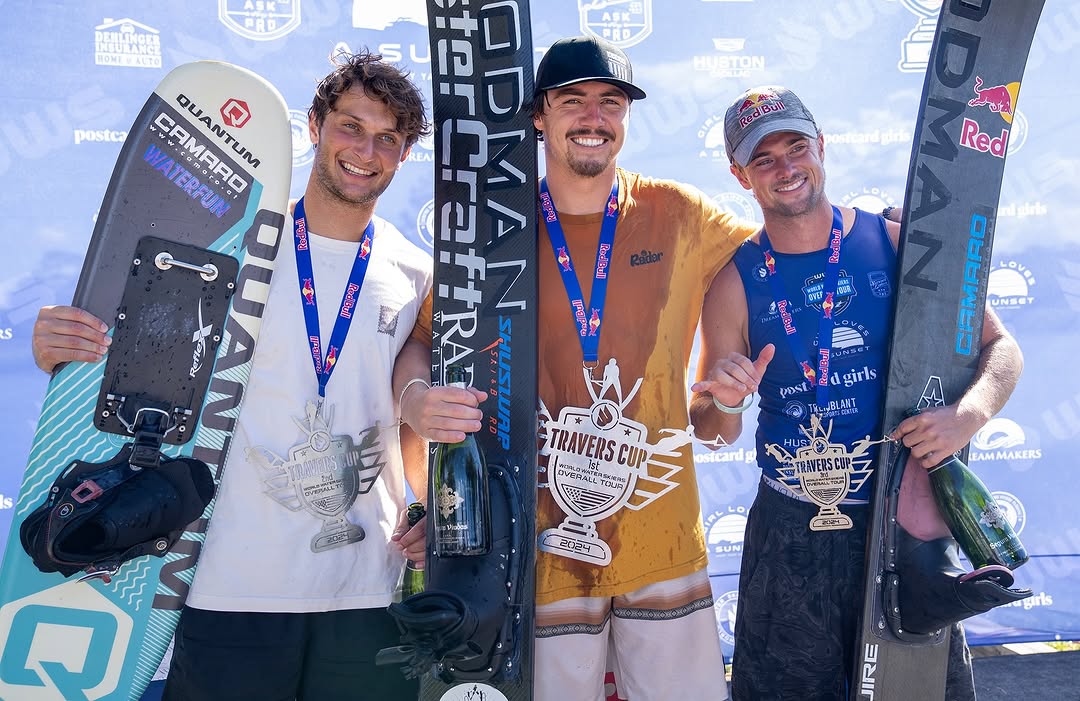
Joel Poland isn’t just rewriting the record books—he’s tearing them apart and starting anew. The 25-year-old Englishman delivered a fortnight of water skiing that bordered on perfection, beating the world overall record in three consecutive rounds. The latter two done in professional competition at the WWS Travers Cup, cementing a third consecutive season championship on the WWS Overall Tour.

This isn’t an isolated hot streak. Poland has been on a relentless tear since last year, when he ended a two-year drought to break the world overall record at the final stop of the 2023 WWS Overall Tour. That moment seemed to unlock a new level of dominance. Since then, he smashed the record again at the Malibu Open, again in the spring at Fluid, and—astoundingly—exceeded it in three consecutive rounds this September. Records aren’t supposed to fall this easily, let alone in bunches. It’s a staggering level of consistency in a sport where perfection is fleeting.

Spare a thought for his competitors, who find themselves skiing in the shadow of history. Louis Duplan-Fribourg, Dorien Llewellyn, and Martin Kolman all delivered exceptional performances at the Travers Cup—indeed, the entire podium surpassed Jaret Llewellyn’s legendary “unbreakable” record that held from 2002 to 2017. The competition was breathtaking, with highlights like a pending under-17 world record from Jake Abelson and a new French national jump record from Duplan-Fribourg. But none of it could hold a candle to Poland, who put up elite-level scores in slalom, tricks, and jump across all rounds.

“I’m pretty happy—three [overall records] in a row now,” Poland said, in his typical understated way. Look away at your peril—he’s not done yet.

Swiss Pro Tricks finalists 2024

Image: @tiaremirandaphotography

5. The Teen Revolution in Trick Skiing

The rise of youth in men’s trick skiing was nothing short of astonishing. Heading into the season, names like Patricio Font and Joel Poland were expected to dominate. Yet, the story quickly shifted to teenagers Matias Gonzalez, Martin Labra, and the prodigious Jake Abelson.

After Font’s early-season triumph at the Moomba Masters, skiers 18 and under claimed every remaining professional trick title. Most remarkable was Abelson, who, in just two weeks, went from never breaking 12,000 points to smashing the world record—twice. This wasn’t just incremental progress; it was seismic, with his combined improvements eclipsing nearly two decades of prior growth in the sport.

The year also marked the highest level of tricking depth ever recorded, with over half of all 12,500+ scores coming in 2024. Abelson’s inspiration came from a variety of sources: the speed and efficiency of Font’s hand pass, the boundary-pushing tricks of Joel Poland, and the blistering pace of Gonzalez and Labra’s toe tricking, to name a few. Far from occurring overnight, the sudden rise in trick scores is the product of “the collective knowledge” of generations of skiers and coaches who have laid the blueprint.

“To consistently trick over 12k, the most important thing for me was to focus on speed,” shared Gonzalez. Labra echoed the sentiment, attributing their collective success to their shared childhood rivalry. “I think we helped each other to be better… we started pushing ourselves to a better level,” he said. The next generation has arrived, and the path to 13,000 points is now firmly in sight.

Regina Jaquess slaloms at the King of Darkness

Image: @waterskiprotour

4. Queen of Darkness

The final weeks of the 2024 professional water skiing season were a relentless showcase of high-stakes tournaments across Florida, but none captured the imagination quite like the MasterCraft King of Darkness (KoD). A festival-like night event, bringing together incredible skiing and an enthusiastic crowd that harkened back to the sport’s glory days. But it wasn’t just the atmosphere that made KoD special—it was the level of competition, particularly in women’s slalom, where the bar was raised to unprecedented heights.

In a dazzling display of skill and composure, all four semifinalists—Regina Jaquess, Whitney McClintock Rini, Jaimee Bull, and Allie Nicholson—successfully navigated the notoriously demanding 10.75-meter (39.5’ off) pass in the head-to-head matchups. It wasn’t just a one-off either; the feat repeated in the finals, making KoD the first event in history to see such consistency at this level under head-to-head pressure.

The semifinals were thrillers. McClintock Rini ran 10.75 meters, likely thinking she had sealed her finals spot, only to watch Nicholson match her, forcing a 10.25m (41’ off) showdown. McClintock Rini held her nerve to edge Nicholson in a tense finish. In the other semi, it was déjà vu for Jaquess and Bull, whose rivalry delivered again. Bull pushed Jaquess to the limit, but the veteran pulled out her signature magic at 10.25 meters to secure her finals berth.

The final was a fitting climax to a night of exceptional skiing. Both Jaquess and McClintock Rini ran 10.75 meters again under the fading lights, setting up another dramatic battle at 10.25. McClintock Rini threw down a challenging score of 2 buoys, but Jaquess, in vintage form, responded with an audacious attempt at 3-buoy, complete with a spectacular cartwheel crash as she exited her ski. The crowd erupted as Jaquess claimed the title and delivered an electrifying reminder of why fan engagement matters so much.

“That was awesome,” Jaquess said, beaming as the crowd roared its approval. “it’s great to have all the fans and spectators on shore, it’s a special treat.”

Cole McCormick wins the US Masters

Image: @johnnyhayward_photo

3. McCormick Breaks the Glass Ceiling

If there was a theme for the 2024 men’s slalom season, it was unpredictability. For years, the pro circuit was dominated by a quartet of skiers. But this season, the door was flung open, and fresh faces stormed through. Among them, Cole McCormick’s initial breakthrough at the Masters stood tallest.

Robin Lake, a venue dripping in history and difficulty, played host to McCormick’s maiden professional victory. The tournament was a battle of attrition, with former champions like Smith and Winter faltering at the 10.75 line to miss the final. It came down to McCormick, the 28-year-old Canadian American in his first Masters final, needing to surpass Asher’s five buoys to claim the title.

What followed was raw grit. McCormick scratched his way to five and a half buoys, his ski ejecting him spectacularly into the water but sealing the win. His victory not only ended a four-year drought of new slalom champions but also set off a cascade of first-time winners, with Hazelwood, Vaughn, Mechler, Cornale, and Caruso all adding their names to the annals of the sport before the season’s end.

Reflecting on his triumph, McCormick said, “Words just can’t even describe what this means to me. To accomplish something that you dream about as a kid, to finally deliver a win… just feels unbelievable.” It was a win years in the making, but the timing felt perfect.

Joel Poland wins jump at the 2024 WWS Canada Cup

Image: @johnnyhayward_photo

2. The Jump-Off that Defined a Season

When Freddy Krueger, the GOAT of water ski jumping, and Joel Poland, the sport’s newest star, meet in a tournament final, magic happens. Saskatoon’s marquee event delivered in spades as these two titans brought the house down.

Poland, second-to-last off the dock, needed a monster jump to surpass Martin Kolman and seize the overall victory. His third and final attempt was pure adrenaline, and when the crowd’s gasp subsided, he had done just enough to edge ahead of Kolman and take the lead in the jump event in one fell swoop. Enter Krueger, who thrives on moments like these. His last jump tied Poland’s leading mark, forcing a rare jump-off.

Krueger opted to go out first after winning the toss and opened with the longest leap of the day, adding an extra foot to his regular competition best. “It’s getting challenging, we’ve got shadows on the ramp now, playing with the visuals a little bit, but this kids got talent coming out his ears,” Krueger remarked as Poland prepared for his turn.

Poland’s response was dramatic. After slipping out on his first attempt, he delivered an all-or-nothing second jump, punctuated by a mid-air fist pump. The crowd held its breath, and when the measurements were revealed, Poland had edged Krueger by 30 centimeters (tying once again in feet).

“I was maybe too confident throwing the fist,” Poland admitted afterward, “but man, that felt good.” Their neck-and-neck battle defined the season, featuring several nail-biting finishes as they traded titles, with Poland ultimately clinching his first Waterski Pro Tour championship.

Jacinta Carroll Retires from Professional Water Skiing After 10th Consecutive Moomba Masters Victory

Image: @jacintacarroll

1. Rabbit Bows Out

Jacinta Carroll capped her storied career with one final, breathtaking triumph—a tenth consecutive Moomba Masters jump title, achieved just 100 days after giving birth to her daughter Amelia. It was the ultimate swan song, a farewell fitting for a legend who has redefined what’s possible in women’s jumping.

The path to her final victory was anything but smooth. With just two weeks of on-water training over the past year, Carroll returned to the ramp powered by sheer determination and a rigorously managed recovery. Her third jump sealed the title, and as she stepped back onshore, the emotions poured out. “I started my professional career here in 2011 when I won my first Moomba Masters, so it was only fitting that I come back this year for my last professional jump event,” she said, her voice quivering.

For over a decade, Carroll was an unstoppable force. She rewrote the record books with 42 consecutive elite wins, seven consecutive U.S. Masters titles, five world championships, and the magic 200 foot milestone ticked off.

As Rabbit waved goodbye to the roaring Moomba crowd, there was a collective sense of loss and gratitude. Her retirement marks the end of an era, but her contributions have undoubtedly elevated women’s water skiing to new heights, inspiring future generations of athletes.

Honorable Mentions

  • The unbreakable tie between Degasperi and Caruso at the European Championships, marking T-Gas’ 11th consecutive victory.
  • Winter’s season-ending dock collision at the Monaco Pro Slalom.
  • Vaughn’s maiden professional victory, achieved after nearly two decades on the circuit.
  • The Abelson siblings’ dominance at the Under-17 World Championships, leading Team USA to a decisive victory.
  • TWBC’s rollout of the “helmet cam” at the MasterCraft Pro.

The Year Slalom Became a Coin Toss: Inside Water Skiing’s Wild 2024

Articles

The year slalom became a coin toss: Inside water skiing’s wild 2024

2024 San Gervasio ProAm

Image: @thomasgustafson

By Jack Burden


If 2024 goes down in the annals of waterski history, it will likely be remembered as the year when everything that was supposed to be stable turned upside down. Down was up, men’s slalom was a coin toss, and the podium was filled with new faces—high schoolers, middle-aged men, you name it. Yet, as chaotic as the men’s field was, the women’s side was almost eerily predictable. In fact, it may have been the least surprising year since the condensed 2020 season, with fewer fresh faces than an IWWF board meeting.

The men’s side, though? That’s where things got interesting. Nine different men claimed their first professional victories this season—an all-time record. Nine! That’s not just unprecedented; it’s a complete game-changer. From seasoned pros finally putting it all together to newcomers who seemed like they’d been training in secret since birth, the sport had never seen such a diverse group of first-time winners. Sure, Nate’s decision to get a “real job” and Freddie’s little misunderstanding with a dock opened a few doors in slalom, but still—this is a sign of the sport’s growing depth. New blood has arrived, and they’re coming for the top spots.

Let’s take a look at the nine who made history:

Pol Duplan-Fribourg wins Moomba Masters Night Jump

Image: @poldf

1. Pol Duplan-Fribourg – Moomba Night Jump

Brash. Arrogant. French. Pol Duplan-Fribourg is like the second coming of Aussie folk hero Timothy Bradstreet, and not just because of his impressive bodybuilder physique. This year, the 21-year-old Frenchman made his debut at the Moomba Masters—his first-ever professional jump event. Yes, you read that right. His first. And in true Duplan-Fribourg style, he went full throttle, falling short in the daylight final to the experienced Ryan Dodd and Jack Critchley but turning up the heat when the lights came on, taking down Dodd in a one-jump shootout to clinch the win.

It was a pivotal moment: he became the youngest jumper to win a pro event since 2017. Let’s take a moment to appreciate the immense talent of the Duplan-Fribourg family. His older brother Louis holds the world overall crown, while his younger brother Tristan was leading the charge in junior jumping before the Robin Lake ramp literally cut him in half. Unfortunately, Pol’s season was also cut short by injury—a herniated disc and a fractured ankle sidelined him by late spring.

But that Moomba win? It set the tone for what would become the year of the first-time champion.

Matias Gonzalez wins the 2024 Swiss Pro Tricks

Image: @tiaremirandaphotography

2. Matias Gonzalez – Swiss Pro Tricks

If you’re looking for the polar opposite of the muscled, stocky trick skiers who dominate the sport, look no further than Matias Gonzalez. Small, rakish, and soft-spoken, he somehow manages to look younger than his already juvenile 16 years. He’s a featherweight in a field of heavyweights—more Manny Pacquiao than Mike Tyson. Coming into the first event of the Waterski Pro Tour as the Under-17 World Record Holder, Gonzalez wasn’t exactly a dark horse, but in a field that included world champion Pato Font (who was eyeing records before the final even started), few expected him to clinch the win.

But that’s exactly what he did. In the final, Gonzalez scored 12,440, matching his personal best and junior world record to claim his first professional victory. The rest of the season saw him finish on the podium at every trick event, culminating in the Waterski Pro Tour season championship.

The lineup for the Swiss Pro Tricks final was striking, with 25-year-old Joel Poland standing out like a sore thumb among a group mostly too young to order a drink—a clear reminder that Trix are for kids. Gonzalez proved the point.

Martin Labra wins tricks at the 2024 US Masters

Image: @johnnyhayward_photo

3. Martin Labra – U.S. Masters

The build-up to the men’s tricks at the Masters was all about the big names—Abelson’s new world record, Joel Poland’s insane form, and Pato Font’s imminent comeback. But quietly, another teenage Chilean phenom was working his way into the conversation: Martin Labra. After grinding relentlessly through the Chilean summer, Labra—already the most decorated skier in Under-17 World Championship history—stepped onto the professional circuit with a vengeance.

He’s the poster child for ‘nurture over nature.’ The stepson of a professional jumper, Labra was raised across Pan-American ski schools with access to the world’s best coaches. A perfect blend of brawn and finesse, he looks equally at home muscling through a scrappy ski-line sequence as he does executing complex toe tricks with speed and precision. Labra stormed the Masters’ tricks event, securing the win with a standout performance in a final where several seasoned competitors faltered.

And he didn’t stop there. Labra followed up with another victory at the Botaski ProAm. In the coming years, he’s set to become a serious force in tricks and overall. Don’t be surprised if he starts cropping up on even more podiums.

Colle McCormick wins slalom at the 2024 U.S. Masters

Image: Mitchell Miller

4. Cole McCormick – U.S. Masters

Forget the last name. Forget the Hall of Fame parents. Forget the legacy. Strip it all away, and what do you get? Cole McCormick, 28, a software engineer who looks more at home on a Discord server than on a slalom course. Hell, he even toe-tricked in college.

But here’s the twist: you’d be wrong.

The McCormick of 2024 is a late-blooming slalom maestro. Shredded, laser-focused, and a true student of the sport. This Memorial Day weekend, he made history as the first second-generation winner of the prestigious Masters title, following in the footsteps of his multiple Masters-winning parents, Susi and Ricky McCormick.

His win didn’t come easy. Conditions were tough, but McCormick was the only skier to run the 10.75m (39.5’) pass in the preliminary round. As the top seed, he secured five-and-a-half buoys in the final to clinch the win. And even after a high-speed faceplant out of six, that grin didn’t leave his face.

McCormick’s victory ended nearly four years of dominance by Nate Smith, Freddie Winter, Will Asher, and Thomas Degasperi in men’s slalom. And just like that, the floodgates opened for what was to come.

Rob Hazelwood wins Lake 38 ProAm

Image: @waterskibroadcasting_

5. Robert Hazelwood – Lake 38 ProAm

Before Robert Hazelwood was the YouTube vlogger we all secretly watch when we should be working, he was just a kid from Northern England with the unenviable task of trying to keep Joel Poland humble. Whether he succeeded? Well, that’s up for debate.

Snubbed by the Masters, Hazelwood came out swinging the next weekend at the Lake 38 ProAm. At 24, he had been lurking in the shadows for years—always there, always a threat, but never quite crossing the line. Until now. This time, he was all business. In a final that could’ve been an intense poker match—coming down to a three-way runoff with McCormick and Winter—it was Hazelwood who kept his cool and showed the most skill. His win was a moment he’d dreamed of since he was old enough to tie his own ski boots.

Hazelwood’s victory seemed to signal a changing of the guard. He became the youngest men’s slalom champion since 2019, and suddenly, the balance of power in the sport didn’t seem so solid.

Perennially inconsistent, however, Hazelwood’s form yo-yoed between triumph and missing finals throughout the rest of the season. He found the top step again at the Botaski ProAm, but with plenty left to work on, don’t be surprised if Hazelwood’s climb up the standings is a bit of a rollercoaster.

Corey Vaughn wins the 2024 Oxfordshire ProAm

Image: @waterski_photography

6. Corey Vaughn – Oxfordshire ProAm

Among the fresh-faced talents and rising stars stood Corey Vaughn, the veteran journeyman. For over a decade, he has been a fixture on the professional circuit—solid and dependable but never quite a threat. Until now. At 38, Vaughn finally broke through at the Oxfordshire ProAm, becoming the oldest skier to claim his first professional slalom title.

Yes, this is the same Vaughn who once donned a cape and cap as “Buoy Wonder,” only to mellow into the barefoot philosopher affectionately known as “Mr. Peace, Love, and Waterskiing.” For years, we’ve watched him grind it out on the pro circuit, collecting more life lessons than titles.

But under the Oxfordshire lights, Vaughn rose to the occasion in challenging nighttime conditions. A career of near-misses, sweat-soaked toil, and unwavering belief finally bore fruit. At 38 years and 9 months, he reminded the world that persistence can be the ultimate trump card.

Far from a one-off triumph, Vaughn backed it up throughout the season. Finishing fourth on the Pro Tour, he delivered the season of his life, even running the elusive 10.25m pass—one of only three skiers to achieve it this year.

Dane Mechler wins his first pro title at the Mastercraft Pro

Image: @johnnyhayward_photo

7. Dane Mechler – MasterCraft Pro

Dane Mechler’s victory at the MasterCraft Pro felt like the culmination of a long, hard-fought journey. For years, Mechler had been the “nearly man” of pro slalom—always consistent, always in the mix, but never quite able to claim the top step. This time, the story ended differently.

His season had been anything but smooth. A broken foot, courtesy of an ill-fated leap through a CorrectCraft hoop and the challenges of balancing family responsibilities could have derailed him. Yet, when it mattered most, Mechler delivered. Skiing early in the final, he laid down a 4.5 at 10.25m—a score that stood tall against a stacked field, including favorites Nate Smith and Will Asher.

The celebration that followed was a moment to savor. With his picture-perfect family cheering from the sidelines, it was a victory that felt as personal as it was professional.

For Mechler, this wasn’t just another tournament; it was the tournament. A skier often labeled “the best never to win” finally got his moment, and the emotions at the finish said it all—relief, pride, and the satisfaction of proving that perseverance pays off.

Lucas Cornale Wins Travers Grand Prix

Image: @robhazelwoodcreative

8. Lucas Cornale – Travers Grand Prix

Lucas Cornale is 19. Let that sink in. Nineteen. And in 2024, the Queenslander smashed his way into the history books as the youngest male to win a pro slalom event this century. Just two days after blowing out his birthday candles, Cornale lit up the Travers Grand Prix, claiming his first pro title.

In a sport often mired in safe, predictable skiing, Cornale is pure adrenaline. He doesn’t seem to know—or care—what an S-turn is. While others might have played it cautiously for a full five, Cornale went for broke, gunning to run the 10.25m (41′ off) pass. His 4.5 held up, delivering not just a win but a statement: fearless beats conservative.

And this wasn’t a one-off. Earlier in the season, Cornale had already turned heads with standout performances at Moomba and the Lake 38 ProAm. His Travers triumph wasn’t luck; it was inevitable.

With a mix of audacity and raw skill that makes veterans sweat, Cornale isn’t just a rising star—he’s the future. Get used to his name. This is only the beginning.

Brando Caruso at the Miami Pro Slalom

Image: Waterski Pro Tour

9. Brando Caruso – Miami Pro

I’ve got mixed feelings about Italians. Part of me leans toward distrust—after all, history reminds us which side they fought on. But if I’m honest, it’s probably jealousy. No nation exudes cool quite like Italy, the land of the Corleones, Ferrari, and Sophia Loren. When I think Italian, I picture the tall, dark, cigarette-smoking guy who effortlessly steals your girl.

No slalom skier embodies that aura of effortless cool better than Brando Caruso. He’s the anti-hero of water skiing, unapologetically marching to his own beat. Feigned courtesy isn’t his style—he’s the guy throwing a death glare while reluctantly posing on the lower steps of a podium. Smooth, elegant, and unmistakably Italian, his skiing is a perfect reflection of who he is.

In the season’s finale, with the biggest cash prize up for grabs, Caruso took down a stacked field—Smith, Asher, Travers, and the rest of slalom royalty. This wasn’t just another win; it was a mic drop moment in a season that saw a record-breaking 10 different winners in men’s slalom.

His triumph was the perfect conclusion to a season full of surprises. It was a showcase of timing, perseverance, and talent, and for Caruso, it was a breakthrough that felt both satisfying and long overdue. Some moments in life are worth the wait—and this was one of them.


2024 was a year that flipped the script on everything we thought we knew about pro waterskiing. It was chaos, unpredictability, and opportunity all wrapped into one, especially in the men’s field, where a record number of first-time winners emerged. Old names faded, and new ones stepped up with the audacity to take it all. From teenagers defying expectations to veteran journeymen finally getting their due, the sport showed that it’s more open than ever to fresh faces. Meanwhile, the women’s field remained more stable, but even that seemed like the calm before the storm. This season didn’t just change the standings; it changed the very tone of the sport. We’ve entered an era where anything is possible, and it’s only going to get more interesting from here. Strap in—2025 might just be the year we see everything we thought was impossible, come true.

Jonathan Travers - professional water skier

Jonathan Travers Speaks Out: Inside the Controversy that Ended a 14-Year Sponsorship

Articles

Jonathan Travers speaks out: Inside the controversy that ended a 14-year sponsorship

Jonathan Travers - professional water skier

Image: @hoskis

By Jack Burden


The world of professional waterskiing is no stranger to high-stakes competition, moments of glory, and, occasionally, controversy. Earlier this year, veteran athlete Jonathan Travers found himself at the center of a storm—both literal and metaphorical. After a contentious Masters Last Chance Qualifier (MLCQ) event, Travers was dropped by his long-time sponsor, Nautique, after 14 years of partnership. Now, he has decided to speak out about the controversy that stemmed from that event, sharing his side of the story, how it has impacted his career, and the broader implications for the sport.

In an exclusive interview with Tony Lightfoot on the TWBC Podcast, Travers expressed frustration and disappointment with how the situation was handled. He believes his side of the story hasn’t been properly shared, and that many key factors leading to the dispute were overlooked.

Masters Qualifier Turns Sour

The incident occurred at Winter Garden Water Ski during the first MLCQ Series event of the year. This qualifier is crucial for skiers hoping to secure spots at the Masters Waterski and Wakeboard Tournament, one of the sport’s longest-running and most prestigious competitions.

Travers, along with five other athletes, tied for second place after two rounds, each scoring 4@10.25m (41′ off). With only three spots available, a runoff was scheduled to determine the qualifiers. However, strong winds had worsened conditions, making it unsafe for skiing. According to Travers, the Safety Director initially called off the runoff due to the weather, but the tournament organizers insisted that the competition continue.

“There’s a time and place for skiing in rough conditions,” Travers said, reflecting on the situation. “But when we’re skiing… at that kind of level… where there’s nothing on the line except to pay another entry [fee] to go to another tournament, it’s hard to make the the athletes ski in that.”

Travers voiced his concerns to the Chief Judge, requesting a brief break to let the weather improve. “I said, ‘We need to stop. There’s no reason to make us ski in [conditions like this]… In 20 minutes the weather says its going to blow through—it’s Florida.’” According to Travers, the conditions were so bad that he hadn’t skied in winds that rough even at Callaway Gardens, home to the US Masters, in over a decade of competing there.

Despite these concerns, the competition continued. Travers, who was first off the dock, managed only 1.5 buoys on his first pass, with the skiers having to tackle 10.75m (39.5’ off) in what multiple competitors described as a white capping tailwind. Travers believed it was too dangerous to continue. “I told the guys in the boat, ‘This is unskiable. Someone’s going to get hurt, and it’s not worth it at this event.’”

As Travers returned to the dock, he gestured toward the officials in the judges’ tower. He claims that he simply raised his hand as if to say, “What are we doing?” but others interpreted it as an obscene gesture. Upon reaching the dock, Travers discussed the conditions with the officials, reiterating his concerns. “I might have said some words I shouldn’t have, and I’m sorry for saying those if anyone was there but I have a lot of passion for this sport, I have a lot of passion for every single athlete, I care about every single person.”

Despite the ongoing objections, the runoff continued. Of the six skiers, only Joel Poland successfully completed his opening pass, earning his spot in the Masters alongside Will Asher, the only other skier to make it past three ball. Tragically, Dane Mechler broke his foot during the runoff, an injury that would force him to miss most of the 2024 season.

“What are we doing?” Travers asked, still incredulous. “We’re not at a pro event, we’re not at an event that someone ever should get hurt at from a conditions standpoint, if I got out there and I hit a buoy and break my foot, that happens, but when you’re trying to turn three ball at [10.75m] after an hour break, cold [start], in white capping conditions, that’s not fair”

The Fallout and the Dismissal

Following the event, Travers was asked to participate in an interview with tournament officials regarding a gesture he made toward the judges’ tower during the runoff. Travers explained that he had raised his hand in a questioning motion to express frustration about the unsafe conditions.

However, rumors began circulating that Travers had made an inappropriate gesture, alleging that he had flipped off the judges. This accusation led to his eventual dismissal from Nautique Boats. According to Travers, this claim was false. “No one even looked into the situation enough to realize for 21 years, I’ve used Clincher or Syndicate Connect gloves,” he explained, noting that these gloves make it physically impossible to separate the middle and index fingers or straighten your hand, let alone give someone the finger.

Travers expressed disbelief over the lack of investigation into the matter. He explained that several judges in the tower worked for Nautique, and he feels the incident was mishandled, resulting in what he describes as a “setup” that led to his firing. ” I wrote emails, I texted, I called—no one replies to me,” he said, adding, “I feel like I got bullied.”

A 14-Year Relationship Ends

For Travers, the dismissal was especially painful given his long relationship with Nautique, a company he had represented for nearly 14 years. “[I’ve] done everything possible for that company… I still believe in that brand, I still love that boat… but the people involved in it really hurt me.”

Despite the turmoil, Travers continues to train behind a Nautique boat daily. “We’re still a Nautique family,” he said, but voicing his disappointment with the individuals involved in his dismissal. Reflecting on the LCQ, Travers admitted that, in hindsight “I would change my attitude when I came back to the dock, but there’s nothing I did on the water to the judges that I could ever say that I wish I did something different.”

The incident also raises questions about Nautique’s consistency in handling skier conduct and disciplinary actions. Five years ago, another Nautique athlete, Ryan Dodd, gave a fiery and emotional speech after winning the World Championships, criticizing event organizers following an injury to Jack Critchley during challenging conditions. The speech led to the webcast of the finals being taken down and reuploaded with the speech censored. However, Dodd, a world record holder and world champion, appeared to receive more leniency from the company. Similarly, world record holder Nate Smith remained with Nautique for years despite facing far more serious allegations within the waterski community. Perhaps this was just a convenient way to get Travers, now 36, off the books?

A Call for Change in the Sport

Travers believes the incident at the MLCQ sheds light on larger issues within the sport, particularly around athlete safety and the Masters qualification process. He criticized the current system, which was altered during the pandemic, for incentivizing participation in the MLCQ over professional events. “Now they’re pushing for people not to got to pro events, not to do the [Waterski] Pro Tour and just to go to their [MLCQ] tournaments,” adding “In my opinion, it’s kind of like a monopoly where May is a Nautique month and they want us to go pay multiple entry fees for no cash prize to try qualify for their Masters.”

He also voiced concerns about the timing of the LCQ event, which takes place just a week before the Masters, making travel and accommodations extremely expensive and difficult to arrange. “If you qualify the weekend before the Masters, there’s no hotels available, there’s no houses available—everything’s outrageously expensive. [But] if you could book it in when you already know, in December or November, you have options.”

Travers calls for a return to the old Masters qualification system, where skiers earned their invitations based on their performance on the Waterski Pro Tour or the World Ranking List. In his view the previous system encouraged young skiers to compete in more pro events. That’s what motivated him when he was starting out.

Looking Forward

Despite the personal and professional setbacks, Jonathan Travers remains committed to the sport. He is currently ranked sixth on the Waterski Pro Tour slalom leaderboard after one of his best seasons in years, including a victory at the San Gervasio Pro-Am. By speaking out, he hopes to inspire change in how the sport is governed and how athletes are treated.

“It’s not fair to the athletes, and it’s not fair to the [Nautique] team—that they call a ‘team’—when they don’t have meetings or talk to us and understand our side of things.” He added, “Without athletes, our sport is nothing,” stressing, “we [can’t] keep beating ourselves up at events that don’t really matter.”

For now, Travers remains focused on moving forward, competing at the highest level, and continuing his work as one of the world’s most sought-after technical controllers. While his relationship with Nautique may have ended, his love for waterskiing remains as strong as ever.

Note: Return to Baseline reached out to a representative from Nautique Boats for comment prior to publishing this article but received no response.