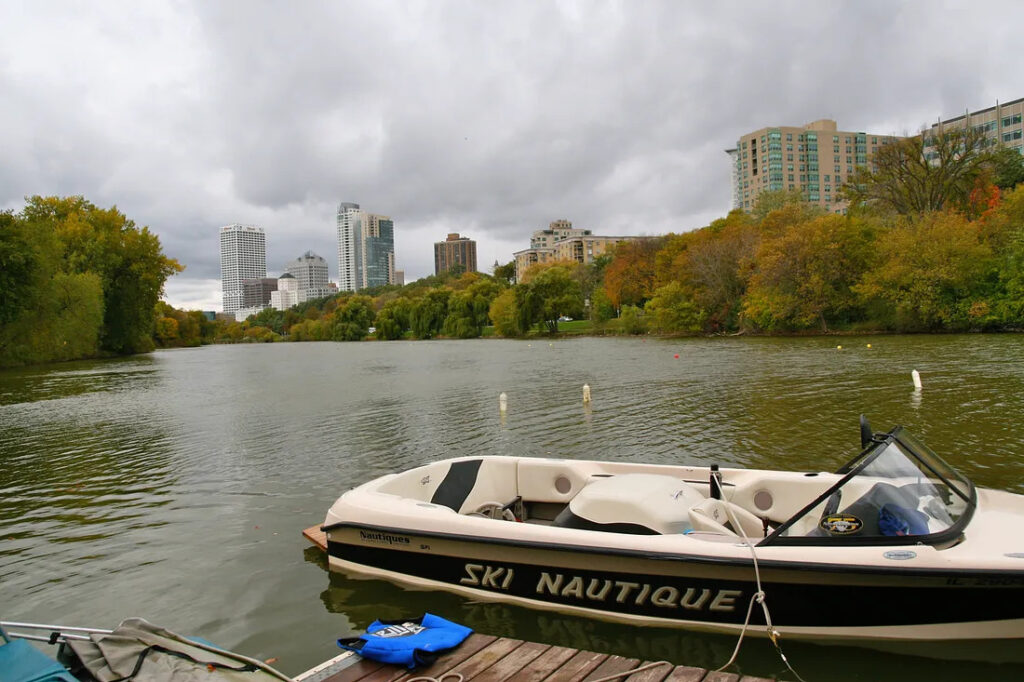
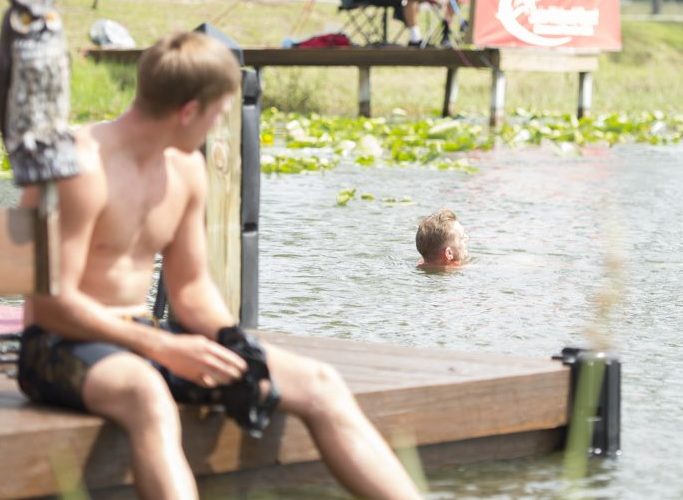
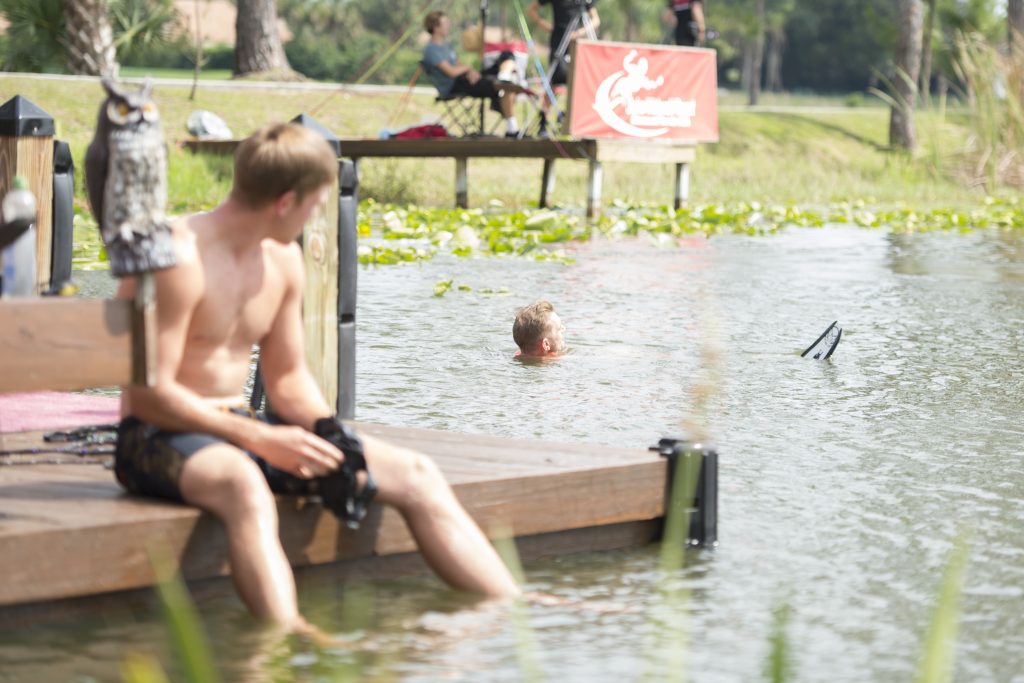
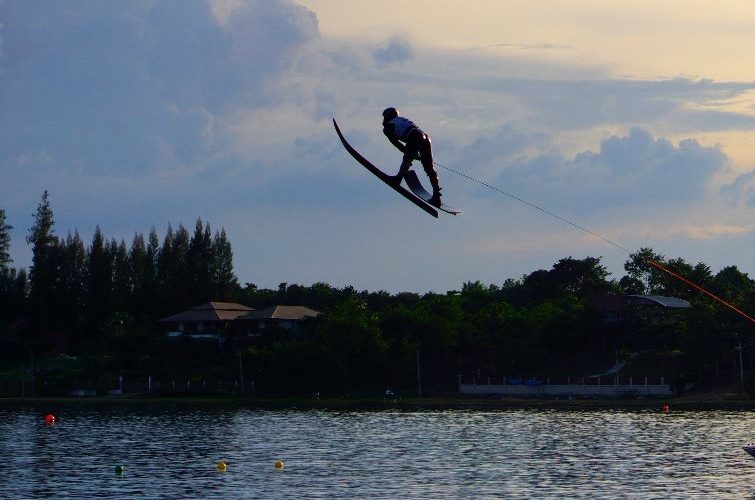
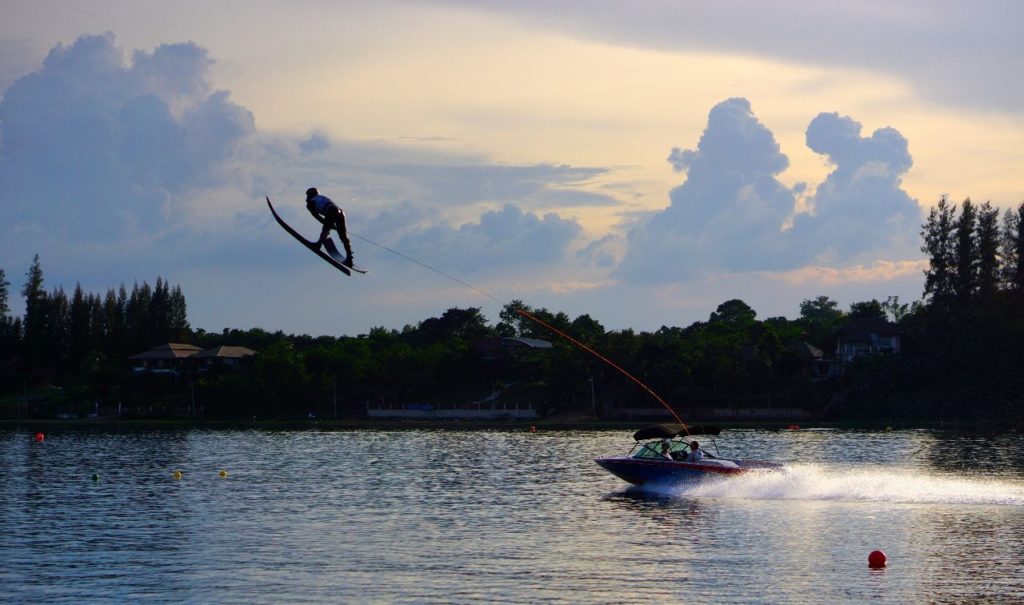
My boat floating for the first time in Veteran’s Park Lagoon

Water Skiing on Veteran’s Park Lagoon in Milwaukee | Medium

Repost

How We Got to be the First People to Waterski on Veteran’s Park Lagoon in Milwaukee

My boat floating for the first time in Veteran’s Park Lagoon

My boat floating for the first time in Veteran’s Park Lagoon (image: Joel Hughes).

By Joel Hughes

Medium


From 2010 to 2016 the quiet lagoon in the middle of Veteran’s Park in Milwaukee would transform into a premier urban waterski venue for one special weekend each year, hosting an elite professional waterskiing tournament called the Malibu Open. This tournament has since moved to another location, but for those 7 summer weekends we had something really special going on with waterskiing in the heart of Milwaukee.

A very long list individuals and corporations contributed time and money to make this amazing event happen. We played a very, very small part in comparison. Here is the story of how we helped out on one cold, windy autumn day in 2009.

Full article at Medium.

Sedlmajer received a 15-month ban

Sedlmajer Receives 15-Month Ban Following Positive Doping Test

News

Sedlmajer Receives 15-Month Ban Following Positive Doping Test

Sedlmajer received a 15-month ban

The two-time world overall champion received the ban for taking a common blood pressure medication. (Image: @adamdeslmajer)

By Jack Burden


In a recent development, Adam Sedlmajer disclosed that his sample collected during in-competition doping control at the World Championships last year tested positive for Hydrochlorothiazide (HCTZ), a common medication used to treat high blood pressure. Sedlmajer, who had been taking HCTZ for the past three years under a prescription from his family doctor, revealed that he has been struggling with high blood pressure for most of his adolescent life, due to family history.

While HCTZ is a widely used and FDA-approved medication for hypertension treatment, it is classified as a S5 Diuretic and Masking agent by the World Anti-Doping Agency (WADA). This classification arises from its property of causing increased urine production, making it potentially susceptible to abuse by athletes attempting to flush their systems of performance-enhancing drugs. Consequently, WADA does not grant therapeutic exemptions for such substances.

Despite searching the WADA website for the drug’s status and not finding it listed as a prohibited medication at the time, Sedlmajer acknowledged full responsibility for the outcome. He emphasized that he conducted due diligence and verified the drug’s authorization under WADA rules, though the website has since been updated with relevant information.

Following months of communications, appeals, and hearings, Sedlmajer’s results from the 2021 World Championships have been annulled, and he has received a 15-month ban until April 2023. In light of the situation, he invites individuals to familiarize themselves with the drug or reach out to him for further discussion.

Sedlmajer’s case sheds light on the complexities of anti-doping regulations, emphasizing the importance of athletes remaining vigilant and informed about the substances they are using, even when medically prescribed. As he navigates this challenging period, the waterskiing community stands in support, hoping to see him back on the water soon.

Read Sedlmajer’s full statement below:

Jacinta Carroll 200 Foot Jump

Jacinta Carroll Speaks Out on Nautique Sponsorship Controversy

News

Jacinta Carroll speaks out on Nautique sponsorship controversy

Jacinta Carroll 200 Foot Jump

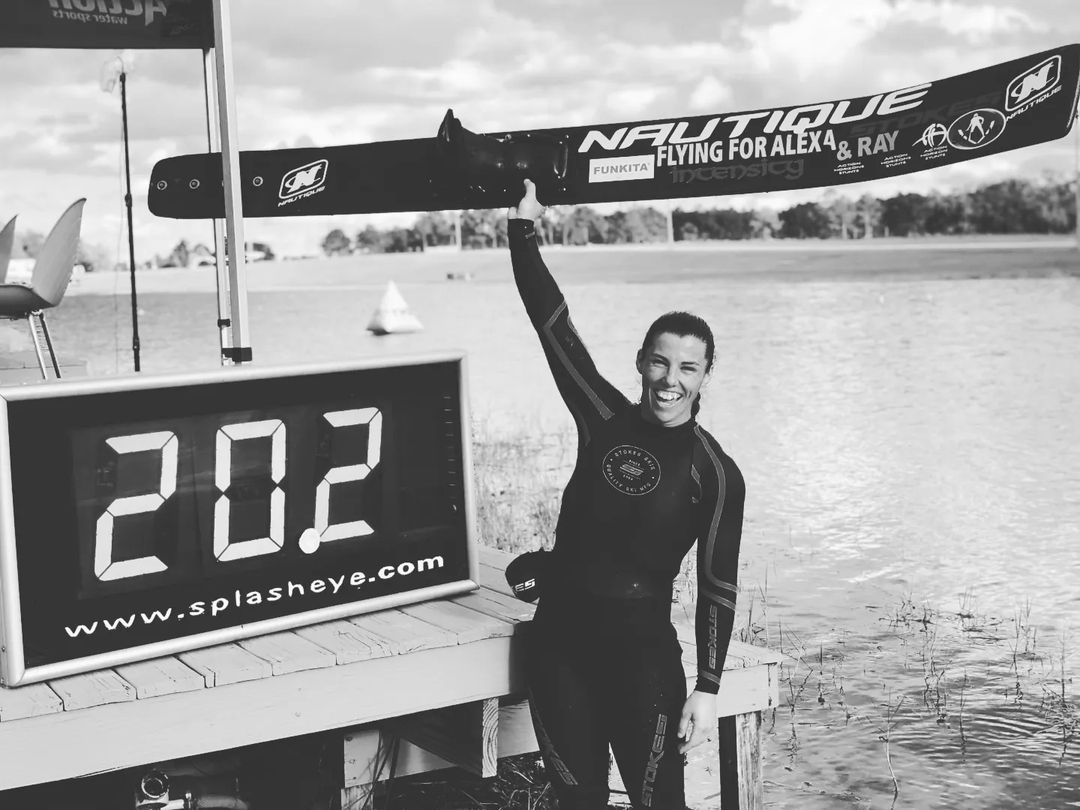
Carroll became the first woman to jump 200 feet at the 2021 MasterCraft Pro. (Image: @jacintacarroll)

By Jack Burden


Last year, Jacinta Carroll etched her name in history by achieving a remarkable milestone – becoming the first woman to jump 200 feet. However, this triumph comes with a bittersweet tale of dreams realized and unexpected setbacks, including being dropped by her major sponsor, Nautique Boats.

The journey to the 200-foot mark wasn’t just a physical feat for Jacinta; it was a deeply personal goal that had its roots in a poignant moment with her coach and mentor Ray Stokes, who was in the advanced stages of a terminal illness. Ray’s words, urging her not to change who she was and to break the barrier of a 200-foot jump, became the driving force behind Jacinta’s aspirations. A hand-drawn poster in her childhood bedroom, asking if she would be the first female to jump 200 feet, served as a constant reminder of this goal.

However, the path to this historic achievement was laden with challenges. Breaking a record demands the convergence of multiple critical factors— the boat, the driver, the site, the conditions, and the athlete’s performance. It’s a delicate dance of precision where all five variables must align perfectly to achieve the extraordinary.

Record-breaking opportunities proved elusive for Jacinta, potentially hindered by the prioritization of the men’s event in terms of the best drivers and conditions. The struggle intensified as she balanced her full-time job with her passion for water skiing, making it difficult to align all the necessary factors for a perfect jump.

Amid the Covid pandemic, international travel posed significant hurdles for the Australian athlete. During her limited stay in the U.S. for the 2021 World Championships, Carroll participated in six tournaments, including two within a single weekend, in her relentless pursuit of breaking the record.

The breakthrough moment unfolded at the Mastercraft Pro, her final tournament of the trip. Despite falling just short of the world record in the finals of the pro event, Carroll approached the officials, presenting her case for a bonus round. Jacinta’s plea was heard, and she seized the moment, achieving a jump of 202 feet – a distance mirroring the first male to accomplish this feat in 1983.

However, the triumph turned into bitterness when Jacinta disclosed that Nautique, her primary sponsor, opted not to renew her contract. This news was delivered to her while she was undergoing a two-week quarantine in isolation upon her return to Australia.

In an emotional recounting of the experience, Jacinta conveyed her disappointment at the absence of congratulations for her historic achievement. Instead, her major sponsor inquired if she regretted her decision to break the record behind a MasterCraft. Feeling disrespected, she questioned whether the situation would be the same if she were a male world record holder, pondering, “Is this just an easy way to get me off the books?”

“I tried and tried, and I just couldn’t get the five stars to align,” lamented Jacinta. “And at the end of the day, in 50 years, I’m not going to look back, I’m not going to regret [breaking the record]. Hell, I don’t even regret it now!”

As Jacinta contemplates her future in the sport, uncertain about competing on the worldwide stage again, her story sheds light on the challenges female athletes face. Not just in their pursuit of excellence but also in navigating the complexities of sponsorship and recognition within the industry.

Waterski Pro Tour

Waterski Pro Tour: A New Dawn for Professional Waterskiing

Articles

Waterski Pro Tour: A New Dawn for Professional Waterskiing

The pro tour emphasizes high-quality webcasts in ideal conditions rather than in person crowds

Will Asher and Rob Hazelwood slalom skiing at the Swiss Pro Slalom.

By Jack Burden


The new season of the Waterski Pro Tour, launched last year, is about to begin. The tour attempts to unify a hodgepodge of global events into one overarching narrative. I, for one, am stoked. The name conjures up images of a bygone era. My mind immediately jumps to ESPN’s Hot Summer Nights, to Channel Seven’s live coverage of Moomba Monday. Like Mark Beretta or Wayne Grimdich’s voice, it sends chills down my spine. But is this anything more than just empty nostalgia?

In many ways, the new tour is just a rebranding of the IWWF Elite Ranking. A system that once held significance but has faded into obscurity as the tournament waterskiing world shifted its focus from a dwindling supply of major tournaments toward performances and world records. By 2020 the only significant purpose of the Elite Rankings was U.S. Masters qualification. With 2021’s revised criteria, they no longer held any tangible value.

Looking only at the nuts and bolts of the Pro Tour, it is clear no one has reinvented the wheel. The new points system and calculations are only a minor tweak from what already existed. A slick new website, coordinated social media presence, and transparent point calculations are all improvements. Maybe that’s reason enough to celebrate. A ranking list buried deep in an archaic website did nobody any good.

However, if we scratch below the surface, the Pro Tour is much more than a simple marketing effort. The genesis, proposal, and implementation were led by the elite athletes themselves. Rather than relying on the cumbersome bureaucracy of the IWWF for administration, a Pro Tour Council made up of current professional athletes will run the initiative. Athlete empowerment is a great reason for optimism. Who else has a larger incentive to promote and grow professional waterski events?

The IWWF deserves credit here too. After years of complaints they have made significant strides toward engaging the top skiers. Athlete representation has been increased on the World Tournament Council, which controls the rules of our sport. The well intentioned but poorly executed attempts to bring the World Championships to spectator friendly venues have been abandoned. Instead, all of 2021’s title events were held on man-made lakes in Florida – with little to no on-site spectators but broadcast quality webcasts. The athletes have created a paradigm shift in the sport.

Unfortunately, cracks are already starting to appear. The glaring omission of both the Moomba Masters and the U.S. Masters from the Pro Tour raises serious concerns. That the most prestigious and highest prize purse events of the season would be excluded stinks of dirty politics. Moomba organizers face an enormous amount of pressure operating on a busy downtown river during a major festival. It is hard to imagine them altering their format to meet the qualification criteria. Without the two largest events in our sport what claim to legitimacy does the Pro Tour even have?

To a certain extent the elite skiers flexing their muscle and pressuring event organizers into standard formats creates valuable consistency. Conversely, diversity and creativity are essential ingredients in the effort to attract a larger audience. Ironically, the Pro Tour suffers many of the same pitfalls the IWWF has been criticized over for years.

Ultimately, a unified calendar of events, high quality streaming, and fresh perspectives are all great steps toward making waterskiing accessible. Anyone working to grow our sport should be applauded and I remain optimistic that this effort will not stall out like the many that have come before it. The tragic waterski fan in me can’t help but pine for the good old days, but a new world requires new perspectives and new solutions.

Whitney McClintock Rini

The Dawn of a Golden Era? | Waterski Journal

Repost

The Dawn of a Golden Era?

Whitney McClintock Rini

Image: Whitney McClintock Rini (photo: Radar Skis)

By Freddie Winter

Waterski Journal


Amongst the many reasons that sport is such a large part of our culture is the collective excitement we feel when witnessing something that was previously thought extremely unlikely or even unthinkable. In most areas of life progress is reached behind closed doors with few witnesses but sporting spectacle is there for all to experience as history is written in real time. The Malibu Open at the start of last October was one such occasion, as all four women’s slalom finalists ran into 10.25m, marking the first time this had happened. In the minds of many, there was suddenly a new era of competitiveness in women’s slalom.

Read the full article at Waterski Journal

Saaya Hirosawa Waterski Jumping

Quiz: Every Jumper to Beat Jacinta Carroll in a Pro Tournament

Quizzes

Quiz: Every jumper to beat Jacinta Carroll in a pro tournament

By RTB


August 4 2021

4 minute play

In this quiz, you need to every female jumper to beat Jacinta Carroll in a professional tournament.

The list has twelve skiers, all of whom have beat Jacinta Carroll in a professional tournament at least once. We are only including professional tournaments with IWWF elite points on offer (now the Waterski Pro Tour). Before her current eight-year unbeaten streak, Jacinta had four years climbing up the ranks. We have given you the skier’s country and the number of times they have beaten Jacinta.

Data updated as of August 1, 2021

Neilly Ross Trick Skiing

The Future of Tricks | Waterski Journal

Repost

Future of Tricks

Neilly Ross Trick Skiing

Image: Neilly Ross (ph. Vincent Stadlbaur)

By Freddie Winter

Waterski Journal


April 30, 2021

Tricks are for kids. Or at least that’s what one might think when examining the last decade of competitive trick skiing. Previously it was not unheard of for precocious teens to take on and beat their more seasoned rivals: in 2001 fairly well known slalom skier Regina Jaquess won a World Trick Championship shortly after turning 17. However, recently teenagers conquering the world on their trick skis is not just more prevalent but more or less the norm.

Read the full article at Waterski Journal

Jaime Beauchesne Slalom Skiing

The Enigma: In Search of the Elusive Jaime Beauchesne | Waterski Journal

Repost

The Enigma: In Search of the Elusive Jaime Beauchesne

Jaime Beauchesne Slalom Skiing

Image: Todd Ristorcelli

By Freddie Winter

Waterski Journal


February 3, 2021

The term ‘Legend’ is overused in the context of sport. The word is often used hyperbolically, along with ‘icon’ and the acronym ‘GOAT’, to describe someone who has reached a high level in their field. The overuse has diluted the real meaning to the point of cliché. Of course, there are instances when the shoe fits: those described are remembered amongst the sports gods and their achievements talked about amongst fans for years after their retirement. The next generation of athletes, aiming to emulate these legends, are measured with regards to the titans that preceded them.

Read the full article at Waterski Journal

IMG_8087 Freddy Krueger & I at the 1987 Nationals, Okeeheelee Park, waiting for something important to happen

The Way Forward | Marcus Brown

Repost

The way forward

IMG_8087
Freddy Krueger & I at the 1987 Nationals, Okeeheelee Park, waiting for something important to happen

Freddy Krueger & I at the 1987 Nationals, Okeeheelee Park, waiting for something important to happen.

By Marcus Brown


I’m worried about the future of Water Skiing. Just last week, Nautique held the US Open in Orlando, FL. It was only the second time the US Open was held since I won in 2007. It seems whenever I win an event, it gets canceled the following year(s). Nautique finally resurrected the Open last year. Gold stars for them for sure. However, this year was tough for me and many other “pros”.

The Big Dawgs (think Senior/Masters Skiers) were included in the event for the first time ever. Fine, thats totally fine. BUT, the tough part is they got paid more than the Pro skiers. They got paid more than the best skiers in the world. AND they got paid more than the best Jumpers in the world….guys that literally put their lives on the line to jump 80 yards off a 6 ft ramp!! Whats even crazier than that, to me, is that NO ONE is speaking out about this. The BEST SKIERS IN THE WORLD are second fiddle to the “Senior Tour” skiers…

Full article at marcusbrown.net

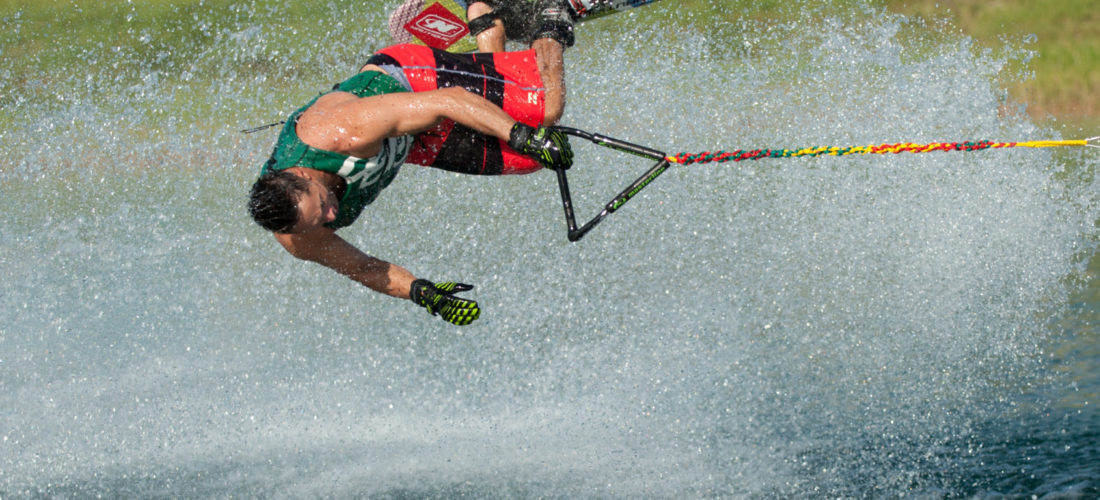
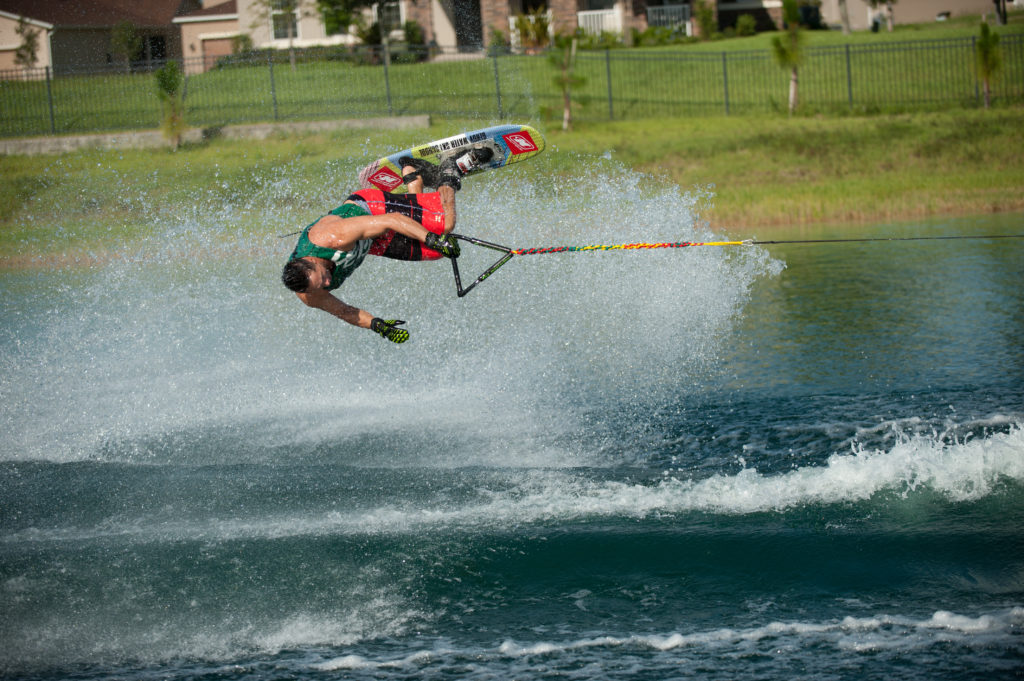
Aliaksei "Ace" Zharnasek flipping

Steeped in Tradition or Stuck in the Past? | Waterski Magazine

Repost

Steeped in Tradition or Stuck in the Past? The Current State of Competitive Trick Skiing

Aliaksei Zharnasek (image: trickskiboss.com)

By Trent Finlayson

Waterski Magazine


April, 2014

With amateur participation numbers on decline and fewer elite events than ever, trick skiing appears to be on a downward slide. Opinion is based on vantage, however. Ask some of the athletes and coaches at the sport’s forefront, and you will get a slightly more optimistic view.

“I spend more than 500 hours a year coaching trick skiers,” says Matt Rini, former pro tricker and current coach of the Canadian National Team. “Based on what I see behind my boat every day, trick skiing is far from dead.” Famed ski and wakeboard coach Mike Ferraro echoes a similar sentiment. “The stuff these guys and girls are truly capable of is mind-blowing,” he says. “And they are only getting better.”

If the level of trick skiing is on the rise at both the amateur and pro levels, why are general participation numbers dwindling? Many industry leaders point to the sport’s resistance to change as its greatest limiting factor.

Ferraro has bean coaching trick skiing for more than 35 years, and while he has seen the sport excel in terms of on-water talent, he feels the event has unfortunately stalled. “Traditionally, the international rules committee has consisted of representatives that don’t fully understand the sport,” he says. “They are holding back the event, and as a result, the athletes are being stifled of their creativity. A reevaluation of the points would be a great place to start. Obviously, we need to drop the limit on the number of flips the skiers are allowed to do. If a specific invert is a recognized trick, it makes no sense to say a skier can’t include it in their run.”

Camillo Espinel, another coach of numerous world champions, feels the state of the event is in the eye of the beholder. “It really depends upon the collective goal of the governing bodies,” Espinel says. “If the goal is to make trick skiing more appealing to the masses, a change in format is necessary.” He believes the current format rewards conservatism and limits the athletes true abilities as skiers.

“Aliaksei Zharnasek won the Worlds with a run he can do blindfolded. The incentive model is askew with the current rule book; that forces our athletes to compete at about 70 percent of their true potential,” Espinel says. “It would be like a slalom event judged on who runs the best 38 off without ever advancing to 39 or 41 off.”

Zharnasek, a three-peat world trick champion and student of Espinel, says, “Trick skiing has been stuck at the same level for too long.” The 34-year-old Belarusian athlete isn’t calling for a vast restructure of the event, just a shift in thinking. “I would like to see a sliding scale within the point system that would give partial points for tricks that are not perfectly performed. I strongly believe that the current methodology of judging is holding the event back; it is pushing kids away from the sport.” Zharnasek says he would like to see the point system reward riskier runs. “Many skiers’ runs are nearly identical,” he says. “There are some extremely hard trick combinations that never get used because the risk trumps the reward.”

Eighteen-year-old women’s trick world-record holder and world champion Erika Lang agrees with Zharnasek. “I would like to see trick skiing become a more expressive sport for its athletes,” she says. “The current runs all look the same. If the six-flip limit was lifted, skiers would be free to construct any run they wanted. It would make it far more appealing to spectators.”

The stringent format of the event may have to stand aside for Lang, as she contemplates pursuing wakeboarding. “I have been riding a bit this winter, and my tricks are transferring over really well. I would like to keep at it and see how it goes.”

American senior official and American Water Ski Association Rules Committee member Kathy Ives is one official not afraid of changes as long as it doesn’t overly detract from trick skiing in it’s traditional form. “Some restructuring to the point system is in order to ensure the more difficult tricks are being rewarded properly,” she says. “Like any rule change in our sport; however, it takes time and eventual support from the international body, the [International Waterski & Wakeboard Federation].”

It’s a process Ives knows all too well. “When a trick is being considered, it must first pass through the different levels of the governing body.”

Starting with the national rules committee, the members review the trick, vote on its validity and pass their suggestions onto the national board of directors for approval. From there, the new trick must be accepted by the IWWF before officially being adopted. While Ives is in support of advancing the sport, she understands the importance of weighing each possible rule change carefully. “Generally speaking, they don’t want trick skiing to morph into wakeboarding,” she says. “They want to reinforce the discipline that is required to master all facets of the trick event, from inverts to ski lines to toes. Tricks is considered the gold standard of traditional three-event skiing, and many are afraid to lose that history moving forward.”

Rini knows the sport can advance without mirroring its wakeboarding brethren. “The fast-paced nature of the sport, as dictated by the 20-second time limit, is really what differentiates trick skiing from wakeboarding,” he says. “And that will never go away.”

To Rini, the answer is simple, and it’s one that does not risk the integrity of the sport. “There needs to be a reassignment of points that will allow skiers to structure their passes to suit their strengths,” he says. “If inverts are your strength, you should be able to put together a run with mostly flips. Or if it’s ski lines or toes or spins, you should be able to place your emphasis there. Even if the flip limit is opened up, the winner will still have to be the most well-rounded tricker.”

Sounds reasonable. But if our governing body’s historical resistance to change is any indication, improving the trick event is likely to be a long, slow process.

This article originally appeared in the April 2014 edition of Waterski Magazine.