The closest overall battles in the history of the World Championships

World Championships: We Countdown the 10 Closest Overall Battles in the History of the Tournament

Articles

World Championships: we countdown the 10 closest overall battles in the history of the tournament

The closest overall battles in the history of the World Championships

The tightest overall competitions in the history of the Water Ski World Championships.

By Jack Burden


The World Championships have always delivered breathtaking competition, but perhaps no discipline captures the drama and intensity quite like overall. From dominant streaks and shocking upsets to clutch, career-defining performances, the race for overall gold has produced some of the most iconic moments in the sport’s history.

As we look ahead to the 2025 World Championships, anticipation is building—and so is nostalgia. We’re counting down the ten closest overall battles ever staged at the Worlds: contests where every buoy, every trick, and every inch mattered.

In this storied event, athletes compete across all three disciplines—slalom, tricks, and jump—with overall scores calculated based on how close they come to the best mark in each. The format rewards versatility and consistency, with the overall champion traditionally recognized as the best water skier in the world.

Join us as we relive some of the most thrilling overall showdowns in World Championship history.

Carrasco and Brush at the 1983 World Waterski Championships

Image: Yvon le Gall

10. Gothenburg, Sweden 1983

Contenders: Deena Brush (USA) vs. Ana Maria Carrasco (VEN)

The drama started before a single buoy was rounded. In a controversial decision, the U.S. Team left out the defending overall champion from 1981—Karin Roberge. Under the rules at the time, only officially selected team members could compete at the World Championships, and the U.S. used a Team Trials event two months prior to select its six-athlete roster. Roberge, having an off day in tricks, narrowly missed the cut.

Out of the preliminary rounds, two young challengers—21-year-old Deena Brush and 20-year-old Ana Maria Carrasco—emerged in a dead heat, with Brush holding a razor-thin 4-point advantage in overall.

In the slalom final, Brush edged ahead slightly, gaining another three-quarters of a buoy. The two would finish silver and bronze in the event. Then came tricks, where Carrasco—who had been trading the world record with the Soviet Union’s Natalia Rumjantseva over the past three years—delivered fireworks. In the final, she laid down a new world record of 7,970 points, putting over 2,000 points between herself and Brush. But in the combined-score format used for individual medals at the time, Carrasco still took silver behind Rumjantseva.

Carrasco’s performance vaulted her just ahead of Brush in the overall standings heading into jump—the weakest of Carrasco’s three events. She didn’t make the jump final and could only watch as Brush chased the title. The American, who would go on to become one of the greatest jumpers of all time, needed just two feet more than her prelim mark to claim gold. But it wasn’t to be. She missed the jump podium, and the title went to Carrasco.

Key Moment: Arguably, the U.S. Team Trials. On form, Karin Roberge was the best overall skier in the world at the time, and her scores from the previous World Championships would have comfortably secured the title.

Winning Margin: 28 points. Equivalent to two feet (70 centimeters) in jump.

  1. Ana Maria Carrasco (2,641 points)
  2. Deena Brush (2,613 points)
  3. Camille Duvall (2,577 points)
Sammy Duvall celebrates winning the 1987 World Waterski Championships

Duvall pays an emotional tribute to his late father.

9. London, England 1987

Contenders: Sammy Duvall (USA) vs. Mick Neville (AUS)

It remains one of the most iconic moments in World Championship history—and arguably the most clutch performance waterskiing has ever seen.

Heading into the 1987 Worlds at Thorpe Park, Sammy Duvall had already cemented his legacy with three consecutive world overall titles. He was also one of the sport’s first true professionals—a dominant jumper, a fixture of the Coors Light Pro Tour, and a household name in the U.S. And by ’87, his appetite for amateur competition was waning. This would be his final World Championship appearance.

His chief rival, though lesser known to many today, was a generational talent. Mick Neville, the unpretentious Aussie, had evolved from a world-class tricker into perhaps the most complete skier of his time. To this day, Neville remains the only man to win professional titles in all three events during the modern era. Think of him as a 1980s Joel Poland—funny accent, quiet swagger, and an allegiance to the crown.

Neville, still burning from a narrow defeat to Duvall two years earlier, came out swinging. He shocked pundits by claiming bronze in slalom, outskiing Pro Tour staples like Kris LaPoint and Carl Roberge, even edging Michael Kjellander in a runoff. Duvall, meanwhile, narrowly missed the slalom final—leaving the door open.

In tricks, Neville was unshakable, scoring over 9,000 points in both rounds to claim silver behind Patrice Martin. With two events down, the Australian held a commanding lead in overall.

Duvall, as expected, had the edge in jump. His opening-round 57.4-meter leap led the field—but it wasn’t enough to erase Neville’s advantage, and he sat in third overall heading into the final round, trailing both Neville and Roberge.

What followed was chaos. The men’s jump final became a frenetic game of musical chairs, reshuffling the leaderboard with every skier. First, a 20-year-old Kreg Llewellyn launched three meters farther than in the prelims to bump Duvall off the overall podium. Then Martin posted a huge personal best to leap into second. Neville followed with a nearly two-meter improvement, vaulting into the lead. When Roberge failed to respond, Duvall stood on the dock—last man out—sitting in fifth place.

More than 10,000 spectators lined the banks of Thorpe Park. Tension was thick enough to cut with a ski fin. Security was even required on the dock after another competitor’s belligerent father got into an altercation with Duvall’s sister Camille. The atmosphere was electric.

Duvall’s first jump? A massive 59.1 meters—the farthest ever at a World Championships. It earned him the jump gold, but still left him half a meter shy of Neville in overall. Then came jump number two. And then, history.

On his final jump, everything clicked. You could hear it in the snap of his skis, see it in the compression before the ramp, and feel it in the silence that hung as he took flight. When he landed—200 feet downcourse—everyone knew. Sammy had done it. With one final, flawless leap, he ripped the overall title from Neville’s grasp and closed the curtain on an undefeated career at the World Championships.

Neville, once again the runner-up, walked away with three medals from London. His eight total podiums remain the most of any man never to win gold.

But this was Duvall’s swan song. And he exited the World Championship stage exactly as he had entered it—undefeated, unmatched, and unshakable when it mattered most.

Key Moment: Sometimes pictures speak louder than words.
Sammy Duvall jumping at the 1987 World Championships.

Winning Margin: 24 points. Equivalent to two buoys in slalom.

  1. Sammy Duvall (2,724 points)
  2. Mick Neville (2,699 points)
  3. Carl Roberge (2,659 points)

Image: IWSF

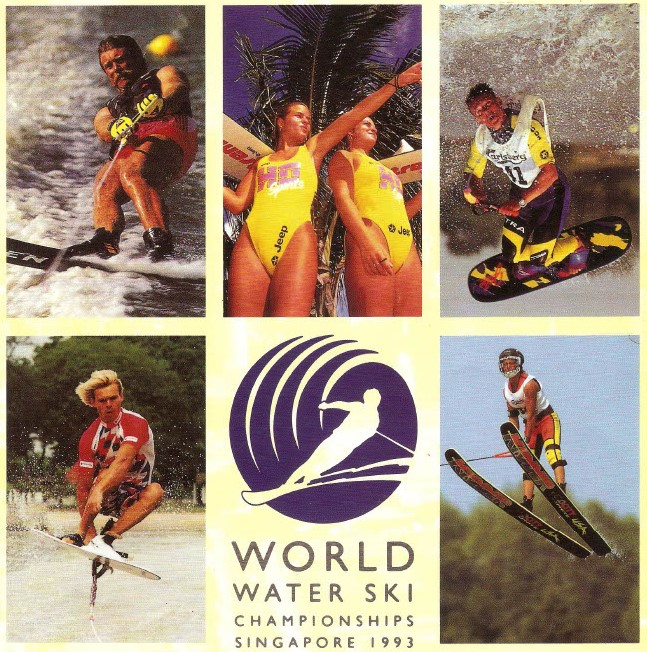
8. Singapore 1993

Contenders: Kim De Macedo (CAN) vs. Natalia Rumjantseva (RUS)

The 1993 World Championships—the first ever held in Asia—are best remembered for the dramatic team battle between the U.S. and Canada, ultimately decided by a razor-thin margin. But quietly, on the brackish, tidal waters of Singapore, another race was unfolding: a down-to-the-wire overall showdown between a Russian veteran and an unheralded Canadian upstart.

Natalia Rumjantseva, already a three-time world trick champion, dominated the preliminary rounds and looked poised to claim her first overall title. With Karen Bowkett Neville and Deena Brush Mapple both retired, Rumjantseva’s closest challenge was expected to come from Canada’s Judy McClintock Messer—a perennial podium finisher in overall.

In the trick final, Messer closed the gap slightly as top-seeded Rumjantseva slipped to second behind Britt Larsen. But it wasn’t enough to seriously threaten the lead. Then came the jump final—where everything changed.

First off the dock was Olga Pavlova of Belarus, a complete unknown to western audiences. She stunned the field by leapfrogging Messer and moving into second overall. Messer responded with a clutch three-meter improvement of her own, reclaiming second—but still sat a meter and a half shy of Rumjantseva’s mark.

Enter Kim De Macedo.

Just 21 years old and added to Team Canada primarily for depth, the public lake skier from Vancouver Island delivered the jump of her life: 41.9 meters, the longest of the day. The performance vaulted her from a distant fourth into striking range of the title. Rumjantseva, skiing next, watched as the young Canadian came within an infinitesimal 0.7 overall points of overtaking her. As the computers whirred, the Russian veteran responded with a half-meter improvement—to put any doubts to bed.

Rumjantseva took the title. De Macedo settled for silver. But in a performance few saw coming, the Canadian walk-on very nearly rewrote the story.

Key Moment: De Macedo’s breakout jump, which earned her an unexpected gold in the event and nearly the overall title. It also proved decisive in Canada’s historic win in the team competition.

Winning Margin: 24 points. Equivalent to 60 centimeters, or two feet, in jump.

  1. Natalia Rumjantseva (2,678 points)
  2. Kim De Macedo (2,654 points)
  3. Judy McClintock Messer (2,602 points)
Sylvie Maurial (FRA) vs. Lisa St. John (USA)

The Battle of Bogotá

7. Bogotá, Colombia 1973

Contenders: Sylvia Maurial (FRA) vs. Lisa St. John (USA)

In the thin mountain air of Bogotá, the 13th World Water Ski Championships delivered one of the sport’s purest overall duels. Lisa St. John, the fresh-faced high school grad from Redding, California, faced off against France’s Sylvie Maurial, a seasoned veteran fresh off an Olympic gold medal in jump at the 1972 Games in Munich. The two women were virtually inseparable across all three events—trading leads, medals, and momentum in one of the closest overall contests in tournament history.

St. John struck first, edging Maurial by a single buoy in the slalom preliminary. Maurial responded in the final, running the only 14.25m (28-off) pass of the tournament to claim slalom gold. In tricks, St. John led Maurial by just 80 points in the prelim and extended that margin slightly to 130 in the final. On the jump ramp, Maurial struck back again, out-leaping St. John by just half a meter to take silver behind the USA’s Liz Allan Shetter.

When the dust settled and the points were tallied, St. John came out a hair ahead.

It was a heartbreaking near-miss for Maurial, and a career-defining victory for St. John. But tragically, the triumph in Bogotá would be her last major one. Ten days later, she suffered a back injury at the California Cup that effectively ended her run at the top. Her career had been a meteoric rise—from child prodigy to world champion—all before her 19th birthday.

Key Moment: The slalom preliminary, where St. John edged Maurial by a single buoy. Under the scoring rules of the time, only preliminary scores counted toward the overall race. Maurial’s final-round surge earned her slalom gold, but it came a round too late.

Winning Margin: 17 points. Equivalent to a single buoy in slalom.

  1. Lisa St. John (2,534 points)
  2. Sylvia Maurial (2,516 points)
  3. Barbara Cleveland (2,149 points)
Men's overall podium at the 2009 World Waterski Championships

Image: Jaret Llewellyn

6. Calgary, Canada 2009

Contenders: Javier Julio (ARG) vs. Jaret Llewellyn (CAN) vs. Adam Sedlmajer (CZE)

In one of the most open overall fields in World Championships history, the 2009 edition in Calgary felt like a roll of the dice. At least five men had a legitimate shot at the title, and by the end of the prelims, three remained—one a grizzled legend, one a fresh-faced prodigy, and a come-from-behind victory for the ages.

Jimmy Siemers stormed out early with a strong trick score, chased closely by Belarusian teammates Herman Beliakou and Oleg Deviatovski. But the slalom event shuffled the deck. Both Adam Sedlmajer and Javier Julio ran midway through 10.75m (39.5 off), putting themselves a full pass ahead of most of the field and narrowly missing the slalom finals in a stacked eight-way runoff for the last two spots.

Then came jump. And with it, chaos.

Jaret Llewellyn, competing in front of a hometown crowd, launched the farthest leap of the prelims to vault himself into serious contention. Siemers and Beliakou misfired, effectively ending their campaigns. When the dust settled, Sedlmajer—a then-unknown 22-year-old from the Czech Republic—held a narrow overall lead over the 38-year-old Llewellyn heading into the finals.

Enter Javier Julio, the emotive Argentinian, skiing with nothing to lose.

First off the dock in tricks—in a final he had only just scraped into—Julio threw down more than 1,000 points over his prelim total, enough to move within striking distance of Sedlmajer and Llewellyn and put himself firmly in the conversation. Then in jump, again as one of the lowest seeds, he found two extra meters on his earlier score and took the overall lead outright.

From there, it was a waiting game. Sedlmajer couldn’t improve. And then came Llewellyn, last off the dock. He needed 70.3 meters to clinch overall gold. Coincidentally, that was the exact distance needed to steal the jump title from Freddy Krueger as well. The crowd held its breath.

But it wasn’t to be. Llewellyn’s best mark was 68.5 meters. A remarkable performance, but not quite enough. Julio, after three consecutive podium finishes earlier in the decade, had finally secured the one title that had always eluded him—claiming Argentina’s first world title.

In a curious twist, the 2009 World Championships were one of only a handful between 2007 and 2013 that used an overall scoring formula widely criticized for overweighting slalom. Under the system used for the previous five decades—or the one in place today—Llewellyn would have won comfortably. Instead, it was Julio who claimed gold: a deserving champion on the day, but one whose victory came in part thanks to a scoring system that has since been scrapped.

Key Moment: The men’s jump prelims were carnage—an outbreak of crashes ruled multiple skiers out of the finals. Had they advanced, Julio’s 200-foot leap likely wouldn’t have made the cut, leaving him out of the final—and out of the race.

Winning Margin: 15 points. Equivalent to a toe slide.

  1. Javier Julio (2,773 points)
  2. Adam Sedlmajer (2,758 points)
  3. Jaret Llewellyn (2,739 points)
1985 Waterski World Championships

Image: WATERSKI Magazine

5. Toulouse, France 1985

Contenders: Sammy Duvall (USA) vs. Mick Neville (AUS) vs. Carl Roberge (USA)

The 1985 World Championships delivered a classic—a three-way standoff in men’s overall that mirrored the broader team competition, where Australia pushed the undefeated Americans closer than ever to surrendering their grip on the world title. And at the center of it all were three men, each with a distinct style and background: The brash confidence of Duvall, the imposing presence of Roberge, and the suave precision of Neville.

Duvall and Roberge were mainstays on the Coors Light Pro Tour, sharpening their slalom and jump in the crucible of professional competition. Neville, by contrast, was a throwback—a tricker first and foremost, still to this day the most decorated trick skier in Moomba Masters history. A relative unknown to international audiences, he arrived in Toulouse determined to prove he could match the pros at their own game.

Roberge struck first, claiming bronze in slalom behind Bob LaPoint and Andy Mapple, finishing two buoys clear of both Duvall and Neville. But Neville countered in tricks, scoring nearly 9,000 points to take bronze behind Patrice Martin and Cory Pickos, putting daylight between himself and the two Americans.

Heading into the jump final, Duvall had the edge. His prelim jump was over 10 feet farther than either rival—and he held a commanding lead in the overall. But the final was anything but predictable.

Neville, the bottom seed, stunned the crowd with a 54-meter leap—3.5 meters farther than his prelim score—to match Duvall’s earlier mark and snatch the lead. Then Roberge responded with a jump 10 feet farther than his qualifying mark, leapfrogging Duvall into second.

Suddenly, the two-time defending champion was sitting in third. His first two jumps didn’t move the needle. It came down to his final attempt. Duvall needed something special—and delivered. On his third and final jump, he unleashed the patented Duvall kick and soared past 184 feet, just enough to reclaim the lead and secure an unprecedented third consecutive World overall title.

Key Moment: Though overshadowed in the jump final by the aforementioned trio, a 21-year-old former trick specialist from France was in the silver medal position when Neville left the dock—perhaps a quiet foreshadowing of the decade of dominance to come.

Winning Margin: 11 points. Equivalent to one foot, or 30 centimeters, in jump.

  1. Sammy Duvall (2,736 points)
  2. Mick Neville (2,726 points)
  3. Carl Roberge (2,714 points)
Women's jump at the 2021 World Waterski Championships

Image: @gregoiredesfond

4. Lake County, United States 2021

Contenders: Aliaksandra Danisheuskaya (BLR) vs. Hanna Straltsova (BLR)

For a country that has quietly produced more elite overall skiers than any other in the past two decades, it was only fitting that the most dramatic battle of recent times came down to two Belarusians: Aliaksandra Danisheuskaya and Hanna Straltsova.

Danisheuskaya struck first, running deep into 11.25m (38 off) in slalom to take the early lead. But Straltsova punched back in jump, claiming a 2.6-meter (9-foot) advantage to finish the prelims with a commanding overall lead. When the dust settled on the elimination round, she held a 100-point lead over Canada’s Paige Rini in second, while Danisheuskaya sat nearly 200 points off the pace in third.

Then came tricks—and with it, a seismic shift.

Danisheuskaya had only just squeaked into the final, grabbing the last qualifying spot by just 20 points. But when the opportunity presented itself, she seized it. Upping her prelim score by nearly 1,000 points, she vaulted into the overall lead, narrowly ahead of Straltsova.

When Rini, Straltsova, and pre-event favorite Giannina Bonnemann all failed to improve in the final, it came down to jump.

Danisheuskaya, skiing from the middle of the pack, tacked on another 1.4 meters (5 feet) to her previous mark, extending her narrow lead. That left Straltsova—silver medalist in both overall and jump two years earlier—with one more chance. She needed 56.2 meters to claim gold.

She came heartbreakingly close. Her best jump, 55.5 meters (182 feet), was good enough for silver—for the fourth time across the 2019 and 2021 World Championships—but not quite enough to catch her teammate.

Danisheuskaya, who had not stood on the podium in any of the individual events, walked away with gold in the one that mattered most.

It would mark the final time either woman would represent Belarus. Four months later, the country was suspended from IWWF competition following its involvement in the invasion of Ukraine. Both Danisheuskaya and Straltsova would continue their careers under the U.S. flag—claiming medals, and in Straltsova’s case, dual golds—at the next World Championships.

Key Moment: Giannina Bonnemann, the world’s top-ranked overall skier entering the tournament, fell early on toes in both rounds of tricks. Had she scored anywhere near her best, she would have cruised to the title.

Winning Margin: 8 points. Only half a buoy in slalom.

  1. Aliaksandra Danisheuskaya (2,574 points)
  2. Hanna Straltsova (2,565 points)
  3. Paige Rini (2,412 points)
1989 World Waterski Championships

Image: WATERSKI Magazine

3. West Palm Beach, United States 1989

Contenders: Patrice Martin (FRA) vs. Carl Roberge (USA)

In 1989, the World Championships returned to U.S. soil for the first time in 28 years, landing at Okeeheelee Park in West Palm Beach for what turned out to be a blockbuster event. The sport was arguably at its peak in American popularity—major sponsors like Pepsi and Coors Light were on board, and more than 15,000 spectators lined the banks for the final day of competition. The headline drama? A gripping men’s overall showdown between established star Carl Roberge and France’s relentless technician, Patrice Martin.

Roberge, 25, had long been the heir apparent—Sammy Duvall’s understudy, a three-time overall bronze medalist, and now the anchor of Team USA. He entered the event ranked number one in the world, with pro tour titles and a season championship already under his belt. Martin, meanwhile, had three world trick titles to his name and was steadily evolving into a true three-event threat. After flirting with the podium in both 1985 and 1987, the Frenchman arrived in Florida looking for more than tricks gold—he wanted the overall.

Roberge opened strong in slalom, his best event, matching Andy Mapple’s championship record of 3 @ 10.75m (39.5 off) to earn silver and establish a full-pass advantage over Martin. But Martin fired back in tricks with a tournament-record 10,780 in the prelims, more than offsetting Roberge’s edge. After the jump prelims, Roberge clung to a razor-thin lead overall—setting the stage for a winner-take-all final.

The jump event, Martin’s weakest, saw him go first. Le Petit Prince barely improved on his prelim mark, landing at 53.5 meters—just enough to inch into the lead and apply pressure. Roberge, one of the top jumpers in the world, needed just 56.7 meters (186 feet)—well short of his personal best and comfortably within his range.

But he never found it.

Three eerily similar jumps, each a little back on the ramp, left him stranded six points short. The crowd watched in stunned silence as the scoreboard confirmed the result: Martin, by the slimmest of margins.

Four years earlier in Toulouse, Martin had declared his intention to win the overall title. Now, on U.S. turf, he finally did—kicking off one of the greatest winning streaks in the history of the sport.

Key Moment: Trick judging at these championships was widely questioned—Cory Pickos called it “nearly incompetent,” and even medalists were surprised by their high scores. Would a stricter panel have swung the overall result the other way?

Winning Margin: 6 points. Less then a foot, a quarter meter, in jump.

  1. Patrice Martin (2,705 points)
  2. Carl Roberge (2,699 points)
  3. Bruce Neville (2,598 points)
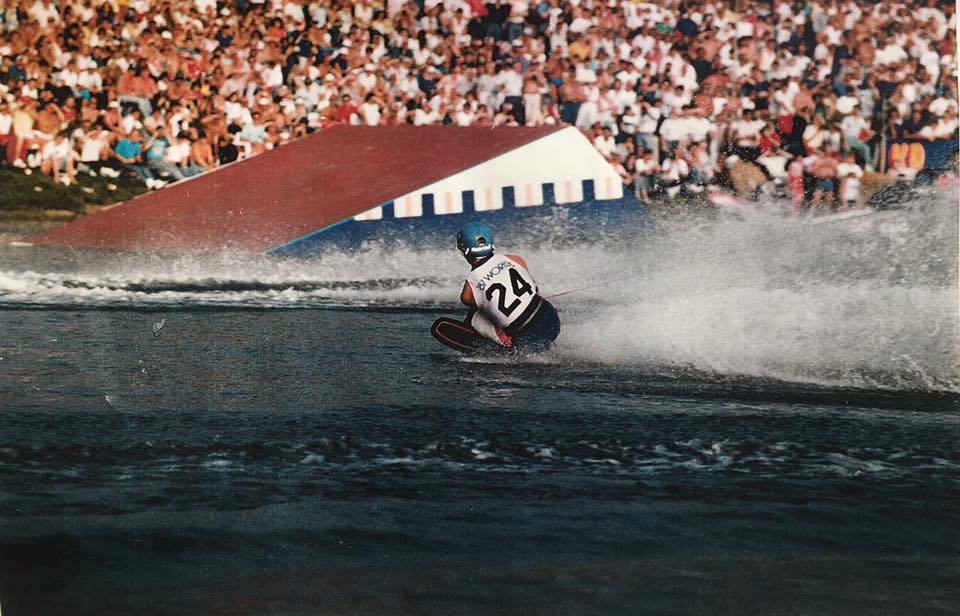
Unknown skier takes off in the final jumping round for the VII World Water Ski Championship at Marine Stadium.

Image: Historical Society of Long Beach

2. Long Beach, United States 1961

Contenders: Jean-Marie Muller (FRA) vs. Bruno Zaccardi (ITA)

The VII World Water Ski Championship at Long Beach was a landmark event for the sport—both in spectacle and competition. It featured the most extensive television coverage water skiing had ever received, broadcast live to homes across the U.S., and drew thousands of spectators. The mile-and-a-quarter Marine Stadium, built for the 1932 Olympics, once again hosted a major international competition. Banners from 19 nations rippled in the breeze as ski parades, chorus lines, and a battery of television cameras surrounded an event marked by style, tension, and a shifting global balance of power.

Tournament skiing in 1961 bore little resemblance to today’s format. Men ran the slalom course at 60 kph (37.3 mph), ramp tricks were still common, and jumpers were judged not just on distance, but on style. In this hybrid of sport and performance, it was 18-year-old Italian Bruno Zaccardi who emerged victorious in the overall standings—though only just.

Zaccardi’s path to the title was a study in consistency. A middling slalom performance saw him qualify for the final but finish only seventh. But he bounced back in the trick and jump events, collecting bronze medals in both. Muller, the French standout, struck gold in tricks—France’s signature event even then—and matched Zaccardi closely in slalom, finishing just one buoy short. But the Italian’s advantage on the ramp proved decisive.

American hopes rested on defending champion Chuck Stearns, but an ankle injury sustained at the Nationals limited his impact. Though U.S. athletes won three of the eight gold medals and claimed the team title, Zaccardi’s triumph marked a turning point—the rise of Europe on the world stage. Coming off three consecutive European overall titles, his win in Long Beach confirmed his global credentials and hinted at a more competitive, international era ahead.

Key Moment: With a fierce cut and a forward-leaning air form, Zaccardi launched a personal best 42.6-meter (140-foot) leap that brought the crowd to its feet and sent his countrymen into hysterics before the distance was even announced. Though not the longest jump of the event—American Larry Penacho flew 45.7 meters—it was enough to secure Zaccardi’s historic overall win.

Winning Margin: 4 points—equivalent to a two-ski side-slide, something you would actually have seen at the ’61 Worlds.

  1. Bruno Zaccardi (2,667 points)
  2. Jean-Marie Muller (2,663 points)
  3. A.J. Orsi, Jr. (2,547 points)
Patrice Martin and Kreg Llewellyn had the tightest overall battle in World Championships history

The tightest overall battle in World Championships history

1. Villach, Austria 1991

Contenders: Jaret Llewellyn (CAN) vs. Kreg Llewellyn (CAN) vs. Patrice Martin (FRA)

Patrice Martin entered the 1991 World Championships as the reigning overall champion, fresh off a dramatic victory over Carl Roberge two years earlier. Now 27, the French trick prodigy turned three-event star was at the peak of his powers. But with the 1980s titans fading, a new generation was knocking—including two brothers from rural Alberta, of all places.

The prelims set the tone. Martin emerged with a narrow lead, just 30 points ahead of 21-year-old Jaret Llewellyn, who had thrown himself into contention with a massive jump score. In the slalom finals, Martin—qualifying as the bottom seed—picked up two extra buoys to widen the gap. Then came tricks, where he claimed yet another world title—his fourth in the event—and solidified his lead.

But the biggest mover was Australia’s Mick Neville. The last of the old guard in overall, Neville delivered a huge final-round score to climb within striking distance of the title. Martin, having failed to make the jump final, could only sit and watch.

The numbers were clear. Martin led by 60 points over Jaret, and 90 over Neville. But it was the elder Llewellyn—Kreg—who turned the event on its head.

Skiing third off the dock, Kreg was known primarily for his tricks, where he’d picked up bronze earlier in the tournament—jumping was the weakest of his three events. But on this day, he uncorked the performance of his life, adding nearly four meters to his prelim mark and launching himself from fourth place to the cusp of an improbable world title. The result was so tight that when the spray settled, no one was sure who had won.

When the computers finished their work, it was Martin clinging to the lead by 0.2 overall points.

Neville, needing just two more meters, couldn’t find it. And Jaret, requiring the first 60-meter jump of his career, came up short. Martin, unshakable once again, had done just enough to defend his title. It would go down as the closest overall finish in the history of the World Championships.

Key Moment: Kreg’s massive leap—it earned him the jump bronze medal, and along with compatriot Jim Clunie’s finals performance, helped Team Canada secure its historic first-ever team victory. But it was 10 centimeters shy of the mark he needed for overall gold.

Winning Margin: 0.2 points. Equivalent to, well, nothing. Just enough for heartbreak.

  1. Patrice Martin (2,655.5 points)
  2. Kreg Llewellyn (2,655.3 points)
  3. Jaret Llewellyn (2,603 points)
Ski Nautique 2026

IWWF Rejects 2026 Ski Nautique for Worlds, Citing Fairness and Timing

Media

IWWF rejects 2026 Ski Nautique for Worlds, citing fairness and timing

Ski Nautique 2026

Image: @nautiqueboats

By Jack Burden


The IWWF World Waterski Council has unanimously rejected Nautique’s late-stage proposal to debut its newly announced 2026 Ski Nautique at this year’s World Championships in Recetto, Italy.

The request came just days after Nautique unveiled its next-generation towboat — a lighter, sharper redesign billed as an “evolution of a true icon.” With flatter wakes, a refined hull, and integrated Zero Off enhancements, the 2026 model is being positioned as a new benchmark in three-event performance. Early impressions from Team Nautique athletes and independent skiers alike have been glowing, with slalomers praising “drastically better wakes” and reduced speed drop out of the turn.

But when Nautique Vice President Brian Sullivan made the pitch during a Masters meeting with IWWF President Jose Antonio, the council’s response was cautious. According to minutes from the May 29 meeting, delegates from all regions agreed the change would unfairly disadvantage athletes outside the U.S., particularly in Oceania and Latin America, where access to the new boat in time for training was unlikely.

“The new boat is completely different, making it unfair for athletes,” said athlete rep Valentina Gonzales, noting that many skiers would have just “two passes (official familiarization) to test the new boat before the Worlds.”

Though Nautique offered to ship three boats to Europe within a week, council members pointed out that large parts of the world — and much of the athlete field — would be left without meaningful prep time.

Athlete chair Martin Kolman was more blunt: if Nautique wanted the boat used at Worlds, “they should have informed the waterski community in a timely manner.” Instead, the request came days after the launch — and just three months before the sport’s flagship event.

For now, the current Ski Nautique — introduced in 2019 and entering its final year of production — will remain in use. And while that may frustrate some, it aligns with the spirit of fair play: the playing field must come first.

Whether Nautique misread the timing or bet too heavily on post-launch momentum, one thing is clear — for all the engineering ambition the new boat represents, it arrived a season too late.

And perhaps, with more riding on this launch than meets the eye. Nautique’s long-held position as the exclusive towboat supplier for IWWF events is set to expire at the end of the year. Rumors have surfaced that Malibu — long absent from the international scene — could take over the contract beginning in 2026. If true, the 2026 Ski Nautique may never get the chance to pull a World Championships.

That’s not just a missed debut. It’s a boatload of R&D with nowhere to run.

Regina Jaquess is continuing to dominate into her 40s

Can Anyone Stop This U.S. Team at Worlds?

News

Can Anyone Stop This U.S. Team at Worlds?

Regina Jaquess is continuing to dominate into her 40s

Image: USA Waterski

By Jack Burden


The names are in. The roster is set. And for the first time in nearly two decades, Team USA will head to the Open World Championships with a male overall skier in the lineup.

The American Water Ski Association’s International Activities Committee has announced the six athletes who will represent the United States at the 2025 IWWF Open World Championships in Recetto, Italy, from August 26–31:

  • Jake Abelson
  • Aliaksandra Danisheuskaya
  • Kennedy Hansen
  • Regina Jaquess
  • Freddy Krueger
  • Erika Lang

It’s a loaded team—experienced, decorated, and packed with world records—but the headline is 17-year-old Jake Abelson, the first male overall skier selected for Team USA since Jimmy Siemers in 2009. It’s been almost as long as Abelson has been alive.

Since Siemers’ retirement, men’s overall has been America’s Achilles’ heel—despite a steady pipeline of overlooked talent. Abelson, the breakout trick skier of 2025, with rapidly improving jump and reliable slalom scores, could signal a long-overdue shift.

Another standout addition is Aliaksandra Danisheuskaya, the 2021 World Overall Champion—then skiing for Belarus. She’s now under the U.S. banner, having lived and trained stateside for over a decade and recently marrying American jumper Taylor Garcia.

Her inclusion raises eyebrows—not for lack of pedigree, but because of her international path. Danisheuskaya was among a group of Belarusian athletes who switched affiliations after the IWWF banned Russian and Belarusian skiers in response to the war in Ukraine. In 2023, she and Hanna Straltsova competed under the USA Water Ski & Wake Sports (USAWSWS) umbrella in a legal gray zone that blurred nationality rules. With the ban now lifted and new eligibility procedures in place, Danisheuskaya’s spot on Team USA is both official and, from a competitive standpoint, a major asset.

Alongside her are legends still at the top of their game. Regina Jaquess remains an ageless force. Erika Lang is a perennial threat. Freddy Krueger, now in his 50s, continues to fly farther than athletes half his age. And Kennedy Hansen—one of the sport’s best young all-arounders—brings team balance and three-event reliability.

It’s a squad built not just to defend the world team title reclaimed in 2023—but to do it with depth and purpose.

Standing in their way, however, is the most consistently dominant team of the modern era: Canada. Led by Dorien Llewellyn and Paige Rini Pigozzi, their ceiling is as high as any—if their health and form hold. Dorien, once trading records with Joel Poland, is still working back to his best after a major injury. Paige, an elegant slalomer and capable tricker and jumper, hasn’t competed much in overall since the 2023 Worlds.

If they’re sharp, the Canadians will be hard to beat.

France, Great Britain, and Australia are all podium threats as well—though none may have the six-skier depth to match the U.S. or Canada across all events.

But for Team USA, this isn’t just about the podium. This roster represents something bigger: a return to the formula that once made them untouchable. From the 1950s to the early ’90s, the U.S. never lost a team title. Since then, they’ve won just 7 of 17. The gap? Often, it’s been men’s overall.

Jake Abelson might not win gold in Recetto. But his selection is a signal—of belief, of change, of remembering what built a dynasty in the first place.

Team titles aren’t won with six individual stars. They’re won with balance. With skiers who fight for every point in every event. With teams that feel—not just strong—but complete.

This one finally does.

Let the countdown begin.

Venues for next two waterski world championships announced

Italy and Australia Announced as Hosts for the 2025 & 2027 World Championships | IWWF

Repost

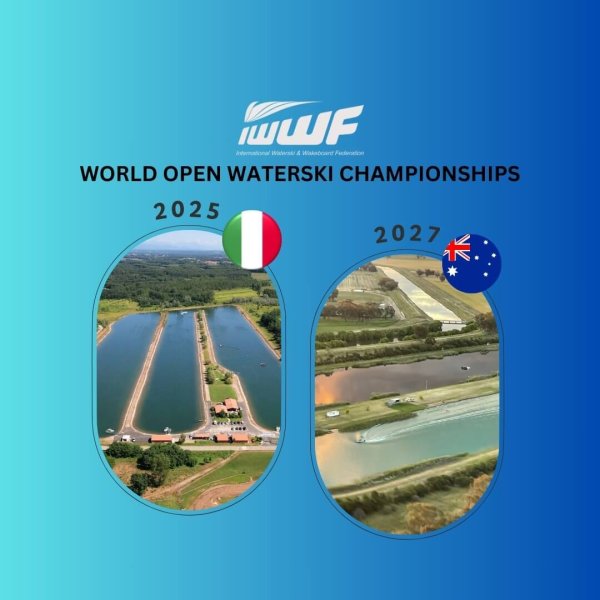
Italy and Australia Announced as Hosts for the 2025 & 2027 IWWF World Open Waterski Championships

Venues for next two waterski world championships announced

Image: IWWF

IWWF


The International Waterski & Wakeboard Federation (IWWF) is delighted to announce that Italy and Australia have been selected as the hosts for the 2025 and 2027 IWWF World Open Waterski Championships, respectively.

Both countries had initially submitted bids to host the 2025 edition, but after careful consideration and discussions, Australia opted to reschedule its bid for the prestigious event until 2027.  

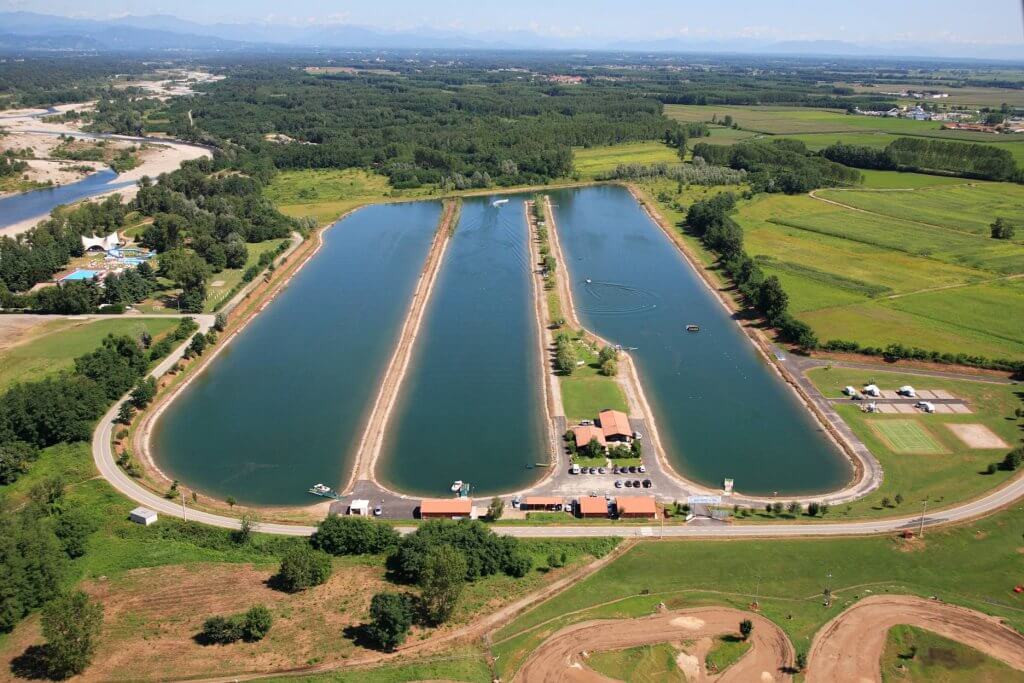
Italy will host the 2025 IWWF World Open Waterski Championships from 3rd to 7th September at the Parco Nautico del Sesia in Recetto. This will be the fifth time that Italy has hosted the World Championships, reaffirming its strong ties to the sport and its reputation as a world-class destination for waterski competitions. The Parco Nautico del Sesia is renowned for its state-of-the-art facilities and stunning natural surroundings, making it an ideal venue for this prestigious event.

Parco Nautico del Sesia in Recetto, Italy

Australia will take the spotlight in 2027, hosting the IWWF World Open Waterski Championships from 16th to 22nd February 2027 at the Max Kirwan Ski Park, Mulwala in New South Wales. This will mark only the second time Australia has hosted the event, with the last occasion being in 1965 at Surfer’s Paradise on the Gold Coast.  The decision to defer to Italy for 2025 highlights Australia’s commitment to fostering international cooperation within the waterskiing community, and the 2027 event promises to be a spectacular showcase of the sport.

Max Kirwin Ski Park in Mulwala, Australia

We are incredibly fortunate to have both Italy and Australia as hosts for our upcoming IWWF World Open Championships,” said José Antonio Pérez Priego, President of the IWWF. “Australia’s gracious gesture to focus on delivering an exceptional event in 2027 is a true reflection of the unity and sportsmanship that defines our global waterskiing family. We look forward to two outstanding championships in these two remarkable countries.”

As the IWWF continues to promote and advance waterskiing on the global stage, the 2025 and 2027 IWWF World Open Waterski Championships are poised to be landmark events. With Italy’s deep waterskiing heritage and Australia’s return to hosting after more than six decades, these championships will not only celebrate the sport but also the spirit of international cooperation and respect that underpins the IWWF

The moments that defined the 2023 water ski season – and the stories behind them.

Year in Review: We Countdown the Most Memorable Moments of 2023

Articles

Year in review: We countdown the most memorable moments of the 2023 water ski season

The moments that defined the 2023 water ski season – and the stories behind them.

The moments that defined the 2023 water ski season – and the stories behind them.

By Jack Burden


As we bid farewell to 2023, it’s time to revisit the unforgettable moments from this year’s water ski season. From seemingly impossible comebacks to record-breaking feats, each competition created its own narrative filled with anticipation, intensity, and sheer excitement.

Throughout 2023, skiers showcased their talents across three World Championships—Under-17, Under-21, and Open—two professional tours, the Waterski Pro Tour and WWS Overall Tour, and legacy events like the Moomba and U.S. Masters. The year witnessed record-breaking prize purses, and the quality of streaming for water ski enthusiasts continued to soar. Join us as we count down our selection of the top 10 unforgettable moments from the 2023 season.

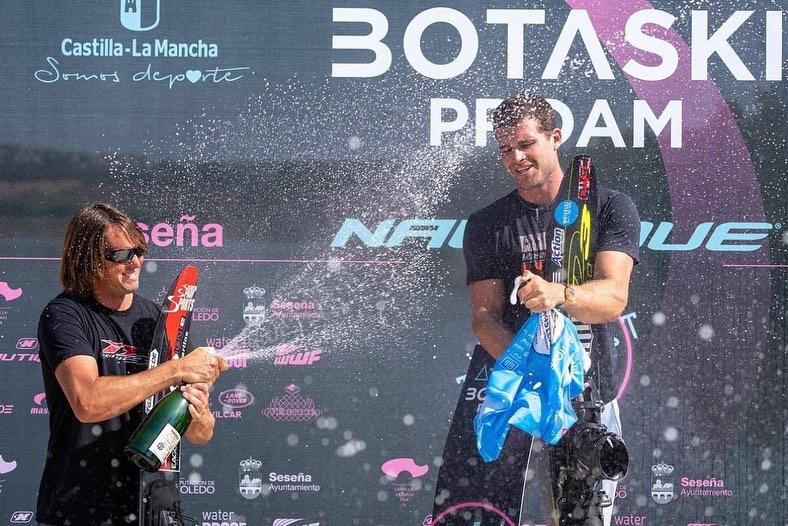
After 27 wins in a row, I got to spray a competitor above me in the face with champagne.

Image: @natesmith43

10. Water Skiing’s 27 Club

Nate Smith flew to Europe this summer on an incredible run of form. After winning the Fungliss ProAm in France, his unbeaten streak in professional competitions tallied an impressive 27, one of the longest winning streaks in water ski history.

Following the qualifying rounds of the Botaski ProAm in Spain, where he finished with an equal top score of 1 @ 9.75m (43’ off), Smith seemed on track for another victory. He made easy work of his first head-to-head bracket, advancing to the semifinals. However, up against the young and relatively unknown Italian Brando Caruso, Smith faltered at 10.25 meters (41’ off), coming up half a buoy short of Caruso.

Facing defeat graciously, Smith shared, “After 27 wins in a row, I got to spray a competitor above me in the face with champagne. Congrats [Brando Caruso] for knocking me out… and Freddie [Winter] for ultimately taking first.”

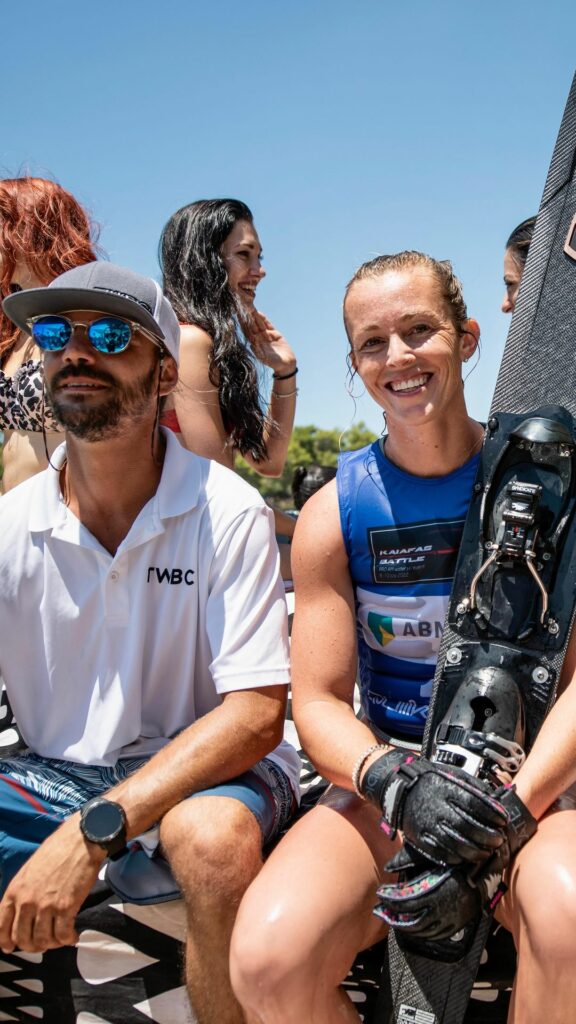
Kaiafas Battle 2023 Skier of the Day!

Image: @waterskibroadcasting_

9. Nicholson Finds Another Gear

One of the hardest workers on the professional circuit, Allie Nicholson had been threatening to post a big score for some time. As the only skier to attend all 12 Waterski Pro Tour slalom events in 2023, her breakthrough came during the European leg at the Kaiafas Battle ProAm. In a qualifying round, the American became only the 12th woman ever to run 10.75m (39.5’ off). Announcer Matteo Luzzeri remarked, “We were waiting for the next lady to run 39, and here we have her; she just hammered it, super confident. She decided now, today’s my day.” Nicholson was elated with the performance, stating, “I almost didn’t ski; I wasn’t feeling good before I skied, and I’m so glad I did. I’m on cloud nine right now.”

Nicholson’s success continued with a victory at the San Gervasio ProAm the following weekend and multiple more successful attempts at 10.75m, including at the Calgary Cup the following month.

Erika Lang at the 63rd Masters

Image: @erikalang36

8. Lang Master’s the 11,000 Point Mark

Erika Lang had one of the closest things our sport has seen to a perfect season. In May, she broke her own world record during the Master’s LCQ. Throughout the season, she won three out of four professional events, broke the World Championships record on the way to her second world title, and closed out the season with a Pan American Games gold.

This incredible season was marked by Lang’s consistency, surpassing 11,000 with increasing regularity. The standout moment for Lang was at the U.S. Masters, where she achieved the second-ever score over 11,000 in a professional tournament by a woman. Her winning score, in the challenging conditions of Robin Lake, would have been enough to secure her a podium place in the men’s event.

Cole McCormick rocks some shades during the 2023 IWWF world waterski championships

Image: @johnnyhayward_photo

7. World’s Returns to “Sunset” Lakes

During the final series of the men’s slalom elimination round at the World Championships, the sun dipped lower on the horizon, presenting competitors with a challenging glare. Joel Howley became the first skier to wear sunglasses during his run, with the boat driver handing them to him for each pass into the glare. Others attempted to mitigate the increasingly difficult glare with eye black. In a candid interview, Freddie Winter commented on the conditions, emphasizing that “we’re all trying to survive as opposed to perform.” Further stating “it’s dangerous, it’s scary, and it minimizes our performance.”

Despite the challenging conditions, most of the top skiers successfully advanced to the finals. Notably, two-time former champion Will Asher suffered an early exit at 10.25m (41’ off). The day concluded with an electrifying eight-way runoff for the final two spots, with young Vincenzo Marino attempting a 10.75m (39.5’ off) pass in what might be the coldest start ever after not skiing for three days. In the end, Cole McCormick and Corey Vaughan secured their tickets to the finals.

rick action at the 2023 IWWF world waterski championships

Image: @johnnyhayward_photo

6. Font Pushes the Envelope

Before Patricio Font broke the world trick record in 2022, it had been the longest-standing record in three-event waterskiing, remaining unbroken since 2011. Proving that it was far from a one-off performance, Font extended his world record to 12,690 at the Master’s LCQ in May, before pulling out the record run in his victories at the Botaski ProAm, setting a professional tournament record, and in the preliminary round of the World Championships, setting a World Championships record.

This top seed position proved critical, as Louis Duplan-Fribourg, after executing a superb hand pass, seemed poised to achieve another big score. However, an equipment malfunction caused his toe strap to release before his final toe trick, preventing a score that could have totaled 12,580 points. Patricio Font, realizing the opportunity presented by Louis’ misfortune, opted for a less challenging run, omitting his Ski-Line-Seven, and cruised to victory with another huge score of 12,470 points.

With a stated goal of breaking 13,000 points, Font is at the forefront of a new wave of trick skiers redefining the boundaries of the sport. Although his potential record of 12,770 was ultimately downgraded upon IWWF review, we expect more big scores from him in the future.

Some moments from the dock during the final day of the King of Darkness.

Image: @waterskibroadcasting_

5. Clutch Performances from the Nightmare

Although still a regular at the top of the podium, Freddy Krueger showed signs of slowing down throughout the season. At the MasterCraft Pro, his second professional win of the season, he very nearly missed the final after failing to qualify on his first two jumps. The 48-year-old veteran then delivered the biggest jump of the tournament on his third and final attempt with 70.7 meters (232 feet).

The following weekend at the Malibu Open, Joel Poland set the pace early with a jump of 69.3 meters (227 feet), which held firm through six skiers and seemed poised to force a jump-off for the title. However, Krueger clinched the championship with an extraordinary 71.0-meter (233 feet) jump on his third and final attempt.

Finally, at the World Championships, Krueger was in serious danger of missing the final, not to mention jeopardizing U.S.A.’s chances in the teams competition, after managing only 56.4 meters (185 feet) from his first two jumps. Yet again, his wealth of experience came to the fore, enabling him to qualify on his third attempt, ultimately going on to finish runner-up in the final and help Team U.S.A. to a world title.

Frenchmen Louis Duplan-Fribourg ready to jump

Image: @johnnyhayward_photo

4. Duplan-Fribourg Takes Flight

In a picturesque setting in the south of France, the WWS Overall Tour opened its 2023 season with an extraordinary performance by Louis Duplan-Fribourg. The Frenchman soared to new heights, setting a national jump record at 68.1 meters (223 feet), igniting the local crowd and taking the lead in the overall competition. Announcer Glen Williams acknowledged Duplan-Fribourg’s achievement, stating, “We’ve talked for a long time about Joel Poland and Dorien Llewellyn, and now there are three names in that category.” Duplan-Fribourg’s performance positioned him among the world’s top overall skiers.

“I was a little stressed after Louis’ big jump; when someone goes out and jumps that far, it’s intimidating,” said Poland in his post-jump interview. In the tightest overall battle of the year, Poland managed to win the event by the razor-thin margin of less than 3 overall points—equivalent to a quarter buoy or a side slide.

As the WWS Overall Tour unfolded, the French contender’s newfound jump form combined with his world-class tricking kept him ahead of the rest of the pack, finishing close second to Poland in all four tour stops. The final stop in Florida saw him extending the French national jump record, and shortly after, he clinched his first professional jump placement at the MasterCraft Pro.

His trick performance at the World Championships broke both the French national and World Championships records in the preliminary round. This impressive foundation paved the way for his breakthrough world title, cementing his status not just as a trick skier but as a rising star among the world’s top overall skiers.

Hanna Wins Jump at 2023 Malibu Open

Image: @malibuopen2023

3. Sweet Home Malib-Ama

The Malibu Open, with over two decades of history, returned to LymanLand in Alabama for the second consecutive year, delivering nearly nonstop record-breaking excitement. First, Regina Jaquess solidified her status as one of the greatest women’s slalomers of all time by setting a new world slalom record of 5 at 10.25 meters (41‘ off) in the preliminary round. Then, Hanna Straltsova became only the third woman ever to jump over 190 feet during the finals, not only claiming victory in the tournament but also securing the season title of the Waterski Pro Tour. Finally, Joel Poland broke his second world overall record in as many weeks, achieving scores of 2@10.25m in slalom, 11,680 in tricks, and 69.3 meters (227 feet) in jump. The latter score very nearly won him the jump event too.

In an interview following her record-breaking performance, Jaquess shared her elation and gratitude, saying, “Oh my gosh, I don’t even know what to say, I’m shaking. I think getting out of two this morning unlocked a little bit of mental pressure because it was my best score. I haven’t gotten a three since my ACL [surgery], so thank you, Andrews Sports [Medicine], for getting me back together. This is unbelievable, and to do it at the Malibu Open behind Malibu Boats… I got mental; I should have run it… it felt so amazing.”

2023 U17 IWWF World Waterski Championships

Image: @nicolasnelson_

2. New Year’s Double Run-Off

For number two, we go all the way back to the very start of the year, to the Under 17 World Championships in Santiago, Chile. This tournament was filled with promising young talents and exhilarating moments on the water. However, the peak of tension unfolded during the boys’ slalom final. Skiing early in the lineup, positioned 3rd and 5th off the dock, respectively, Australian Lucas Cornale and Mexican Nicolas Nelson set an early pace with 3 @ 10.75m (39.5’ off), falling just half a buoy short of the World Championships record. This combined lead persisted through all 12 competitors, necessitating a runoff to determine the winner.

Starting at 11.25 meters (38′ off), Nelson skillfully navigated the pass, narrowly missing four ball at 10.75 to match his initial score. As Cornale entered the course for his chance to challenge, announcer Tony Lightfoot noted, “Nicolas Nelson [is] still in the course.” Cornale fell early around buoy two but promptly signaled for a reride by raising his ski in the air. Meanwhile, Nelson, having initially stayed within the buoy line, was slowly making his way to the shore, perhaps overwhelmed by the occasion. After a split decision from the judges, Cornale’s request for a reride was denied. Nevertheless, the Australian team lodged a formal protest citing unsafe skiing conditions, which was ultimately upheld.

Seizing this opportunity, Cornale successfully completed the 11.25-meter pass, matching Nelson’s runoff score of 3 @ 10.75m. Once again, the young men found themselves in a runoff, this time with Cornale starting first. Unfortunately, the Australian fell early at 11.25m, leaving the door open for Nelson, who ultimately claimed the world title by navigating around three buoys. This dramatic double runoff set the stage for an intense start to the year.

Getting knocked down happens, getting back up is a choice.

Image: @fotografacamilabernal

1. Poland’s New Haircut

It should come as little surprise that our top pick for the number one moment of 2023 involves the hottest commodity in world water skiing right now – Joel Poland. Many moments came to mind for the extraordinarily talented Brit: his first 70-meter (230-foot) jump at the California Pro Am, and his back-to-back world records set live on webcast to close out the professional season—any of these could have easily made this list. However, it was his World Championships effort, ironically one of the only events he didn’t win, that stood out the most.

Poland, who only needed 10,000 points to make the trick final, stood up in his opening toe pass “like clockwork,” as remarked by announcer Glen Williams. Williams added, “I don’t think he has a B run; [he] pretty much just goes for it no matter what.” Fifteen seconds later, Poland, along with his overall aspirations, were in deep water after he fell during his signature Super-Mobe-Five, ruling himself out of the final and overall contention—or so it seemed.

The following day, the down-and-out Joel Poland, who had shaved his head overnight, skied with the determination of a man with nothing to lose. Poland took a bold approach, attacking the 10.25m (41’ off) pass rather than taking the safer route of securing his spot in the final with an S-turn mid-pass. The Brit produced the defining performance of the World Championships, becoming the newest member of the 41-off club. Suddenly, he was back in the overall title race.

Poland described his emotions, saying, “I’m not gonna lie. I lost sleep over that trick run, I’ll probably lose a little more too. But, the job was not done and giving up is not an option. After a small talk with myself and a new f*cking haircut, I felt like I had nothing to lose… that’s a dangerous feeling. Now the rest is history.”

Poland would ultimately come up short of the 70.6-meter (232-foot) jump he needed to secure the world overall title, finishing in second to the well-deserving Louis Duplan-Fribourg. However, his comeback will be remembered as one of the greatest World Championships performances of all time.

Honorable Mentions

  • Jacinta Carroll’s continued dominance on the Yarra
  • Three skiers running 10.25m (41′ off) in a single round at the Kaiafas ProAm
  • Three skiers jumping over 70m (230′) in a single round at the California ProAm
  • The incredibly tight battle for Waterski Pro Tour season title in women’s slalom
  • Nate Smith’s close call with the jump ramp at the Traver’s Grand Prix
  • Dorien Llewellyn’s and Lauren Morgan’s injury comebacks for World Championships medals
2023 Water Ski Season: Records Shattered and Dominance Prevails

Year in Review: RTB’s Top Five Stats of 2023

Analysis

Year in review: RTB’s top five stats of the 2023 water ski season

2023 Water Ski Season: Records Shattered and Dominance Prevails

The moments that defined the 2023 water ski season.

By Jack Burden


The 2023 water ski season proved to be a historic one, with outstanding performances and records tumbling across various categories. Here’s a glimpse into the remarkable achievements that defined this unforgettable season:

1. Rabbit Remains Unbeaten

Jacinta Carroll’s victory at the 2023 Moomba Masters was her 34th consecutive* professional jump title, maintaining an unbeaten streak since 2013. Her career winning percentage stands at an impressive 79%.

2. The Highest Scoring Year, Ever!

Over 25% of all trick scores exceeding 12,000 points were accomplished in 2023. Even more remarkable is the fact that over half of the female trick scores surpassing 11,000 points were achieved in this same year.

3. A ‘Joel of All Trades’

Throughout 2023, Joel Poland attained podium finishes in slalom, trick, jump, and overall in professional competition. He stands as the sole individual in the 21st century to accomplish this remarkable feat within a single year, and only the second man this century, following Adam Sedlmajer, to achieve it over the course of his career.

4. Among the Greats

Securing his fifth consecutive World Championships victory, Ryan Dodd became the second oldest skier ever to clinch a world title, only three days younger than Andy Mapple. Only Mapple in slalom and Patrice Martin in overall have won more golds (six) in a single event.

5. Records on the Big Stage

Joel Poland’s performance at the WWS Florida Cup marked the first instance of a world record being broken at a professional tournament since the 2005 U.S. Masters. Additionally, the two world records set by Regina Jaquess and Poland at the Malibu Open marked the first time multiple world records were set in a professional tournament since the 2002 Malibu Open.

* Carroll’s 34 consecutive victories did not include Moomba Night Jump victories. If you add those and her World’s titles it is an astounding 42 consecutive wins at elite events!

Slalom skiing at the 2023 World Championships

Thrills, Spills, and Triumphs: Highlights from the 2023 World Championships

Articles

Thrills, spills, and triumphs: highlights from the 2023 World Championships

Slalom skiing at the 2023 World Championships

Cole McCormick slaloms at sunset during the 2023 IWWF World Championships (image: @johnnyhayward_photo)

By Jack Burden


The 2023 IWWF World Water Ski Championships proved to be a thrilling showcase of skill and determination, with each day bringing its own set of remarkable moments and challenges. From the impressive kickoff early in the week, to the unexpected turns in the tournament caused by adverse weather conditions, this competition was a rollercoaster of excitement and resilience. The water skiing world watched in anticipation as emerging talents and seasoned champions went head-to-head, vying for world titles and displaying the sheer tenacity that defines this sport. Here, we delve into the highlights and surprises from this extraordinary event, setting the stage for the action-packed journey that followed.

Young Talent Shines Early

Day one featured a full day of slalom skiing under perfect conditions, with over 70 skiers in total. While some might consider these early rounds as a curtain raiser, they still delivered some incredible performances. Notably, 17-year-old Italian skier Vincenzo Marion took the lead by running 2 at 10.25 meters (41′ off). Setting the pace early with 38 of the world’s top-ranked skiers yet to compete.

Moving on to Wednesday, it was time for the lower-seeded competitors in the jump and trick events to showcase their skills. This day was marked by numerous emerging talents achieving personal bests in the jump competition. Jutta Menestrina, making a remarkable comeback from knee surgery, posted an impressive score in the third series of the women’s jump. On the men’s side, Marino once again delivered an outstanding performance, achieving a personal best jump by 5.6 meters, crossing the 60-meter mark for the first time in his career.

Battling the Elements

Thursday marked the onset of dramatic developments as heavy rain showers and strong winds intensified throughout the morning. These adverse conditions prompted officials to suspend the women’s slalom competition midway through the third series. Following consultations with officials and team captains, the decision was made to postpone the women’s slalom to the following day. The weather conditions proved extremely challenging, with intermittent heavy rain and white caps on the lake, making it extremely difficult for both skiers and even the boat drivers to navigate the course for much of the day.

This postponement, although necessary for safety, came at a cost due to the tight schedule for the weekend. Despite the forecast predicting better conditions on Friday, the early seeds of women’s slalom and the top seeds of men’s slalom would have to contend with sun glare and reflection in the morning and afternoon, as the lake runs from east to west.

In the midst of these weather challenges, the men’s tricks elimination round proceeded as scheduled on Thursday afternoon. Skiers faced the daunting task of battling strong winds and bumpy conditions in the first completed elimination round of the tournament. The quality of tricks, which has been steadily rising in recent years, remained exceptional despite the unfavorable conditions. The French team exhibited remarkable prowess, with both veteran Pierre Ballon and newcomer Pol Duplan-Fribourg leading the pack out of series two.

As the saying goes, the overall event is won or lost in the trick event, and this held true at this World Championships. Notably, Italian skier Edoardo Marenzi, who was nursing an Achilles injury, exited early, effectively ending his campaign. Defending trick champion Dorien Llewellyn, competing in his first trick tournament in six months, and former overall champion Martin Kolman did enough to secure their spots in the finals. However, the biggest upset of the tournament occurred when the clear favorite, Joel Poland, who only needed 10,000 points to make the final, fell during his signature Super-Mobe-Five, ruling himself out of the final and overall contention—or so it seemed.

In a defining moment, as Poland experienced this unexpected setback, the next skier off the dock, Frenchman Louis Duplan-Fribourg, emerged as the new favorite in the overall event. Instead of succumbing to the mounting pressure, he took a daring approach, opting for the hardest run in his repertoire. In doing so, he set a new personal best with 12,510 points, earning himself the French national trick record and a World Championships record. The skier who previously held the latter record, Patricio Font, responded in thrilling fashion by reclaiming his World Championships record only three skiers later, matching his own world record and securing the top seed position.

Nonstop Action Shines Through (A Little Too Bright)

Friday delivered another action-packed day of slalom skiing, with the top three series of both women’s and men’s slalom running. On a separate lake, the women’s trick preliminaries took place concurrently throughout the afternoon. Among the top female slalomers, there were no major upsets, but unexpected subpar performances from prominent overall contenders Giannina Bonnemann Mechler and Paige Rini set them back considerably. The cut for the finals remained comparable to 2021, with a runoff at 1.5 @ 10.75m (39.5’ off).

The afternoon treated viewers to one of the most thrilling and engaging broadcasts ever produced by TWBC. It featured simultaneous men’s slalom and women’s trick skiing, earning comparisons to “NFL’s RedZone.” The excitement peaked during the start of the women’s series one tricks. On one lake, the women’s overall title was being determined, with the likes of Hanna Straltsova, Kennedy Hansen, and Paige Rini competing. On the other lake, the down-and-out Joel Poland, who had shaved his head overnight, skied with the determination of a man with nothing to lose. Poland took a bold approach, attacking the 10.25m (41’ off) pass rather than taking the safer route of securing his spot in the final with an S-turn mid pass. The Brit produced the defining performance of the World Championships, becoming the newest member of the 41-off club. Suddenly, he was back in the overall title race.

Women’s trick skiing concluded in spectacular fashion, with three athletes surpassing 10,000 points. Erika Lang claimed the pole position with a World Championships record of 10,930 points. As all eyes shifted to the slalom lake for the final series, the sun dipped lower on the horizon. Competitors had to adapt to the challenging glare. Joel Howley became the first skier to wear sunglasses during his run, with the boat driver handing them to him for each pass into the glare. Others attempted to mitigate the increasingly difficult glare with eye black. In a candid interview, Freddie Winter commented on the conditions, emphasizing that “we’re all trying to survive as opposed to perform.” Further stating “it’s dangerous, it’s scary, and it minimizes our performance.”

While the conditions were far from ideal and arguably hazardous for the top series of men’s slalom, in an event with limited time and significant weather-related disruptions, the officials made the right call. The alternatives, such as running the women’s slalom in the rainy and whitecap-filled conditions from the previous day or scheduling the jump preliminaries in similar glare or strong gusty tailwinds the following day, would have been significantly more dangerous.

Despite the challenging conditions, most of the top skiers successfully advanced to the finals. Notably, two-time former champion Will Asher suffered an early exit at 10.25m. The day concluded with an electrifying eight-way runoff for the final two spots, with young Marino attempting a 10.75m pass in what might be the coldest start ever after not skiing for three days. In the end, Cole McCormick and Corey Vaughan secured their tickets to the finals.

The First World Champions Are Crowned

The penultimate day of the competition brought an abundance of excitement with five series of jump preliminaries. As anticipated, the cut in women’s jump was lower than two years ago, mainly due to an injury-plagued field. Straltsova had an unusual off day, still managing to secure the top seed position but failing to cement her overall title chances. She finished the prelims just behind Bonnemann Mechler after an underwhelming, by her standards, 54.1-meter (177-foot) performance.

The men’s jump competition provided non-stop excitement, with an impressive 21 men surpassing the 200-foot barrier. Overall hopefuls Louis Duplan-Fribourg and Llewellyn narrowly missed the finals, leaving room for a potential comeback from Poland, who secured the second-to-top seed. The veteran Freddy Krueger put Team USA and the fans through some nerve-wracking moments, as he didn’t secure his finals spot until his third jump. It was the defending champion, Ryan Dodd, who claimed the top seed position.

Attention then shifted to the trick lake as the first world champions of the tournament were to be crowned. The early seeds, including many young skiers competing in their first-ever finals, encountered a series of stumbles and early falls while attempting to achieve high scores. Straltsova made significant improvements over the preliminary round, effectively securing the overall title. Three-time world champion Anna Gay led the event early, despite a fall on her final flip, and had to watch from the shore as Peruvian Natalia Cuglievan came up just 10 points short of her lead. Then, Bonnemann Mechler and Neilly Ross went down early while chasing big scores. It all came down to Erika Lang in the end, who, despite being one of the most dominant trickers in the sport over the last decade, had not secured World Championships gold since 2013. Although she appeared shaky at times, she managed to complete both passes and earn a well-deserved second world title.

In stark contrast to the low-scoring final in 2021, the men’s field posted impressive scores throughout, with six skiers surpassing 11,000 points. Llewellyn improved upon his preliminary trick score, securing fourth place in the trick event and a bronze in the overall competition, a remarkable feat considering his injury comeback timeline. Chilean phenom Martin Labra took the lead with two skiers left to go, guaranteeing himself a medal. The stage was set for an epic battle between the two standouts from the preliminaries. Louis Duplan-Fribourg, after executing a superb hand pass, seemed poised to achieve another record score. However, an equipment malfunction caused his toe strap to release before his final toe trick, preventing a score that could have exceeded Aliaksei Zharnasek’s long standing world record, totaling 12,580 points. Patricio Font, realizing the opportunity presented by the Louis’ misfortune, opted for a less challenging run, omitting his Ski-Line-Seven and cruising to victory with another huge score of 12,470 points.

Schedule Shake-Up Ignites Controversy Among Outstanding Performances

A last-minute schedule change stirred some controversy as the start time was moved up to 8:30 am, and the order was reversed to begin with the jump event. The weather forecast had predicted increasingly strong winds throughout the afternoon, prompting the schedule adjustment. This change allowed for an earlier start, avoiding the morning sun glare for slalom and offering safer jump conditions. Nevertheless, many skiers expressed their dissatisfaction with the shift. Regina Jaquess, after taking the lead in the event with her longest jump of the season, gave a defiant interview referring to the early start as “ridiculous” and questioning the feasibility of “throwing big scores down that early.” Similarly, Jack Critchley, also in an emotional speech following a disappointing performance, voiced concerns, lamenting that he “was in bed when they changed the event, how do you prepare for that?”.

Despite the emotional outbursts from some skiers, it’s important to note that schedule changes at World Championships are quite common. In this case, the alteration significantly improved the skiing conditions for the final day. A team captains meeting was held at the conclusion of skiing on Saturday, where the revised schedule was communicated to representatives from all participating countries. Thus, there should have been no excuse for not being aware of the change.

The early start at 8:30 am might not have been preferred by some, but it proved to be beneficial for the performances. 10 out of the 12 finalists in the women’s jump improved on their preliminary scores, some by several meters. Lauren Morgan, in her first major event after knee surgery, secured her second consecutive World Championships medal. Notably, the two former Belarusian skiers, now competing under the USA Water Ski banner, claimed the top two spots. Hanna Straltsova, who has shown incredible form throughout 2023, clinched gold medals in both jump and overall.

Similarly, the men delivered strong performances in the jump event, with over half of the field improving on their preliminary scores. However, some skiers like Rodrigo Miranda and Joel Poland ended up with lower rankings after failing to convert their late cuts into big jumps. Poland faced the Herculean task of achieving a 70.6-meter (232-foot) jump to secure the world overall title, but he came up short on all three attempts, setting the stage for Americans Freddy Krueger and Taylor Garcia to secure podium finishes. The defending champion, Ryan Dodd, was the final skier to go, needing to chase a score of 69 meters (226 feet). Dodd succeeded, clinching his fifth consecutive World Championships victory on his first attempt.

The winds, as predicted, had intensified into a strong head/tailwind by the time the slalom event began. This left the women with a dilemma – whether to take the challenge of running 11.25m (38′ off) with the tailwind, or to play it safe with a headwind. Most of the early seeds opted for the aggressive approach, aiming to win, but they struggled to run 11.25m with the wind behind them. Neilly Ross from Canada, one of the few who chose the conservative path, led the pack with 2 @ 10.75m (39.5’ off), with four skiers remaining. The defending champion, Jaimee Bull, was only the second skier to successfully navigate 11.25m with a tailwind, securing the crucial headwind 10.75m. She took the lead with 3.5 and anxiously awaited the outcome. The top two seeds, Allie Nicholson and Regina Jaquess, took the safe option, setting up a comfortable 11.25m pass but facing the critical 10.75m pass with the tailwind. Ultimately, both fell short of the lead, granting Bull her second consecutive world title and rewarding her brave decision to tackle 11.25m downwind.

The men encountered a similar dilemma, needing to choose between a safe 10.75m pass or taking the risk for 10.25m (41′ off) with a headwind. Several skiers aimed high but couldn’t complete the 10.75m pass downwind. Cole McCormick, Stephen Neveu, and Dane Mechler played it safe, running 10.75m and achieving 3 @ 10.25m with the wind at their backs. Freddie Winter, skiing in the middle of the pack, attacked 10.25m with his characteristic aggressive style after running 10.75m downwind. He managed to reach 4, ending with a spectacular crash on his way to ball 5. Then, he had to watch the next five skiers try to surpass his lead. Nate Smith and Joel Poland, the top two seeds, both set themselves up for a headwind 10.25m pass but failed to make it past three ball, ultimately granting Winter his second world title.

Meanwhile, the team competition was a closely contested battle, with France, Canada, and the USA closely matched during the trick event. Yet, the American team’s substantial lead in the slalom event proved to be a significant advantage. Despite Canada’s strength in the jump event, it was challenging for them to bridge the gap. France, on the other hand, required one more big jump score to truly contend for the top spot.

A World Championship for the Ages

As the 2023 World Championships came to a dramatic close, it was clear that this year’s competition had surpassed the expectations of many. The competition unfolded in a fashion that kept spectators on the edge of their seats from start to finish, with each day bringing its own unique set of challenges and triumphs. The weather, although at times a hindrance during the preliminary rounds, added a layer of strategy and intrigue to the finals, intensifying the excitement of the World Championships. As the sun set on this extraordinary event, the memories of thrilling performances and unexpected twists will endure, leaving an unforgettable mark on the annals of water skiing history.