The knives are out for the IWWF. They always are. This time, it’s over water skiing’s absence from the 2025 World Games in Chengdu. Forty-plus years of tradition gone, replaced by wakesurfing’s debut. Another bureaucratic misstep? Another case of bad leadership? That’s the easy take — and the one our sport seems most eager to reach for.
You’ve heard the grumbling: How could they let this happen?Don’t they know water skiing was one of the Games’ founding sports? We take it personally because it feels personal — a door slammed in our face after decades of loyal attendance. And yes, the decision was made in consultation with the IWWF. And yes, the optics are ugly. But let’s not pretend this was a bolt from the blue.
The World Games is a product, not a sentimental reunion. It exists to fill stadiums, sell tickets, and justify broadcast time. In that context, swapping three-event skiing for wakesurfing isn’t madness — it’s arithmetic. Wakesurfing needs less infrastructure. It plays better in urban venues. It comes with a soundtrack and an image package you can sell on TikTok. And China, our host, has a ready-made roster of wake athletes but exactly zero active three-event skiers. The organizers didn’t choose wakesurfing to spite us. They chose it because it fits their event better than we do.
Here’s the harder question: why wouldn’t we fit?
For years, our competitive structure has been almost aggressively insular. Our tournaments are for us. Our coverage is by us. Our audience is… well, mostly us. Many in the sport barely flinched when the news broke. The World Games? Please. It’s an outcasts’ Olympics, they say — full of fringe and gimmicky sports nobody watches unless they stumble across them on TV.
But that’s exactly the point. The World Games gave us legitimacy in the wider sporting world. In more than a few countries, national federations used our place in the Games to justify government funding. And when was the last time water skiing got real terrestrial TV coverage? For those still pining for the ESPN Hot Summer Nights era, this was as close as we’d come in decades. Now it’s gone.
Wakesports have embraced spectacle and accessibility; we’ve clung to purity and tradition as if they were a form of currency the real world still accepts. They aren’t. Not to the World Games, and not to any outside partner who needs more than nostalgia to justify a slot.
So, yes, the IWWF could have fought harder. Maybe they should have. But what exactly were they supposed to fight with? A product that hasn’t been meaningfully reimagined in decades? A fan base that barely exists outside our own families and training partners? A sport whose public face is often a locked gate to a private lake? That’s not leverage. That’s a liability.
And now we’re talking about the Olympics. “We are actively bidding for inclusion in Brisbane in 2032… we might have an actual chance to get in there,” IWWF President Jose Antonio Perez Priego said recently. Encouraging words — but when your most recent headline is We just lost the World Games, it’s hardly the kind of momentum you want for an Olympic pitch.
The truth is we weren’t pushed out — we drifted out. Slowly. By choice. By choosing to play only to ourselves. By defining “success” as keeping the same people happy instead of adding new ones. By treating the outside world as a distraction rather than an opportunity.
If losing the World Games feels like a punch to the gut, it should. But don’t waste your energy swinging at the IWWF. This isn’t a one-off scheduling decision. It’s a preview of our future if we keep doing exactly what we’ve been doing.
Because if we want to stop losing places — at the World Games, in media coverage, in the public imagination — we’re going to have to start competing off the water as fiercely as we do on it. Otherwise, this won’t be the last goodbye. It’ll just be the latest.
At 44 years old, Thomas Degasperi is still rewriting water skiing’s record books. Over the weekend, the Italian captured his 12th European & Africa Slalom Championship—his sixth consecutive—cementing his place as one of the sport’s enduring greats.
“12 times European & Africa Champion. No words,” Degasperi posted afterward.
With the win, Degasperi moves into second all-time for most European titles in a single discipline, trailing only Patrice Martin’s 15 trick titles. He also climbs to 10th on the all-time titles list, but holds the record for the most titles by a single-event specialist. His 12 slalom crowns are more than double the total of the next closest men’s champions—Martin and Roby Zucchi—who each own six.
The latest triumph comes in the middle of another age-defying season. Degasperi currently sits third on the Waterski Pro Tour leaderboard after a string of podiums and a home-soil victory at July’s San Gervasio Pro Am. Only tour leader Freddie Winter has stood on more professional podiums in 2025 than the ever-present Italian.
A two-time world champion and five-time worlds medalist, Degasperi now turns his focus to the World Championships later this month, where he will once again ski in front of a home crowd.
In the European final, Degasperi held off a stacked field that included Sacha Descuns, Brando Caruso, and Tim Tornquist to extend his continental reign.
Other champions crowned in the tournament included Ukraine’s Danylo Filchenko, who took gold in both tricks and overall—mirrored on the women’s side by new mother Giannina Bonnemann Mechler, also winning tricks and overall. Additional titles went to Katerina Vrabcova, Luca Rauchenwald, and Jutta Menestrina.
The World Championships have always delivered breathtaking competition, but perhaps no discipline captures the drama and intensity quite like overall. From dominant streaks and shocking upsets to clutch, career-defining performances, the race for overall gold has produced some of the most iconic moments in the sport’s history.
As we look ahead to the 2025 World Championships, anticipation is building—and so is nostalgia. We’re counting down the ten closest overall battles ever staged at the Worlds: contests where every buoy, every trick, and every inch mattered.
In this storied event, athletes compete across all three disciplines—slalom, tricks, and jump—with overall scores calculated based on how close they come to the best mark in each. The format rewards versatility and consistency, with the overall champion traditionally recognized as the best water skier in the world.
Join us as we relive some of the most thrilling overall showdowns in World Championship history.
Image: Yvon le Gall
10. Gothenburg, Sweden 1983
Contenders: Deena Brush (USA) vs. Ana Maria Carrasco (VEN)
The drama started before a single buoy was rounded. In a controversial decision, the U.S. Team left out the defending overall champion from 1981—Karin Roberge. Under the rules at the time, only officially selected team members could compete at the World Championships, and the U.S. used a Team Trials event two months prior to select its six-athlete roster. Roberge, having an off day in tricks, narrowly missed the cut.
Out of the preliminary rounds, two young challengers—21-year-old Deena Brush and 20-year-old Ana Maria Carrasco—emerged in a dead heat, with Brush holding a razor-thin 4-point advantage in overall.
In the slalom final, Brush edged ahead slightly, gaining another three-quarters of a buoy. The two would finish silver and bronze in the event. Then came tricks, where Carrasco—who had been trading the world record with the Soviet Union’s Natalia Rumjantseva over the past three years—delivered fireworks. In the final, she laid down a new world record of 7,970 points, putting over 2,000 points between herself and Brush. But in the combined-score format used for individual medals at the time, Carrasco still took silver behind Rumjantseva.
Carrasco’s performance vaulted her just ahead of Brush in the overall standings heading into jump—the weakest of Carrasco’s three events. She didn’t make the jump final and could only watch as Brush chased the title. The American, who would go on to become one of the greatest jumpers of all time, needed just two feet more than her prelim mark to claim gold. But it wasn’t to be. She missed the jump podium, and the title went to Carrasco.
Key Moment: Arguably, the U.S. Team Trials. On form, Karin Roberge was the best overall skier in the world at the time, and her scores from the previous World Championships would have comfortably secured the title.
Winning Margin: 28 points. Equivalent to two feet (70 centimeters) in jump.
Ana Maria Carrasco (2,641 points)
Deena Brush (2,613 points)
Camille Duvall (2,577 points)
Duvall pays an emotional tribute to his late father.
9. London, England 1987
Contenders: Sammy Duvall (USA) vs. Mick Neville (AUS)
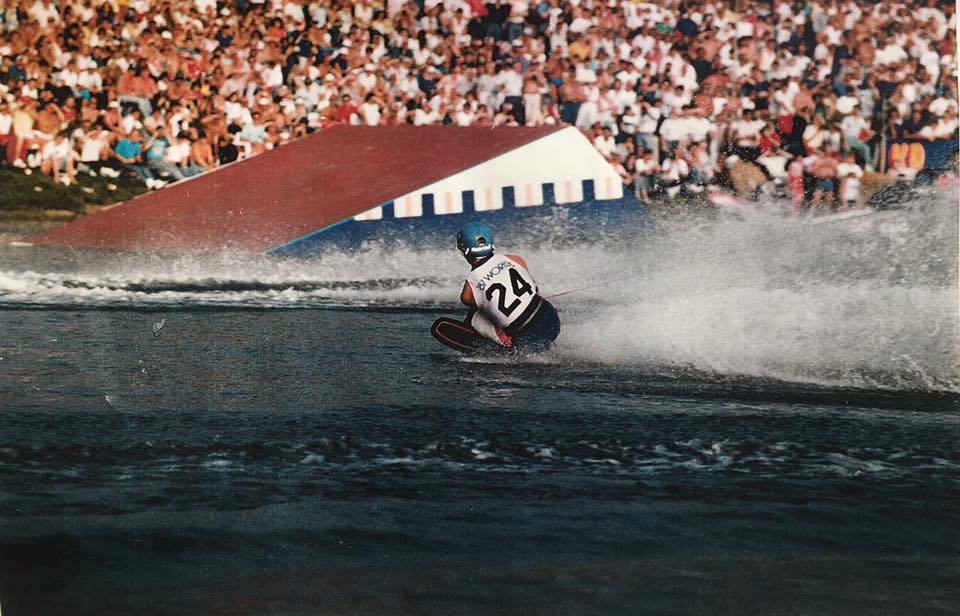
It remains one of the most iconic moments in World Championship history—and arguably the most clutch performance waterskiing has ever seen.
Heading into the 1987 Worlds at Thorpe Park, Sammy Duvall had already cemented his legacy with three consecutive world overall titles. He was also one of the sport’s first true professionals—a dominant jumper, a fixture of the Coors Light Pro Tour, and a household name in the U.S. And by ’87, his appetite for amateur competition was waning. This would be his final World Championship appearance.
His chief rival, though lesser known to many today, was a generational talent. Mick Neville, the unpretentious Aussie, had evolved from a world-class tricker into perhaps the most complete skier of his time. To this day, Neville remains the only man to win professional titles in all three events during the modern era. Think of him as a 1980s Joel Poland—funny accent, quiet swagger, and an allegiance to the crown.
Neville, still burning from a narrow defeat to Duvall two years earlier, came out swinging. He shocked pundits by claiming bronze in slalom, outskiing Pro Tour staples like Kris LaPoint and Carl Roberge, even edging Michael Kjellander in a runoff. Duvall, meanwhile, narrowly missed the slalom final—leaving the door open.
In tricks, Neville was unshakable, scoring over 9,000 points in both rounds to claim silver behind Patrice Martin. With two events down, the Australian held a commanding lead in overall.
Duvall, as expected, had the edge in jump. His opening-round 57.4-meter leap led the field—but it wasn’t enough to erase Neville’s advantage, and he sat in third overall heading into the final round, trailing both Neville and Roberge.
What followed was chaos. The men’s jump final became a frenetic game of musical chairs, reshuffling the leaderboard with every skier. First, a 20-year-old Kreg Llewellyn launched three meters farther than in the prelims to bump Duvall off the overall podium. Then Martin posted a huge personal best to leap into second. Neville followed with a nearly two-meter improvement, vaulting into the lead. When Roberge failed to respond, Duvall stood on the dock—last man out—sitting in fifth place.
More than 10,000 spectators lined the banks of Thorpe Park. Tension was thick enough to cut with a ski fin. Security was even required on the dock after another competitor’s belligerent father got into an altercation with Duvall’s sister Camille. The atmosphere was electric.
Duvall’s first jump? A massive 59.1 meters—the farthest ever at a World Championships. It earned him the jump gold, but still left him half a meter shy of Neville in overall. Then came jump number two. And then, history.
On his final jump, everything clicked. You could hear it in the snap of his skis, see it in the compression before the ramp, and feel it in the silence that hung as he took flight. When he landed—200 feet downcourse—everyone knew. Sammy had done it. With one final, flawless leap, he ripped the overall title from Neville’s grasp and closed the curtain on an undefeated career at the World Championships.
Neville, once again the runner-up, walked away with three medals from London. His eight total podiums remain the most of any man never to win gold.
But this was Duvall’s swan song. And he exited the World Championship stage exactly as he had entered it—undefeated, unmatched, and unshakable when it mattered most.
Key Moment: Sometimes pictures speak louder than words.
Winning Margin: 24 points. Equivalent to two buoys in slalom.
Contenders: Kim De Macedo (CAN) vs. Natalia Rumjantseva (RUS)
The 1993 World Championships—the first ever held in Asia—are best remembered for the dramatic team battle between the U.S. and Canada, ultimately decided by a razor-thin margin. But quietly, on the brackish, tidal waters of Singapore, another race was unfolding: a down-to-the-wire overall showdown between a Russian veteran and an unheralded Canadian upstart.
Natalia Rumjantseva, already a three-time world trick champion, dominated the preliminary rounds and looked poised to claim her first overall title. With Karen Bowkett Neville and Deena Brush Mapple both retired, Rumjantseva’s closest challenge was expected to come from Canada’s Judy McClintock Messer—a perennial podium finisher in overall.
In the trick final, Messer closed the gap slightly as top-seeded Rumjantseva slipped to second behind Britt Larsen. But it wasn’t enough to seriously threaten the lead. Then came the jump final—where everything changed.
First off the dock was Olga Pavlova of Belarus, a complete unknown to western audiences. She stunned the field by leapfrogging Messer and moving into second overall. Messer responded with a clutch three-meter improvement of her own, reclaiming second—but still sat a meter and a half shy of Rumjantseva’s mark.
Enter Kim De Macedo.
Just 21 years old and added to Team Canada primarily for depth, the public lake skier from Vancouver Island delivered the jump of her life: 41.9 meters, the longest of the day. The performance vaulted her from a distant fourth into striking range of the title. Rumjantseva, skiing next, watched as the young Canadian came within an infinitesimal 0.7 overall points of overtaking her. As the computers whirred, the Russian veteran responded with a half-meter improvement—to put any doubts to bed.
Rumjantseva took the title. De Macedo settled for silver. But in a performance few saw coming, the Canadian walk-on very nearly rewrote the story.
Key Moment: De Macedo’s breakout jump, which earned her an unexpected gold in the event and nearly the overall title. It also proved decisive in Canada’s historic win in the team competition.
Winning Margin: 24 points. Equivalent to 60 centimeters, or two feet, in jump.
Natalia Rumjantseva (2,678 points)
Kim De Macedo (2,654 points)
Judy McClintock Messer (2,602 points)
The Battle of Bogotá
7. Bogotá, Colombia 1973
Contenders: Sylvia Maurial (FRA) vs. Lisa St. John (USA)
In the thin mountain air of Bogotá, the 13th World Water Ski Championships delivered one of the sport’s purest overall duels. Lisa St. John, the fresh-faced high school grad from Redding, California, faced off against France’s Sylvie Maurial, a seasoned veteran fresh off an Olympic gold medal in jump at the 1972 Games in Munich. The two women were virtually inseparable across all three events—trading leads, medals, and momentum in one of the closest overall contests in tournament history.
St. John struck first, edging Maurial by a single buoy in the slalom preliminary. Maurial responded in the final, running the only 14.25m (28-off) pass of the tournament to claim slalom gold. In tricks, St. John led Maurial by just 80 points in the prelim and extended that margin slightly to 130 in the final. On the jump ramp, Maurial struck back again, out-leaping St. John by just half a meter to take silver behind the USA’s Liz Allan Shetter.
When the dust settled and the points were tallied, St. John came out a hair ahead.
It was a heartbreaking near-miss for Maurial, and a career-defining victory for St. John. But tragically, the triumph in Bogotá would be her last major one. Ten days later, she suffered a back injury at the California Cup that effectively ended her run at the top. Her career had been a meteoric rise—from child prodigy to world champion—all before her 19th birthday.
Key Moment: The slalom preliminary, where St. John edged Maurial by a single buoy. Under the scoring rules of the time, only preliminary scores counted toward the overall race. Maurial’s final-round surge earned her slalom gold, but it came a round too late.
Winning Margin: 17 points. Equivalent to a single buoy in slalom.
Lisa St. John (2,534 points)
Sylvia Maurial (2,516 points)
Barbara Cleveland (2,149 points)
Image: Jaret Llewellyn
6. Calgary, Canada 2009
Contenders: Javier Julio (ARG) vs. Jaret Llewellyn (CAN) vs. Adam Sedlmajer (CZE)
In one of the most open overall fields in World Championships history, the 2009 edition in Calgary felt like a roll of the dice. At least five men had a legitimate shot at the title, and by the end of the prelims, three remained—one a grizzled legend, one a fresh-faced prodigy, and a come-from-behind victory for the ages.
Jimmy Siemers stormed out early with a strong trick score, chased closely by Belarusian teammates Herman Beliakou and Oleg Deviatovski. But the slalom event shuffled the deck. Both Adam Sedlmajer and Javier Julio ran midway through 10.75m (39.5 off), putting themselves a full pass ahead of most of the field and narrowly missing the slalom finals in a stacked eight-way runoff for the last two spots.
Then came jump. And with it, chaos.
Jaret Llewellyn, competing in front of a hometown crowd, launched the farthest leap of the prelims to vault himself into serious contention. Siemers and Beliakou misfired, effectively ending their campaigns. When the dust settled, Sedlmajer—a then-unknown 22-year-old from the Czech Republic—held a narrow overall lead over the 38-year-old Llewellyn heading into the finals.
Enter Javier Julio, the emotive Argentinian, skiing with nothing to lose.
First off the dock in tricks—in a final he had only just scraped into—Julio threw down more than 1,000 points over his prelim total, enough to move within striking distance of Sedlmajer and Llewellyn and put himself firmly in the conversation. Then in jump, again as one of the lowest seeds, he found two extra meters on his earlier score and took the overall lead outright.
From there, it was a waiting game. Sedlmajer couldn’t improve. And then came Llewellyn, last off the dock. He needed 70.3 meters to clinch overall gold. Coincidentally, that was the exact distance needed to steal the jump title from Freddy Krueger as well. The crowd held its breath.
But it wasn’t to be. Llewellyn’s best mark was 68.5 meters. A remarkable performance, but not quite enough. Julio, after three consecutive podium finishes earlier in the decade, had finally secured the one title that had always eluded him—claiming Argentina’s first world title.
In a curious twist, the 2009 World Championships were one of only a handful between 2007 and 2013 that used an overall scoring formula widely criticized for overweighting slalom. Under the system used for the previous five decades—or the one in place today—Llewellyn would have won comfortably. Instead, it was Julio who claimed gold: a deserving champion on the day, but one whose victory came in part thanks to a scoring system that has since been scrapped.
Key Moment: The men’s jump prelims were carnage—an outbreak of crashes ruled multiple skiers out of the finals. Had they advanced, Julio’s 200-foot leap likely wouldn’t have made the cut, leaving him out of the final—and out of the race.
Winning Margin: 15 points. Equivalent to a toe slide.
Javier Julio (2,773 points)
Adam Sedlmajer (2,758 points)
Jaret Llewellyn (2,739 points)
Image: WATERSKI Magazine
5. Toulouse, France 1985
Contenders: Sammy Duvall (USA) vs. Mick Neville (AUS) vs. Carl Roberge (USA)
The 1985 World Championships delivered a classic—a three-way standoff in men’s overall that mirrored the broader team competition, where Australia pushed the undefeated Americans closer than ever to surrendering their grip on the world title. And at the center of it all were three men, each with a distinct style and background: The brash confidence of Duvall, the imposing presence of Roberge, and the suave precision of Neville.
Duvall and Roberge were mainstays on the Coors Light Pro Tour, sharpening their slalom and jump in the crucible of professional competition. Neville, by contrast, was a throwback—a tricker first and foremost, still to this day the most decorated trick skier in Moomba Masters history. A relative unknown to international audiences, he arrived in Toulouse determined to prove he could match the pros at their own game.
Roberge struck first, claiming bronze in slalom behind Bob LaPoint and Andy Mapple, finishing two buoys clear of both Duvall and Neville. But Neville countered in tricks, scoring nearly 9,000 points to take bronze behind Patrice Martin and Cory Pickos, putting daylight between himself and the two Americans.
Heading into the jump final, Duvall had the edge. His prelim jump was over 10 feet farther than either rival—and he held a commanding lead in the overall. But the final was anything but predictable.
Neville, the bottom seed, stunned the crowd with a 54-meter leap—3.5 meters farther than his prelim score—to match Duvall’s earlier mark and snatch the lead. Then Roberge responded with a jump 10 feet farther than his qualifying mark, leapfrogging Duvall into second.
Suddenly, the two-time defending champion was sitting in third. His first two jumps didn’t move the needle. It came down to his final attempt. Duvall needed something special—and delivered. On his third and final jump, he unleashed the patented Duvall kick and soared past 184 feet, just enough to reclaim the lead and secure an unprecedented third consecutive World overall title.
Key Moment: Though overshadowed in the jump final by the aforementioned trio, a 21-year-old former trick specialist from France was in the silver medal position when Neville left the dock—perhaps a quiet foreshadowing of the decade of dominance to come.
Winning Margin: 11 points. Equivalent to one foot, or 30 centimeters, in jump.
Contenders: Aliaksandra Danisheuskaya (BLR) vs. Hanna Straltsova (BLR)
For a country that has quietly produced more elite overall skiers than any other in the past two decades, it was only fitting that the most dramatic battle of recent times came down to two Belarusians: Aliaksandra Danisheuskaya and Hanna Straltsova.
Danisheuskaya struck first, running deep into 11.25m (38 off) in slalom to take the early lead. But Straltsova punched back in jump, claiming a 2.6-meter (9-foot) advantage to finish the prelims with a commanding overall lead. When the dust settled on the elimination round, she held a 100-point lead over Canada’s Paige Rini in second, while Danisheuskaya sat nearly 200 points off the pace in third.
Then came tricks—and with it, a seismic shift.
Danisheuskaya had only just squeaked into the final, grabbing the last qualifying spot by just 20 points. But when the opportunity presented itself, she seized it. Upping her prelim score by nearly 1,000 points, she vaulted into the overall lead, narrowly ahead of Straltsova.
When Rini, Straltsova, and pre-event favorite Giannina Bonnemann all failed to improve in the final, it came down to jump.
Danisheuskaya, skiing from the middle of the pack, tacked on another 1.4 meters (5 feet) to her previous mark, extending her narrow lead. That left Straltsova—silver medalist in both overall and jump two years earlier—with one more chance. She needed 56.2 meters to claim gold.
She came heartbreakingly close. Her best jump, 55.5 meters (182 feet), was good enough for silver—for the fourth time across the 2019 and 2021 World Championships—but not quite enough to catch her teammate.
Danisheuskaya, who had not stood on the podium in any of the individual events, walked away with gold in the one that mattered most.
It would mark the final time either woman would represent Belarus. Four months later, the country was suspended from IWWF competition following its involvement in the invasion of Ukraine. Both Danisheuskaya and Straltsova would continue their careers under the U.S. flag—claiming medals, and in Straltsova’s case, dual golds—at the next World Championships.
Key Moment: Giannina Bonnemann, the world’s top-ranked overall skier entering the tournament, fell early on toes in both rounds of tricks. Had she scored anywhere near her best, she would have cruised to the title.
Winning Margin: 8 points. Only half a buoy in slalom.
Aliaksandra Danisheuskaya (2,574 points)
Hanna Straltsova (2,565 points)
Paige Rini (2,412 points)
Image: WATERSKI Magazine
3. West Palm Beach, United States 1989
Contenders: Patrice Martin (FRA) vs. Carl Roberge (USA)
In 1989, the World Championships returned to U.S. soil for the first time in 28 years, landing at Okeeheelee Park in West Palm Beach for what turned out to be a blockbuster event. The sport was arguably at its peak in American popularity—major sponsors like Pepsi and Coors Light were on board, and more than 15,000 spectators lined the banks for the final day of competition. The headline drama? A gripping men’s overall showdown between established star Carl Roberge and France’s relentless technician, Patrice Martin.
Roberge, 25, had long been the heir apparent—Sammy Duvall’s understudy, a three-time overall bronze medalist, and now the anchor of Team USA. He entered the event ranked number one in the world, with pro tour titles and a season championship already under his belt. Martin, meanwhile, had three world trick titles to his name and was steadily evolving into a true three-event threat. After flirting with the podium in both 1985 and 1987, the Frenchman arrived in Florida looking for more than tricks gold—he wanted the overall.
Roberge opened strong in slalom, his best event, matching Andy Mapple’s championship record of 3 @ 10.75m (39.5 off) to earn silver and establish a full-pass advantage over Martin. But Martin fired back in tricks with a tournament-record 10,780 in the prelims, more than offsetting Roberge’s edge. After the jump prelims, Roberge clung to a razor-thin lead overall—setting the stage for a winner-take-all final.
The jump event, Martin’s weakest, saw him go first. Le Petit Prince barely improved on his prelim mark, landing at 53.5 meters—just enough to inch into the lead and apply pressure. Roberge, one of the top jumpers in the world, needed just 56.7 meters (186 feet)—well short of his personal best and comfortably within his range.
But he never found it.
Three eerily similar jumps, each a little back on the ramp, left him stranded six points short. The crowd watched in stunned silence as the scoreboard confirmed the result: Martin, by the slimmest of margins.
Four years earlier in Toulouse, Martin had declared his intention to win the overall title. Now, on U.S. turf, he finally did—kicking off one of the greatest winning streaks in the history of the sport.
Key Moment: Trick judging at these championships was widely questioned—Cory Pickos called it “nearly incompetent,” and even medalists were surprised by their high scores. Would a stricter panel have swung the overall result the other way?
Winning Margin: 6 points. Less then a foot, a quarter meter, in jump.
Contenders: Jean-Marie Muller (FRA) vs. Bruno Zaccardi (ITA)
The VII World Water Ski Championship at Long Beach was a landmark event for the sport—both in spectacle and competition. It featured the most extensive television coverage water skiing had ever received, broadcast live to homes across the U.S., and drew thousands of spectators. The mile-and-a-quarter Marine Stadium, built for the 1932 Olympics, once again hosted a major international competition. Banners from 19 nations rippled in the breeze as ski parades, chorus lines, and a battery of television cameras surrounded an event marked by style, tension, and a shifting global balance of power.
Tournament skiing in 1961 bore little resemblance to today’s format. Men ran the slalom course at 60 kph (37.3 mph), ramp tricks were still common, and jumpers were judged not just on distance, but on style. In this hybrid of sport and performance, it was 18-year-old Italian Bruno Zaccardi who emerged victorious in the overall standings—though only just.
Zaccardi’s path to the title was a study in consistency. A middling slalom performance saw him qualify for the final but finish only seventh. But he bounced back in the trick and jump events, collecting bronze medals in both. Muller, the French standout, struck gold in tricks—France’s signature event even then—and matched Zaccardi closely in slalom, finishing just one buoy short. But the Italian’s advantage on the ramp proved decisive.
American hopes rested on defending champion Chuck Stearns, but an ankle injury sustained at the Nationals limited his impact. Though U.S. athletes won three of the eight gold medals and claimed the team title, Zaccardi’s triumph marked a turning point—the rise of Europe on the world stage. Coming off three consecutive European overall titles, his win in Long Beach confirmed his global credentials and hinted at a more competitive, international era ahead.
Key Moment: With a fierce cut and a forward-leaning air form, Zaccardi launched a personal best 42.6-meter (140-foot) leap that brought the crowd to its feet and sent his countrymen into hysterics before the distance was even announced. Though not the longest jump of the event—American Larry Penacho flew 45.7 meters—it was enough to secure Zaccardi’s historic overall win.
Winning Margin: 4 points—equivalent to a two-ski side-slide, something you would actually have seen at the ’61 Worlds.
Bruno Zaccardi (2,667 points)
Jean-Marie Muller (2,663 points)
A.J. Orsi, Jr. (2,547 points)
The tightest overall battle in World Championships history
1. Villach, Austria 1991
Contenders: Jaret Llewellyn (CAN) vs. Kreg Llewellyn (CAN) vs. Patrice Martin (FRA)
Patrice Martin entered the 1991 World Championships as the reigning overall champion, fresh off a dramatic victory over Carl Roberge two years earlier. Now 27, the French trick prodigy turned three-event star was at the peak of his powers. But with the 1980s titans fading, a new generation was knocking—including two brothers from rural Alberta, of all places.
The prelims set the tone. Martin emerged with a narrow lead, just 30 points ahead of 21-year-old Jaret Llewellyn, who had thrown himself into contention with a massive jump score. In the slalom finals, Martin—qualifying as the bottom seed—picked up two extra buoys to widen the gap. Then came tricks, where he claimed yet another world title—his fourth in the event—and solidified his lead.
But the biggest mover was Australia’s Mick Neville. The last of the old guard in overall, Neville delivered a huge final-round score to climb within striking distance of the title. Martin, having failed to make the jump final, could only sit and watch.
The numbers were clear. Martin led by 60 points over Jaret, and 90 over Neville. But it was the elder Llewellyn—Kreg—who turned the event on its head.
Skiing third off the dock, Kreg was known primarily for his tricks, where he’d picked up bronze earlier in the tournament—jumping was the weakest of his three events. But on this day, he uncorked the performance of his life, adding nearly four meters to his prelim mark and launching himself from fourth place to the cusp of an improbable world title. The result was so tight that when the spray settled, no one was sure who had won.
When the computers finished their work, it was Martin clinging to the lead by 0.2 overall points.
Neville, needing just two more meters, couldn’t find it. And Jaret, requiring the first 60-meter jump of his career, came up short. Martin, unshakable once again, had done just enough to defend his title. It would go down as the closest overall finish in the history of the World Championships.
Key Moment: Kreg’s massive leap—it earned him the jump bronze medal, and along with compatriot Jim Clunie’s finals performance, helped Team Canada secure its historic first-ever team victory. But it was 10 centimeters shy of the mark he needed for overall gold.
Winning Margin: 0.2 points. Equivalent to, well, nothing. Just enough for heartbreak.
CALGARY, Alberta — It’s not official, but it might as well be.
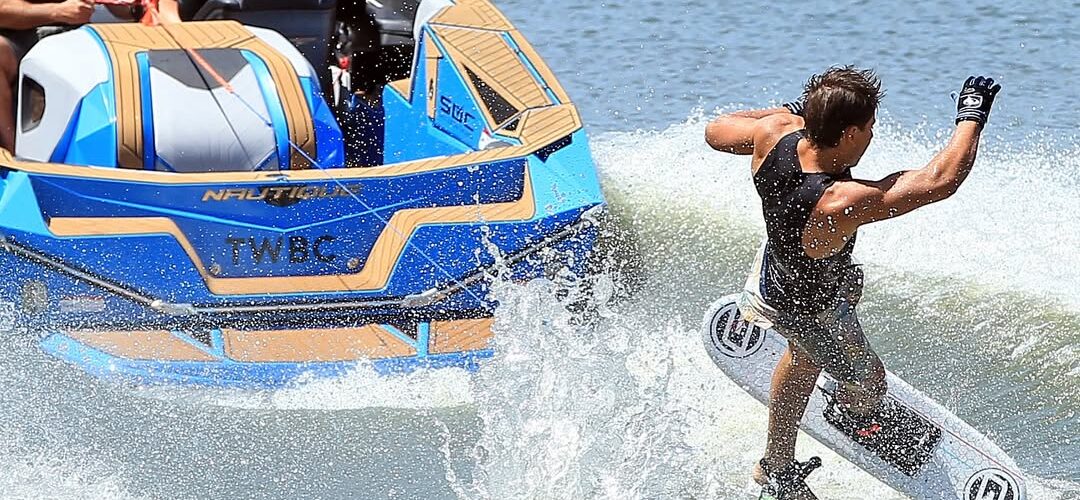
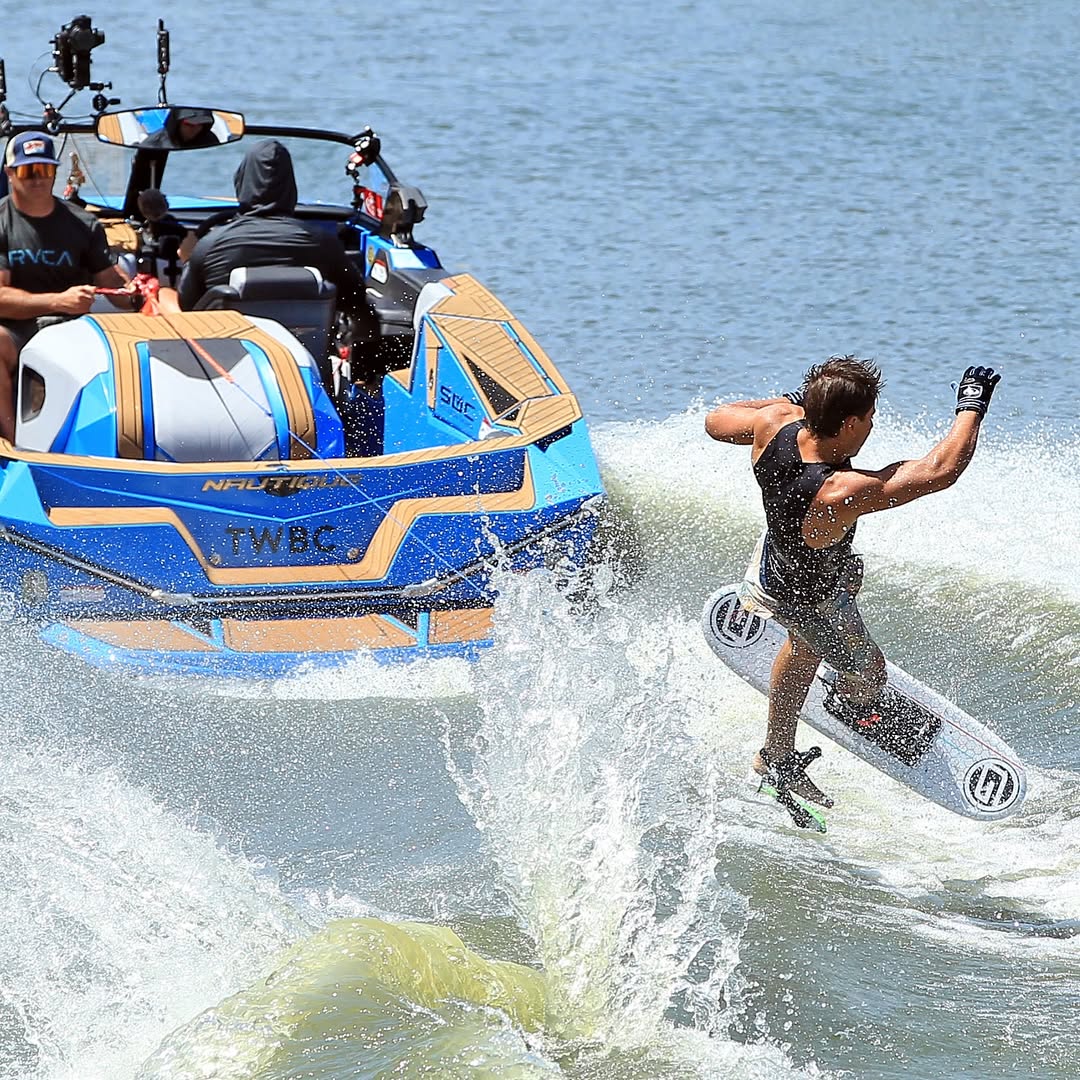
Speaking during an episode of the TWBC Podcast last weekend at the Under-21 World Championships, IWWF President José Antonio Pérez Priego all but confirmed that Nautique’s time as the federation’s official towboat partner is over.
“Our relationship with Nautique will end at the end of the year,” Pérez said. “They have been a great partner to us… but we’re in the process of moving on.”
While Pérez stopped short of naming the successor, his comments added fuel to long-circulating rumors that Malibu Boats is set to take over the coveted contract starting in 2026.
When pressed directly about whether Nautique would continue, Pérez replied, “Nothing is cast in stone. It could change, but at this moment it doesn’t look like that.”
The IWWF issued a tender earlier this year to six major boat manufacturers, receiving three bids—among them, it’s widely assumed, Malibu, MasterCraft, and Nautique. According to Pérez, the bids were reviewed not only for boat performance but also for financial support, global reach, and logistical capacity across all disciplines, including wakesports.
All boats under consideration have already been approved by the IWWF Tournament Council, Pérez said, and an announcement will come “in the next few weeks.” But the federation will do no more than announce its next partner until Nautique’s contract expires on December 31.
“For us, honoring our commitments is extremely important,” Pérez added. “We will not make any other comments until the first of next year.”
Despite the formality of that timeline, the writing seems to be on the wall. And for many within the sport, it’s the worst-kept secret on the circuit: Malibu is back.
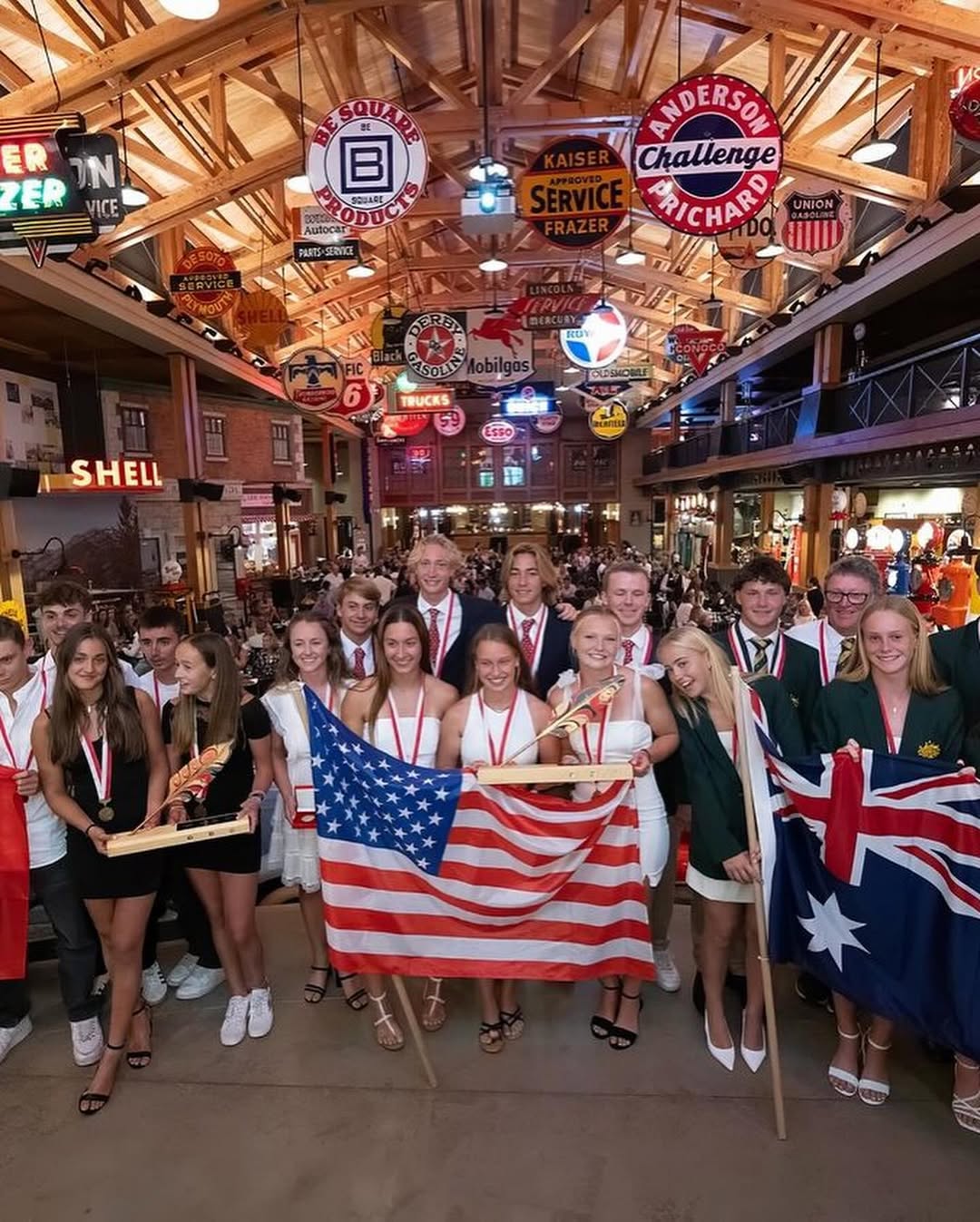
CALGARY, Alberta — The Under-21 World Waterski Championships have long served as the bridge between promise and prominence, a proving ground where rising stars and already-seasoned professionals collide. But even by its high standards, the 2025 edition—held at the picturesque Predator Bay Water Ski Club just outside Calgary—delivered a week of soaring highs, crushing lows, and a final day that left the waters of Alberta rippling with both celebration and controversy.
This was an event marked by breakout performances and premature heartbreak, where future world champions were minted and the sport’s deeper fissures were exposed for all to see.
Before the finals even began, the undercurrents of chaos were already pulling the field in unpredictable directions. In men’s tricks, a rash of early falls upended the leaderboard and torpedoed the hopes of several title contenders. Chile’s Matias Gonzalez, one of the pre-event favorites, fell early on his toe pass—then tried to mount a Patrice Martin-style resurrection. It wasn’t enough. His exit took with it any hopes of challenging Jake Abelson for the title.
By the end of qualifying, Team USA had built an insurmountable lead in the team standings, while Germany’s Tim Wild—still riding the momentum from his historic sweep at the Junior Masters—put the men’s overall title virtually out of reach before the final round even began.
With forecasts shifting, organizers moved the jump finals to the front of the schedule—and the drama began immediately.
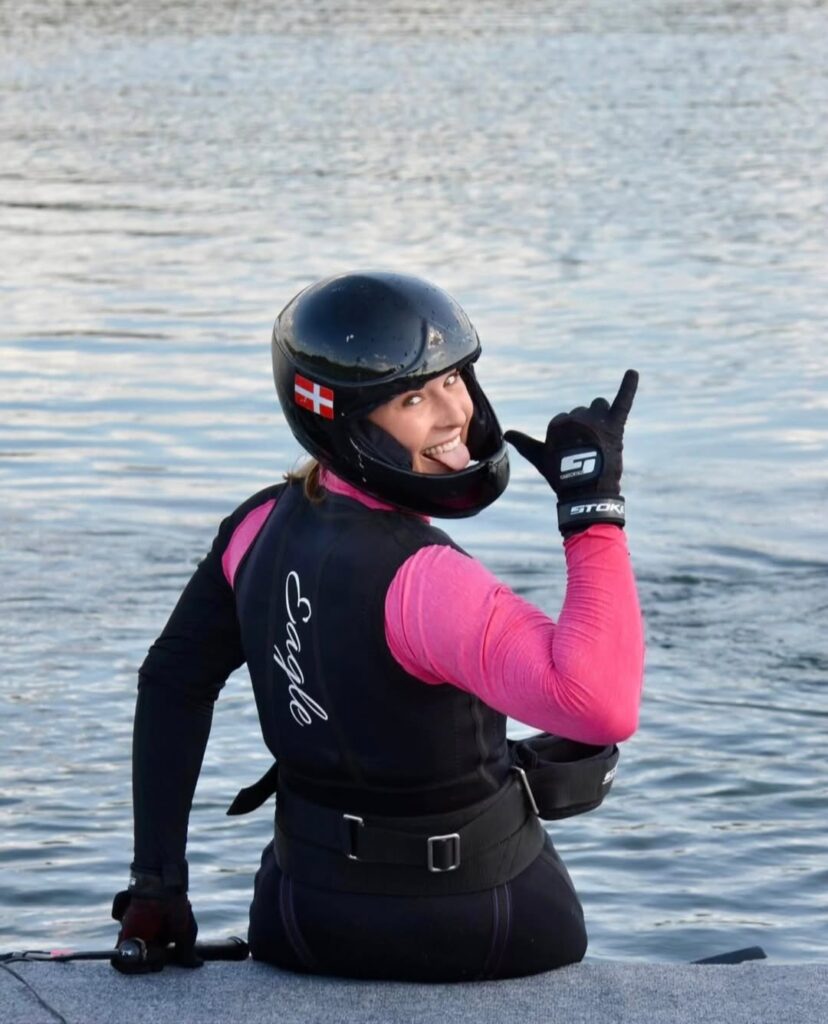
The women’s event mirrored last year’s Under-17 showdown, held at the same site. Denmark’s Maise Jacobsen, the reigning U17 world champion, went over 48 meters to stake her claim early. Then came Australia’s Kristy Appleton, launching a huge 48.7-meter (160-foot) jump on her final attempt to take the lead.
But what followed was a string of brutal setbacks. Austria’s Leona Berner took a violent out-the-front on her opening jump—only to have competitors rally around her, offering skis and helping switch bindings in a stirring act of sportsmanship. Her teammate, Lili Steiner, another podium hopeful, landed awkwardly and was forced to withdraw injured. Canada’s Nellie Allard secured bronze after a new personal best, but it was Appleton who stood tallest, earning her first world jump title in stunning fashion.
The men’s final followed a similar arc. With several top seeds falling short of their qualifying marks, it was France’s Antoine Morin, skiing from the middle of the pack, who set the distance to beat: a clean, composed 60.6-meter leap—his first time ever clearing 60 meters.
Nobody else could match it. Wild locked in bronze to seal his overall title. Italy’s Florian Parth, returning to form after a quiet season, came closest but had to settle for silver. The top seed, American Gage Kacprowicz, dislocated his shoulder after crashing on his opening jump and was helped from the water. In the week’s most unexpected result, Antoine Morin became a world champion—despite not featuring on most pre-event radar screens.
In women’s slalom, South America, the continent that has claimed the last three Under-17 world titles, continued its rise. Skiers from Chile and Peru claimed the top four spots in the final, culminating in a dramatic three-way runoff between Christiana De Osma, Daniela Kretschmer, and Trinidad Espinal. The reigning Under-17 World Champion, De Osma, emerged victorious—running into 10.75m (39.5’ off) to seal the title.
The men’s slalom final was perhaps the most anticipated event of the tournament. But what was expected to be a shootout at 10.25m (41’ off) turned into a survival test, with skier after skier falling victim to the 10.75m line.
Mexico’s Jaime Palomino was the first to break through, posting 1.25 at 10.25m to set the pace. Australia’s Lucas Cornale looked confident through 10.75m but failed to get out of the gates on 10.25m. Then, reigning Under-17 World Champion Jaeden Eade pulled up narrow at 10.75m and fell short.
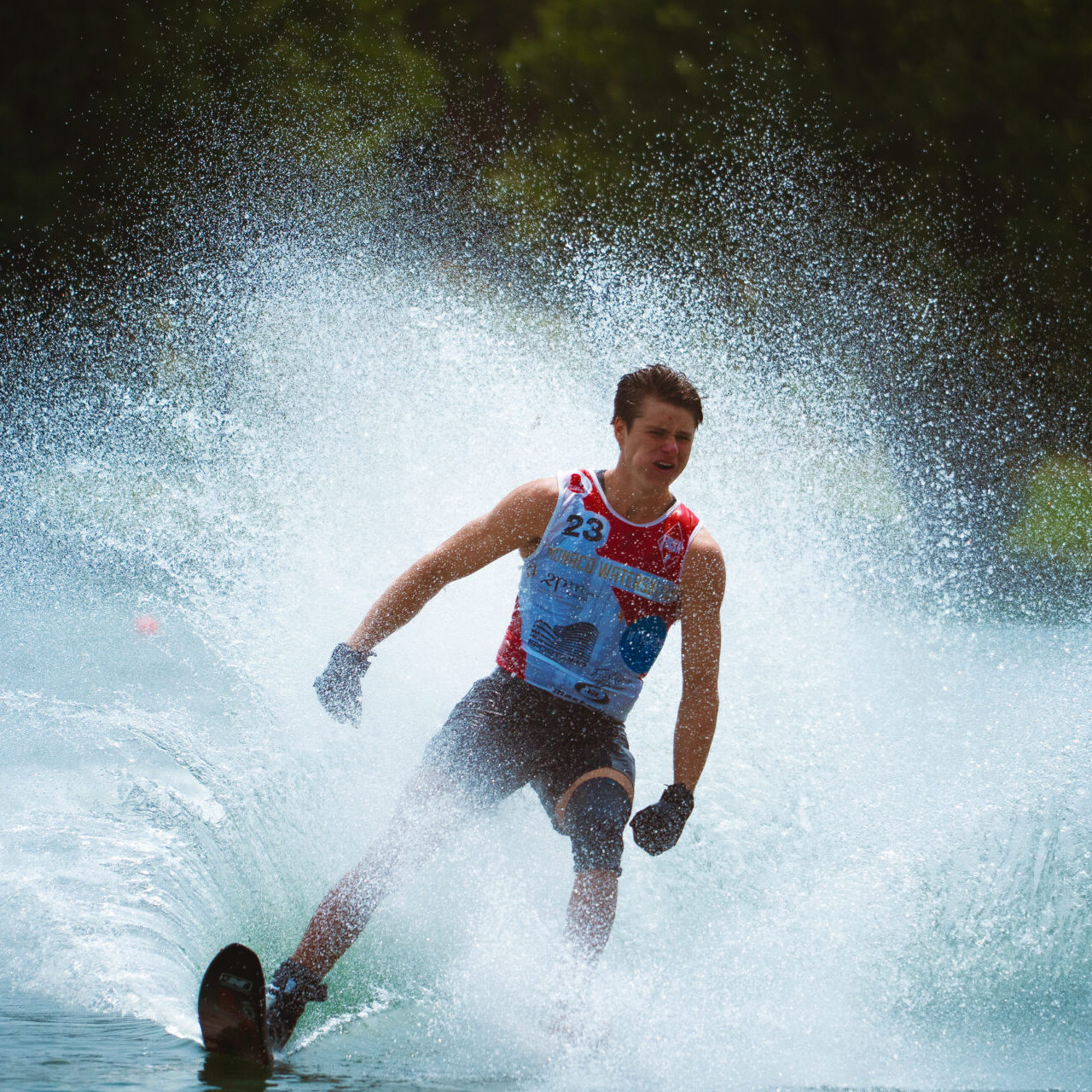
It was left to Canadian Charlie Ross, defending champion and home-country favorite, to finish the job. He didn’t disappoint. With measured aggression and trademark composure, Ross tied Will Asher’s 22-year-old World Championships record of 3@10.25m—matching the longest-standing mark in the sport’s history and becoming a two-time Under-21 World Slalom Champion.
The tournament ended with fireworks, and not just from the skiing.
Emma Davis of Team USA held a slim lead in the overall standings going into the trick final, with Alexia Abelson still within striking distance. But an off day in toes dashed Abelson’s chances in both tricks and overall.
Then came a trio of standout runs: Canada’s Hannah Stopnicki, Colombia’s Daniela Verswyvel, and Canada’s Olivia Chute all delivered strong performances. But when the scores dropped, controversy erupted.
Verswyvel’s reverse mobe—a pivotal 800-point trick—was unanimously ruled no-credit by the judging panel, dropping her to second behind Stopnicki. The TWBC live chat exploded with confusion and outrage. Elite skiers including Patricio Font and Neilly Ross voiced disbelief. Protests were lodged. Videos scrutinized. The call stood.
There’s an old adage in sport: the best judges are the ones you never notice. When they do their job well, the athletes—and not the adjudication—are the story. By that measure, the trick judging at this World Championships left much to be desired. This time, it was the judges, not the tricks, who stole the spotlight.
“I think that’s the discussion,” Gonzalez said on the TWBC broadcast. “In my opinion, it was pretty good—it is credit.”
What followed was a viral groundswell of support for Verswyvel, with her father sharing an emotional comment:
“After years of hard work and dedication, those who are supposed to be impartial lacked the humility to admit a mistake… Even if others refused to acknowledge it, the true champion proved it in the competition.”
But it’s worth stating clearly: Hannah Stopnicki is a phenomenal trick skier. She could easily have won with no drama had she landed her final flip. In a moment bigger than either athlete, Stopnicki and Verswyvel embraced after the final—two competitors in tears, caught in a storm they didn’t ask for.
“Honestly my toe run felt so good,” Stopnicki said. “I know the judges are looking at everything extra carefully today, so I was just trying to be as clean as I could be and stay on top of the water.”
In contrast, the men’s trick final was relatively sedate. With Mati Gonzalez relegated to the commentary box, only France’s Tristan Duplan-Fribourg looked like a potential challenger. The Frenchman earned plaudits with a gritty, chaotic, improvisational run that won over the crowd—but Jake Abelson was untouchable.
His 12,100-point performance set a new Under-21 World Championships record and added yet another accolade to what’s already one of the most decorated junior careers in water skiing history.
While the event featured standout performances across all disciplines, the shallow depth of the women’s field was a concerning undercurrent. The cutoffs to reach finals in slalom, tricks, and jump were among the lowest in tournament history—raising questions about development pipelines, participation, and long-term sustainability on the women’s side of elite water skiing.
But for one week in Calgary, the next generation took center stage—some rising, some falling, all reminding us why this sport, at its best, is one of the most beautiful and brutal in the world.
As the World Championships approach, a quiet but consequential debate is coming to a head: how much is a trick really worth?
At stake is the very structure of trick skiing’s scoring system—a rigid points table that hasn’t fundamentally changed in more than two decades. For athletes like world record holder Joel Poland, that’s no longer acceptable.
“The point values for high-difficulty flips are crippling trick skiing,” Poland told the IWWF Water Ski Council. “It’s limiting what athletes can do.”
Poland should know. Two of his most innovative tricks—the 900-point “UFO” and the 950-point “Matrix”—were recently approved for competition but, in his own words, are “tricks you’ll never see in a tournament” unless something changes. He’s not alone in that sentiment.
A Broken Balance
Trick skiing is unique among board sports: every maneuver has a fixed value, from 40-point surface turns to 950-point flips. The goal is objective scoring. The result? Homogeny.
“Right now the trick point values reward doing more tricks versus doing harder tricks,” said Brooks Wilson on the GrabMatters podcast. “You can get more tricks in because you’re going fast. It’s a speed game.”
That tradeoff—efficiency over difficulty—has shaped elite competition. Instead of variety, most skiers now converge on the same sequence of reliable, high-value tricks.
“We want to see variation,” added Freddie Winter. “Instead, everyone’s forced to do the same kind of runs.”
The Repetition Problem
An analysis of over 100 score sheets at the 2023 World Championships shows just how narrow the tricking landscape has become.
Among hand tricks, backflips dominate. The half twist (BFLB), worth 750 points, appeared in every finalist’s run—typically paired with its reverse. In contrast, the only other trick worth 750, the ski-line seven back, was attempted just once.
The mobe (BFLBB), worth 800 points, was nearly as common, performed by three-quarters of the finalists—far outpacing other tricks in its point range. The basic backflip remains a staple, especially among intermediate-level skiers, tricks worth comparable points, such as W7B, SLBB, and SL5s, were attempted much less often and with much lower success.
Toe tricks show a similar pattern. Toe back-to-backs (TBB) are ubiquitous, appearing in 112 of 117 toe runs (the exceptions were early falls). Toe wake back-to-backs were also incredibly common; the regular and its reverse featured in every single finalist’s toe run. Toe wake tricks worth comparable points, such as TWO or TWLB, were less common, although some of this stems from them not having an easy reverse.
Misaligned Incentives
Not all frequently performed tricks are necessarily overvalued—some, like backflips, may be common because they serve as foundational building blocks for higher-scoring flips. And in toe runs, the inherent physical limitations naturally result in a narrower pool of viable tricks and sequences.
But some mismatches are hard to ignore. Why does the toe wake back-to-back (TWBB) score more than the toe wake 360 (TWO), despite similar difficulty? Why is the mobe front-to-front, attempted only three times at the tournament, valued the same as the standard mobe, which was performed over 100 times?
Take the half cab (BFLF) as another example. Worth 550 points, it was performed just once for every three half twists (BFLB), valued at 750. While it may be true that landing in the back is more difficult than taking off in the back, does that justify a 200-point gap? If so, why are half twists so common—and half cabs so rare?
Innovation Without Reward
In early 2024, the IWWF approved four new flips, including Clarens Lavau’s “Super Half Twist” and Poland’s “UFO.” But even with official approval, no one expects them to appear in major tournaments.
Poland’s “Matrix”—a frontflip with a ski-line 540 from the back position—was awarded 950 points. That’s just 150 more than a basic frontflip, and identical in value to the established super-mobe-five.
“There’s a point where you go, well, the slam it takes to learn this trick is just not going to be worth the extra 50 points,” said Poland. “I was trying to do a super-mobe-seven—a backflip 720 over the rope—but there’s not much point because they’ve made it very clear no trick can be worth more than 1,000 points.”
The scoring ceiling isn’t just discouraging; it’s actively stifling innovation.
“I tried three of them,” Poland added, “and they were the worst crashes of my life. I was like, ‘I’m never gonna try that again.’”
Without a meaningful scoring incentive, tricks like the Matrix may never make it into competition. Even Poland, one of the sport’s most creative skiers, is reconsidering the cost.
“You’re limiting creativity and progression,” said Winter. “Do we want to see the same runs forever—just a bit faster?”
A System Stuck in Neutral
The IWWF knows the problem exists. In a memo last year, Council Chair Candido Moz urged the Tricks Working Group to bring forward point values that better reflect “true difficulty levels.”
But attempts at reform have stalled for years.
“The skiers could never agree on point values,” Moz has explained. “So IWWF never received a proposal.”
That may change this September. A restructured Tricks Working Group, which includes Poland as a member, is expected to present formal recommendations during the World Championships in Recetto.
Time for a Reset?
Poland is done waiting. “In my opinion, [the current system] is crippling trick and limiting the athletes,” he said. He plans to stay vocal in the lead-up to Recetto.
Winter sees trick skiing as the discipline with the most untapped potential. “Right now, it’s just not reaching it,” he said. “But it could.”
The current system rewards repetition and safety. A modernized score table—one that truly values difficulty and risk—could transform the sport overnight.
“You’ve got to blow it up to build it up,” said Wilson.
The World Championships run August 27–31 in Recetto, Italy. A formal review of trick point proposals is expected to take place at the IWWF Water Ski Council meeting during the event.
CALGARY, Alberta — The future of waterskiing descends on Canada this week.
The 2025 IWWF Under-21 World Championships kick off at Calgary’s stories Predator Bay Water Ski Club. Host of the 2009 World Championships and a string of pro events since, Predator Bay is the kind of site that inspires career-best performances — and with the under-17 world titles just completed and over-35 event still to come, this marks the middle leg of a rare triple header of World Championships.
First held in 2003, the Under-21 Worlds has become a rite of passage — a proving ground where prodigies stake their claim and new names break through. With scores climbing higher than ever across all three events, this year’s championship promises more than just titles. It’s a glimpse into what comes next.
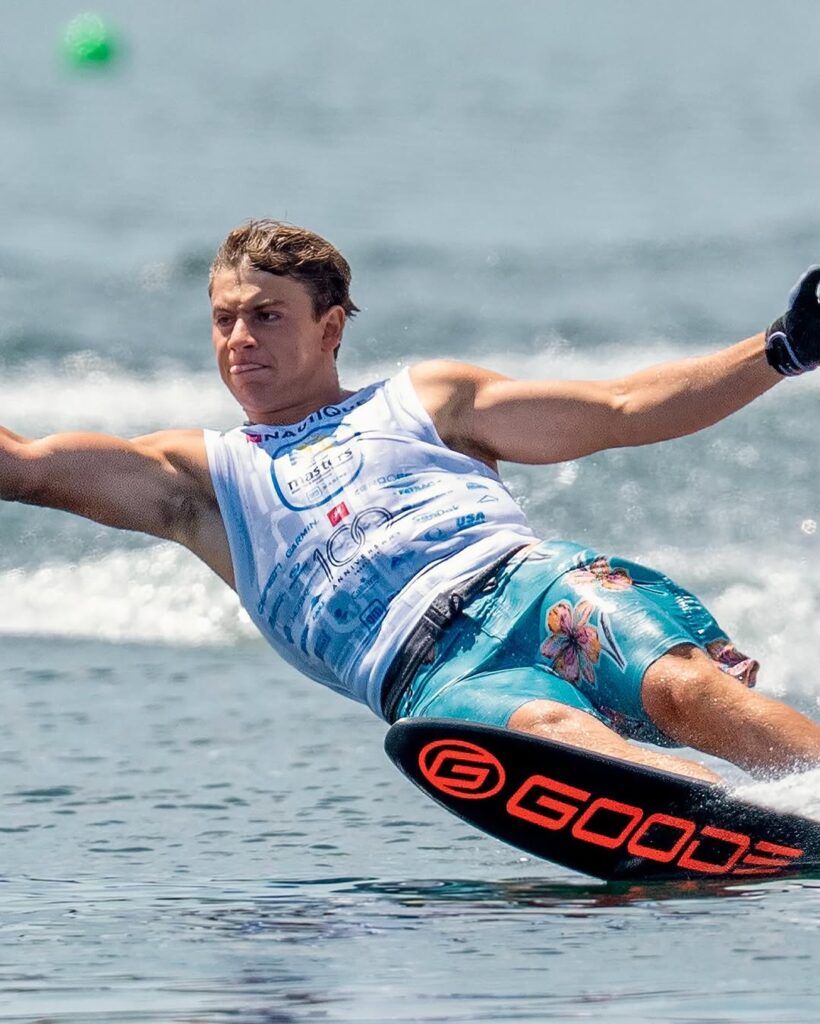
For all the headlines Jake Abelson has made as a trick skier — including becoming the first to eclipse 13,000 points — he arrives in Calgary as the frontrunner in men’s overall.
That might catch some off guard. But to those paying attention, the 17-year-old American has quietly rounded out his game. He runs deep into 11.25m (38’ off) in slalom, and consistently sails past 55 meters (180 feet) on the jump ramp. With reigning World No. 1 Martin Labra sidelined by injury, the path is open — and Jake has the horsepower to take it all.
He’s already swept trick titles at Moomba, the U.S. Masters, and BOTASKI ProAm this season. Now he’s chasing something bigger: a second consecutive world overall title, following his Under-17 double gold from last year.
No junior has ever jumped farther than Maise Jacobsen. Not even Jacinta Carroll.
At just 17, the Danish phenom holds the junior world jump record at a jaw-dropping 49.1 meters (161 feet), and she returns to the same Calgary site where she claimed gold at last year’s Under-17 World Championships.
She’s still skiing on the lower speed and ramp height of the Under-17 division, but that hasn’t stopped her from topping the Under-21 rankings. Her smooth style and fearless approach make her a favorite — not just for gold, but to dominate for years to come.
Charlie Ross is the only reigning Under-21 World Champion returning this week — and with two pro wins already in 2025, the Canadian is better than ever.
He’s the latest skier to join the exclusive 10.25m (41’ off) club and has been a fixture on pro podiums all season. But the real edge? He’s skiing in front of a home crowd, and few will match his hunger to repeat.
A technical, deeply analytical skier, Ross has always had the tools. Now, he’s putting it all together.
The younger Abelson sibling is quickly forging a legacy of her own. The reigning Junior Masters and U17 world champ in tricks, Lexi recently broke 9,000 points for the first time and scored her first pro podium in overall.
At just 15, she’s among the youngest in the field—but don’t be surprised if she’s vying for titles across multiple events.
Straight out of winter in Australia, Lucas Cornale lands in Calgary as the wildcard no one wants to face.
He made history last season as the youngest man in decades to win a pro slalom title, and his raw, aggressive style makes him one of the sport’s most exciting talents. With only a handful of tournament starts this year, he’s a bit of a mystery — but don’t mistake that for inconsistency.
His matchup with Charlie Ross could define this championship.
Austria’s rising star, Steiner was the linchpin of their shock University Worlds team victory. Now, she enters Calgary as the favorite in women’s overall and a serious contender in both slalom and jump.
Steiner has a string of podiums under her belt, including on the WWS Overall Tour, U.S. Collegiate Nationals, and, most recently, the University World Championships, where she finished runner up in jump and overall.
Jake Abelson might be the biggest name, but Matias Gonzalez is every bit his equal in tricks — and has the hardware to prove it.
Gonzalez beat Abelson for Under-17 world gold last year and came within a whisker of winning the Under-21 title last time out. He also holds the highest trick score ever recorded in a pro event, proving he delivers when it matters.
He’s been just behind Abelson at every turn in 2025 — but this could be the week he flips the script.
Still technically Under-17 eligible, De Osma enters these championships as the world No. 1 in slalom.
The Peruvian star has claimed junior victories at Moomba and the U.S. Masters this season, and scored her first professional podium in Melbourne with a bronze. She’s known for handling pressure and tough conditions, and runs deep into 10.75m (39.5’ off) with remarkable consistency.
She’s already the Under-17 World Champion. A second title — at the U21 level — would be a fitting next step.
The biggest dark horse of these Championships, Florian Parth has only jumped in one tournament in 2024, during which he passed on five out of six jumps, recording only a single score of a paltry 41 meters.
But just last year, he stood on the podium at the U.S. Masters and was the No. 1 ranked Under-21 jumper in the world.
When he’s on, no one jumps farther.
He also has serious slalom chops, having run into 10.25m (41’ off) multiple times. If he finds form in Calgary, he could blow this tournament wide open.
POLK CITY, Fla. — It’s official: trick skiing has a new benchmark, and Jake Abelson’s name is etched beside it.
The International Waterski & Wakeboard Federation (IWWF) confirmed today that Abelson’s 13,020-point performance at the Bill Wenner Memorial Record tournament on June 14 has been ratified as a new men’s world trick record.
The 17-year-old American becomes the first skier in history to break the 13,000-point barrier, surpassing his own previous record of 12,970 set last year.
“It’s always been my goal to trick 13,000, if it was even possible,” Abelson said on USA Water Ski’s Hit It! podcast. “After my 12,970, I realized that it could be done if I had the best round—and I was able to put the hand run and the toe run together.”
He did. And then some.
Abelson actually went higher in the following round of the same event, tricking a jaw-dropping 13,270 points. But that score was ultimately disallowed by the IWWF record review panel after his wake-seven-front (W7F) was ruled not credit. The panel reduced the score to 13,010 for ranking purposes, leaving the 13,020 from Round 1 as the new official world record.
Still, it’s a monumental achievement—24 years in the making.
The men’s trick world record has long moved at a glacial pace. In the 18 years following Nicolas Le Forestier’s 2004 mark, it was broken just once. The stagnation gave trick skiing a reputation as the most frozen of the three disciplines.
That changed in 2022, when Patricio Font jump-started a new era with a flurry of record-setting performances. Now, Abelson has taken that torch and launched it into uncharted territory.
His 13,020 wasn’t a fluke. It was the culmination of years of work—gymnastics-level strength, surgical timing, and tournament composure.
The hand pass opens with a blistering sequence of high-difficulty flips. At the bitter end of the 20-second window—when most skiers are clinging to their last breath—Abelson unleashes his most difficult combo: ski-line-seven-back-to-back into wake-seven-front. Together, those two tricks are worth 1,550 points and demand perfect placement and timing.
“Really the only place for it is at the end of the run,” Abelson said. “But at that time, I’m pretty tired, pretty gassed. So learning to do that while tired was a real challenge.”
That final sequence was the key. Without it, 13,000 wasn’t possible.
With the record now ratified, the obvious question follows: Is 14,000 next?
“People keep asking me that,” Abelson said, laughing. “I’m not brainstorming that point yet.” For now, the teenager says he’s focused on taking things “one trick at a time.”
He’s right to be cautious. Trick skiing is a race against the clock—20 seconds, no more. As tricks become more difficult, the challenge isn’t just execution. It’s speed, efficiency, and composure. And that means the margin for further progress is slim.
But Abelson isn’t done yet.
He’ll represent Team USA later this month at the IWWF World Under-21 Championships in Calgary, followed by the IWWF World Open Championships in Recetto, Italy, this August.
And it’s not just in trick. Abelson was recently named to the U.S. team in overall, a nod to his emergence as one of the sport’s most complete athletes.
His story is still in its early chapters. But already, the impact is clear.
Jake Abelson didn’t just break a world record—he shattered a mental barrier. And maybe a generational one too.
The California ProAm returns for its 23rd edition next weekend at Shortline Lake in Elk Grove—now the longest-running professional waterski event in the world outside of Moomba and the Masters. But this year brings a notable first: the competitive debut of the all-new 2026 Ski Nautique.
Billed as the largest professional slalom tournament in the country, the three-day event also features pro jumping and amateur competition. On-site displays will showcase Nautique’s new flagship model, giving West Coast fans their first look at the next generation of tournament towboats.
On paper, this should be one of the biggest events of the year: head-to-head slalom, a rare pro jump field (one of just five in 2025), and a $60,000 prize purse—second only to the Masters in the U.S. It’s also the final professional stop before August’s World Championships, a last chance to preview key matchups on the sport’s biggest stage.
And yet, the slalom field is surprisingly thin.
As of publication, only one woman from the Waterski Pro Tour’s top five is entered, with just three from the top ten. The men’s side is slightly stronger, but still missing most of its stars: just four of the top ten, and only one from the top three, are confirmed.
Whether that’s down to fatigue after a long European stint, the looming Worlds in Italy, or the ProAm’s absence from this year’s Pro Tour calendar is unclear. There’s still time for late entries—but the message feels unmistakable: something is missing.
Still, fans will be treated to a rare jump showdown, a significant boat debut, and one last look at the world’s best before the biggest event of the season.
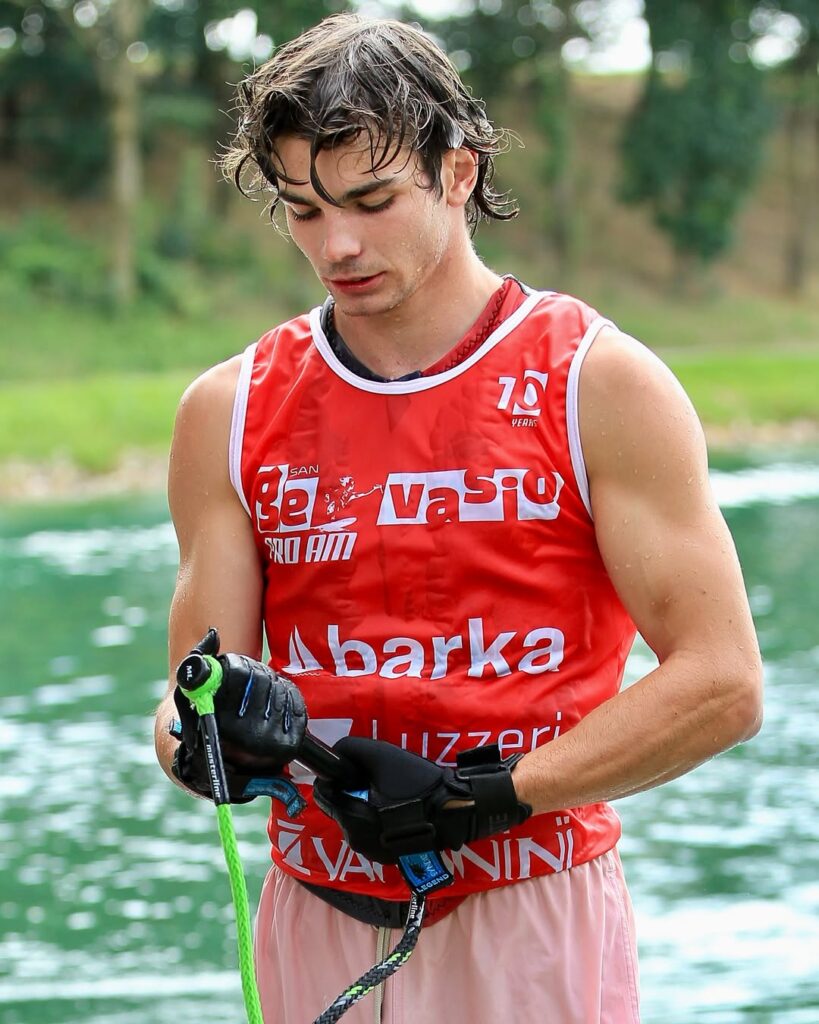
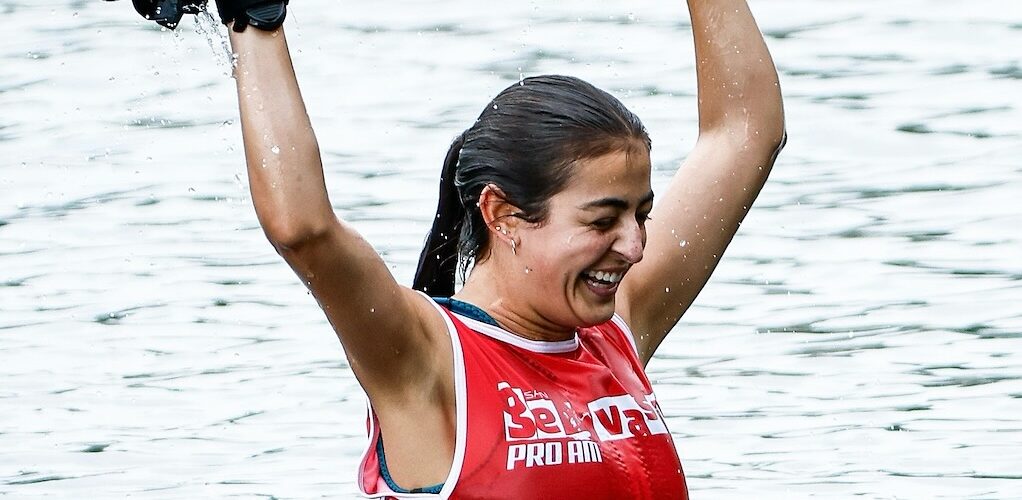
SAN GERVASIO, Italy — For Ali Garcia, the breakthrough didn’t come with fireworks. It came with tears.
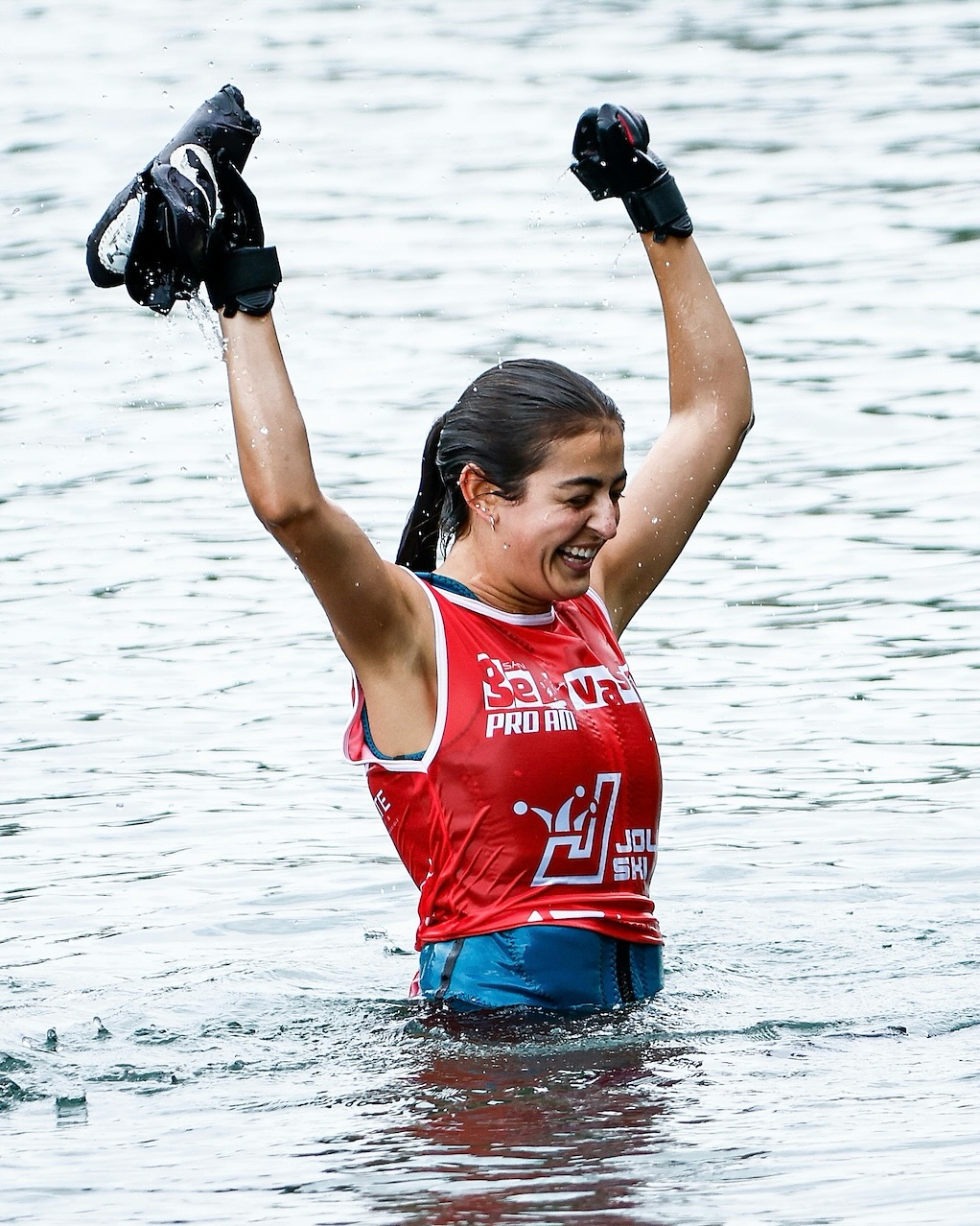
After months of grinding on the Waterski Pro Tour with little reward, the 23-year-old American finally stood tall in San Gervasio, riding a season-best performance into the finals and finishing second behind an undefeated Jaimee Bull. But it wasn’t the result that made the moment — it was how she got there.
In the qualifying round, Garcia tied her personal best of 3 buoys at 10.75 meters — a score she hadn’t managed all season — grinning ear to ear as she took the provisional lead and forced top seeds Allie Nicholson and Bull to deliver under pressure to hold their spots.
“I’m so happy, honestly,” Garcia said after qualifying. “This whole week I’ve been skiing really well and I felt like I could get my first three of the summer. I didn’t feel good the whole set — my rhythm was crazy — so the fact I could still put up a score makes me feel really confident.”
Then came the semifinals.
Matched up against Nicholson in a head-to-head showdown, Garcia needed a piece of 4 at 10.75 to advance — a score she had never achieved in competition. She delivered a gutsy 3.5, a new personal best, and stood afterward with tears in her eyes, soaking in the weight of the moment.
“A week ago I was calling my parents crying, saying I thought I should come home,” she said. “Now I PB’d. I thank my brother for teaching me how to throw a ski because I wouldn’t know how if he didn’t push me to crash more often.”
In the final against Bull, Garcia claimed 3 at 10.75 again — matching her previous best for the third time that weekend.
“I just figured I had nothing to lose,” she said. “Thirty minutes ago, three was my PB, so to tie it in a final — I’m psyched. It was so fun just to participate.”
No skier — man or woman — has entered more pro slalom events in 2025 than Garcia. Until now, she had yet to reach a podium. But her San Gervasio run changes everything. She now sits fourth on the Waterski Pro Tour leaderboard behind Bull, Nicholson, and Neilly Ross — with momentum, and belief, finally on her side heading into the U.S. season closers and the looming World Championships.
For her father, Steve Garcia, watching from across the world, it was a moment years in the making.
“More tears than can be counted,” he wrote. “Like so many challenges, especially the last 12 months. And on one special day, in one special moment, I’m confident Ali would say it was all worth it.”
At the top of the table, Bull’s dominance continued.
The Canadian completed a perfect five-stop sweep through Europe, winning every event and locking up the top spot in the Waterski Pro Tour standings. Neither of her biggest rivals — Regina Jaquess or Whitney McClintock Rini — made the trip across the Atlantic, but Bull left little room for doubt. Her control at 10.75 has become surgical, and her consistency now matches her explosive potential.
“Ali crushed it last round and I knew she was going to go for it,” Bull said after the final. “I played it a bit safe at four just to make sure I didn’t fall — it’s a bit choppy down there — and made sure I had a full five. I’m happy. It’s been a great five weeks. Really good skiing for me, and I’m happy we get to go home now.”
Bull owned the top step. But Garcia may have delivered the weekend’s most powerful story — a reminder of how much the sport demands, and how sweet it can be when persistence finally pays off.
No crushing expectations. No top-seed pressure. Just a ski, a rope, and one more try.
And this time, she made it count.
Independent perspectives on tournament water skiing